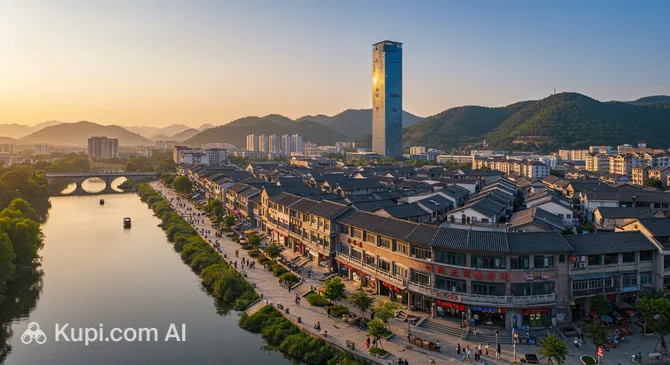
Nestled in the heart of Zhejiang Province, Zhuji is a fascinating blend of ancient legends and rapid industrial growth. Spanning the picturesque Puyang River valley, this city is rightfully considered one of the cultural centers of China. With a population of over 1.1 million, it maintains a cozy atmosphere where modern skyscrapers stand alongside tranquil river landscapes and historical monuments.
Thanks to its rich historical heritage, Zhuji is renowned as the birthplace of Xi Shi—one of the four legendary beauties of ancient China, whose story has inspired poets and artists for centuries. The city was officially founded as early as 222 BC during the Qin Empire, making it one of the oldest settlements in the region with deep cultural roots.
Zhuji. Illustration.
Source: Kupi.com AI
Today, Zhuji attracts travelers not only with its past but also with its unique specialties: it holds the title of the world's pearl capital and is a major center for textile production. Here, you can stroll along modern embankments, visit memorial complexes dedicated to ancient heroes, or head into the mountains to see breathtaking waterfalls. This city invites those seeking the authentic China, hidden away from the mass tourist crowds.
Weather Overview
The city of Zhuji is located in a subtropical monsoon climate zone, characterized by a distinct change of four seasons. Summer here is long, hot, and humid: in July and August, average temperatures often reach +30...+35°C, and heavy rainfall is brought by monsoon winds. Winter in the region is cool and dry, with temperatures ranging from +2°C to +10°C, while frosts are extremely rare.
Special attention should be paid to the rainy season, which usually falls in June—this month receives the highest amount of precipitation. The most comfortable times for a visit are considered spring and autumn, when pleasant warm weather sets in, ideal for strolling through parks and mountain trails. You can study the climate of Zhuji by month in detail in our summary temperature table.
A typical weather scenario for a traveler is a moderately warm summer with occasional thunderstorms and clear, bracing winter days. In spring, the city blooms, and in autumn, it delights with stability and the absence of exhausting heat, making these periods peak times for cultural tourism.
Average monthly temperature
Average monthly precipitation
Interesting Facts
Birthplace of a Legend: Zhuji is considered the birthplace of Xi Shi, a legendary beauty from the 5th century BC who, according to legend, helped the Kingdom of Yue defeat the rival Kingdom of Wu.
Pearl Capital: The city is the world's largest center for freshwater pearl cultivation and processing; the local market provides more than 70% of the world's demand for these gems.
Sock City: The Datang district within Zhuji produces about one-third of all the world's socks, earning it the unofficial title "Sock Capital of the World."
Ancient Roots: Zhuji officially received county status in 222 BC, during the reign of the first emperor Qin Shi Huang, who unified China.
Water Country: Thanks to the Puyang River, the region has remained a fertile breadbasket for millennia, developing unique terrace farming and river fishing techniques.
How to Get There
Zhuji boasts excellent transport accessibility, being an important link in the Yangtze River Delta economic zone. The city is located just 64 kilometers south of Hangzhou, allowing tourists to easily plan visits here as part of a larger trip through Zhejiang Province. You can learn more about how to get to the city by various means of transport on the specialized pages of our travel guide.
The nearest major air hub is Hangzhou Xiaoshan International Airport (HGH). From there, you can reach the center of Zhuji by taxi or intercity bus in about 1–1.5 hours. The airport accepts flights from all major cities in Asia and Europe, making it the main gateway for foreign guests.
Railway communication is the fastest and most convenient way to travel. Zhuji Railway Station serves modern high-speed trains (高铁) that connect it with Hangzhou (30 minutes away) and Shanghai (about 1–1.5 hours). The station is conveniently located relative to the city center, and a well-developed taxi network allows you to quickly reach your hotel.
The main symbol and pride of the city is the Xi Shi Memorial Hall. This extensive cultural area is dedicated to one of the greatest beauties of antiquity. Here, visitors can stroll through traditional Chinese gardens, see elegant pavilions and sculptures that tell the story of devotion and beauty that changed the course of Chinese history. The Tang and Ming dynasty-style architecture creates an atmosphere of immersion into the distant past.
For nature lovers, the Wu-Xie (Five Waterfalls) scenic area is a must-visit. This is a cascade of five picturesque waterfalls hidden among dense forests and whimsical cliffs. Hiking trails lead through steep climbs and shady gorges, offering spectacular views of the mountain landscapes. It is the perfect place for those who want to escape the city noise and enjoy the pure mountain air.
Another unique attraction is the World Pearl Market in the Shanxiahu district. It is not just a trading floor, but a true cultural and industrial site where you can learn everything about the process of cultivating freshwater pearls. The scale of the market is staggering: a significant portion of the global trade in these precious stones is concentrated here, and the variety of products will satisfy even the most sophisticated collector.
Local Cuisine
Zhuji's cuisine is a brilliant representative of Zhejiang culinary traditions, characterized by fresh ingredients, moderate use of spices, and a delicate balance of flavors. Thanks to the abundance of rivers and reservoirs, the local diet is based on freshwater fish, shrimp, and other seafood. One of the region's signature dishes is "Pearl Meatballs"—tender balls of meat or fish coated in glutinous rice, which resembles shining pearls after cooking, paying homage to the city's main industry.
It is definitely worth trying dishes made from bamboo shoots and fresh vegetables grown in the Puyang River valley. Locals take pride in their slow-cooked soups and braised meats, which become exceptionally tender through long simmering. As for drinks, high-quality green tea from local plantations or the famous rice wine, which flourishes in neighboring Shaoxing but is also widely available in Zhuji, is traditionally served.
The city's gastronomic scene is diverse: from affordable street stalls to elegant restaurants in large hotels. Locals often dine at family-run taverns where recipes are passed down through generations. A special atmosphere can be felt at the night food markets, where food is prepared over an open flame, offering passersby various snacks such as fried tofu, hand-pulled noodles, and steamed buns with various fillings.
Travel Tips
A trip to Zhuji promises to be an unforgettable cultural experience; to ensure your journey goes smoothly, we have prepared some practical tips.
Clothing and Season: The best time to visit is spring (March-May) and autumn (September-November), when the weather is mild. In summer, don't forget an umbrella for rain and sunscreen, and in winter, bring warm clothes as the climate can be quite cool and damp.
Transport: Install the Didi app for hailing taxis—it's the most convenient way to get around. For trips to neighboring cities, book high-speed train tickets in advance via Trip.com, especially during public holidays.
Finance: In China, cashless payments via Alipay or WeChat Pay are used almost everywhere. It is recommended to link your card to these apps beforehand. Cash is only useful for small purchases at markets.
Connectivity: Buy a local SIM card at the airport or operator offices (China Mobile/Unicom). To access your usual services and maps, take care of a working VPN in advance.
Language Barrier: English is not widely spoken, so download an offline translator and save your hotel and attraction addresses in Chinese (characters).
Etiquette: Be polite and respect local traditions in memorial complexes. In China, it is customary to greet with a slight nod, and to use both hands when handing over business cards or money.
What to Avoid: Do not engage in political discussions and try not to photograph people without their consent, especially in rural areas or temples.
Shopping Tip: When buying pearls at markets, don't be afraid to bargain, but do so in a friendly manner. Always check for certificates for expensive items.
May your introduction to the homeland of Xi Shi be filled with inspiration and pleasant discoveries!
Entertainment & Nightlife
Entertainment in Zhuji is primarily calm and cultural, reflecting the city's overall atmosphere. Most evening activity is concentrated along the banks of the Puyang River, where locals and tourists enjoy walks under decorative lighting. The city focuses on traditional leisure; instead of noisy nightclubs, you are more likely to find cozy tea houses where famous local tea is served alongside leisurely conversation.
For those seeking evening spectacles, traditional theatrical performances are often held in the tourist zones associated with the history of Xi Shi. These shows offer a closer look at the folklore of Zhejiang Province and the culture of the ancient Yue Kingdom. In the city center, you can also find modern cinemas and shopping and entertainment complexes that stay open late, offering a standard range of urban pleasures, from karaoke boxes to children's play areas.
Nightlife in the classic sense—with bars and dance floors—is moderately developed. A few popular establishments can be found near major hotels, such as the Zhuji Grand Hotel, or in the central business districts. However, for full immersion into dynamic nightlife, travelers often prefer short trips to nearby Hangzhou, while Zhuji remains an ideal place to recharge after a busy day of sightseeing.
Parks & Museums
Zhuji's natural charm is best revealed in its green zones along the Puyang River. The embankments have been transformed into modern parks with walking paths, recreational areas, and picturesque bridges. This is a favorite spot for locals to practice morning Tai Chi and enjoy evening picnics. The landscape design of the parks emphasizes the natural beauty of the river flow and surrounding hills, creating an ideal space for leisurely outdoor relaxation.
The city's main cultural institution is the Xi Shi Museum, part of the memorial complex of the same name. Its exhibits are dedicated not only to the life of the famous beauty but also to the history of the ancient Yue Kingdom. Here, you can see archaeological finds, ancient textiles, and household items that help explain how the region's culture has been shaped over more than two thousand years. This is a must-visit for anyone interested in classic Chinese history and literature.
Also of interest to tourists is the specialized Pearl Museum, located in the suburbs. it clearly demonstrates the evolution of the pearl industry: from ancient harvesting methods to modern cultivation technologies. The museum halls display rare specimens of pearls in whimsical shapes and sizes, as well as jewelry masterpieces. A visit to this museum provides a complete understanding of why Zhuji holds such a significant place in the global gemstone industry.
Getting Around
The public transport system in Zhuji is well-developed and convenient for moving between major attractions and residential areas. The backbone of urban transport is the bus network, with routes covering not only the center but also remote districts, including the Datang textile cluster and the pearl market in Shanxiahu. Fares are low, and most buses are equipped with air conditioning and electronic displays, though the information on them is often provided only in Chinese.
For the fastest and most comfortable movement, tourists most often choose taxis. Both official services and the popular mobile app Didi (the Chinese equivalent of Uber), which has an English interface, operate in the city. This is the most reliable way to reach your destination, especially in the evening. Taxis are metered, and apps allow you to link an international card or use local wallets like Alipay and WeChat Pay.
An alternative and popular way of moving around in China is via electric scooters and bicycles, which can be rented through apps. Convenient pedestrian and bicycle paths are laid out along the embankments and in central parks. For intercity travel within the province, residents and visitors actively use high-speed trains; the station is integrated into the citywide transport network, allowing for easy transfers to city buses or taxis upon arrival.
Accommodation
For travelers planning a visit to Zhuji, the most convenient option is to stay in the central part of the city or near the railway station. Mid-range and business-class hotels are concentrated here, providing a high level of service and easy access to major transport arteries. One of the most famous places to stay is the Zhuji Grand Hotel, which is often chosen by business travelers and tourists who appreciate classic comfort.
If your goal is shopping or visiting industrial zones, you should consider accommodation in the Datang district or near Shanxiahu (the pearl market). Functional hotels and guesthouses catering to business travelers predominate there. For those looking for a more secluded getaway, there are eco-hotels in the foothills offering views of tea plantations and rivers.
The cost of staying in Zhuji is usually lower than in neighboring Hangzhou or Shanghai, making it attractive for budget travelers. However, during major industry exhibitions or national holidays, it is recommended to book accommodation in advance through platforms like Trip.com. The city offers a wide range of choices—from simple hostels to luxury complexes with a full range of services.
Nearby Cities
Thanks to its location at the intersection of important transport routes, Zhuji serves as an ideal starting point for exploring the central part of Zhejiang Province. Within an hour's drive are cities with thousands of years of history and modern achievements, easily reachable by high-speed trains or the network of expressways.
One of the most popular destinations is the ancient city of Shaoxing, famous for its picturesque canals, black wupeng boats, and the historic residences of great literati. It is also worth visiting Yiwu—a true paradise for shopping enthusiasts, home to the world's largest small commodities market. If you are interested in traditional architecture and wood carving, a trip to Dongyang would be an excellent choice.
Don't forget the opportunity to visit Shangshan or nearby Xiaoshan, where modern urban landscapes harmoniously blend with green parks. Short trips to these neighboring centers will allow you to see the full diversity of East China—from quiet provincial aesthetics to the futuristic brilliance of megacities.
Shopping & Souvenirs
Shopping in Zhuji is primarily about hunting for unique goods for which the city is world-famous. The main object of desire for tourists is freshwater pearls. The best place to purchase them is at the specialized markets in the Shanxiahu district. Here, you can buy individual pearls in various shades and sizes, as well as finished jewelry—from classic necklaces to modern designer accessories. Buying directly from manufacturers guarantees attractive prices and a huge selection.
Another unusual shopping spot is the Datang district, known as a global textile production center. Huge shopping pavilions are located here, offering an incredible range of hosiery: from everyday models to high-tech sports equipment. For tourists, this is an excellent opportunity to purchase high-quality knitwear at wholesale prices, making Datang a popular place for practical shopping.
As souvenirs from Zhuji, people also bring back traditional embroidery, local green tea, and wooden crafts. Major shopping centers and souvenir shops are concentrated in the city center and near memorial zones. Shops are generally open from 9:00 to 21:00. Large centers accept international cards, but for purchases at markets and small stalls, it is better to have cash or use the popular payment apps in China.