Support

Huangyan

About

Located in the heart of Zhejiang Province, Huangyan is a dynamic district of the city of Taizhou. This corner of China harmoniously combines the features of a modern industrial center and a quiet residential area. Huangyan is often called the "Capital of Plastics," emphasizing its important role in the regional economy; however, for the traveler, it is primarily interesting for its authentic atmosphere of everyday life in East China.

Geographically, Huangyan is situated on the coast, surrounded by the picturesque landscapes typical of this part of the country. The district's population is approximately 198,713 people, making it compact and convenient to explore. Although it is not a typical tourist hub, the city attracts visitors with its utility, accessibility, and proximity to the province's major cultural centers.
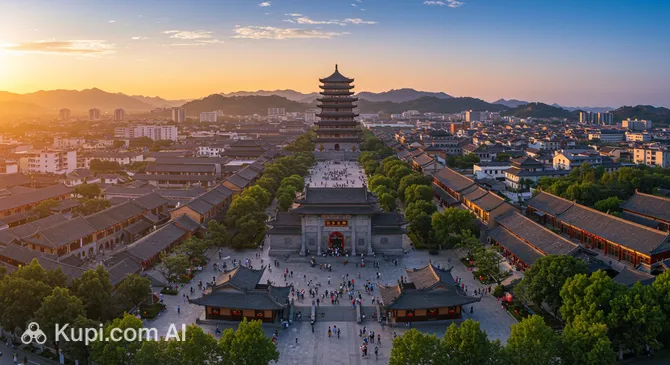
Huangyan. Illustration.
Source: Kupi.com AI

The rich history of Huangyan dates back to the Jin Dynasty, when it played a significant role in trade routes. Today, historical heritage is intertwined with urban landscapes: here you can see both the dense development of modern neighborhoods and bustling industrial districts. The city is famous for its production of toys, household appliances, and plastic products, which are shipped from here all over the world.

Visiting Huangyan is an excellent opportunity to see the "real" China, hidden from the eyes of the mass tourist. We invite you to stroll along its boulevards, visit shopping centers such as Huangyan Wanda Plaza, and feel the rhythm of life in this hardworking and hospitable city.

Weather Overview

The climate in Huangyan is typical for the east coast of China and is characterized as subtropical monsoon. The city experiences hot and humid summers, as well as mild, relatively dry winters. Expect warm summers with frequent precipitation and cooler months at the beginning and end of the year, when temperatures stay at a comfortable level.

According to weather data for the city, the hottest months are July and August, with an average temperature of around +29°C, while daytime highs often exceed +33°C. In winter, in January, the temperature drops to +4°C at night, but usually warms up to +11°C during the day. Rainfall peaks in June, when up to 328 mm of precipitation falls, so it's always worth having an umbrella with you during this time.

The proximity to the sea and dense industrial development can affect humidity and air quality. During calm periods, the humidity is felt particularly strongly, creating a "sauna" effect in the summer months. The optimal times to visit are considered spring (April–May) and autumn (October–November), when the most pleasant and dry weather for walking sets in.

Average monthly temperature

Average monthly precipitation

Interesting Facts

  • Huangyan has deep historical roots: a settlement was founded on this site as far back as the Jin Dynasty (3rd–4th centuries AD).

  • The city officially holds the title of "China's Capital of Plastics" due to the colossal number of factories producing polymer goods for the entire world.

  • Despite its industrial focus, the district only administratively became part of Taizhou in the 1980s as part of large-scale economic reforms.

  • The district's population is comparable to that of a small European city, with just under 200,000 people, creating the atmosphere of a cozy industrial hub.

  • Huangyan is considered one of the key export centers of Zhejiang Province, specializing in the production of toys and household appliances.

How to Get There

The transport accessibility of Huangyan is due to its proximity to the key logistics hubs of Zhejiang Province. The main gateway to the region is Taizhou Airport (IATA: ZTS), located about 20–30 kilometers from the district. A trip from the terminal to the center will take 30 to 50 minutes by taxi or shuttle bus, depending on traffic.

AirportPassenger trafficDistance
Luqiao Airport2.0 mln19 km
Wenzhou Longwan International Airport11.7 mln91 km
Dongyang Hengdian Airport113 km
Ningbo Airport14 mln132 km
Yiwu Airport3 mln143 km

For those who prefer land transport, high-speed trains are the most convenient option. Taizhou Railway Station connects the district with the country's largest metropolises: the journey from Shanghai takes about 2 hours, and you can get there from Ningbo in just one hour. After arriving at the station, you can reach Huangyan by taxi in 20–40 minutes.

StationPassenger trafficDistance
Wenling Railway Station2.3 mln19 km
Linhai Railway Station4.5 mln26 km
Yuyao North Railway Station5.5 mln161 km
Shaoxing Railway Station3.5 mln166 km
Hangzhou Railway Station100 mln209 km

If you are planning to travel by car, the city is easily accessible via the modern G15 or G92 expressways. The travel time from Shanghai is about 3–4 hours. You can also find more details on how to get there by regular intercity buses that run from neighboring Taizhou cities at intervals of 30–60 minutes.

Main Attractions

While Huangyan is not a classic tourist destination with world-renowned architectural masterpieces, it offers travelers a unique look at modern industrial culture. One of the main points of attraction here is Huangyan Wanda Plaza—a modern multifunctional complex housing shops, restaurants, and entertainment zones. It is the heart of the district's social life, where activity is always buzzing.

For those interested in the industrial scale of the region, the massive plastic and toy markets are a unique sight. Here you can see firsthand the scale of production that earned the city its nickname. Wholesale bases and factory outlets are of interest not only to businesspeople but also to curious tourists wishing to understand the economic structure of Zhejiang Province.

If you are looking for a quiet break in the fresh air, the city boulevards and embankments are worth your attention. Although they lack elaborate decor, these places are perfect for leisurely walks and observing the daily life of local residents. For more extensive cultural experiences and historical monuments, experienced travelers often head to neighboring districts of Taizhou, using Huangyan as a convenient base.

Local Cuisine

The culinary traditions of Huangyan are inextricably linked with the gastronomy of Zhejiang Province, which is famous for its attention to the freshness of ingredients. The menu is based on seafood harvested from the East China Sea. Be sure to try the delicate steamed shrimp and various dishes made from local fish served in restaurants near the markets.

Among everyday dishes, rice noodles and traditional Chinese dumplings—jiaozi—are particularly popular. Street food is ubiquitous in the city: from fragrant tofu soups to crispy flatbreads. The district's gastronomic scene is characterized by its affordability and authenticity, offering guests delicious food without unnecessary frills.

As for drinks, no lunch in Huangyan is complete without tea. The most revered variety is Longjing ("Dragon Well") green tea, which is grown in this province. Beer lovers can appreciate the local brews, which perfectly complement the spicy and savory snacks of Cantonese cuisine, widely available in the district's shopping centers.

Travel Tips

A trip to Huangyan is a unique experience of getting to know the industrial heart of China. To make your trip as comfortable and productive as possible, we have prepared some practical tips.

  1. Clothing and Essentials: Choose clothing according to the season—it is hot and humid here in summer, so bring light items made of natural fabrics. It can be cool in winter, so a mid-season jacket will be useful. Don't forget comfortable shoes for walking and a power adapter for socket types A/C/I.
  2. Transport: Install the Didi app—it's the easiest way to get around the city. Buses are cheap but can be overcrowded. If you plan to travel a lot to neighboring cities, use the high-speed trains.
  3. Finance: Cash is hardly used in China. WeChat Pay or Alipay are mandatory for payment even in the smallest shops. International cards (Visa/Mastercard) are only accepted in major hotels, so take care to link your card to Chinese services in advance.
  4. Health: The air can be dusty in industrial zones, so it is recommended to wear a protective mask on days with poor AQI readings. Pharmacies are easy to find in shopping centers and residential areas.
  5. Communication: English is not widely spoken in Huangyan. Be sure to download an offline translator and carry a card with the hotel address in Chinese characters.
  6. Local Etiquette: Chinese people are very hospitable. Greetings are usually limited to a slight nod or handshake. Observe general norms of politeness and don't be surprised by the close attention—tourists are still a rarity here.
  7. What to Avoid: You should not walk in remote industrial areas late at night due to poor lighting. Also, avoid discussing political topics to prevent awkward situations.
  8. Additional Tip: Try the local green tea and be sure to visit the plastic market—even if you don't buy anything, the scale of production will impress you.

Huangyan will show you China from a new perspective, displaying its energy and diligence. Enjoy your trip!

Entertainment & Nightlife

Nightlife in Huangyan is quiet and steady, reflecting the working rhythm of the city. You won't find noisy mega-clubs or bars open until dawn here—evening leisure for locals is centered around family restaurants and shopping centers. The main place for evening walks and entertainment is Wanda Plaza, which features modern cinemas and game zones for the whole family.

If you crave a more active nightlife, it is worth heading to the central districts of Taizhou, which are only a 20–30 minute drive away. KTV (karaoke boxes) and small pubs where young people like to gather are popular there. In Huangyan itself, evening is a time for a delicious dinner in a cozy establishment or a game of billiards in one of the many clubs near residential complexes.

For daytime entertainment, the city offers fitness centers and walking areas in parks. The atmosphere here is extremely safe and friendly, making it comfortable to enjoy evening walks along the well-lit central streets. To call a taxi late at night, it is best to use the Didi app, as public transport stops running by midnight.

Parks & Museums

Despite its industrial status, Huangyan offers several green zones to escape the city's hustle and bustle. The main place for locals to walk is Huangyan Central Park. This is a functional space with neat paths, where you can see people practicing Tai Chi in the mornings and families enjoying the cool air in the evenings.

In addition to the central park, small squares and street alleys have been established within residential neighborhoods. Although green space accounts for less than 10% of the area, city authorities are actively working on creating new recreational zones. These squares serve as important islands of nature amidst the dense industrial buildings and residential blocks.

There are currently no major museums of its own in the district, so travelers usually head to neighboring Taizhou for a cultural program. There you will find the city history museum, where you can learn more about the heritage of the entire prefecture. In Huangyan itself, the role of "open-air museums" is played by modern industrial zones demonstrating the power of Chinese manufacturing.

Getting Around

The public transport system in Huangyan is represented by an extensive network of buses and route taxis. Buses run at intervals of 10–20 minutes, connecting residential areas with industrial zones and neighboring parts of Taizhou. The fare is very affordable, usually 1–2 yuan, though it's worth noting that transport can be crowded with factory workers during peak hours.

There is no metro or tram system in the district itself, so taxis remain the main and most convenient way for tourists to get around. Using the Didi app allows you to quickly call a car; a trip across the city rarely takes more than 15 minutes and is inexpensive. Bike-sharing services are also very popular in Huangyan—bike rentals are available on almost every corner.

To pay for bus fares, you can use transport cards or QR codes in payment apps. When planning your trips, remember that the number of public transport services significantly decreases in the evening. Overall, the city's transport network is well integrated into the general Taizhou system, making it easy to move around the entire metropolitan area.

Accommodation

The hotel infrastructure in Huangyan is primarily oriented toward business travelers and wholesale buyers visiting local factories. Middle-range and budget segments predominate here. Popular Chinese chains such as Hanting and 7 Days Inn offer comfortable accommodation at affordable prices—averaging from 150 to 300 yuan per night.

For the most convenient stay, it is recommended to choose accommodation near major shopping centers or main thoroughfares, which will provide easy access to infrastructure and transport. Those planning a long-term visit often consider renting apartments, which is particularly popular among foreign specialists working at the city's industrial enterprises.

There are not many luxury five-star hotels in the district itself, so tourists looking for high-end service often stay in the central part of Taizhou. During peak seasons, such as when industrial exhibitions or holidays are held, it is better to book accommodation in advance through popular online services to guarantee availability and the best price.

Nearby Cities

Huangyan serves as an excellent starting point for exploring the picturesque surroundings and neighboring cities of Zhejiang Province. Just 15 kilometers away is Taizhou—a major metropolis with developed infrastructure, parks, and museums, perfect for a deeper introduction to the region's culture.

For a day trip, the ancient city of Linhai is also wonderful, famous for its fortress wall, often called the "Southern Great Wall." Lovers of coastal scenery should look toward Wenling, known for its unique rock landscapes and proximity to the sea. Both cities are within an hour's drive by car or train.

CityPopulationDistance
Taizhou5 031 00015 km
Jiaojiang471 50022 km
Linhai1 028 81326 km
Wenling1 416 19933 km
Yueqing488 98065 km

The region around the city offers many hidden gems: from mountain temples to quiet coastal villages. Exploring these places will allow you to see the versatility of East China and enjoy the diversity of its nature and architecture before returning to the calm atmosphere of your hotel in the evening.

Shopping & Souvenirs

Shopping in Huangyan is primarily an opportunity to purchase goods at factory prices. The city specializes in the production of plastic products and toys, so the local markets resemble a miniature version of the famous Yiwu. If you are looking for unusual souvenirs, look for high-quality home goods and original toys, which are presented here in a huge assortment.

The main center for modern commerce is Huangyan Wanda Plaza. This shopping mall houses stores of popular clothing, electronics, and cosmetics brands. It is an ideal place for those who prefer the familiar shopping format in comfortable conditions. In the vicinity of the railway station, there are also markets where you can buy inexpensive clothing and daily necessities.

Shops in the city usually operate from 9–10 AM to 9–10 PM, seven days a week. To pay for purchases, you will definitely need the WeChat Pay or Alipay apps, as cash and international cards are not accepted everywhere. Markets and small shops in Huangyan offer utilitarian shopping without extra flash, but with an excellent price-to-quality ratio.

Reached the end of the page?

That means the route is fully explored