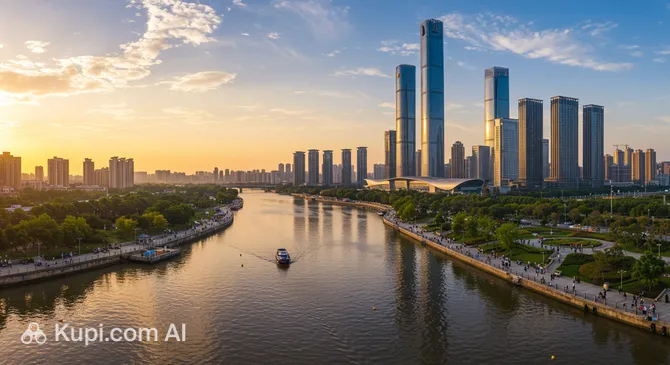
Xiaoshan is a dynamic and picturesque district within Hangzhou, located in Zhejiang Province, China. Situated on the southern bank of the majestic Qiantang River, this city harmoniously combines a deep cultural heritage with modern industrial achievements. Home to over a million people, the atmosphere here is permeated with a spirit of creation and tranquility.
Xiaoshan. Illustration.
Source: Kupi.com AI
The city is widely known as the home of the legendary Qiantang River Bridge — an outstanding engineering feat that has become a symbol of the region. Exploring Xiaoshan's rich historical heritage, travelers will find not only industrial clusters but also cozy temples, green parks, and traditional agricultural lands. One of the main natural highlights is the famous river tides, which attract thousands of spectators every year.
Visiting Xiaoshan is a wonderful opportunity to see the real China, where traditions of the past intertwine with the rhythm of a modern metropolis. Developed infrastructure and the hospitality of local residents make this district an excellent choice for both a short visit and a long exploration of the region.
Weather Overview
Xiaoshan is characterized by a subtropical monsoon climate with four distinct seasons. Summer here is typically hot and humid, especially from June to August, when temperatures can rise to +35°C and above, and rainfall becomes heavy. Winters, on the other hand, are quite mild and dry with rare frosts, with average temperatures in January hovering around +5...+10°C.
The most comfortable times to visit are considered to be spring and autumn, when pleasant weather sets in with temperatures ranging from 15°C to 25°C. If you are planning a trip, be sure to check the detailed city climate to choose your wardrobe correctly. Expect warm sunny days in October and possible prolonged rains at the beginning of the summer season.
Average monthly temperature
Average monthly precipitation
Interesting Facts
Xiaoshan hides many surprising details that make it a unique place on the map of Zhejiang Province.
Home of an Engineering Marvel: This is where the famous Qiantang River Bridge is located, opened back in 1978, which becomes the center of a massive tidal bore festival every year on the 18th day of the eighth month of the lunar calendar.
Air Gateway: The Hangzhou Xiaoshan International Airport, one of China's largest aviation hubs, is located in this district, welcoming millions of travelers from around the world annually.
Cultural Reserve: In the local Xiaoshan Village Cultures Park, you can see authentic Min people's settlements and learn about their ancient way of life.
Textiles and Grapes: The city is recognized as an important center of the textile industry and is also famous for growing a special variety of "crystal grapes," which are considered an exquisite local delicacy.
How to Get There
Thanks to its strategic location, getting to Xiaoshan is easy. The city is integrated into East China's powerful transport network, offering tourists several convenient travel options. Detailed information on routes and current travel methods can be found in the how to get there section for the district.
The key facility is Hangzhou Xiaoshan International Airport (HGH). It is located directly within the district and accepts direct flights from many countries, including Russia, Europe, and Asian nations. From the terminals, you can reach the city center by metro, shuttle buses, or taxi in just 30-40 minutes, making it extremely convenient for travelers.
Railway connections are also excellently developed. You can travel from Shanghai to Xiaoshan by high-speed train in just one hour. Nearby stations provide links to all the country's major cities. Additionally, a bus trip from neighboring regions will take two to three hours via modern expressways such as the G25 or G60.
One of Xiaoshan's most impressive attractions is the Qiantang River Bridge. This spot draws thousands of people eager to witness the famous "Qiantang Tidal Bore" — a unique natural phenomenon where a powerful wall of water surges up the river. This spectacle is considered one of the largest in the world and leaves a lasting impression on every observer.
For those seeking spiritual peace, the ancient Buddhist Longji Temple is a must-visit. This majestic complex, with its elegant pagodas and well-kept gardens, allows you to experience the region's old architectural traditions and enjoy the silence away from the city bustle. The temple's atmosphere encourages reflection and an introduction to Eastern philosophy.
Nature lovers and ecotourism enthusiasts will enjoy Xinkai Valley. This picturesque location is famous for its extensive vineyards. Harvest festivals are often held here, where you can not only taste fresh fruit but also learn more about local agriculture while walking along green trails among the hills and enjoying the fresh air.
Local Cuisine
Xiaoshan's gastronomic map is a vibrant extension of Zhejiang culinary traditions, where the emphasis is on fresh ingredients and delicate flavors. The district's main specialty is dishes made from fish caught in the Qiantang River. Be sure to try "bianjiang yu" — tender braised fish whose flavor is enhanced by local spices and fresh roots.
Among drinks, "Xiaoshan liumi jiu" — a fragrant rice wine — holds a special place. It has a mild taste and is traditionally served at festive tables. The city is also famous for its crystal grapes, which are used not only as a standalone dessert but are also often found in exquisite fruit platters and sweets at local markets.
You can experience the region's true taste in specialized establishments like the Qianjiang Seafood restaurant, where guests are offered a huge selection of seafood prepared in a traditional style. Local residents often prefer to dine in cozy riverside restaurants, enjoying not only high-quality food but also a beautiful view of the city's evening lights.
Travel Tips
When planning a trip to Xiaoshan, use these practical tips to ensure your journey is as comfortable as possible and brings only positive emotions.
Clothing and essentials: In summer, bring light clothing made of natural fabrics and an umbrella for protection from rain. In spring and autumn, layered outfits are useful (temperatures 15-25°C). For visiting temples, choose modest clothing, and for long walks — comfortable athletic shoes.
Transport: The best way to get around is the metro and the Didi app for calling taxis. For navigation, download Baidu Maps, as Western mapping services may be unstable.
Finance: Contactless payment via Alipay dominates in China. We recommend linking your card to the app in advance. It's worth having cash in yuan (CNY) for small purchases at traditional markets.
Health and safety: Xiaoshan is a very safe district. Nevertheless, drink only bottled water and carry a basic first-aid kit. Pharmacies are common and usually marked with a green cross.
Communication: The main language is Chinese. English is not widely spoken, so download an offline translator. A local SIM card can be purchased at the airport or China Mobile offices.
Local etiquette: Be polite and show respect to elders. It is customary to remove your shoes when entering temple halls or private homes.
What to avoid: Do not plan important travel during the peak days of the Tidal Bore Festival without extra time — crowds can be huge, and some roads may be closed.
Extra tip: Try renting an electric scooter for rides along the Qiantang River embankment — it will allow you to see more of the district's beauty in a short time.
May your introduction to this amazing region bring you bright discoveries and unforgettable impressions!
Entertainment & Nightlife
Entertainment in Xiaoshan is largely linked to seasonal events and natural cycles. The main magnet for tourists and locals alike remains the annual Qiantang Tidal Bore Festival. During this time, the riverbanks transform into a huge festival ground with exciting shows, bright fireworks, and performances by artists. It is the best time to feel the drive and scale of local folk festivities.
The district's nightlife is more relaxed and focused on relaxing with friends. Locals are very fond of karaoke bars (KTV), which are full-fledged entertainment centers here with excellent service and cuisine. Along the embankment, you can find cozy spots with river views, perfect for spending time watching the play of lights on the evening city's waters.
For daytime activity enthusiasts, Xiaoshan offers numerous parks and walking areas. In the evenings, they become centers of social life: you can see traditional square dancing or join collective exercises. The district is considered very safe for night walks, and calling a taxi via a mobile app is possible at any time of day.
Parks & Museums
Xiaoshan offers travelers wonderful opportunities for cultural enrichment and outdoor recreation. Xiaoshan Village Cultures Park is a must-see for those wanting to learn about the region's history. Traditional architecture has been recreated here, and masters demonstrate ancient crafts, turning a walk into a true immersion into the rich heritage of the Min peoples.
Fans of panoramic views should head to the Qiantang River Tidal Bore Viewing Park. This park is specially equipped with stands and observation decks for watching the famous river tide. Even on ordinary days, it is pleasant to walk along the embankment here, enjoying the scale of the Qiantang River and the fresh breeze.
To better understand this region's development path, visit the Xiaoshan Museum. Its exhibits detail the district's history from ancient times to the present day: from the first agricultural settlements to the construction of giant modern bridges. Xinkai Park is also great for a leisurely break, where a network of walking trails leads through picturesque hills to calm lakes, creating ideal conditions for walks.
Getting Around
Xiaoshan's transport system is integrated into Hangzhou's general network, making travel within the district and beyond fast and convenient. The main mode of transport is the metro: Line 2 connects Xiaoshan with the city's central business and historical districts in just 20-30 minutes. Metro stations are modern and have clear navigation in English.
Surface transport is represented by an extensive bus network and the BRT (Bus Rapid Transit) system, which has dedicated lanes and effectively avoids traffic jams during peak hours. It is most convenient to pay for travel using mobile apps like Alipay or WeChat, or by using a transport card that can be purchased and topped up at major transit hubs.
For short trips around the city, locals and tourists often use bike-sharing services like Mobike. Infrastructure with dedicated bike lanes makes this mode of travel very pleasant. If you need to reach the airport or a remote site in comfort, the Didi taxi service is the most reliable and affordable option, allowing you to see the trip's cost in advance.
Accommodation
Xiaoshan offers a variety of accommodation options tailored to different travel purposes. For those in transit or planning an early flight, hotels in the immediate vicinity of the airport are ideal. Well-known chains such as Holiday Inn and Hilton are represented here, offering international-standard service and convenient transfers to the terminals.
If you want to enjoy beautiful views and a calmer setting, consider hotels by the Qiantang River, such as GreenTree Inns. Staying in this area will allow you to take evening walks along the embankment and be within walking distance of the main viewing platforms for observing the famous tidal bore.
For budget travelers and families, many hostels and modern apartments offering all necessary amenities are available in the center of Xiaoshan. It is recommended to book accommodation in advance, especially if your visit coincides with the Tidal Bore Festival, when demand for rooms surges. Most accommodation options are easy to find and book on popular international and local online platforms.
Nearby Cities
Xiaoshan serves as an excellent starting point for exploring the eastern regions of China, offering easy access to world-renowned cities. The magnificent Hangzhou is just 14 kilometers away. This destination is a must-visit thanks to the legendary West Lake (Xihu), tea plantations, and ancient pagodas, all reachable by metro in minutes.
For those who appreciate an ancient atmosphere and traditional architecture, a trip to Shaoxing, located 37 kilometers away, is an ideal option. The city is famous for its canals and its renowned yellow wine. Also worth noting is the city of Zhuji, known as the home of pearls and picturesque mountain landscapes perfect for nature walks.
The region around Xiaoshan is steeped in a spirit of tradition and rapid development. Each of these destinations will give you new experiences and allow you to delve deeper into the culture of Zhejiang Province within a short and comfortable day trip.
Shopping & Souvenirs
Shopping in Xiaoshan is an exciting mix of modern shopping centers and colorful local shops. The main commercial activity is concentrated in the Qianjiang New City area, which houses massive malls with a wide selection of international clothing, electronics, and cosmetics. Shops here usually stay open until late evening, and all popular digital services are accepted for payment.
If you are looking for something unique, look for local products that the province is famous for. First and foremost, this is the renowned Longjing tea and high-quality silk products. As a souvenir from Xiaoshan, people often bring back miniature models of the Qiantang River Bridge and, of course, local crystal grapes in beautiful gift packaging.
For a more authentic experience, it is worth visiting local markets where you can find the freshest produce and traditional Chinese sweets. A tax refund system may be available for tourists in large retail chains, but it is better to clarify this with staff directly before purchasing. Shopping in this area will leave a pleasant impression thanks to the combination of high service and the chance to find true treasures of local culture.