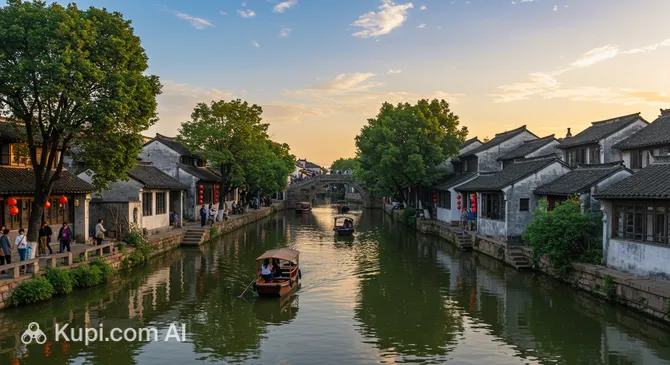
Shaoxing is one of those rare cities where time seems to slow down, allowing guests to immerse themselves in the atmosphere of ancient China. Located in Zhejiang Province, in the fertile Yangtze River Delta, this city of over 2.5 million people is famous for its unique water architecture. It is often called the "Venice of the East" due to its endless network of canals and hundreds of ancient stone bridges that shape the unique look of this open-air "living museum."
Shaoxing. Illustration.
Source: Kupi.com AI
Founded more than 2,500 years ago, Shaoxing once served as the capital of the ancient Yue Kingdom. To better understand its significance to national culture, it is worth exploring the history of the city, which is inextricably linked with the names of great thinkers, poets, and political figures such as Lu Xun and Zhou Enlai. Traditional houses with black roofs and white walls lined up along the banks create a melancholic yet inspiring landscape that has been celebrated in Chinese literature for centuries.
Tourists are drawn here not only by the opportunity to ride a traditional flat-bottomed boat through narrow water arteries but also by the deep cultural heritage. The city harmoniously combines the tranquility of old quarters with the dynamics of modern development. A visit to Shaoxing is an invitation to leisurely contemplation, tasting the famous rice wine, and walking along pavements that remember the succession of great dynasties.
Weather Overview
Shaoxing is characterized by a humid subtropical climate typical of the east coast. This means distinct seasonal changes: hot, moisture-laden summers and cool, sometimes quite damp winters. During the summer months, especially in July and August, the average air temperature often exceeds 30°C, and high humidity can make walking tiring, so plan your visits for the early morning or evening.
The winter period in the city is mild compared to northern regions, with average temperatures around 6-7°C in January. Snow here is rare, but frequent rains can add a chill. Expect warm summers with periodic monsoon rains peaking in June, and cold, mostly dry winters. If you are interested in more detailed weather in Shaoxing, it is worth checking the forecast just before you leave.
The best times to visit the city are considered spring (March–May) and autumn (September–November). During these periods, the temperature is most comfortable — from 15°C to 25°C, nature blooms or turns golden, and air humidity becomes moderate. Autumn months are especially good for long walks across old bridges and canals under clear skies.
Average monthly temperature
Average monthly precipitation
Interesting Facts
Museum of Ancient Bridges: Shaoxing has preserved 604 historical bridges, representing almost all types of bridge structures from ancient China, making the city a unique architectural sanctuary.
Birthplace of Rice Wine: The city is considered the cradle of the famous huangjiu (yellow wine), a recipe passed down from generation to generation for over two millennia.
Capital of an Ancient Kingdom: During the Spring and Autumn period, Shaoxing was the capital of the powerful Yue Kingdom, and the local Mount Kuaiji is steeped in legends about the Great Emperor Yu, who tamed the flood.
Textile Heritage: For centuries, Shaoxing has remained one of the most important centers for sericulture and the textile industry in the country, continuing the traditions of the ancient Silk Road.
City of Black Boats: The hallmark of the city is the "wupengchuan" — small flat-bottomed boats with characteristic black awnings, operated by an oar held between the feet.
How to Get There
Shaoxing is conveniently located for transport logistics, just 62 kilometers from Hangzhou and a couple of hours' drive from Shanghai. This makes it an easily accessible destination for those traveling along the east coast of China. The city is well-integrated into the modern road network, allowing quick access via high-speed train or intercity bus.
Although there is no major international airport in the city itself, the nearest aviation hub is Hangzhou Xiaoshan International Airport (HGH). From there, you can reach the center of Shaoxing by taxi or a special shuttle in about an hour. This is the most convenient way for foreign tourists to reach the city immediately after an international flight.
Rail communication is the pride of the region. Shaoxing Railway Station (RNX) receives trains from key metropolises. High-speed trains from Shanghai deliver passengers to the city in about an hour, making even day trips possible. Detailed information on routes can be found on the how to get to Shaoxing page.
The main treasure of Shaoxing is its historic center, where a network of canals and ancient bridges creates a unique ensemble. The Yuecheng District has preserved the layout of the Yue Kingdom era, and a walk through its narrow streets allows you to see traditional architecture in its original form. Stone bridges here are not just a means of transportation but symbols of the skill of ancient builders, each with its own unique shape and legend.
Special attention should be paid to places associated with the life and work of Lu Xun, the founder of modern Chinese literature. His ancestral estate and memorial complex are important cultural landmarks, offering a glimpse into the life of wealthy families during the Ming and Qing dynasties. The atmosphere of old China is felt in every detail of the interior and the quiet courtyards hidden from the city noise.
For those who want to see the city from above, the Dashan Pagoda is a must-visit. This ancient seven-story structure rises above the residential quarters and offers a panoramic view of the interwoven canals and modern avenues. The combination of historical monuments and vibrant, everyday life on the water makes Shaoxing one of the most photogenic cities in the region.
Local Cuisine
A gastronomic journey to Shaoxing is unimaginable without tasting the famous yellow rice wine (huangjiu). This amber-hued drink with a mild flavor has a thousand-year history. It is usually served slightly warmed, which reveals its rich aroma, and local shops offer many varieties — from young and light to aged for years, possessing a deep flavor.
Local cuisine is based on fresh products from the region's numerous water bodies. Be sure to try dishes made from river fish, shrimp, and snails, prepared with the addition of that same rice wine. One of the most famous and unusual snacks is "stinky tofu" (chou doufu), which is prepared in Shaoxing according to a special recipe — it has a pungent smell but a surprisingly delicate taste, especially when paired with spicy sauce.
The dining culture in the city is closely linked to the canals: many restaurants are located right at the water's edge, allowing guests to enjoy their meal and the view of passing boats. For a more authentic experience, visit local food markets where you can try steamed buns with various fillings and rice cakes. Shaoxing cuisine is a balance of freshness, fermentation traditions, and the delicate flavors of Zhejiang.
Travel Tips
Preparing for a trip to Shaoxing will be easier if you consider a few practical nuances that will help you feel confident in this ancient water city.
Clothing and Footwear: Choose extremely comfortable shoes with non-slip soles, as you will be walking a lot on stone bridges and wet embankments. The dress code for visiting temples is casual, but it's better to cover your shoulders. In summer, don't forget an umbrella — it will save you from both the sun and sudden subtropical downpours.
Transport: The most authentic way to get around is by traditional boats. For bus and taxi rides, download apps with built-in maps. Note that taxi drivers rarely speak English, so carry the names of your hotel and attractions in Chinese.
Finances: The official currency is the Chinese Yuan. While mobile payments (Alipay, WeChat) dominate, tourists should have a supply of cash for paying in small shops and markets, as international bank cards are not accepted everywhere.
Health and Safety: The city is very safe for tourists, even at night. Pharmacies are easy to find by the green cross, but it's better to bring specific medications with you. Drink only bottled water.
Communication: English is not very common, so learn basic phrases: "Ni hao" (hello) and "Xie-xie" (thank you). Be sure to buy a local SIM card at the airport or official communication salons to use online translators.
Local Etiquette: Residents of Shaoxing are hospitable but value restraint. Loud talking in public places is discouraged. When visiting tea houses, show respect for the tea ceremony.
What to Avoid: Do not attempt to cross the road in the wrong place; traffic can be chaotic. Also, do not overindulge in local rice wine in the heat — it is tricky and gets you tipsy faster than it seems.
Extra Tip: Visit the old quarters at dawn. At this time, the canals are shrouded in light mist and the city is just waking up, allowing you to take the best photos without crowds of tourists.
By following these simple tips, you can fully focus on the beauty of Shaoxing and get only the most positive emotions from your trip!
Entertainment & Nightlife
Entertainment in Shaoxing is more cultural and aesthetic than noisy and club-oriented. The city's evening life centers around the illuminated canals, where boat trips under the soft light of lanterns create a truly magical atmosphere. This is the perfect time to visit traditional tea houses or small waterfront restaurants where you can listen to local musicians performing folk melodies.
The nightlife here is quite calm and safe. The main establishments where you can spend the evening are located in the historic quarters and along the central shopping streets. Instead of loud discos, Shaoxing offers cozy bars with local rice wine tastings and atmospheric venues overlooking old bridges. The dress code in most places is casual, and the atmosphere is conducive to friendly conversation and leisurely relaxation.
During the day, travelers can diversify their leisure time by visiting theaters featuring classical Chinese operas or participating in craft festivals. For family vacations, city parks with walking areas and modern playgrounds are excellent. While Shaoxing is not a mecca for fans of wild night parties, its evening charm and authentic style of relaxation leave a deep impression on connoisseurs of tradition.
Parks & Museums
For a deep dive into the cultural context of the region, it's worth visiting the Shaoxing Museum. Its exhibitions span a massive period — from Yue Kingdom artifacts to Ming and Qing dynasty household items. The museum is interesting not only for its collections of ancient ceramics and bronze but also for its interactive exhibits telling the stories of the city's famous residents and the development of local crafts such as winemaking and calligraphy.
The natural beauty of the city is best revealed in the parks surrounding the Kuaiji Hills. This is a sacred place for Chinese history, home to ancient temples and memorials. Walking trails lead through bamboo groves to observation platforms offering peaceful views of the city's canals and the endless rice fields in the outskirts. The park is ideal for those seeking peace and solitude away from the busy city streets.
Another important point on the map is the area around the Dashan Pagoda. This place harmoniously combines an architectural monument and a well-maintained park zone. Walking along the old city walls and canals allows you to see how nature is woven into the urban fabric, creating cozy green corners among the stone embankments and historical buildings.
Getting Around
The transport system of Shaoxing is an interesting blend of modern technology and centuries-old traditions. The basis of city communication is bus routes that connect all districts and attractions. Buses run regularly, and you can pay for travel using transport cards or mobile payment systems, which is very convenient for active tourists. The city's metro is actively developing, expanding options for quick travel between remote areas.
The most colorful and truly touristy form of transport remains the traditional black boats (wupengchuan). This is not just entertainment, but a way to see the city from the same perspective as its residents have seen it for centuries. The boats run along the main canals of the historic center, and a ride on them allows you to avoid the bustle of the streets and enjoy the silence of the waterways.
For those who prefer independence, taxi services and bicycle rentals are well-developed in Shaoxing. A bike ride along the embankments is a great way to explore the "city of bridges" at your own pace. Keep in mind that the historic center is largely pedestrian-oriented, so comfortable shoes will be your main ally. Most transport stops operating around 10 PM, after which the main way to get around is by taxi, which can be easily called via apps.
Accommodation
To fully experience the charm of Shaoxing, experienced travelers recommend choosing hotels in the historic center, especially in the Yuecheng district. Here you can find unique boutique hotels located in renovated traditional houses. Staying in such a place gives you the chance to wake up to the sound of water splashing in the canals and admire old bridges right from your room window.
In the new districts of the city, modern hotel complexes and international 4-star and 5-star chains are widely represented. They offer a high level of comfort, spacious rooms, and a full range of services, including swimming pools and fitness centers. Such accommodation options are well-suited for business travelers and those who prefer familiar service standards.
The price range in Shaoxing is quite affordable compared to neighboring metropolises. Both budget guesthouses for young people and luxury resorts are available here. During peak tourist seasons, especially during Chinese New Year or spring festivals, it is worth booking accommodation in advance, as the best waterfront options get snapped up very quickly.
Nearby Cities
Thanks to its location in the heart of a developed region, Shaoxing serves as an excellent starting point for exploring the surroundings of Zhejiang Province. In just an hour, you can find yourself in completely different worlds, whether they are modern metropolises or ancient settlements that have preserved their way of life.
First on the list of must-visits is Hangzhou. This city is famous for its legendary West Lake (Xihu), temple complexes, and Longjing tea plantations. A high-speed train trip takes very little time, allowing you to see some of the most beautiful landscapes in the country in a single day. Also interesting is the city of Xiaoshan, which attracts travelers with its modern parks and developed infrastructure.
For those looking for paths less traveled, a trip to Zhuji, known for its natural beauty and historical connections to ancient Chinese beauties, is ideal. Exploring nearby cities allows for a more complete picture of life in the Yangtze River Delta.
Each of these destinations is easily reachable thanks to the developed system of railways and high-speed highways. We recommend not limiting yourself to Shaoxing alone and dedicating at least one day to visiting the neighboring gems of the region.
Shopping & Souvenirs
Shopping in Shaoxing is primarily a hunt for unique goods with centuries of history. The city has long been famous for its silk and textiles, so look for high-quality fabrics, scarves, and traditional-style clothing here. In local markets and specialized shops, you can find silk products that make beautiful and prestigious gifts.
The main gastronomic souvenir is undoubtedly the yellow rice wine. In specialized shops in the historic center, it is sold in beautiful ceramic vessels, which are works of art in themselves. It is also worth looking at local ceramics and calligraphy supplies — Shaoxing is considered one of the centers of this classical art, and you can purchase high-quality brushes and inkstones here.
Shopping districts in the city center, such as the streets near the historical canals, offer atmospheric shopping in craft shops. Here you can find models of the famous wupengchuan black boats and miniature replicas of stone bridges. Large shopping centers with global brands are concentrated in modern quarters; they usually operate until 21:00 or 22:00, and payment in most places is accepted via popular mobile apps, though it is useful to have some cash yuan in small shops.