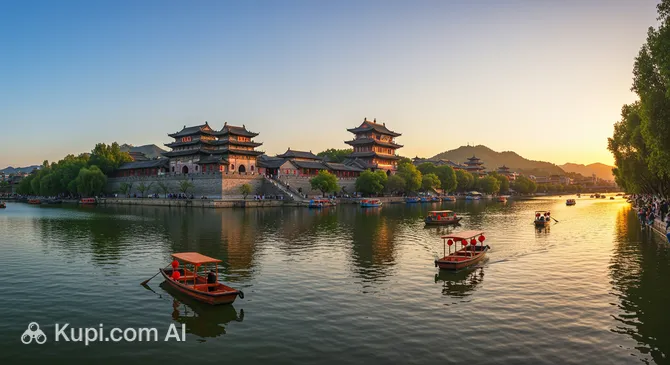
Located in the heart of Jiangsu Province, Gaoyou is a fascinating blend of ancient history and serene waterscapes. This city, nestled on the banks of the Grand Canal and the lake of the same name, is often called the "Postal Capital of the East." Gaoyou earned this poetic nickname due to its unique role in the development of the postal service in ancient China.
Gaoyou. Illustration.
Source: Kupi.com AI
Geographically, the city is situated in a low-lying area just a few meters above sea level, defining its character as a "city on the water." With a population of over 800,000, Gaoyou manages to maintain an atmosphere of tranquility and authenticity, which is why it is often included in the list of "slow cities." Unlike bustling metropolises, the historical heritage here is harmoniously interwoven with the daily rhythm of the local residents.
The main magnets for travelers here are the grand ancient Yuchengyi Post Station and the picturesque views of Lake Gaoyou. This place is ideal for those who want to see the real, non-touristic China, enjoy walks along the canals, and touch traditions that have been carefully preserved for centuries. We invite you to discover this quiet corner of the Middle Kingdom, where time seems to slow its pace.
Weather Overview
The city of Gaoyou is located in a subtropical monsoon climate zone, typical for the eastern coast of China. Proximity to the huge lake and the network of canals has a softening effect on temperatures but also maintains a high level of humidity throughout the year.
Summers here are hot and humid: in July and August, the thermometer often rises to +30...+32°C, and heavy rainfall during this period makes the air quite heavy. Winters, on the other hand, are cool and dry, with average January temperatures ranging from +1°C to +7°C, though severe frosts are rare. The most favorable time to visit is spring and autumn when the weather is mild and sunny.
When planning your trip, keep in mind that the city's climate involves frequent rains in early summer (the "plum rain" season). Expect a warm summer with occasional downpours and cool, mostly dry winters. Humidity remains high even in the cold months, so warm, windproof clothing in winter will be very useful.
Average monthly temperature
Average monthly precipitation
Interesting Facts
Gaoyou is the only city in China whose name officially originates from the word "post." This emphasizes its status as a historical communication hub in Ancient China.
The local Yuchengyi Post Station is recognized as the largest surviving station in the country; it was a key link in the state messenger system across several dynasties.
The city was celebrated in Chinese literature by the writer Wang Zengqi, who described it as an ideal "slow city on the water," highlighting the unique rhythm of local life.
On an island in the middle of the Grand Canal stands a unique temple complex with a pagoda called the "Southern Wild Goose Pagoda"—a rare architectural monument surrounded by water on all sides.
Lake Gaoyou is the sixth-largest freshwater lake in the country and is famous for its sunsets, which have inspired poets and artists for centuries.
How to Get There
Gaoyou is located in Jiangsu Province and, despite lacking its own airport, remains quite accessible to travelers thanks to a developed network of ground transportation. The city is conveniently connected to major regional transport hubs, making it easy to plan your travel route from China's largest metropolises.
The nearest major international aviation hub is Nanjing Lukou International Airport (NKG), located about 100 kilometers away. From the airport, you can reach Gaoyou by intercity bus or taxi; the trip will take 2 to 3 hours depending on traffic. You can also use Yangzhou-Taizhou Airport, which is significantly closer and serves domestic flights.
Railway travel is the most comfortable way to get around. Gaoyou Railway Station serves trains running on the Yangzhou line. Although there may not be direct high-speed trains from Beijing or Shanghai specifically to the city, travelers usually transfer in Yangzhou or Nanjing. Regular buses also frequently run from Yangzhou to Gaoyou, with a travel time of about an hour.
Although Gaoyou is not a mass tourism destination, it hides several unique treasures. The city's main pride is the Yuchengyi Ancient Post Station (Mengcheng). It is the largest and best-preserved facility of its kind in all of China. Today, the station has been converted into a museum where you can study the history of postal communications and explore ancient living quarters, stables, and halls for official receptions. A visit to this place literally transports you back centuries.
Another gem of the city is Zhongguo Temple, located on an island right in the middle of the Grand Canal. Its centerpiece is the Southern Wild Goose Pagoda, which rises majestically above the water. The boat trip to the temple is an exciting journey in itself, offering panoramic views of the region's historical waterways.
For those seeking an authentic atmosphere, Nanmen Street (South Gate) is a must-visit. This is an old quarter with traditional architecture where life flows just as it did decades ago. Here, you can peek into small shops, try street food, or simply observe the slow-paced daily life of the townspeople. End your day with a walk by Lake Gaoyou, which is especially beautiful in the rays of the setting sun as fishing boats return to the shore.
Local Cuisine
The culinary traditions of Gaoyou are inextricably linked to the region's water resources. The cuisine here is a prominent representative of the Jiangsu school, characterized by mild flavors and an emphasis on the freshness of ingredients. Dishes made from freshwater fish and seafood caught in Lake Gaoyou are considered the main delicacies. Be sure to try the tender catfish or carp, steamed with ginger and local herbs.
Lotus dishes and the famous local shrimp hold a special place in the diet. Classic regional boiled jiaozi dumplings with various fillings are equally popular. For drinks, locals prefer the famous green tea from neighboring Yangzhou and traditional rice wine, which is often served warm.
The city's gastronomic scene is mainly represented by small family establishments and street markets. The most authentic eateries are concentrated in the South Gate area and along the lakefront. You won't find English menus here, but the hospitality of the owners and the aroma of freshly prepared food will help you find your way. The food culture in Gaoyou is about simple, honest, and very tasty food without unnecessary pretense, reflecting the calm character of the city itself.
Travel Tips
A trip to Gaoyou promises to be a calm and pleasant adventure if you consider a few practical nuances of life in the Chinese provinces beforehand.
Clothing and Essentials: The best time to visit is spring and autumn when the weather is most comfortable. In summer, it is very humid and hot, so bring light clothing made of natural fabrics. Be sure to have comfortable shoes for walking on paved streets and an umbrella. To charge your devices, you will need an adapter for Chinese sockets (Type A, C, or I).
Transport: Within the city, it is most convenient to get around by taxi using the Didi app. For short distances, public bicycles are ideal. If you plan to travel to neighboring cities, use high-speed trains.
Finances: International Visa or Mastercard cards are practically not accepted in Gaoyou. Cash will come in handy, but WeChat Pay or Alipay are mandatory for payment everywhere—from markets to taxis. Tipping is not customary in China.
Health and Safety: The city is very safe, but it's always worth carrying a hotel card with the address in Chinese. Pharmacies are common, but they may not know international names of medications—it's better to have a basic first-aid kit with you.
Communication: English is very rare here. Install an offline translator in advance (such as Google Translate or Baidu Translate) and download the Chinese data package. Purchasing a local SIM card is possible at China Mobile or China Unicom offices with a passport.
Local Etiquette: Be polite; a greeting is usually accompanied by a slight nod. In temples and historical sites, behave with restraint and try not to make noise.
What to Avoid: Do not engage in political discussions and try to avoid visiting remote industrial zones at night—there is simply nothing of interest for a tourist there.
Extra Tip: Be sure to try the local salted duck eggs—they are a famous specialty of Gaoyou, considered the best in the country.
May your journey to this "slow city" on the water be filled with only pleasant discoveries and peace of mind!
Entertainment & Nightlife
Gaoyou is a city for those who appreciate silence and an early bedtime. You won't find noisy nightclubs or bars with loud music here. The city's evening life revolves around family walks and gastronomic pleasures. Locals prefer to spend time in traditional tea houses or gather along the banks of the lake and canals, where numerous street food stalls open in the evening hours.
One of the favorite pastimes for residents is karaoke (KTV), which has the status of a national hobby in China. If you are looking for a more active nightlife with concerts and discos, it's best to head to neighboring Yangzhou, which is about an hour's drive away. In Gaoyou itself, the atmosphere encourages quiet contemplation of the illuminated bridges and pagodas along the Grand Canal.
Daytime leisure in the city includes visiting parks and local museums. For tourists, the most interesting activity is a stroll along the embankment, where you can rent a boat or simply enjoy the fresh river breeze. Safety in the city is at a very high level, so night walks along the central lit streets and the South Gate area are perfectly comfortable and peaceful.
Parks & Museums
Cultural life in Gaoyou is centered around its unique heritage. The primary must-visit site is the Yuchengyi Post Station Museum. This is not just a building with exhibits, but an entire historical complex where you can see how the state courier service functioned centuries ago. The exposition includes ancient maps, daily life items of postal workers, and restored interiors, making it interesting for both adults and children.
The city's natural beauty is represented primarily by the recreational zones around Lake Gaoyou. Walking trails have been laid out here, allowing you to enjoy lake views and observe local flora and fauna. While there are no giant theme parks here, the water spaces and numerous canals create the feeling of living in a vast garden.
Another important cultural site is the Zhongguo Temple on the island. This place combines the functions of a religious center and an open-air museum. The temple's pagoda is the city's architectural landmark and an excellent viewpoint for the surrounding area. Gaoyou does not have large national galleries, but local exhibition halls often host displays dedicated to local crafts and regional history, emphasizing the authenticity of this "postal capital."
Getting Around
The transport system in Gaoyou is simple and efficient, typical for small Chinese cities. The main form of public transport here is buses, which connect the city center with the railway station, the lakeshore, and remote districts. The routes cover all key points, and the fare is extremely low (usually 1–2 yuan).
There is no metro or tram system in the city, but their absence is fully compensated for by the availability of taxis and ride-hailing services through the Didi app. Trips within the city are inexpensive and are the fastest way to get around. For fans of active recreation and eco-friendly travel, bicycle and electric scooter rental services are perfect. Cycling along the Grand Canal is one of the most pleasant ways to see the city.
Payment on buses is most often made either in cash (you need small bills as no change is given) or via QR codes in apps. Tourists should remember that the compact historical center of Gaoyou is best explored on foot, as many interesting alleys and small bridges are inaccessible to cars. The city's railway station serves as an important hub for suburban travel, providing connections to neighboring provincial metropolises.
Accommodation
The hotel infrastructure in Gaoyou is primarily oriented toward domestic tourists and business travelers, so there are almost no luxury five-star hotels from international chains. The accommodation options mainly consist of cozy guesthouses and mid-range hotels. Prices are quite affordable: a standard room in a good hotel will cost between 200 and 500 yuan per night.
For tourists, the most convenient area to stay is the city center, especially the vicinity of the South Gate (Nanmen). By staying here, you will be within walking distance of major historical sites, such as the Yuchengyi Post Station, and numerous local restaurants. Accommodation options with lake views are also popular, offering a more peaceful and scenic environment.
If you plan to visit during China's national holidays, it is recommended to book your accommodation in advance through popular services like Agoda or Trip.com. During regular times, finding a place on the spot is usually not a problem. Please note that in smaller hotels, staff may not speak English, so it is wise to prepare the hotel name and address in Chinese characters beforehand.
Nearby Cities
Thanks to its location in the developed Jiangsu Province, Gaoyou serves as an excellent starting point for exploring neighboring historical centers. The region is crisscrossed with canals and high-speed highways, making day trips easy and fulfilling.
Just 43 kilometers to the south lies majestic Yangzhou—one of the most beautiful cities in China, famous for its Slender West Lake and exquisite gardens. The trip there takes about an hour. It is also worth visiting Zhenjiang, located on the southern bank of the Yangtze, known for its ancient temples and picturesque hills. If you are interested in a more intimate atmosphere, visit Tianchang, which is very close by.
Exploring the surroundings will allow you to see the diversity of East China's culture—from the imperial grandeur of large centers to the cozy charm of small towns. Regular bus services and trains make such trips accessible and comfortable for any traveler.
Shopping & Souvenirs
Shopping in Gaoyou is primarily about discovering local crafts and traditional goods rather than chasing international brands. The city lacks giant Western-style shopping malls, but colorful local markets and shops thrive here.
The main shopping area is considered the South Gate (Nanmen) district. This is where shops offering folk crafts, high-quality local tea, and unique souvenirs related to the city's postal history are concentrated. Popular purchases include souvenir models of ancient post stations or calligraphy works.
The city's food markets are a special kind of pleasure. Here you can find the freshest products from the lake, local lotus, and traditional sweets. Shops typically operate from early morning until 8 or 9 PM. Payment is most often made through WeChat Pay or Alipay payment systems, although cash is also accepted in small shops. Large international cards are practically never used in local stores, so it is advisable to set up mobile payment access in advance.