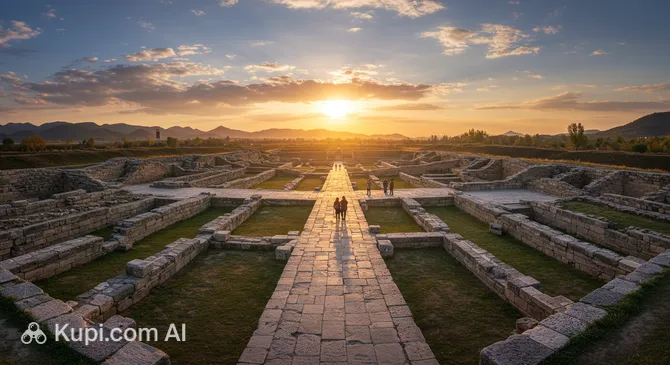
Acheng District, historically known as the cradle of the mighty Jin Empire, is a unique blend of ancient history and the industrial pulse of modern China. Located in Heilongjiang Province, this urban district serves as a living monument to the history of the Jurchens, who once ruled vast territories across East Asia. Here, in the country's northeast, you can feel the rugged yet majestic spirit of the northern frontiers, attracting those seeking authentic historical roots away from typical tourist routes.
Geographically, Acheng is located just a few dozen kilometers from Harbin, occupying an area with a population of over 751,389 people. The climate here is distinctly continental: with snowy, freezing winters and short but warm and humid summers. The city is surrounded by plains and low hills that once served as a defense for the first capital of the Jin Dynasty.
Acheng District. Illustration.
Source: Kupi.com AI
The main treasure of Acheng is the Museum of Jin Dynasty History and the ruins of the ancient capital, Shangjing. Travelers come here to see archaeological finds that testify to the empire's former greatness and to learn about the culture of the Manchu ancestors. The combination of industrial landscapes and ancient burial mounds creates a special, reflective atmosphere.
A visit to Acheng is an invitation to travel through time, where echoes of Jurchen cavalry hooves can still be heard among modern neighborhoods. We recommend planning a trip here as part of a larger tour of Northeast China to fully appreciate the scale of this region's cultural heritage.
Weather Overview
The climate of Acheng is characterized as temperate monsoon with distinct seasonality, typical for Heilongjiang Province. Winters here are long, dry, and freezing. In January, the average temperature is around -15.2°C, but it is not uncommon for the thermometer to drop to -25°C or lower. Despite the cold, this time of year attracts tourists with sunny days and an atmosphere of a real winter wonderland.
Summer in the district is short but quite warm and humid. In July, the hottest month, the average temperature reaches +24.3°C, and maximum values can exceed +28°C. Most of the annual precipitation falls during the summer period, often in the form of short but heavy thunderstorms. Expect warm days with occasional rain, which makes the nature around the city emerald green.
The best time to visit Acheng is considered late spring (May) and early autumn (September), when comfortable temperatures are established for long walks through historical ruins. During these months, the air is dry and clear, and the landscapes acquire a special expressiveness. A winter trip also has its charm if you are ready for severe cold and want to combine a visit to Acheng with ice festivals in neighboring Harbin.
Average monthly temperature
Average monthly precipitation
Interesting Facts
Cradle of the Empire: The territory of modern Acheng was the first capital of the powerful Jin Dynasty (1115–1234), which at its peak controlled most of Northern China.
Jurchen Heritage: Acheng is considered the spiritual homeland of the Jurchens—the ancestors of the modern Manchus. Many local customs and even gastronomic preferences are rooted in the traditions of this warrior northern people.
Proximity to the "Ice City": The district is located just a 40-50 minute drive from the center of Harbin, making it an ideal place for those who want to escape the city's noise for historical silence.
Archaeological Klondike: A huge number of 12th-century artifacts have been found in the district, including unique mirrors and seals, which today form the golden fund of Heilongjiang Province museums.
How to Get There
Acheng District boasts excellent transport accessibility thanks to its proximity to Harbin, the main logistics hub of Heilongjiang Province. Most travelers arrive here via the region's international gateways, using modern highways and an extensive railway network.
The primary air hub for a trip to Acheng is Harbin Taiping International Airport (IATA: HRB). It handles flights from China's largest cities, as well as international flights from Russia, Korea, and Japan. From the airport, Acheng can be reached by taxi or a pre-booked transfer in about an hour, bypassing Harbin's main city traffic via bypass roads.
Railway communication is the most convenient and fastest way to travel. Acheng has its own station, where trains from Harbin and other cities in the province regularly arrive. Travel time from Harbin's main station by high-speed train is only about 20-30 minutes. This makes the district accessible even for short day trips.
Additionally, there is a frequent bus service between the center of Harbin and Acheng. Buses depart from major transport terminals and arrive at the Acheng bus station, from where it is easy to reach the main attractions by local taxi or city bus. For more detailed information, we recommend checking the routes in advance.
Main Attractions
The main pride and focal point of Acheng is the Shangjing Ruins—the first capital of the Jin Dynasty. This site allows you to touch the foundations of Jurchen statehood; a walk among the ancient foundations and remnants of fortress walls provides an idea of the scale of the city, which was one of Asia's most important political centers in the 12th century. The historical landscape here is supplemented by information stands that help visualize the former grandeur of the palaces.
In the immediate vicinity of the ruins is the Jin Dynasty Shangjing History Museum. This is a must-visit for every tourist: the exhibition features unique artifacts, from exquisite jewelry and ceramics to weapons and household items found during archaeological excavations. The museum is designed to lead the visitor through all stages of the great empire's rise and fall, making history visual and exciting.
For those who prefer natural beauty, the picturesque Panyun Mountain is located in the vicinity of the district. It is a popular spot for light trekking, offering panoramic views of the valley and the modern quarters of Acheng. The mountain trails are especially beautiful during the golden autumn when the forests are painted in vibrant colors, creating a perfect backdrop for photos and peaceful outdoor relaxation.
The city's cultural profile is also shaped by local temples and memorials dedicated to prominent figures of the Jin Dynasty. For example, the mausoleums of the rulers located nearby are still objects of veneration and important monuments of Northeast-style architecture. These sites allow for a deeper understanding of the worldview of the peoples who inhabited Heilongjiang centuries ago.
Local Cuisine
The cuisine of Acheng is a classic embodiment of Northeast China's (Dongbei) traditions, where the main criteria are heartiness, the use of local vegetables, and rich sauces. In the cold northern climate, a love for hot, high-calorie dishes has historically developed. Be sure to try Guo Bao Rou—slices of pork in a sweet and sour sauce, which are prepared in this region according to ancient recipes to achieve a perfect crispy crust.
Another signature dish is Di San Xian, which translates as "three earthly treasures." It is a simple but incredibly tasty combination of sautéed eggplant, potatoes, and green peppers in a thick soy sauce. Fresh water fish dishes from local rivers are also popular in Acheng; they are often stewed with tofu and ginger in large pots, creating a unique homey feel.
Dining culture in Acheng is closely linked to friendly gatherings. Locals prefer to dine in spacious restaurants where many plates are served at once on rotating tables. Regarding drinks, look out for local Harbin beer brands and the strong spirit baijiu, which helps to keep warm during winter frosts. Street food is also widely represented: from roasted sweet potatoes to lamb skewers with cumin, the aroma of which fills the evening streets.
Travel Tips
Planning a trip to Acheng requires taking into account the regional specifics of Northeast China. These tips will help make your trip as comfortable and rewarding as possible.
Clothing and Essentials: If you are traveling in winter, bring the warmest possible clothing: thermal underwear, a high-quality down jacket, and windproof footwear. Temperatures can drop below -25°C. In summer, light clothing and an umbrella for frequent rains will be useful. Be sure to bring comfortable shoes for walking through the extensive archaeological parks.
Transport: The fastest way to get from Harbin is by high-speed train. Within the district, it is most convenient to move by taxi or via the Didi app.
Finances: The local currency is the Yuan (CNY). The use of cash is becoming a thing of the past, so be sure to install Alipay or WeChat Pay and link an international card. ATMs are available in the center, but they can be hard to find in the historical zone.
Health and Safety: Acheng is a very safe district. In winter, keep your body hydrated and use a rich face cream to protect your skin from the wind. Pharmacies are common, but medicine names will be in Chinese.
Communication: The main language is Mandarin. English is almost not spoken. Download an offline translator and Baidu or Gaode maps in advance (Google Maps is unstable).
Local Etiquette: Residents of Northern China are straightforward and hospitable. Greet people with a slight nod of the head. In restaurants, it is customary to order many dishes for the table to share.
What to Avoid: Do not try to enter closed archaeological excavation sites without permission—this is strictly controlled by the state.
Extra Tip: Try the local ice cream even in winter—it's a peculiar regional tradition that originated in neighboring Harbin!
May your introduction to the cradle of the Jin Empire be filled with discoveries and vivid impressions of this rugged but beautiful land.
Entertainment & Nightlife
Entertainment in the Acheng District is calm and culturally oriented, which is typical for the historical centers of Northeast China. During the day, main activities are concentrated around park areas and historical complexes, where themed tours and occasional costumed performances reconstructing Jurchen life are held. Local city parks with rides and playgrounds are excellent for family recreation.
As evening falls, life moves to the central quarters, where the neon signs of small restaurants and karaoke bars (KTV) light up. The nightlife here lacks the pretentiousness of megacities, offering instead a cozy atmosphere of local establishments. Residents of Acheng enjoy spending time over a hearty dinner, followed by walks along illuminated embankments or shopping streets where evening snack trade thrives.
In the winter period, Acheng becomes part of Harbin's famous winter festival. Ice sculptures are erected in local parks and slides are set up, transforming the city into a fairytale space, especially beautiful with evening illumination. It is the safest and most fun time for night walks, when the frosty air only adds vigor and a festive mood.
Parks & Museums
The cultural heart of Acheng is the Jin Dynasty Shangjing History Museum. This is not just a repository of antiquities, but an entire complex dedicated to the era when Acheng was the capital. The museum's exhibits tell the story of the Jurchens' lives, their wars, crafts, and art. Special attention should be paid to the collection of jade and gold items, as well as reconstructed fragments of palace architecture that help you feel the greatness of the vanished empire.
Adjacent to the museum is the Shangjing Archaeological Park, which is an open-air museum. Here, visitors can walk along the outlines of ancient walls and see the places where imperial chambers once stood. It is an ideal place for thoughtful walks, where the historical significance of the landscape is combined with the quiet and space characteristic of China's northern plains.
For more active outdoor recreation, residents and visitors choose the coastal zones of local water bodies and small forest parks. In these parks, picnics are held during the warm season, while in winter, they transform into grounds for snow fun. The landscapes of the northeast, with their birch groves and wide horizons, create a unique backdrop for relaxation and allow you to escape the city bustle, immersing yourself in the contemplation of the rugged northern nature.
Getting Around
The transport system of Acheng is oriented towards providing convenient communication within the district and a connection with nearby Harbin. The core of public transport consists of bus routes that cover both residential neighborhoods and main historical zones. Buses run regularly, and fares are extremely low, making them an accessible way for tourists to get around.
For faster and more comfortable travel, residents and visitors actively use taxi services. Both official taxi services and the popular Didi app, which allows you to call a car to any point, operate in Acheng. This is especially convenient for trips to remote archaeological sites or mausoleums where public transport runs less frequently. It is worth remembering that drivers rarely speak English, so it's better to have a card with the address in Chinese.
An alternative to motorized transport is bicycles and e-scooters, which are very popular during the warm season. Acheng's flat terrain favors leisurely bike rides. If you need to get to Harbin, besides trains, there are regular suburban buses departing from Acheng's main bus station; they run from early morning until late evening.
Accommodation
For tourists who decide to stay in Acheng, a choice of accommodation is offered, primarily oriented toward the mid-range price segment and budget travelers. Most hotels are concentrated in the district center, which is convenient for accessing local restaurants and transport hubs. Here you can find both modern chain hotels with a standard level of comfort and more modest guesthouses.
Hotels located near historical zones and parks are particularly popular. Staying in such places allows you to enjoy peace and cleaner air. It should be noted that there are not many luxury hotels in Acheng; if you require the highest level of service, it would be more sensible to stay in one of Harbin's five-star hotels and come to Acheng for excursions.
Accommodation prices here are significantly lower than in the center of Harbin, making Acheng an excellent option for budget travelers. It is recommended to book accommodation in advance, especially during Chinese national holidays and during the Winter Ice and Snow Festival, when the flow of tourists to the region increases sharply. For booking, it is best to use popular Asian services where the most complete list of available options is presented.
Nearby Cities
The Acheng District serves as an excellent starting point for exploring the attractions of Heilongjiang Province. Thanks to the well-developed road network, travelers can easily go on one-day trips to see the contrasting landscapes and modern megacities of Northeast China.
By far, the priority destination is Harbin, located just 58 km away. This city impresses with its Russian-Chinese architecture, the majestic Saint Sophia Cathedral, and, of course, the world-famous Ice and Snow Festival. A trip there will allow you to immerse yourself in the atmosphere of the "Paris of the East" and enjoy shopping on the pedestrian Central Street.
Another interesting option would be a trip to Shuangcheng—a city with a rich history known for its agricultural traditions and old quarters. If you are interested in the life of the region's industrial and transport centers, you can visit Zhaodong, which is about an hour's drive away and offers a glimpse into the modern lifestyle of provincial China.
Exploring the surroundings of Acheng allows you to see the real China beyond the glossy guidebooks. Each of these cities reveals the character of the region in its own way, whether through the grand architecture of Harbin or the quiet rhythm of small settlements like Shengping or Pingyuanjie.
Shopping & Souvenirs
Shopping in Acheng is primarily an opportunity to purchase unique souvenirs related to the heritage of the Jin Dynasty and Manchu culture. In museum souvenir shops, you can find quality replicas of ancient jewelry, mirrors with characteristic ornaments, and decorative items in the Jurchen style. Such products will serve as an excellent reminder of your visit to the cradle of a great empire.
For more everyday shopping, head to the district's central shopping streets. Both modern clothing and electronics stores as well as traditional markets are located there. At local markets, be sure to look for the natural gifts of Northeast China: dried mushrooms from Heilongjiang forests, high-quality honey, and ginseng root, which is considered one of the main treasures of medicine here.
Typical store opening hours in Acheng are from 9:00 AM to 8:00 PM or 9:00 PM, while markets open early in the morning and quiet down by lunch. Most large retail outlets accept payment via mobile apps (WeChat Pay, Alipay), which are the standard in modern China. If you are looking for something truly unique, look into small artisan shops where leather and wood products are still created using traditional northern technologies.