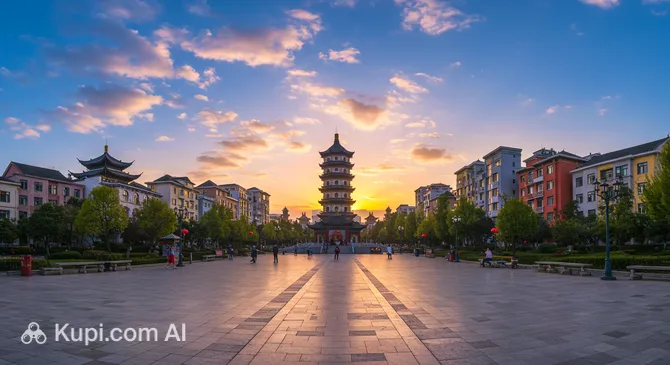
Suihua is a fascinating city in the heart of Heilongjiang Province in northeastern China, which rightfully bears the proud title of the "granary of Northern Manchuria." The city stretches across endless black soil plains, where the horizon is lost in emerald soybean fields. It boasts an atmosphere of a peaceful and welcoming agricultural center, where the modern urban rhythm harmoniously intertwines with a traditional rural idyll.
With a population exceeding 5 million people, the city is an important economic hub for the region. Its geographical location on fertile lands has shaped its unique character: picturesque natural landscapes stretch around the city blocks, offering tourists a rare opportunity to enjoy wide-open spaces and fresh air. The rich history of this region is inextricably linked with the development of virgin lands and the advancement of agriculture.
Suihua. Illustration.
Source: Kupi.com AI
Travelers are drawn here not only by modern avenues but also by an authentic ecotourism experience. In summer, Suihua delights the eye with the greenery of vast fields, while in winter, it transforms into a fairytale snow-covered kingdom. We invite you to visit this hospitable city to feel the true spirit of Northeast China, learn about its rich agricultural traditions, and enjoy a slow pace of life surrounded by nature.
Weather Overview
The climate of Suihua is distinctly continental, with harsh winters and warm, sometimes rainy summers. When planning a trip, it is worth considering significant temperature fluctuations: the hottest month is July, when the thermometer rises to an average of +24...+27°C, creating ideal conditions for the famous soybean fields to bloom.
The winter period in the region is truly severe — January is considered the frostiest month, with daytime temperatures around -19°C, and nighttime temperatures potentially dropping to -30°C and below. Despite the cold, winter here is often sunny, though variable cloudiness is observed throughout the year. If you want to know more about how the city's weather changes month by month, you should check the forecast in advance.
Precipitation is distributed unevenly: most of it falls during the summer months (especially in July and August), while winter remains dry, although snowfall is not uncommon. The best time for a comfortable visit is considered the period from May to September, when warm days allow for long walks in the fresh air to enjoy the endless landscapes of Heilongjiang Province.
Average monthly temperature
Average monthly precipitation
Interesting Facts
The Nation's Granary: Suihua is officially recognized as one of China's most important grain regions, earning it the poetic nickname "granary of Northern Manchuria."
Black Soil Riches: The city is located in one of the world's few deep black soil zones, making its land incredibly fertile and unique from an ecological perspective.
Transport Gateway: Despite its agricultural status, Suihua has its own modern airport (IATA code: HUA), connecting this remote corner with the country's largest metropolises.
Contrasting Climate: The temperature difference in the city between the extremely frosty winter and the hot summer can reach an impressive 60 degrees Celsius.
Soybean Capital: Vast areas around the city are occupied by soybean crops, making Suihua a key center for the production of this crop on a national scale.
How to Get There
Getting to Suihua is quite simple thanks to its location in the central part of Heilongjiang Province. The city is an important transport hub connecting northern agricultural areas with major metropolises. If you are planning a visit, it is worth checking all the options for how to get to the city in the most comfortable way beforehand.
The main air gateway is Heilongjiang International Airport (IATA: HUA). It receives regular flights from Beijing, Shanghai, and Harbin. The airport is located in close proximity to the city, and the journey to the center by taxi or shuttle bus will take very little time.
Railway connections in the region are excellently developed. Suihua is connected by a network of high-speed trains to Harbin, a journey that takes about 2 hours. Routes connecting it with other provincial centers in China also pass through the city. This is one of the most budget-friendly and convenient ways to travel for tourists.
For those who prefer road transport, modern expressways lead from neighboring cities such as Harbin. Traveling by car allows you to fully enjoy the views of the endless Manchurian plains and agricultural landscapes for which this region is famous.
Main Attractions
The main attraction of Suihua is rightfully considered its natural wealth. The city is surrounded by vast black soil plains and soybean fields, which are a magnificent sight, especially during the summer. It is an ideal place for ecotourism and landscape photography enthusiasts: neat rows of crops stretching beyond the horizon create a unique landscape geometry characteristic only of this region.
In winter, the city's surroundings are transformed, offering tourists classic northern entertainment. The snowy landscapes of the plains become an excellent backdrop for walks and winter sports. Locals are proud of their agricultural achievements, making the agricultural exhibition zones significant sites where you can learn about crop cultivation technologies in the "granary of Northern Manchuria."
In addition to natural areas, it is worth paying attention to the city parks, which serve as centers of social life. They often host local festivals and fairs that emphasize the city's agricultural status. For those seeking an authentic Chinese experience, it is recommended to head to the rural areas in the suburbs of Suihua to see the traditional way of life of farmers and enjoy the silence away from the megacities.
Local Cuisine
The cuisine of Suihua is a true tribute to the bounty of the northern land. The basis of the local diet consists of products grown on the local black soil: cereals, vegetables, and, of course, the famous local soybeans. One of the key ingredients is tofu, which is prepared here in dozens of ways — from delicate soups to fried delicacies with spices. Be sure to try the local grain porridges, which are considered a guarantee of health and longevity for the region's inhabitants.
In the cold season, hearty and warming dishes take center stage. Tourists highly praise the local meat noodles with plenty of fresh vegetables, as well as traditional dumplings, often filled with aromatic wild herbs. The character of the city's gastro scene can be described as "honest and homemade" — here, they value the natural taste of products and large portions capable of restoring strength after walks in the fresh air.
As for drinks, various herbal teas and unique grain-based infusions are popular in Suihua. The food culture is concentrated in family restaurants and small establishments in agricultural areas, where the freshness of ingredients "straight from the field" is guaranteed. To find the most authentic flavors, we recommend looking into places where the locals themselves eat — that's where the best dishes of Heilongjiang province are served at the most pleasant prices.
Travel Tips
Planning a trip to a region as distinctive as Suihua requires considering local characteristics. To ensure your journey goes smoothly and leaves only pleasant impressions, we have prepared a list of practical recommendations.
Season and Clothing: The best time to visit is from May to September, when the temperature remains within a comfortable range of +18...+25°C. If you decide on a winter visit, be sure to bring high-quality thermal clothing and down jackets, as frosts can reach -30°C.
Language Barrier: English is not widely spoken in the city. We recommend downloading an offline translator in advance and carrying a hotel card with the address in Chinese.
Transport: For getting around the city, it is most convenient to use taxis or buses. If you plan to explore the surroundings, consider renting a car, but remember the need for a Chinese license or driver services.
Finances: The main currency is the yuan. Mobile payments (Alipay) are used everywhere, but always carry some cash for small markets and stalls.
Health: In the summer, when going for walks in the fields, use repellents and sunscreen. Pharmacies are easy to find in the city center, but it is better to bring specific medications with you.
Etiquette: In agricultural areas, residents may be very curious about foreigners. Be friendly; a smile is the best way to communicate. Always ask for permission before taking photos of local residents.
What to Avoid: Do not plan long walks in winter without special preparation. Also, try not to engage in price disputes at markets too aggressively — politeness is valued here.
Specific Tip: Try to be in the soybean fields during sunrise — the soft light on the endless plains creates perfect conditions for incredible photos.
Suihua will give you a unique experience of getting to know the "real," non-tourist China. Be open to new things, and this region will surely charm you with its space and tranquility!
Entertainment & Nightlife
Entertainment in Suihua is closely linked to its unique natural surroundings and calm rhythm of life. The main focus here is on active outdoor recreation: in the summer months, cycling tours through the surrounding plains, picnics in nature, and walks among blooming soybean fields are popular. This place is ideal for those seeking solitude and wanting to take a break from the hustle and bustle of major tourist centers.
In the winter period, leisure activities move to the snow-covered areas. The city offers classic snow fun, including sledding and walking across the snowy expanses. Evening life in Suihua is characterized by its unhurried pace — you are unlikely to find world-famous noisy nightclubs here, but you can enjoy cozy dinners in family restaurants and leisurely strolls along the lit central streets.
For those who want to get acquainted with the local flavor, agricultural festivals and seasonal fairs are an excellent option. Folk groups often perform at such events, and the atmosphere of celebration and neighborliness allows for a better understanding of the culture of Heilongjiang's residents. Safety in the city is at a high level, making evening walks pleasant and peaceful.
Parks & Museums
The parks of Suihua are true oases of tranquility, where the nature of the black soil plains is presented in all its beauty. During the summer, city gardens and green zones are bursting with flowers, becoming an ideal place for leisurely strolls and family picnics. In winter, these spaces are transformed: amazing snow sculptures are often exhibited here, turning the parks into open-air galleries that glow in the rays of the winter sun.
The cultural life of the city is closely intertwined with its agricultural heritage. Local museums and exhibition halls are primarily dedicated to the history of the region's development and its role as a major grain center. Visiting such exhibits will allow you to learn many interesting things about soybean cultivation, the features of black soil, and how, in just a few decades, wild plains turned into a thriving agricultural region.
Although the city does not have massive world-class museum complexes, its local cultural centers win you over with their sincerity and attention to the details of everyday life. We recommend combining museum visits with relaxation in the open natural areas on the outskirts of the city — it is there that you can see a living embodiment of the region's history by observing work on modern farms and the endless fields stretching to the horizon.
Getting Around
The public transport system in Suihua is organized efficiently and clearly, which significantly facilitates movement for tourists. The basis of urban transportation is bus routes, which regularly run along flat and wide avenues, connecting the center with remote areas and the airport. Bus fares are minimal, and the route network covers all key points of the city.
Railway transport plays a key role in the life of the city. Suihua Railway Station is an important hub through which both regular and high-speed trains pass. This makes the city an ideal base for trips throughout Heilongjiang Province. For fast and comfortable short-distance trips, taxis and ride-sharing services are always available; they are inexpensive in Suihua and operate around the clock.
During the warmer months, bicycles are an excellent alternative to transport. Thanks to the flat terrain, moving on two wheels here is a pleasure, especially if your path lies along picturesque outskirts with views of the fields. In winter, however, you should consider the weather conditions and opt for taxis or buses, as movement can be difficult due to heavy snowfall.
Accommodation
For guests of Suihua, there is a decent choice of accommodation options, primarily oriented toward business travelers and ecotourists. Middle-class hotels (3-4 stars) are concentrated in the central areas of the city and in the immediate vicinity of the railway station, offering comfortable rooms and modern service at quite affordable prices. These locations are particularly convenient for those planning a short visit or using the city as a transit point.
For budget travelers, hostels and guesthouses are available, allowing for significant savings on accommodation. If your goal is to immerse yourself as much as possible in the atmosphere of "China's granary," you should look into small hotels in the agricultural suburbs. Such accommodation will allow you to watch the awakening of the endless soybean fields every morning and enjoy the purest rural air.
When planning a trip during peak seasons — in summer or during agricultural festivals — it is recommended to book accommodation in advance through popular online services. The overall price range in Suihua is significantly lower than in large metropolises like Beijing or Harbin, making this city attractive for a long and inexpensive holiday surrounded by nature.
Nearby Cities
Thanks to its location in the center of Heilongjiang Province, Suihua serves as an excellent starting point for exploring the country's northern regions. A well-developed transport network makes it easy to plan day trips to neighboring cities, each with its own unique character.
Just a couple of hours away by train is the majestic Harbin — the provincial capital, famous for its Russian architecture and grandiose ice festivals. For a more peaceful holiday, small neighboring cities such as Qing'an or Qinggang are suitable, where you can immerse yourself even deeper into the atmosphere of traditional China. Also worth noting are Tieli and Hailun, offering picturesque natural views and a glimpse into the daily life of local residents.
The surrounding region is rich in natural attractions and agricultural landscapes. We strongly recommend not limiting yourself to the city center and taking time to explore neighboring districts to fully appreciate the scale and hospitality of this region.
Shopping & Souvenirs
Shopping in Suihua is primarily an opportunity to purchase unique products and goods for which this generous land is famous. Instead of huge shopping malls with global brands, authentic city markets and central shopping streets await tourists. The main interest lies in local delicacies: Suihua is famous for its high-quality soybeans, aromatic honey from the vast plains, and various grain products, which make for excellent and healthy gifts.
To find handmade souvenirs, you should head to small shops selling products by local craftsmen. Woven items and beautifully packaged farmer delicacies are popular. The city's central shopping districts offer a standard set of goods for daily life, but it is at the food markets that you can feel the true flavor of "China's granary" while tasting the freshest seasonal fruits and vegetables.
Shops usually operate from early morning until 8-9 PM. The main method of payment is mobile payment systems (Alipay, WeChat Pay), but cash is also accepted in large retail outlets and hotels. If you are looking for something special, check out the shops at agricultural enterprises — there you can find the region's best products at producer prices.