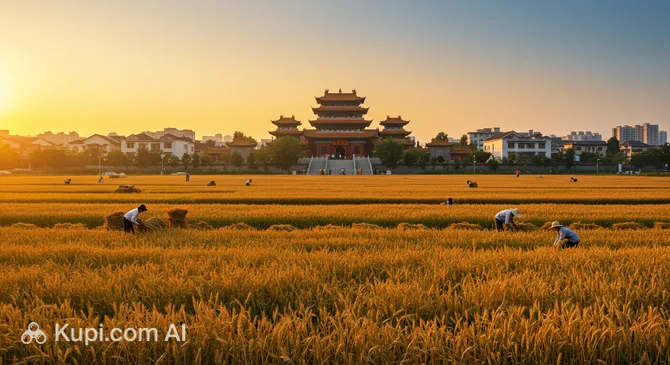
Dehui is a dynamically developing county-level city located in Jilin Province in northeastern China. Situated in the heart of the fertile Songliao Plain, the city has the unique atmosphere of an industrial hub closely intertwined with the region's agricultural traditions. It is a place where large-scale agricultural production meets modern logistics, creating the image of an energetic working center.
Geographically, the city occupies a strategic position, serving as an important satellite to the Changchun metropolis. With a population of over 800,000 people, Dehui is a significant administrative and industrial player in its province. The climate here is distinctly continental, which determines the seasonal rhythm of life: from snowy winters to bright, warm summers.
Dehui. Illustration.
Source: Kupi.com AI
The city's rich history reflects stages of rapid growth—from a small settlement to a major logistics hub. Although Dehui is not a typical tourist destination with an abundance of ancient temples, it attracts explorers of the "real" China with its sincerity, vast industrial landscapes, and the opportunity to see the daily life of a major production hub from the inside.
We invite you to visit Dehui to experience the industrial power of the country's northeast and enjoy the hospitality of a region that feeds millions and serves as an important link in the transport chain of the Middle Kingdom.
Weather Overview
The weather in Dehui is determined by a moderate continental climate, typical of the northeastern regions of China. Travelers should be prepared for significant seasonal temperature drops: severe and frosty winters here give way to warm and humid summers. It is best to check detailed information about what the Dehui climate will be like during your visit in advance.
The winter months, especially January, are characterized by frosts with average values around -14°C, while at night the temperature can drop to -20°C. Summer, on the contrary, delights with warmth: in July, the air warms up to an average of +25°C. Most precipitation falls during the summer period, often in the form of short but intense rains, while winter remains relatively dry and sunny.
When planning a trip, keep in mind that the transitional seasons—spring and autumn—are quite short. During this time, the weather can be changeable, with sharp gusts of wind typical of the Songliao Plain. The most comfortable time to visit the city is considered to be late spring or early autumn, when the air temperature is most pleasant for walking and exploring the city's industrial landscapes.
Average monthly temperature
Average monthly precipitation
Interesting Facts
Symbolic Name: The name Dehui did not appear by chance—it was formed by merging the last characters of two ancient townships, Mude and Huaihui, which once merged into a single administrative unit.
Centuries of History: The county officially received its status over a hundred years ago—on May 24, 1910, during the final years of the great Qing Dynasty.
Large Territory: The county-level city covers an impressive area of more than 3,017 square kilometers, making it one of the significant spatial hubs in Jilin Province.
Transport Hub: Due to its location, Dehui is integrated into a network of high-speed highways, becoming a key logistical link between the northern provinces.
Demographic Status: The city ranks 19th in population within its province, being home to hundreds of thousands of hardworking residents.
How to Get There
The transport accessibility of Dehui is due to its favorable position near key highways in northeastern China. The city is an important connecting link providing easy access to regional centers. Travelers should study information on how to get there in advance, as the infrastructure here is focused on high population mobility.
The main way for international tourists to arrive remains a flight to the nearest major air hub. This is most often the metropolis of Changchun, located only about 40–60 kilometers from Dehui. A trip by taxi or rental car on high-speed highways will take from an hour to an hour and a half, depending on the traffic situation when leaving the provincial capital.
Railway communication is another reliable and popular option. Dehui Railway Station receives regional trains connecting the city with neighboring settlements and the administrative center. This is a convenient and budget-friendly way to travel, allowing you to enjoy views of the Songliao Plain from the train window.
Bus service is also well-developed: regular flights depart from bus stations in neighboring cities. If you are planning a trip from Changchun, regional buses can be an excellent alternative to the train, providing flexibility in scheduling and the ability to reach specific areas of the city.
Main Attractions
In the classical sense, Dehui can hardly be called a tourist center; however, its character is remarkable in its own way for those who want to see the industrial and agricultural power of modern China. The main objects of interest here are not ancient pagodas, but large-scale modern complexes reflecting the city's status as a major logistics and processing hub in Jilin Province.
The city's central districts are concentrated around modern administrative buildings and spacious squares where locals gather in the evenings. Walking through the center, you can appreciate the scale of development and visit large shopping quarters, which are the focal points of urban activity. For fans of industrial aesthetics, the warehouse and production zones demonstrating the region's technological progress may be of interest.
Special attention should be paid to the city's surroundings. The fertile lands of the Songliao Plain surrounding Dehui consist of endless agricultural fields. A trip outside the city limits allows you to see the scale of Chinese farming, which is especially impressive during the flowering or harvest seasons. Dehui is a place for those seeking an authentic experience of the industrial heart of the northeast, free from tourist gloss.
Local Cuisine
The gastronomic face of Dehui is a vivid reflection of the traditions of northeastern China, known as Manchurian cuisine. Hearty and warming dishes based on wheat, corn, and soy are highly valued here. The region's cuisine is characterized by simplicity, the use of high-quality local products, and impressive portion sizes, making a meal in local establishments truly soul-satisfying.
Be sure to try the classic local noodles and various types of dumplings, which are prepared here with dozens of filling options. Since Dehui is a poultry processing center, chicken and duck dishes are presented in abundance and are exceptionally fresh. Don't miss the chance to taste cornmeal dishes and traditional preserved vegetables, which are especially popular during the cold season.
The food culture in the city is centered around authentic restaurants for locals and bustling markets. You will rarely find fine-dining establishments here, but it is easy to find places with honest home-cooked food where workers and employees dine. Popular drinks include strong Chinese tea and local beer brands. A gastronomic journey through Dehui is a great chance to get acquainted with practical and hearty cuisine that warms and gives strength to the residents of this harsh but hospitable region.
Travel Tips
A trip to Dehui is a great opportunity to see the real industrial China, and these practical tips will help make your journey as comfortable as possible.
Clothing and Seasonality: The climate in Jilin province is contrasting. In winter, warm clothing that protects against the wind is essential, while in summer, light items made from natural fabrics are best. Be sure to bring comfortable shoes for walking around industrial zones and shopping centers.
City Transport: The best way to get around is the Didi app for hailing taxis. Public buses can be overcrowded during peak hours, and knowing the routes requires language skills.
Finances and Payment:AliPay and WeChat Pay are accepted almost everywhere. International cards do not work in all small shops, so always carry a small supply of cash Yuan. Tipping is not customary in local establishments.
Communication: English is not widely spoken in Dehui. Be sure to download an offline translator and save your hotel address in Chinese characters.
Health: Pharmacies are common, but international drug names may differ. It is recommended to have a basic first-aid kit with you. Drink only bottled or boiled water.
Local Etiquette: Residents of Dehui are friendly but reserved. Greet people with a slight nod. Restaurants are noisy—this is a sign that guests enjoy the food, so don't be startled.
What to Avoid: It is not recommended to walk in remote industrial zones after dark. Try not to photograph objects related to security or government departments.
Connectivity: For stable internet, it is best to buy a local SIM card at the arrival airport (for example, in Changchun), as Wi-Fi in hotels may require a Chinese phone number for authorization.
Be open to new experiences, and Dehui will reveal itself to you as a sincere and hardworking city with a strong character!
Entertainment & Nightlife
The entertainment sector in Dehui is primarily focused on the daily leisure of local residents and workers, creating a special, relaxed atmosphere. The city's nightlife is concentrated around large shopping centers and specialized recreation zones. The most popular entertainment formats remain numerous karaoke clubs (KTV), where it is customary to spend time in large groups, and cozy massage parlors offering traditional restorative treatments.
Cinemas located in central malls show both world premieres and the latest Chinese films, becoming a magnet for young people. The gastronomic component of nightlife is represented by noisy street markets and small night restaurants where you can try local delicacies in a very casual setting. Safety in the city is high, but for night walks, tourists are advised to stick to the central, well-lit streets.
For large-scale entertainment, such as major nightclubs or concert venues with international artists, Dehui residents often head to neighboring Changchun. However, if you appreciate a quiet rest, visiting local coffee shops, or an evening stroll through busy shopping districts, Dehui will offer you sincere and simple hospitality without the excessive bustle of a metropolis.
Parks & Museums
Dehui's park and museum infrastructure reflects its status as an industrial and agricultural hub, where outdoor recreation is closely linked to the daily lives of citizens. There are no large-scale historical museums of global significance in the city itself, but local cultural centers and exhibition halls allow you to learn about the stages of the region's development and its achievements in agriculture. Greenery is mainly concentrated in residential quarters and along the main avenues, creating cozy areas for evening strolls.
For a full rest in the fresh air, residents often use public spaces in the central part of the city, where squares are equipped for traditional dancing and sports. The surroundings of Dehui, which are the endless Songliao Plain, open up prospects for rural tourism. Visiting demonstration agricultural sites can be a unique experience for those interested in the scale of modern agro-production in China.
If you crave classical museums with rich collections of artifacts or huge landscape parks with lakes, the best solution would be a trip to neighboring Changchun. Nevertheless, Dehui charms with its simplicity: here you can see how modern industrial areas harmoniously coexist with green spaces, creating a comfortable environment for the lives and work of hundreds of thousands of people.
Getting Around
The transport system of Dehui is highly functional and designed to provide a connection between residential areas and production zones. The core of public transport consists of bus routes that cover almost all important points in the city. Service intervals can vary, so tourists are recommended to use local maps to track routes in real time.
For faster and more comfortable trips around the city, taxis and ride-hailing services (such as Didi) are ideal. This is the most reliable way to get around, especially if you are not fluent in reading characters at bus stops. The cost of trips around the city remains very affordable, making taxis the primary choice for foreign guests.
During the warmer months, bike rentals and e-scooters are popular—an excellent way to feel the rhythm of the city and avoid traffic jams during peak hours. Since Dehui is actively developing as a logistics center, the main roads here are in good condition. If you are planning a trip to neighboring Changchun, it is best to use a suburban bus or train, which will ensure maximum speed and convenience.
Accommodation
The hotel infrastructure in Dehui is primarily geared towards business travelers and specialists visiting city enterprises. Mid-range hotels and functional guesthouses predominate here, offering a basic level of comfort at very affordable prices. Most accommodation facilities are concentrated in the central districts, in close proximity to administrative buildings and shopping areas.
For those looking for a standard international level of service and luxurious interiors, the choice in Dehui itself may be limited. In such cases, experienced travelers often prefer to stay in hotels in neighboring Changchun, where global hotel chains are represented. However, staying directly in Dehui provides an opportunity to fully immerse yourself in the local environment and significantly save on your budget.
When planning a trip, it is recommended to book accommodation in advance through popular Chinese services, as the best options may be occupied during periods of business activity or agricultural exhibitions. Pay attention to the availability of registration for foreign citizens at the chosen hotel, as not all budget hotels have the corresponding license. Overall, accommodation in Dehui is a practical choice for those who value functionality and a convenient location relative to transport hubs.
Nearby Cities
Dehui serves as an excellent starting point for exploring Jilin Province, offering convenient access to neighboring cities, each with its own unique character. Proximity to major transport arteries allows for interesting day trips, expanding the horizons of your journey through northeastern China.
The undisputed leader among destinations is Changchun, located less than an hour's drive away. It is a massive metropolis where major museums are concentrated, such as the Museum of the Imperial Palace of the Manchu State, along with magnificent parks. It is also worth paying attention to Nong'an and Jiutai, which offer a calmer pace of life and the opportunity to get acquainted with the local culture and daily life of the region's smaller towns.
For those ready to go a little further, an interesting option would be a trip to Shuangcheng or the modern Songyuan, known for its natural landscapes. We highly recommend not limiting yourself only to the Dehui city center and taking the opportunity to see the diversity of neighboring districts, each of which will complement your understanding of life in this part of China.
Shopping & Souvenirs
Shopping in Dehui is primarily a practical experience focused on the needs of the local population, making it very interesting for tourists looking for authentic goods at reasonable prices. The city does not claim the title of a fashion capital, but it offers an excellent selection of everyday goods, high-quality electronics, and locally produced items. Main commercial activity is concentrated in the central quarters, where modern shopping centers stand alongside traditional markets.
Dehui's large malls offer a standard set of international and Chinese brands of clothing, shoes, and cosmetics. However, for true local flavor, you should head to the city markets. Here you can find the freshest food products, unique spices, and textiles. Pay special attention to meat delicacies and poultry products—these are the city's gastronomic calling card, which many take home as practical souvenirs.
Shops usually operate from early morning until late evening, and payment in most places is made through popular mobile applications (AliPay, WeChat Pay), although cash is also accepted. If you require a wider selection of luxury goods or specific souvenirs, we recommend setting aside a day for a trip to Changchun. But it is in Dehui that you can shop in the atmosphere of real, vibrant China, away from the zones overcrowded with tourists.