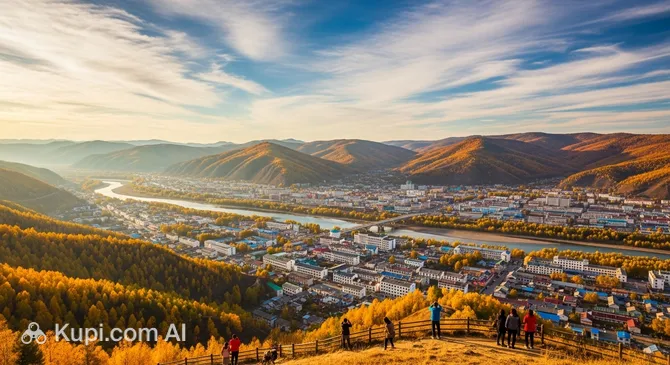
Located in Heilongjiang Province in northeastern China, Shangzhi is a distinctive county-level city that forms part of the Harbin metropolitan area. Home to more than half a million people, this location harmoniously combines the rhythm of provincial life with the charm of northern nature. The city does not strive to be a bustling metropolis, maintaining an atmosphere of peace and comfort that makes it attractive to those seeking an authentic Chinese experience away from the beaten tourist paths.
Shangzhi. Illustration.
Source: Kupi.com AI
The history of the city is deep and fascinating: founded in the early 20th century as Zhuhe County, it received its current name in 1946 in honor of the national hero Zhao Shangzhi, who led the resistance in these parts. Geographically, the county stretches across hilly plains surrounded by dense forests, which has predetermined the development of ecological and seasonal tourism here.
Today, Shangzhi is primarily known for its skiing opportunities and developed agriculture. Tourists come here for active winter recreation on the local slopes and the chance to get acquainted with the lifestyle of the country's northeastern regions. We invite you to discover this hospitable corner where history and nature intertwine into a unique pattern of daily life.
Weather Overview
The climate in Shangzhi has a pronounced continental character typical for the northeast of the country. Here you will feel all the charm and severity of real seasons. For those who want to prepare for the trip in advance, we recommend checking the current weather in Shangzhi before packing your suitcases.
Winters here are harsh, long, and dry. In January, the average temperature stays around -16°C but often drops to -25°C and below. It is precisely these frosts combined with snowfalls that create ideal conditions for the operation of ski resorts. Summer, by contrast, is moderately warm and quite humid: in July and August, the air warms up to +23...+27°C, and most of the annual precipitation falls during this time.
Expect a frosty and sunny winter with rare but heavy snowfalls, as well as a pleasant warm summer with occasional rains. The transitional seasons—spring and autumn—pass quite quickly, bringing frequent changes in winds and a gradual change of scenery from snow-white plains to the dense greenery of forests.
Average monthly temperature
Average monthly precipitation
Interesting Facts
Shangzhi received its modern name in 1946 in memory of the legendary hero Zhao Shangzhi, who died in this region while fighting for the country's independence.
The area of the county-level city is almost 8,891 square kilometers, making it one of the most extensive administrative units within Harbin.
The city is located at an altitude of about 119 meters above sea level, and its landscape is a picturesque combination of plains and low hills.
The region's economy relies heavily on "white gold"—winter tourism and skiing, which have become a true hallmark of the county.
Despite its provincial nature, Shangzhi is in the same time zone as Beijing (UTC+8), although geographically it is located significantly further east.
How to Get There
The transport accessibility of Shangzhi makes it a convenient destination for those planning a trip across northeastern China. The city does not have its own airport; however, its proximity to major transport hubs makes it easy to plan a route. If you are looking for detailed information about flights and tickets, it is worth researching how to get to Shangzhi in the most optimal way beforehand.
The nearest international aviation hub is Harbin Taiping Airport (HRB). This is a modern terminal receiving flights from many cities in China and abroad. From the airport, the county can be reached by transfer, intercity bus, or taxi, which takes about 2-2.5 hours depending on traffic conditions.
Railway transport is the most popular way to get around in this region. An important line passes through the city, connecting it with the provincial capital. Shangzhi Railway Station receives both regular and high-speed trains from Harbin. The journey on a high-speed train takes just over an hour, making the trip fast and comfortable.
For those who prefer car travel, the G10 highway (Suifenhe–Manzhouli Expressway) passes through the county. Intercity buses depart regularly from the Harbin bus station, ensuring stable communication with Shangzhi throughout the day.
Main Attractions
While Shangzhi is not a classic sightseeing center with an abundance of ancient monuments, it attracts travelers with its natural wealth and opportunities for active recreation. The main point of attraction during the winter period is the ski resorts located in the city's surroundings. These recreation areas offer quality trails amidst picturesque snow-covered forests, making the county an important part of the province's winter sports map.
For those who prefer quiet walks, the central squares of the city are of interest. Here you can observe the daily life of local residents, visit small public gardens, and see administrative buildings whose architecture reflects the modern style of northeastern China. These are excellent places to feel the rhythm of a provincial county and enjoy its unhurried atmosphere.
The natural surroundings of Shangzhi are its main treasure. The surrounding hills and vast forest tracts are suitable for light trekking and walks in the fresh air during the warmer months. Although there are no world-class museums here, nature itself and the opportunity to see the "real" China without tourist gloss are the main incentives for many to visit this region.
Local Cuisine
A gastronomic journey in Shangzhi is, above all, an introduction to Northeastern Chinese cuisine (Dongbei). Its main features are heartiness, an abundance of meat, and the use of local products. Be sure to try jiaozi (dumplings) with various fillings and stewed pork with vegetables. Local chefs masterfully prepare dishes from mushrooms and wild forest products gathered in the county's woods, giving the food a unique taiga aroma.
A special place on the table is occupied by sauerkraut, which is often stewed here with noodles and bacon—it is the perfect warming dish for the harsh northern winters. In street stalls and city markets, you can find freshly baked flatbreads and various skewers prepared right in front of you. A characteristic feature of the local table is the impressive portions, which are traditionally shared in a large group.
Regarding drinks, strong tea and local light beer are popular in Shangzhi. During the cold season, many prefer baijiu—a traditional strong alcohol that perfectly complements fatty meat dishes. A meal in this region is always more than just eating; it is a manifestation of hospitality and a reason for long conversation in a warm atmosphere.
Travel Tips
A trip to Shangzhi promises to be an interesting adventure into the heart of northeastern China, and these tips will help you make it as comfortable and safe as possible.
Clothing and gear: If you are traveling in winter, bring the warmest clothes possible—temperatures can drop to -30°C. Thermal underwear, a high-quality down jacket, and warm boots are essential. In summer, things for forest walks and insect repellent will come in handy.
Transport: Within the city, it is most convenient to move by taxi. Install the Didi app—it will save you from having to explain the address to the driver. For trips to Harbin, use high-speed trains.
Finance: The primary currency is the yuan. International cards are rarely accepted, so be sure to set up Alipay or WeChat Pay by linking your card. It is worth having cash on hand for small markets.
Health and Safety: Shangzhi is a safe city. Pharmacies can be found in the center, but it is better to bring specific medications with you. Drink only bottled or boiled water.
Communication: English is almost unknown here. Download an offline translator and save cards with the hotel address and station in Chinese beforehand.
Local Etiquette: Be polite and patient. Loud talking in restaurants is normal for this region. When entering a private home or some small shops, it is customary to remove your shoes if the owners indicate so.
What to avoid: Do not plan important taxi trips during heavy snowfall without extra time—roads may be closed or very congested. Do not photograph military or government facilities.
Additional tip: Try the local wild mushrooms in one of the local restaurants—they are a true gastronomic symbol of the county.
May your introduction to this northern land be filled with bright impressions and warm encounters!
Entertainment & Nightlife
The entertainment scene in Shangzhi is primarily focused on daytime activities and quiet relaxation. Here you will not find the noisy nightclubs or large-scale concert venues typical of major metropolises. The city's life quiets down with the arrival of dusk, giving way to cozy family evenings and walks along the illuminated central streets.
The main form of leisure for locals is karaoke bars (KTV) and small cafes in the center of the county where you can spend time with friends. During the winter season, the focus of entertainment shifts entirely towards the ski bases, which offer not only skiing but also evening gatherings in the traditional northern style.
For those who crave a more dynamic nightlife, bars, and cinemas, a trip to neighboring Harbin is an excellent option. The journey takes no more than two hours, allowing tourists to combine the silence of provincial Shangzhi with the vibrant entertainment of a major center.
Parks & Museums
The cultural and natural landscape of Shangzhi is closely linked to its historical heritage and northern climate. Although there are no huge state museums in the city, you can find exhibitions dedicated to the hero Zhao Shangzhi and the history of the anti-Japanese resistance. Such small memorial exhibitions allow for a deeper understanding of why local residents are so proud of their city and its name.
The main "park" for Shangzhi is nature itself. The surrounding forests and hilly recreation areas provide residents and guests of the city with fresh air and space for walks. Within the county, there are landscaped squares with typical Chinese sports grounds, where in the mornings and evenings you can see people practicing gymnastics or dancing.
For larger-scale walks, it is worth heading to the forest tracts outside the urban area. There, nature appears in all its majesty, offering silence and peace. This lack of large urban parks is more than compensated for by the clean air and the beauty of natural landscapes, which are particularly picturesque during the golden autumn or snowy winter.
Getting Around
The public transport system in Shangzhi is mainly represented by an extensive network of buses and route taxis. Buses connect the city center with its outskirts and nearby villages. This is an affordable and convenient way to get around for local residents; however, tourists should keep in mind that schedules may not always be stable, and the signs on routes are exclusively in Chinese.
Taxis are the most comfortable option for trips around the county. Both traditional services and the popular Didi app operate in Shangzhi. The cost of a trip within the city is low, and the travel time to any significant point rarely exceeds 20–30 minutes. In winter, when roads may be covered with snow, taxi services become especially in demand.
The central part of the city is quite suitable for walking, especially in the warm season. There are no subways or trams in the county, which is typical for settlements of this type. If you plan to visit remote natural areas or ski resorts, it is better to book a transfer in advance or arrange a round-trip with a taxi driver.
Accommodation
Accommodation options in Shangzhi largely depend on the purpose of your visit. Most hotels are concentrated in two areas: in the administrative center of the county and directly near the ski slopes. In the city itself, mid-range hotels and budget guesthouses predominate, offering the basic comfort and hospitality characteristic of China's northern regions.
For fans of active winter recreation, hotels at the resorts are the best choice. Here you can find more modern rooms geared towards tourists who have come for skiing and snowboarding. It is worth noting that during the peak ski season (December–February), rooms in such establishments are booked very quickly.
If you are planning a short stopover or a business trip, it is worth looking at business hotels in the center of Shangzhi. Prices here are usually lower, and the proximity to transport hubs and local markets is an added advantage. There are practically no international hotel chains in the county, so be prepared for authentic service in the local language.
Nearby Cities
The city of Shangzhi serves as an excellent starting point for exploring Heilongjiang Province, offering travelers convenient access to interesting locations in the northeast of the country.
The absolute leader for a day trip is Harbin. Located about 120 kilometers away, this metropolis amazes with its "Russian" architecture, the majestic Saint Sophia Cathedral, and the famous winter Ice and Snow Festival. You can get there in just an hour by high-speed train.
If you want more nature and silence, it is worth paying attention to the city of Hailin, which is famous for its picturesque surroundings and lakes. Another interesting destination is Shulan, a trip to which will allow you to dive even deeper into the atmosphere of the Chinese province and see the lifestyle of rural areas.
Exploring the surrounding cities will help you form a complete picture of the multifaceted nature of the region, where modern industrial centers sit alongside endless forests and cozy counties.
Shopping & Souvenirs
Shopping in Shangzhi is more of a hunt for unique local delicacies and everyday goods than a trip to world-brand boutiques. Trade here is concentrated on the lively central streets and markets, which are the heart of city life. Tourists appreciate the opportunity to purchase the freshest gifts of the forest here: dried mushrooms, pine nuts, and medicinal herbs for which Heilongjiang Province is famous.
If you are looking for souvenirs, look for items related to the ski theme or small crafts by local artisans. The city markets are an excellent place to buy quality warm clothing and winter gear at very attractive prices, as the region lives by winter sports.
There are no large shopping centers in the Western sense in the county, but there are many specialized shops and small trade houses. Most outlets operate from morning until late evening, and payment is most often made through the popular Chinese apps WeChat Pay and Alipay, although cash is still in use in small shops. For large-scale brand shopping, locals usually head to neighboring Harbin.