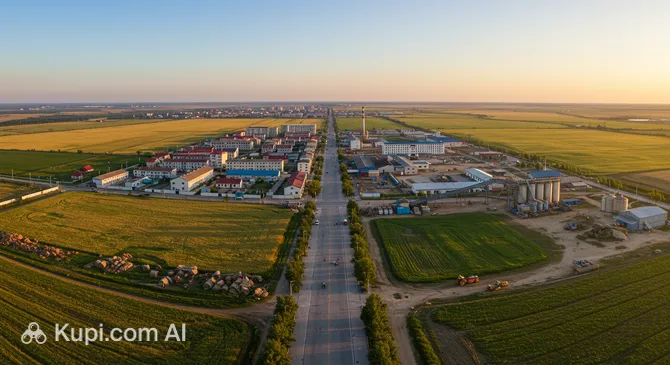
Anda is a peaceful and welcoming city in Heilongjiang Province, located in the heart of northeastern China. The city does not strive to be a flashy tourist center, winning over travelers with its sincerity, utilitarian architecture, and the atmosphere of a real, rather than "picture-perfect," China. With a population of over 520,000, Anda serves as an important administrative and transport hub for the region.
Geographically, the city is situated on the Songliao Plain, which defines its agricultural significance. Anda. Illustration.
Source: Kupi.com AI
An introduction to this place is inextricably linked to Anda's history, which began to develop actively thanks to the construction of the Chinese Eastern Railway. To this day, one can feel the industrial rhythm of life here, closely intertwined with the traditional way of life of the northeastern provinces.
One of Anda's unique features is its reputation as the "city of milk and soy." This agricultural focus makes the local markets a true paradise for lovers of fresh, natural products. If you are looking for a place to see the everyday life of a Chinese province without the bustle of megacities, Anda will be an excellent point on your itinerary through Heilongjiang.
Weather Overview
The climate of Anda has a pronounced continental monsoon character, typical for China's northern latitudes. Travelers should prepare for significant seasonal temperature fluctuations. The city's weather is characterized by a long, dry, and freezing winter, as well as a short but quite warm and humid summer.
In winter, especially in January, the temperature can drop to -22°C and below, so warm clothing is a mandatory attribute of the trip. Summer months, on the contrary, please with warmth: in July, the average maximum is around +28°C. Most of the precipitation falls in the summer, often in the form of short but intense rains. Autumn and spring in the region are fleeting but feature clear skies and comfortable coolness, making these periods successful for transit visits.
Average monthly temperature
Average monthly precipitation
Interesting Facts
The name of the city Anda has Mongolian roots and comes from the word "nairamdal," which translates to "friendship."
The city received official county-level city status on June 23, 1964, by decision of the State Council of the PRC.
The historic Harbin-Manzhouli railway line passes through Anda, which is a key section of the former Chinese Eastern Railway.
Despite its industrial status, Anda is known in Heilongjiang Province as an important center for the production of dairy products and soy.
How to Get There
The transport accessibility of Anda is largely determined by its favorable position on the railway line connecting Harbin and Manzhouli. This makes the city a convenient transit point for travelers exploring the northeast of the country. Detailed information on how to get to the city will help you plan your route as efficiently as possible.
The nearest major air hub is Daqing Airport, located just 30 kilometers from the city. From there, you can reach the center of Anda by taxi or shuttle bus in about 40–60 minutes. Many tourists also prefer to fly into Harbin International Airport, as the choice of flights there is significantly larger, and the subsequent train journey to Anda takes no more than two hours.
Railway transport is the heart of Anda. The local station accepts both regular and high-speed trains. A trip from Harbin will take about 1–2 hours, while from neighboring Daqing, it takes only 20–40 minutes. Thanks to regular service and affordable prices, the railway remains the most popular way to arrive in the city.
While Anda is not on the list of major tourist destinations, it preserves unique evidence of the era when the Chinese Eastern Railway was built. The most valuable monument is an old two-story house in the Russian architectural style, built in the late 19th and early 20th centuries. This is a rare example of European architecture for this region, serving as a reminder of the time when the city was an important link in the railway connection between Harbin and Manzhouli.
The centers of urban life are the spacious municipal squares. They become especially colorful in the evening hours when local residents gather for traditional Chinese dancing and Tai Chi sessions. Strolling here, you can feel the true rhythm of provincial China, free from crowds of foreign tourists.
It is also worth paying attention to the railway station building. As a key infrastructure object, it reflects the functional style of modern Chinese transport hubs and is the best place to observe the dynamic life of the city, where the paths of workers, traders, and travelers constantly cross.
Local Cuisine
The gastronomic landscape of Anda is classic Northeastern Chinese cuisine (Dongbei), famous for its hearty dishes and large portions. The basis of the diet here consists of pork, soy, noodles, and various vegetables. Be sure to try chaomian (fried noodles) and traditional baozi (steamed dumplings), which are prepared with special skill in local establishments.
One of the region's highlights is dishes using sauerkraut, which are served in rich soups. The city's gastro scene is mainly represented by cozy family restaurants and lively street markets. It is at the markets that you can experience the true taste of Anda by trying shaokao skewers or fresh soy milk, which is considered some of the best in the province here.
For drinks, locals prefer green tea or local beer, which perfectly complements the hot and spicy dishes of the Northeast. In Anda, you won't find fine dining restaurants with Michelin stars, but the home-cooked taste and sincerity of the local cuisine will leave you with the warmest memories.
Travel Tips
Preparing for a trip to a small Chinese city requires attention to detail. These practical tips will help you feel confident and get the most out of your visit to Anda.
Seasonal clothing: The region's climate is harsh. In summer, bring light clothing and sunscreen, but in winter, you will need serious freeze-proof gear, as temperatures can drop to -30°C. Comfortable shoes for walking the city streets are essential.
Getting around the city: Use taxis—they are cheap and convenient. Install the Didi app, but be prepared that drivers do not speak English. Buses are a good option if you know your route in advance.
Finances and payment: Be sure to have cash yuan with you and the Alipay or WeChat Pay apps installed. International cards are only accepted at very large banks, so cash is your main insurance.
Health: Pharmacies are common, but medicine names will be in Chinese. It is recommended to have a basic first-aid kit with you. You cannot drink tap water—use only bottled water.
Language barrier: English is almost non-existent in Anda. Download an offline translator and carry a card with the name of your hotel and the station in Chinese characters.
Local etiquette: Residents of Anda are friendly but may show curiosity toward foreigners. Be polite; a greeting with a nod of the head is always appropriate. Tipping is not customary in restaurants.
What to avoid: Do not discuss political or sensitive topics to avoid awkward situations. Avoid photographing restricted facilities or people in uniform without permission.
Digital comfort: To access your usual social networks and services, take care of a reliable VPN service in advance or purchase a special tourist SIM card.
May your journey to Anda be a brilliant discovery of the real China, full of tranquility and hospitality!
Entertainment & Nightlife
The entertainment scene in Anda is primarily oriented toward local residents, so it is difficult to find noisy nightclubs or conceptual bars here. The main form of evening leisure is the numerous karaoke bars (KTV) located in the central part of the city. This is an ideal place to get acquainted with the local leisure culture, where soulful singing with friends and a relaxed atmosphere are highly valued.
For those who prefer daytime entertainment, the city offers strolls along the main streets and visits to local markets, which turn into lively open-air food courts by evening. Here, you can not only try street food but also observe the residents' daily lives. If you crave larger-scale entertainment—cinemas, amusement parks, or modern shopping malls—you can reach the neighboring city of Daqing in just half an hour.
Safety in the city is at a high level, which is typical for the Chinese provinces. Walking through the central districts of Anda is safe even in the evening. For nighttime travel, it is best to use an official taxi, which can be easily hailed via mobile apps or caught on the main roads.
Parks & Museums
Park culture in Anda is represented by small but cozy green zones located within the city's three main street committees. These parks serve as the primary recreation spot for residents: there are walking paths, outdoor exercise equipment, and conditions for a peaceful pastime among trees and decorative shrubs.
Although there are no large state museums in the city itself, the role of an open-air historical museum is played by the preserved objects of the Chinese Eastern Railway. An observant traveler will find old technical buildings and residential houses here that tell the story of Anda's industrial past better than any exhibition.
For those seeking large-scale natural areas or botanical gardens, a short trip to neighboring Daqing is recommended, where park art is more extensively represented. However, for a morning jog or leisurely observation of the daily life of local residents, Anda's city squares are perfect.
Getting Around
The public transport system in Anda is simple and efficient. The main way to get around the city is by buses and fixed-route taxis, which connect the railway station with residential areas and adjacent villages. A trip between the city's main points usually takes 10 to 30 minutes, making movement very fast.
Payment on buses is made in cash upon entry or via QR codes of payment systems. Fares are extremely affordable. Despite the lack of a metro, the city does not suffer from serious traffic jams, although public transport can be quite crowded with locals during peak hours.
As a convenient alternative to buses, taxis are inexpensive in Anda (averaging 5–20 yuan for a trip around the city). In summer, bicycles become a popular means of transport. Thanks to the flat terrain, a bike ride along Anda's wide streets is a great way to explore the city at your own pace.
Accommodation
Accommodation options in Anda are primarily aimed at business travelers and transit passengers. The highest concentration of hotels is found in the railway station area and along the main streets. Mid-range hotels and budget guesthouses predominate here, offering a standard set of services for a comfortable stay.
For those planning to stay in the city longer, rental apartments are available. There are almost no luxury five-star international chain hotels in Anda; however, local hotels please with affordable prices and traditional Chinese hospitality. It is worth considering that in some budget hotels, the staff may not speak English.
We recommend booking accommodation in advance, especially if your trip coincides with Chinese national holidays. Major booking systems offer a wide range of options in the central part of the city, ensuring you have convenient access to transport hubs and local markets.
Nearby Cities
Anda's location makes it an excellent starting point for exploring the industrial and cultural giants of Heilongjiang Province. Thanks to the developed railway connection, many interesting places are accessible for a day trip.
Just 26 kilometers away is Daqing—the oil capital of China, where it is worth visiting the Oil Museum and modern city parks. If you want to immerse yourself in the atmosphere of the "Paris of the East," head to Harbin (about 110 km), famous for its Saint Sophia Cathedral and Russian-style architecture. Also of interest for a short trip are the cities of Shengping and Zhaodong, each revealing the flavor of Northeast China in its own way.
Exploring the surroundings of Anda will allow you to see the contrast between the quiet province and dynamic metropolises. Traveling on local commuter trains will be an interesting experience in itself, allowing you to admire the endless plains and agricultural lands of the region.
Shopping & Souvenirs
Shopping in Anda is primarily an introduction to local life. There are no giant shopping and entertainment centers in the city, but the central streets abound with stores for clothing, household appliances, and electronics. The main commercial activity is concentrated around the county center, where modern signs sit alongside traditional shops.
Special attention should be paid to the local food markets. Anda is famous for its agricultural products, so high-quality soy products and local grain delicacies are often taken from here as useful souvenirs. You can also find inexpensive clothing and home goods at the markets that reflect the daily needs of northeastern residents.
Shops usually operate from early morning until 8–9 PM. Payment in most places is made via mobile apps like WeChat Pay or Alipay; however, it is useful to have cash yuan on hand in small shops and at markets. If you are looking for brand-name items or international labels, it is better to head to the shopping malls of Harbin or Daqing.