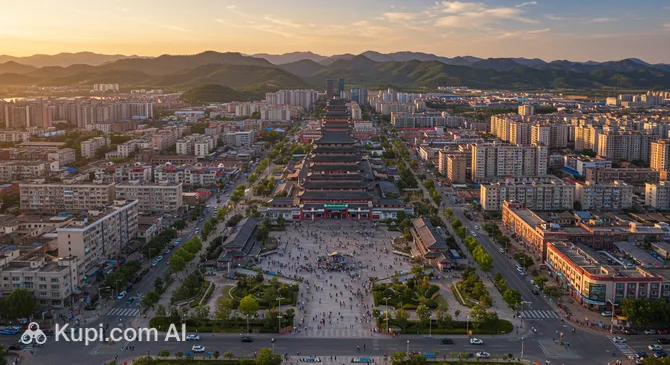
Dunhua is a dynamic county-level city in the Yanbian Korean Autonomous Prefecture of Jilin Province, located in Northeast China. The city combines the features of an important industrial center and a cozy regional hub, where Chinese and Korean cultures are closely intertwined. With a population of approximately 483,811, it offers the atmosphere of a bustling yet manageable city focused on daily life and family values.
Geographically, Dunhua is surrounded by picturesque mountainous terrain, which gives the urban landscape a special charm. Although the city is largely industrial, it has attracted more attention in recent years thanks to its rich heritage. Historically, these lands were closely linked to the Manchu people and ancient states, making the study of the local past a fascinating journey for any curious tourist.
Dunhua. Illustration.
Source: Kupi.com AI
Key highlights of Dunhua include the majestic temple complex on Liudingshan Mountain and its proximity to nature reserves. The city is ideal for those who want to see the "real" China without the tourist gloss, get acquainted with life in the northeastern provinces, and enjoy the silence at the foot of the mountains. We invite you to discover this unique corner of Manchuria, where the traditions of the past meet the rhythm of modern industry.
Weather Overview
The climate in Dunhua is distinctly continental, typical of the northeastern regions of China. The city is surrounded by mountains, which ensures fresh air but also influences seasonal temperature fluctuations. Expect warm, sometimes humid summers with comfortable daytime temperatures up to +25°C, and harsh, cold winters where the thermometer can drop to -20°C.
Precipitation is unevenly distributed: the peak of rain occurs in the summer months, especially in July and August, when up to 180–190 mm of moisture falls. Winter in the city is dry and sunny, with stable snow cover that lasts for several months. Transition seasons—spring and autumn—are quite short but delight with picturesque changes in the mountain landscape. To better plan your wardrobe, we recommend checking the weather in the city in advance.
Thanks to the Liudingshan mountain relief, the air in Dunhua remains cleaner than in large industrial metropolises, although the proximity to production zones can sometimes be felt. During the spring period, be prepared for potential dust storms coming from northern regions, though this phenomenon is temporary. Overall, the city is beautiful at any time of year if you have chosen the right clothing for the season.
Average monthly temperature
Average monthly precipitation
Interesting Facts
Dunhua holds many surprising stories that reflect the spirit of Northeast China and its unique cultural diversity.
The county was officially established in 1882, and its name was borrowed from ancient Confucian texts. Prior to this, the area had been closed to settlement for nearly two hundred years, as it was considered the "sacred homeland" of the Manchu emperors.
The city's territory was once part of the ancient state of Bohai (698–926 AD), which was a successor to the legendary kingdom of Goguryeo. The ancient burials on the sacred Liudingshan Mountain still serve as reminders of those times.
The city features one of the world's tallest outdoor statues of a sitting Shakyamuni Buddha—standing at 48 meters, symbolizing the 48 vows of Amitabha.
Due to its status within the Yanbian Korean Autonomous Prefecture, Korean influence is felt throughout Dunhua: from bilingual street signs to unique culinary traditions that combine the spice of Korean flavors with Chinese scale.
How to Get There
The accessibility of Dunhua makes it easy for tourists to reach this regional center. The city is well-connected to major metropolises in Jilin Province and neighboring regions, offering travelers a choice between air and ground transport. You can learn more about routes and travel options on the page describing how to get to the city.
For those who prefer flying, the main hub is Dunhua Airport (IATA: DNH). It is conveniently located near the city limits, and the journey to the center by taxi or shuttle bus usually takes no more than 20–30 minutes. Although the airport primarily serves domestic flights, it provides reliable connections to key cities in China.
Railway communication is one of the most popular ways to visit the city. Dunhua Railway Station receives trains from Changchun, Yanji, and Mudanjiang. For example, a trip from Changchun takes about 4–5 hours depending on the train type. Modern high-speed trains make the journey comfortable and allow you to enjoy views of the Manchurian mountains from the carriage window.
Additionally, intercity buses regularly arrive in Dunhua. The trip from Yanji takes only about an hour, and from Mudanjiang, it takes around 2–3 hours. The G12 and S2 highways provide good road surfaces, though the mountainous terrain requires careful driving. Foreigners should remember that driving a personal vehicle in China requires a local driver's license.
Main Attractions
Despite being primarily an industrial center, Dunhua boasts several unique sites worth visiting. The region's crown jewel is Liudingshan Mountain. This site features a majestic temple complex centered around a giant 48-meter-high Buddha statue overlooking the Mudanjiang River. It is a place for pilgrimage and peaceful walks, where the architecture harmoniously blends into the mountain landscape.
For history enthusiasts, the ancient tombs of the Bohai Kingdom, located near the same Liudingshan Mountain, are of great interest. This is a unique testament to the existence of a powerful kingdom that flourished on these lands over a thousand years ago. The archaeological finds and the atmosphere of the ancient necropolis allow visitors to touch the secrets of East Asian history.
Within the city limits, it is worth taking a stroll along the Mudanjiang River embankment. This is a favorite spot for locals where you can observe daily city life, visit small markets, or simply enjoy the fresh mountain air. For those ready for a short trip outside the county, Dunhua's proximity to the famous Changbaishan Nature Reserve makes it a convenient base for ecological expeditions.
Local Cuisine
The gastronomic map of Dunhua is a vibrant mix of Chinese and Korean culinary traditions. Thanks to its location in an autonomous prefecture, the city offers a unique opportunity to try authentic Yanbian cuisine. Spicy snacks like kimchi and various pickled vegetables, served with almost every meal, are incredibly popular here.
Among the signature dishes to try is cold noodles (naengmyeon)—a refreshing yet piquant dish especially popular during the warmer months. Don't miss the chance to taste hot soups with sauerkraut and local dumplings (mantu) prepared with various fillings of mountain herbs and meat. The Chinese side of the menu features classic Peking duck and rich beef noodles.
The food culture in Dunhua is simple and democratic. Most establishments are concentrated in the center, dominated by cozy family restaurants and street food stalls. For drinks, locals prefer green tea, Korean beer, and sweet soy beverages. The average restaurant bill is usually between 20 and 50 yuan, making culinary exploration accessible to any traveler.
Travel Tips
A trip to Dunhua is a great chance to see the real, non-touristy China, and these tips will help make your journey as comfortable as possible.
Clothing and Essentials: The climate here is continental, so dress in layers. Very warm clothes are mandatory in winter (temperatures drop to -20°C), while light clothing and an umbrella are needed for summer. For visiting the temples on Liudingshan Mountain, choose comfortable closed shoes, as there will be a lot of walking.
Transport: Within the city, it is most convenient to move by taxi or via the Didi app. For navigation, download Baidu Maps or Gaode, as Google services work with restrictions in China.
Finances: The main currency is the yuan. International cards are rarely accepted, so it is better to have a UnionPay card or cash. Be sure to set up Alipay or WeChat Pay for small purchases.
Health and Safety: The city is very safe, but it can be dusty in the industrial zones on the outskirts. Pharmacies are common in the center, but medicine names will be in Chinese—keep a list of necessary medications with you.
Communication: English is practically not spoken here. Be sure to download an offline translator. It is helpful to have a hotel card with the address in Chinese characters for taxi drivers.
Local Etiquette: Be polite and patient. A greeting with a light bow or a nod of the head is standard. In Korean restaurants, it is customary to remove your shoes if you are sitting on traditional raised platforms.
What to Avoid: Do not go on solo hikes on mountain trails in winter without a guide due to deep snow. Also, avoid discussing politics or controversial topics in conversations with locals.
Pro Tip: Be sure to try the street food at the evening markets—it is the fastest way to experience the true taste of the Yanbian region.
By following these simple rules, you will be able to fully enjoy the hospitality of Dunhua and bring home only the best impressions!
Entertainment & Nightlife
The entertainment scene in Dunhua is relatively quiet and primarily oriented toward local residents. You won't find loud, world-class nightclubs here, as the city lives at a measured, family-friendly pace. Karaoke bars (KTV) are the main hub of evening activity and are incredibly popular. This is a great way to experience local leisure culture, where large groups of friends gather to sing in private rooms.
Evening time is best spent near the Mudanjiang River or in the city's central squares. As dusk falls, street markets come alive, offering local delicacies and a chance to watch mass public square dancing—a traditional Chinese sight that brings people of all ages together. The atmosphere in the center is friendly and safe, perfect for leisurely walks.
For those looking for larger-scale entertainment or modern cinemas, travelers often head to the neighboring city of Yanji, which is about an hour away. Nevertheless, Dunhua offers its own unique charm: small, cozy cafes with a Korean touch and traditional tea shops allow for a soulful evening enjoying the tranquility of provincial China.
Parks & Museums
Natural areas in Dunhua are closely linked to the surrounding mountain landscape, creating excellent conditions for outdoor walks. The most significant site is the Liudingshan Cultural Park. It is not just a green zone, but a massive complex combining Buddhist architecture, sacred mountains, and the banks of the Mudanjiang River. Tourists come here for the panoramic views from the peaks and the peaceful atmosphere of the temple gardens.
In the city itself, park areas are more compact and designed for the daily recreation of residents. The squares along the Mudanjiang River offer well-maintained paths for jogging and gymnastics, while small islands of greenery in residential quarters provide cool shade on summer days. Despite the city's industrial status, its proximity to the mountains ensures fresh air, which sets Dunhua apart from million-plus metropolises.
The museum component of the city consists mainly of exhibits in temple complexes and small galleries dedicated to the history of the Bohai Kingdom. While there are no massive state museums in the city, local exhibitions allow you to get acquainted with the region's archaeological finds and Manchu traditions. To study the region's nature more deeply, travelers often head toward the Changbaishan Nature Reserve, the primary natural museum of all Northeast China.
Getting Around
The public transport system in Dunhua is simple and efficient, making it easy to navigate even for first-time visitors. The backbone of movement is the bus network, which densely covers both central blocks and the outskirts. Buses usually run every 10–20 minutes, though it is worth noting they can be crowded during morning and evening rush hours.
There is no metro in the city, but this is more than compensated for by the availability of taxis. You can hail a car directly on the street or use the popular Didi app. Trips within the city are inexpensive, averaging from 5 to 20 yuan. Due to Dunhua's medium size, traffic jams are extremely rare, making taxis the fastest and most comfortable way to get around.
For those who prefer active travel, the city center is ideal for walking or cycling. However, keep in mind the hilly terrain on the outskirts, which can be a challenge for an unprepared cyclist. Bus fares are paid in cash upon entry or via mobile payment systems, which have become the standard in modern China. A practical tip: always have the name of your destination in Chinese to show the driver.
Accommodation
Accommodation in Dunhua is primarily represented by mid-range hotels and budget guesthouses catering to business travelers and those in transit. Prices are quite affordable: a standard room in a good city hotel will cost between 100–300 yuan per night. In the city center, you can find comfortable options with modern renovations and basic amenities.
The most convenient area to stay is the city center and the blocks adjacent to the railway station. This provides easy access to transport hubs, markets, and main cafes. While there are almost no luxury five-star resorts in Dunhua, local hotels are known for their hospitality and cleanliness, offering a decent level of service for reasonable money.
When planning a trip, especially during Chinese national holidays, it is recommended to book accommodation in advance through popular Chinese services. Keep in mind that staff in some smaller hotels may not speak English, so having a translation app on your phone is a big plus. For longer stays, rental apartments are also available, often chosen by specialists working in the local industrial sector.
Nearby Cities
Dunhua serves as an excellent starting point for exploring the northeastern region, offering travelers interesting routes for short trips. The city's surroundings are rich in cultural and natural discoveries that allow for a deeper immersion into the atmosphere of Jilin Province.
One of the most recommended destinations is the city of Yanji, located about 117 km away. It is the capital of the autonomous prefecture, where Korean influence reaches its peak. Here you can visit colorful markets, try the best examples of Yanbian cuisine, and enjoy a more active urban rhythm. Also worth noting is Jiaohe, known for its natural beauty and hiking opportunities in the foothills.
For those interested in the history and industry of the region, a trip to Helong or Shuixi would be an interesting option. These cities allow you to see the non-tourist side of China and enjoy the tranquility of the Manchurian hinterland. Exploring nearby territories is the best way to complement your impressions of Dunhua and discover new facets of this amazing region.
Shopping & Souvenirs
Shopping in Dunhua is primarily practical, offering tourists the chance to dive into the atmosphere of traditional Chinese markets. The main shopping points are concentrated in the central part of the city and near the railway station. Here you can find both everyday goods and unique products characteristic of the region.
Special attention should be paid to the markets selling Korean goods: from cosmetics and textiles to traditional sweets. This is an excellent opportunity to purchase quality items at affordable prices. Modern shopping centers in the city feature popular Chinese clothing and electronics brands, and the atmosphere in them is always lively and friendly.
Popular souvenirs from Dunhua often include local mountain treasures: dried mushrooms, medicinal herbs, and famous tea. Handcrafted items and souvenirs related to the symbols of Liudingshan Mountain are also popular. Most shops are open from morning until late evening, and UnionPay cards and popular mobile apps are accepted, though it is always better to have some cash yuan for the markets.