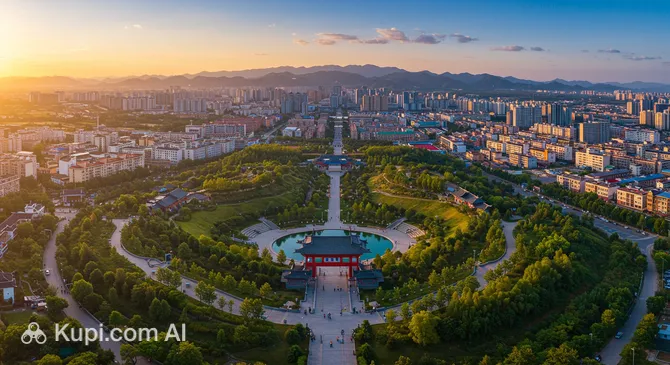
Hunchun is a unique city in the southeast of Jilin Province, where the borders of three nations intersect: China, Russia, and North Korea. This geographical location has transformed the city into a colorful trade and cultural hub where Chinese, Korean, and Manchu traditions coexist harmoniously. With a population of about 225,000, Hunchun welcomes guests with a calm atmosphere and surprising multilingualism, serving as an important bridge between the countries of Northeast Asia.
Hunchun. Illustration.
Source: Kupi.com AI
The city has deep roots: the history of Hunchun dates back to the 7th century, when it served as one of the capitals of the ancient Balhae (Bohai) Kingdom. Today, it is a modern industrial and commercial hub that has preserved its ethnic identity. Nearly half of the residents are ethnic Koreans, which leaves a special mark on the city's daily life, architecture, and, of course, its gastronomy.
Tourists come here for great shopping, high-quality traditional medicine, and stunning natural views at the border junction. Surrounded by picturesque hills and rivers, the city offers not only walks through modern shopping centers but also visits to Buddhist temples and national parks. Visiting Hunchun is a rare opportunity to see how different cultures intertwine in one of Asia's most dynamic border regions.
Weather Overview
The climate in Hunchun is temperate continental, which is typical for Northeast China. This means that travelers should prepare for a clear change of seasons: a harsh but sunny winter and a warm, humid summer. The coldest month is January, when the average temperature is about -10.4°C, and night frosts can reach -15°C and below. Winter here is usually dry with minimal precipitation, making walks invigorating.
The summer period, by contrast, is characterized by plenty of heat and moisture. Peak temperatures occur in July and August, when the air warms up to a comfortable +25–30°C. It is worth noting that August is the rainiest month (up to 213 mm of precipitation), so be sure to take an umbrella or raincoat on your trip. More detailed weather in Hunchun will help you plan your wardrobe more accurately before departure.
The best time to visit the city is spring (May) and early autumn (September-October). During these periods, moderately warm weather sets in, and air humidity remains comfortable. In autumn, the hills surrounding the city are colored in bright golden-red tones, creating ideal conditions for excursions to the scenic Fangchuan area and walks through historical sites.
Average monthly temperature
Average monthly precipitation
Interesting Facts
Hunchun is the only city in China that borders both the Russian Federation and North Korea simultaneously.
The city's name has Manchu roots and translates into English as "borderland" or "edge."
Until the very end of the 19th century (specifically until 1896), there was a strict residency ban in the city for everyone who was not of Manchu ethnicity.
In the 8th century, the city, then known as Longyuanfu, was one of the five capitals of the powerful Balhae (Bohai) Kingdom, which united many peoples of Northeast Asia.
Hunchun is a key point in the Tumen River project—a large-scale international development program under the auspices of the UN.
How to Get There
Hunchun is an important transport hub connecting Northeast China with neighboring regions. For many tourists from Russia, the most convenient way to get here is via the Kraskino–Hunchun land border crossing. Regular scheduled buses from Vladivostok cover this distance in about 3–4 hours, although travel time may increase due to customs control at the border. Detailed information on routes and border crossing rules is available on the how to get to Hunchun page.
For travelers from other regions of China or from abroad, a convenient option is to fly to the airport in the neighboring city of Yanji, which accepts flights from Beijing, Shanghai, and other metropolises. From Yanji to Hunchun, you can quickly get there by bus or high-speed train (travel time is about 40–60 minutes).
Railway communication in the city is excellently developed: Hunchun Station is the terminus of a high-speed rail line. Comfortable trains connect the city with major centers in Jilin Province and other provinces. Within China, this type of transport is considered one of the most reliable and fastest.
Station
Passenger traffic
Distance
Tumangang Station
10
53 km
Khasan Railway Station
10 000
53 km
Rajin Station
5
68 km
Hoeryong Chongnyon Station
6
69 km
Yanjixi Railway Station
5
78 km
Main Attractions
Although Hunchun is primarily known as a shopping destination, it has several truly iconic sites. One of the main attractions is the Ling Bao Buddhist Temple. This majestic structure attracts pilgrims and tourists with its massive statue of the Reclining Buddha. There is a local legend: if you walk around the temple three times with pure thoughts, your wish will surely come true.
For those who want to feel the uniqueness of the city's geographical location, the Fangchuan National Scenic Area is a must-visit. This place is called the "eyes of the three borders": from here, you can enjoy a panoramic view of where the territories of China, Russia, and North Korea meet. There is also a high observation tower, from which you can see the Sea of Japan on a clear day.
History buffs should visit the Ancient Bohai City complex. This is a large-scale historical reconstruction dedicated to the heritage of the 7th-century kingdom of the same name. The complex looks especially impressive in the evening when multi-level lighting highlights the traditional curves of the roofs and massive gates. It is an excellent place for quiet walks and getting to know the cultural roots of the region.
Local Cuisine
Hunchun's gastronomy is a vibrant mix, with Korean cuisine holding a dominant position. The main hit here is Korean BBQ: guests grill thin slices of meat themselves on grills built into the tables. Be sure to try traditional Kuksi cold noodles and various Kimchi snacks, which are served in a huge assortment in local establishments. Manchu traditions complement the menu with rich meat stews and hearty flatbreads.
Seafood deserves special attention, delivered here as fresh as possible due to the proximity to the sea. In Hunchun's restaurants, you can often find dishes that combine Chinese cooking methods with Russian taste preferences, making the local cuisine accessible and attractive to foreign guests. Popular drinks here include green tea, local Korean beer, and traditional rice wine.
The food culture in the city is excellently developed: from inexpensive street food at night markets to specialized restaurants at traditional medicine centers, where dishes are selected based on their health benefits. Exotic food lovers will find many unusual combinations of spices and ingredients here, while those who prefer familiar tastes will easily find establishments with adapted menus.
Travel Tips
Hunchun is a hospitable and safe city, but knowing a few practical nuances will make your trip much more comfortable and enjoyable.
Clothing and Essentials: The climate here is temperate continental, so pack clothes in layers. Warm things are a must in winter (it can drop to -20°C), while light clothing and an umbrella are needed in summer. For walking in the hilly terrain of Fangchuan, you will need comfortable shoes.
Transport: It is most convenient to get around the center by taxi. For trips to neighboring cities, use high-speed trains from Hunchun Station—they are fast and reliable.
Finance: The main currency is the Chinese Yuan. Although large shopping centers accept cards, it is better to always have cash with you. International cards do not work everywhere, so currency exchange should be done in advance or at a bank.
Health and Safety: The city is safe, but always carry your passport with you—it may be checked in the border zone. Pharmacies are common in the center, many focused on traditional medicine.
Communication: There are many signs in Russian in the center, but English is not widely spoken. It is recommended to download an offline translator and a city map (such as Baidu Maps or Maps.me) in advance.
Local Etiquette: Be polite and patient. A greeting with a slight bow or a nod of the head will be received positively. In shops and markets, you can and should bargain, but do so with a smile.
What to Avoid: Do not use the services of unofficial taxi drivers at the border or the station. Also, avoid photographing military objects or people in uniform near border zones.
Extra Tip: Try to plan trips to shops and clinics on weekdays to avoid the queues created by tour groups on weekends.
May your journey to Hunchun be filled only with pleasant discoveries and great purchases!
Entertainment & Nightlife
Entertainment in Hunchun is calm and relaxed, oriented more toward family vacations and cultural leisure than loud parties. The main evening attraction is the numerous karaoke bars (KTV), where locals and tourists alike enjoy performing popular hits. The Korean influence is particularly strong here, so you will often find both Chinese and Korean songs in the repertoire.
For those who prefer a quieter pastime, the city offers traditional tea houses and specialized centers where massage and acupuncture clinics operate until late evening. If you are looking for large-scale club shows or discos, locals recommend heading to neighboring Yanji, which is just a couple of hours away. In Hunchun itself, nightlife is centered around the main squares and restaurants, where traditional BBQ is served late into the night.
Daytime entertainment includes walks in city parks and visits to cinemas. In the city center, you can find several cozy family cafes and children's play areas. Hunchun is a place where the evening is best spent in slow conversation at a good restaurant or during an evening stroll along the brightly lit shopping streets, enjoying the safe and friendly atmosphere of a border town.
Parks & Museums
Hunchun harmoniously combines urban development with green zones that serve as favorite vacation spots for residents and visitors. The most significant site in the vicinity is Fangchuan Park—a unique natural complex offering breathtaking views of the Tumen River floodplain and border territories. The hilly terrain makes walks here not only educational but also beneficial for health, while well-equipped observation decks allow for rare photos of three countries at once.
The cultural component of the city is represented by small but informative exhibitions. Local museums mainly focus on the history of the Balhae (Bohai) Kingdom and the daily life of the Manchu people. Be sure to visit the ancient city complex, which is a kind of open-air museum: here you can see reconstructions of ancient buildings and feel the spirit of medieval Asia. This place is especially interesting for those fond of archaeology and ethnography.
For a quiet rest within the city limits, the landscaped river embankments are ideal. Even though Hunchun is not a giant metropolis, greenery is maintained at a decent level. City squares with neat paths and areas for gymnastics allow you to temporarily escape the noise of the shopping streets and enjoy the silence.
Getting Around
Hunchun's transport system is simple and efficient, making it ideal for such a compact city. The basis of public transport is bus routes that cover all key areas, including shopping centers, markets, and the railway station. Bus fares are minimal, and the intervals between buses allow for quick movement around the city. Information about routes can be found at stops, although knowing a few phrases in Chinese or having a map on your smartphone is helpful.
The most popular and convenient way for tourists to get around remains taxis. Cars are found everywhere, and a trip through the city center usually takes no more than 10–15 minutes and is quite cheap. In Hunchun, it is customary to pay by the meter, but in this border city, drivers often offer a fixed price for popular routes. You can also use popular Chinese apps to call a car, but this requires a local SIM card.
Due to the compactness of the central part, many tourists prefer to get around on foot or rent bicycles and electric scooters. The city's cycling infrastructure is constantly developing, and flat roads make such rides pleasant. It is worth considering that during peak hours, areas around large markets and the station can be crowded, so plan your trips in advance to avoid the rush.
Accommodation
The accommodation market in Hunchun is mainly oriented toward transit travelers and tourists coming for shopping and health treatments. The highest demand is for 3 and 4-star hotels located in the city center. One of the pleasant features of local service is the presence of Russian-speaking staff in many popular hotels, which significantly simplifies the check-in and stay process for guests from Russia.
It is best to stay in the area of the central shopping squares or near the railway station—this way, you will always be within walking distance of the main shops, markets, and restaurants. Luxury five-star complexes are rare in the city, but there are many solid budget options offering clean rooms and breakfasts featuring elements of both Chinese and Korean cuisine.
If you plan to visit during Chinese national holidays or the peak tourist season, it is recommended to book accommodation in advance. You can use popular international or specialized Chinese booking services to find suitable options, although many hotels in Hunchun are accustomed to working directly with tour groups.
Nearby Cities
Hunchun serves as an excellent starting point for exploring a unique region at the crossroads of cultures and borders. The city's surroundings offer both natural beauty and interesting urban landscapes, which are easily accessible as part of a day trip.
One of the most popular destinations is the city of Yanji, the capital of the autonomous prefecture. A trip here takes about two hours, placing you in the epicenter of Korean culture in China with its vibrant markets and colorful parks. Also of interest is the city of Tumen, located just 44 kilometers away. This is another important border point where you can stroll along the Tumen River embankment and visit local museums. If you are drawn to the sea, you can reach the Russian city of Vladivostok in 3-4 hours.
Exploring nearby cities allows for a deeper understanding of the specifics of this multinational region and reveals how architecture and the rhythm of life change just a few dozen kilometers from Hunchun. Each of these directions will provide new impressions and broaden your horizons.
Shopping & Souvenirs
Shopping in Hunchun is perhaps the main reason why thousands of tourists visit the city. You can find almost everything here: from high-quality electronics and home appliances to trendy clothes and footwear. The main shopping activity is concentrated in the central district, on Trade Street and its adjacent blocks. Here, modern shopping centers alternate with small shops where bargaining is expected, adding a special thrill to your purchases.
Among the large facilities, modern shopping complexes stand out, which are especially popular among Russian tourists due to affordable prices and a wide range of goods from South Korea and China. In addition to clothing, people often bring back silk products, Manchu folk crafts, and various souvenirs with Korean symbols from Hunchun. Shops usually operate from the morning until 8–9 PM, and payment is accepted in cash Yuan or through popular mobile apps.
No less interesting are the local markets, where you can buy the freshest delicacies, spices, and health products. Special attention should be paid to traditional Chinese medicine stores: they sell the famous ginseng root, various herbal blends, and natural cosmetics. For tourists in the city, there are often special offers, and convenient navigation in Russian makes the shopping process as comfortable as possible.