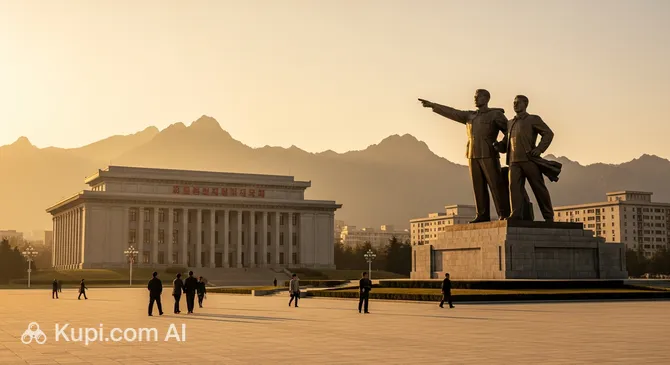
Chongjin is a major industrial center and a strategically important port on the northeastern coast of North Korea. The city serves as the administrative center of North Hamgyong Province and is the country’s third-largest city, with a population of approximately 668,000 people.
Chongjin. Illustration.
Source: Kupi.com AI
While Chongjin is primarily known as an industrial giant, its seaside location gives it a unique character. Much of the city's history is defined by its rapid transformation from a small fishing village into a powerful industrial hub during the 20th century. Although the city underwent extensive reconstruction in the past, it has been fully restored and today plays a key role in the region's maritime trade.
For travelers, Chongjin is interesting for its authentic atmosphere as a working-class center and the opportunity to witness life in one of the country's most significant ports. We invite you to discover this "City of Steel," where industrial power meets the rugged beauty of the Sea of Japan.
Weather Overview
Chongjin's climate is characterized as temperate monsoon with distinct seasons. Winters here are cold and predominantly dry: the average January temperature is around -10°C, with nighttime frosts reaching -15°C. Summers are moderately warm and humid, with comfortable daytime temperatures around +21–25°C.
Expect a warm summer with occasional rain and cold, dry winters. Most precipitation falls in August, when monsoon winds bring heavy showers. Spring and autumn are the most favorable periods to visit, as clear weather sets in, although the coastal sea breeze can bring a chill even on sunny days.
Average monthly temperature
Average monthly precipitation
Interesting Facts
Chongjin is the administrative center of North Hamgyong Province and covers an impressive area of over 1,855 km².
The city grew from a tiny fishing village to the third-largest metropolis in the country, becoming a key industrial hub.
The Port of Chongjin is one of the few in the region that remains ice-free throughout the year, making it critically important for maritime shipping.
The local airport has the international IATA code RGO, allowing it to be part of global aviation navigation.
Due to its abundance of metallurgical plants, Chongjin is often called the "City of Steel," highlighting its role in heavy industry.
How to Get There
Chongjin is a vital transport hub in the northeast of the country, though its accessibility has specific requirements. More details about ways to get to Chongjin can be found through organized tours, as independent travel to the region is limited by existing regulations.
The main air gateway is Orang Airport (IATA: RGO). It primarily handles domestic flights connecting the city with the capital. The trip from the airport to the city center by bus or taxi takes about an hour, and traffic jams on this route are extremely rare.
Rail travel plays a key role in the region's logistics. The train from Pyongyang to Chongjin takes about 10–12 hours, passing through scenic mountain and coastal areas. The city's central railway station is conveniently located and serves as the starting point for most travelers.
Station
Passenger traffic
Distance
Ranam Station
5
6 km
Rajin Station
5
71 km
Hoeryong Chongnyon Station
6
75 km
Tumangang Station
10
103 km
Khasan Railway Station
10 000
106 km
Yanjixi Railway Station
5
129 km
Main Attractions
While Chongjin is not a typical tourist resort, it offers a unique look at the industrial history and culture of the region. The main technological highlight is the massive Port of Chongjin, which is a key infrastructure element and serves as the maritime gateway for the entire northeast.
History and architecture enthusiasts should visit the City History Museum in the center, which features exhibits detailing the city's development. Also of great interest are Chongjin Castle, founded in 1413, and the ancient Chongjinsa Temple (dating back to 802), located on a picturesque hill and accessible by public transport.
For those looking for outdoor recreation, there is a zoo on the outskirts of the city, and a national park with mountain trails stretches to the northeast. The city's central squares and markets serve as everyday gathering points for residents, allowing visitors to feel the rhythm of local life.
Local Cuisine
Chongjin's culinary landscape is inextricably linked to its geographical position. The foundation of local cuisine is fresh seafood: squid, shellfish, and various types of sea fish delivered straight from the port. Dishes are often steamed or pan-fried with the addition of spicy Korean seasonings.
In local establishments, be sure to try traditional dishes such as spicy seafood soups and kimchi. Rice with vegetables and fish is the staple of the residents' daily diet, and the simplicity of preparation highlights the freshness of the ingredients used.
Popular beverages include traditional Korean tea, rice wine, and products from local breweries. The food culture here is without frills and focused on hearty meals that provide energy for the port and factory workers. Restaurants are mainly concentrated in the city center and offer a straightforward, traditional menu.
Travel Tips
A trip to Chongjin requires following certain rules and preparation to ensure your journey is as comfortable and smooth as possible.
Clothing and Essentials: Choose comfortable, layered clothing, as coastal winds can be chilly. For visiting Chongjinsa Temple and official museums, a modest dress code covering shoulders and knees is recommended.
Transport: Travel around the city by taxi or organized buses. Remember that independent walks outside central areas may be restricted by local guidelines.
Finance: Bring a sufficient amount of cash. International bank cards and ATMs do not work in the city, and currency exchange is handled at specialized points.
Health and Safety: Chongjin is a city with low crime rates; however, stick to well-lit central streets in the evening and always have your guide's contact information with you.
Communication: The primary language is Korean. English is not widely spoken, so learn basic polite phrases: "kamsahamnida" (thank you) and "annyong-hasimnikka" (hello).
Local Etiquette: A slight bow is customary when greeting someone. Show respect to monuments and national symbols, and always ask for permission before taking photos of local residents.
What to Avoid: Do not take photographs of restricted industrial zones or port facilities without explicit permission. Avoid wandering into residential neighborhoods on the outskirts on your own.
Extra Tip: Try the local seafood at restaurants near the port—it is the freshest and most authentic gastronomic experience you can have in Chongjin.
Following these simple recommendations will help you enjoy the unique atmosphere of the city and make your visit a memorable one!
Entertainment & Nightlife
Entertainment in Chongjin differs significantly from standard formats and is primarily collective and seasonal in nature. The city lives according to a strict working rhythm, so nightlife in the form of clubs or bars is virtually non-existent. Local residents prefer to spend their leisure time in cultural centers or strolling through park areas.
The main event in public life is the annual Chongjin Hangil Festival, held in October. During this time, festive concerts, achievement exhibitions, and public celebrations are organized throughout the city. On regular days, the local zoo and the national park to the northeast are available, offering peaceful relaxation in nature.
Daytime entertainment includes visiting theaters and museums in the city center. For those seeking a more active evening program, trips to the capital are usually organized, as Chongjin's entertainment infrastructure is focused on maintaining cultural traditions and providing relaxation for workers after their shifts.
Parks & Museums
Chongjin offers several significant locations for those interested in the culture and nature of the region. A central feature of the cultural program is the Chongjin City History Museum. Its exhibitions detail the region's development, ranging from archaeological finds to modern industrial achievements.
For outdoor walks, the national park located in the northeast of the city is ideal. Trails are laid out here, allowing visitors to enjoy the hilly terrain and coastal views. On the outskirts of the city, there is also a zoo, which is a traditional destination for family outings.
A special blend of history and landscape can be found at the ancient Chongjinsa Temple. Situated on an elevation, it serves not only as a cultural heritage site but also as an excellent viewpoint overlooking the city and the port zone, harmoniously combining architectural traditions with an industrial landscape.
Getting Around
Chongjin's public transport system relies on a network of bus routes and taxis. Buses connect the main residential areas with the port and central enterprises, facilitating the movement of thousands of workers. Although the network is well-planned, transport can be significantly crowded during morning and evening peak hours.
Taxis in Chongjin are a convenient and relatively inexpensive way to move between key sites, such as the railway station, museums, and hotels. For foreign visitors, this is the most preferred mode of travel, ensuring comfort and speed.
The railway remains a vital component of the transport system. The city station is a major transport hub connecting the province with the rest of the country. For trips to remote park areas or historical temples on the outskirts, organized bus services following a fixed schedule are often used.
Accommodation
Accommodation options in Chongjin are primarily focused on functionality and hosting official delegations or transit groups. The typical range of housing includes mid-range and basic-class hotels, most of which are concentrated in the central district or near the port for ease of travel.
Hotels in the city are not known for luxury but provide all the necessary amenities for rest. For foreign specialists and expats arriving for long-term stays, apartments offering a more home-like environment are available in residential areas.
Travelers are recommended to book their stay in advance through authorized agencies, as the hospitality industry in Chongjin operates on a planned system. Price ranges remain stable, and the level of service is geared toward providing basic comfort within the setting of an industrial city.
Nearby Cities
Chongjin serves as an excellent starting point for exploring the northeastern region and border areas. Thanks to the developed railway network, interesting trips can be made from here to neighboring cities in North Hamgyong Province.
Just 72 kilometers away is the city of Rason, which is part of a special economic zone and attracts attention with its port architecture. Another interesting destination is Hoeryong, known for its historical monuments. For those wishing to see the junction of three borders, a route toward the Russian settlement of Khasan is available.
Exploring the surroundings allows for a better understanding of the diversity of this region, where the industrial landscapes of Chongjin give way to pristine coastal areas and mountain ranges, offering a unique experience for discerning travelers.
Shopping & Souvenirs
Shopping in Chongjin is primarily concentrated in central markets and department stores in the port area. There are no large shopping and entertainment malls in the city, so the main format of trade remains market squares, where daily life bustles and locally produced goods can be found.
The main items to look out for are fresh seafood and folk crafts. Markets near the port often sell high-quality wood and fabric souvenirs, as well as traditional Korean clothing. The markets are also the best place to buy local delicacies and spices.
Shops typically open in the afternoon, and payment is mostly made in cash. For tourists, this is a great opportunity to purchase authentic souvenirs that reflect the spirit and traditions of the northeastern region, away from standard tourist paths.