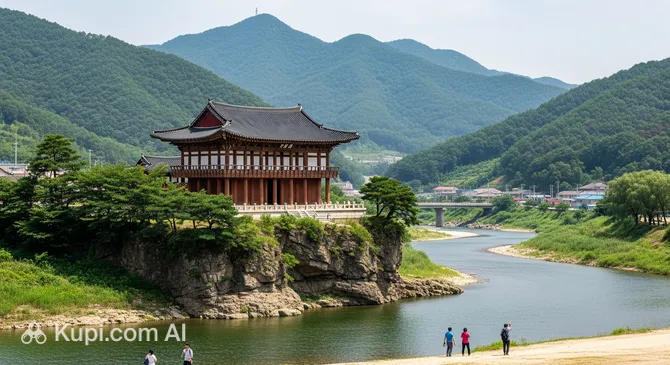
Kanggye is an important administrative and industrial center located in the northwestern part of North Korea. The city lies in a picturesque spot at the confluence of four rivers, giving its landscape a unique character. As the capital of Chagang Province, Kanggye plays a key role in the regional economy while maintaining an atmosphere of strict order and the traditional Korean way of life.
Kanggye. Illustration.
Source: Kupi.com AI
The city's geographical location in a mountainous area determines its climatic features and strategic importance. With a population of about 252,000, the city represents a harmonious combination of industrial facilities and natural beauty. Immersing yourself in the city's historical heritage allows for a better understanding of the development path of this region and its significance for the entire country.
One of the most striking modern features of the city is the development of its recreational infrastructure. A modern ski resort has been built here, attracting outdoor enthusiasts. A trip to Kanggye is a rare opportunity to see life in one of the country's most closed provinces, get acquainted with its monumental architecture, and witness majestic mountain landscapes.
Weather Overview
The climate in Kanggye is distinctly continental, due to its location in the northern mountainous part of the peninsula. Winters here are severe and long: in January, the average temperature drops to -13.5°C, and night frosts can reach -20°C or lower. These conditions allow the local ski resort to function successfully, ensuring a stable snow cover.
Summer in the city is moderately warm and quite humid. The hottest month is July, when the air warms up to an average of +22°C, and daytime maximums can reach +26°C. Most of the precipitation falls during the summer period in the form of monsoon rains, which is important to consider when planning walking tours. The current climate of the city is characterized by a clear change of seasons, each of which transforms the mountain landscapes in its own way.
Spring and autumn in this region are quite short but very picturesque. In March, frosts are still possible, and proper warmth arrives only by May. September pleases with mild weather and average values around +16°C, making the beginning of autumn a comfortable time to visit. Due to the proximity of rivers, morning mists are often observed in the valleys, giving the city a special, mysterious atmosphere.
Average monthly temperature
Average monthly precipitation
Interesting Facts
Kanggye is unique for its geographical location — the city was founded at the point where four rivers converge.
The local ski resort is the second most significant and large-scale in the country, surpassed only by the famous Masikryong.
The city is the key center of Chagang Province, which for a long time remained one of the most closed areas for visitors.
The Kanggye Revolutionary Museum houses rare artifacts related to the activities of the Workers' Party of Korea in this region.
How to Get There
Traveling to Kanggye requires careful planning, as the city is located in a remote mountainous region in the northwest of North Korea. The main way to reach the city for foreign guests is through an organized transfer from Pyongyang. Detailed information about routes will help you plan your trip in advance.
Railway communication plays an important role in the region's transport system. Kanggye is connected to other major cities in the country by a network of railways served by passenger trains. Although travel times can be significant due to the mountainous terrain, a train journey allows you to see picturesque corners of the country that are inaccessible from a car window.
Station
Passenger traffic
Distance
Tonghua Railway Station
3
106 km
Baishanshi Railway Station
2
110 km
Hamhung Station
5
142 km
Unjon Station
5
172 km
Sinanju Chongnyon Station
6
174 km
For those who prefer road transport, trips are provided by tourist buses accompanied by official guides. There are no direct international flights to the city; the nearest major air hub is the capital's airport, from where tourists continue their journey by land. Independent travel between cities is prohibited for foreigners, so all movements are carried out within the framework of a pre-approved program.
One of the main attractions of Kanggye is the local Revolutionary Museum. This is the city's central cultural institution, housing exhibits that tell the history of the region and the key stages of the formation of the state ideology. Visiting the museum allows guests to delve deeper into the atmosphere of the past and understand the values that shape the modern appearance of the city.
For fans of active winter recreation, the Kanggye Ski Resort will be a real discovery. Built in the early 2010s, it is considered the second largest in the country. Modern slopes and developed infrastructure make it an important center of attraction for tourists wishing to enjoy mountain descents surrounded by pristine northern nature.
In addition to man-made sites, Kanggye is interesting for its natural landscapes. The city is located at the confluence of four rivers, which creates picturesque views, especially during the warmer months. Although the classic excursion route here is strictly regulated, the very experience of being surrounded by rugged mountains and fast river flows leaves an unforgettable impression on travelers.
Local Cuisine
The gastronomic landscape of Kanggye is based on the classic traditions of Korean cuisine, where dishes made from rice, vegetables, and seafood take center stage. You should definitely try the local kimchi — spicy fermented vegetables, which have their own preparation styles in the northern regions. Hearty soups and noodle dishes are also popular, perfectly warming in the cool mountain climate.
Dining culture in the city is concentrated in state-owned restaurants where the menu is often fixed. For tourists, meals are organized centrally, offering the best examples of local cuisine. In such establishments, you can find classic Korean bulgogi (grilled meat) and various banchan side dishes served in small bowls.
Among the beverages in Kanggye, various types of tea are popular, as well as local beer, which is renowned for its quality. Traditional Korean soju can also be found in shops and restaurants. Despite the absence of a typical Western restaurant scene, the authenticity and natural quality of the products in local establishments leave a pleasant impression on food lovers.
Travel Tips
Planning a trip to Kanggye is an exciting process that requires knowledge of certain rules. These tips will help you feel confident and get the most out of your visit to this unique region.
Clothing and Essentials: When preparing for your trip, take the harsh mountain climate into account. Even in summer, evenings can be cool, and in winter, proper gear (down jacket, thermal underwear) is essential. For visiting museums and monuments, choose a formal, neat style of dress; tracksuits and shorts will be inappropriate.
Transport: Remember that independent movement around the city is not possible. All your trips will be organized by the host party in special transport.
Finance: Bring cash in Euros, Chinese Yuan, or US Dollars. There are no ATMs for international cards, and cashless payments are impossible. Change is often given in the same currency or in small goods.
Health and Safety: Kanggye is a very safe city in terms of law and order. Pharmacies exist, but it is better to bring specific medications with you. Be sure to arrange international insurance before departure.
Communication: The main language is Korean. English is not widely spoken, so you will be completely dependent on your guide-interpreter. Mobile internet is practically unavailable for tourists, and Wi-Fi in hotels is very rare.
Local Etiquette: Greet those around you with a slight bow. Be polite and reserved in communication. Respect local traditions and the daily routine.
What to Avoid: It is strictly recommended not to photograph military installations, construction sites, or people without the guide's permission. Also, avoid discussing political topics or criticizing the local way of life.
Respect for Monuments: When visiting memorials, it is customary to behave quietly and show respect. Laying flowers at monuments is welcomed and perceived as a sign of goodwill.
Following these simple rules will make your visit to Kanggye comfortable and leave you with only pleasant memories of the hospitality of this northern land.
Entertainment & Nightlife
The entertainment program in Kanggye differs significantly from typical tourist centers. The main focus here is on active recreation and cultural education. The primary place for leisure during the winter period is the local ski resort, where visitors can not only go skiing or snowboarding but also enjoy the clean mountain air and winter scenery.
Traditional nightlife in the form of clubs or bars is virtually non-existent in the city. Evenings here are spent quietly, in accordance with the local rhythm of life. Catering establishments and the few leisure spots are primarily oriented towards organized groups and local residents, closing quite early.
Daytime entertainment for tourists includes excursions to state museums and walks through central squares, where monumental landmarks and official government buildings can be seen. For those seeking large-scale spectacles, a trip to Kanggye is often combined with a visit to the capital, where the choice of theaters and cultural events is significantly broader.
Parks & Museums
The cultural heart of the city is the Kanggye Revolutionary Museum. Its halls house an extensive exhibition dedicated not only to political history but also to the labor achievements of the region's residents. The museum is a mandatory stop for any guest of the city wishing to understand the local ideology and appreciate the scale of historical events that took place in Chagang.
The urban landscape is complemented by well-maintained squares and park areas where majestic monuments are installed. These places serve as centers for official events and are favorite spots for walks among local residents. The landscaping of Kanggye is executed in a strict style, emphasizing the order and cleanliness of the city streets.
Special attention should be paid to the natural areas around the city. Mountain ranges and river valleys create natural "parks" of incredible beauty. Although free access to the wilderness may be limited, organized excursions allow you to enjoy panoramic views of the confluence of the four rivers and the rugged mountain ridges surrounding Kanggye.
Getting Around
The transport system of Kanggye is mainly represented by bus routes and trolleybus lines that connect residential neighborhoods with industrial zones and the city center. Public transport operates on a strict schedule, and for local residents, it is the primary way to get around. Tourists usually observe the system from the outside, as their movements are conducted in special motor vehicles.
Taxis exist in the city, but their numbers are limited and services are regulated by state rules. The bicycle is a very popular means of transport among citizens, which is characteristic of many cities in the country. On the streets, you can see many neatly parked bicycles near enterprises and shops.
For travelers, all logistics issues are handled by accompanying guides. Intra-city trips on public transport are generally not provided for foreigners, but viewing the city from a tourist bus allows you to appreciate the cleanliness of the streets and the architectural style of Kanggye. It is important to remember that any independent attempts to use city transport may cause difficulties due to the language barrier and stay regulations.
Accommodation
Accommodation options in Kanggye are limited to state-owned hotels specifically intended for receiving foreign delegations and tourist groups. These hotels offer a basic set of amenities and traditional Korean service. Although the choice of accommodation is small, the hotels provide the necessary comfort for resting after a busy day of sightseeing.
Most hotels are located in the central part of the city or in close proximity to key sites, such as the ski resort. Accommodation bookings are made exclusively through official tour operators, as independent hotel selection upon arrival is not permitted by the country's travel regulations.
The price range in these hotels is usually fixed and included in the total cost of the tour package. The city's housing stock consists mainly of apartment buildings in the socialist realism style, which creates the characteristic architectural look of Kanggye. Travelers should keep in mind that service standards may differ from familiar international systems, but the hospitality of the staff always remains at a high level.
Nearby Cities
The city of Kanggye can serve as a starting point for exploring other interesting locations in the northwest of the country, though all trips must be strictly coordinated. Nearby is the city of Manpo, located right on the border, which gives it a unique atmosphere and strategic importance.
Another destination for regional exploration is Huichon — an industrial center known for its machine-building and picturesque surroundings. Trips to these cities allow visitors to see the diversity of the industrial and natural landscapes of Chagang Province. Exploring nearby territories helps to build a more complete picture of life in this part of the country.
For those interested in border regions, it is worth mentioning the proximity to the Chinese border, where cities such as Linjiang and Tonghua are located. Although crossing the border requires separate permits and visas, the mere awareness of being close to another state adds an element of adventure to a trip to Kanggye.
Shopping & Souvenirs
Shopping opportunities in Kanggye are specific in nature and fully controlled by the state. The main retail outlets are central department stores and specialized shops for tourists, where one can purchase everyday goods and souvenirs. There are no typical mega-malls here, but visiting a local state store is an interesting cultural experience in itself.
Souvenirs often brought from Kanggye include folk crafts, Korean embroidery, and ceramics. Books about the country's history, colorful photo albums, and postage stamps—which are considered true works of art in North Korea—are in high demand. It is also worth paying attention to local textiles and ginseng products.
Purchases by foreigners are usually made in cash (Euros, Dollars, or Yuan), as international bank cards are not accepted in the city. Store opening hours are strictly regulated, and the assortment of goods may vary. Shopping here is not so much about consumption as it is an opportunity to bring home a piece of a unique and closed culture.