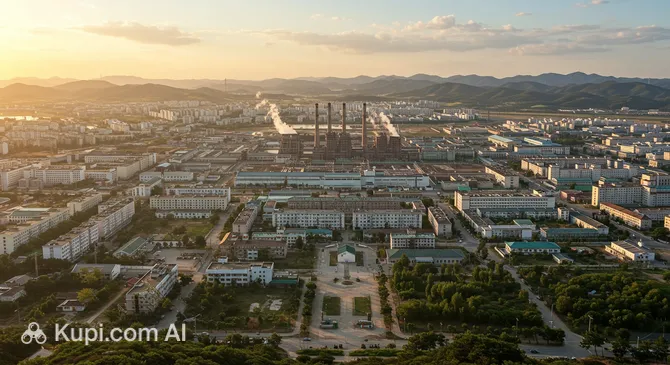
Sunchon is a major industrial and administrative center located in South Pyongan Province in the central part of North Korea. The city is not a typical tourist hub, which gives it a unique atmosphere of authentic North Korean life. It is home to approximately 437,000 people, and the urban environment is organized with an emphasis on collective spaces and functionality.
Sunchon. Illustration.
Source: Kupi.com AI
Geographically, the city occupies a favorable position in a river valley, which is reflected in its name: translated, Sunchon means “Obedient River.” Studying the history of the city's formation, one can see how it transformed from a regional settlement into a powerful industrial hub. Today, it is a place dominated by working-class neighborhoods and vital transport arteries connecting different regions of the country.
For travelers interested in the daily life of the DPRK, Sunchon offers a unique look at how life is structured beyond the showcase of Pyongyang. While there is no flashy tourist polish here, there is a sincere aesthetic of tidy streets, central squares, and the monumental architecture characteristic of the country. A visit to this city allows for a better understanding of the industrial heritage and the modern rhythm of life in the republic's central provinces.
Weather Overview
The climate in Sunchon is typical for the central part of the peninsula, with distinct seasons. Winters here are harsh, dry, and windy: in January, the average temperature drops to -6°C, and nighttime frosts can reach -11°C. Summers, by contrast, are warm and humid, with peaks in July and August around +28...+30°C.
The bulk of precipitation falls during the summer months in the form of heavy rains, which is characteristic of the monsoon influence. During this time, humidity levels rise significantly. Transitional periods—spring and autumn—are considered the most comfortable for visits, as the weather becomes milder and rain is less frequent. When planning your trip, be sure to check the current weather in Sunchon for your dates.
An important feature is the continental nature of the climate, which implies sharp temperature fluctuations throughout the day. The city's industrial status can sometimes affect air clarity, especially on windless days, so morning hours are better for walks. Don't forget to bring an umbrella if your visit falls in July or August, and warm windproof clothing for the winter months.
Average monthly temperature
Average monthly precipitation
Interesting Facts
The name of the city Sunchon translates from Korean as “Obedient River”, highlighting the city's harmonious proximity to the region's waterways.
Sunchon is one of the largest cities in South Pyongan Province with a population of over 430,000 people, making it an important demographic center in the central part of the country.
The city plays the role of a strategic transport hub, connecting rail and road routes leading from the capital to the northern and eastern provinces.
Unlike many other cities, Sunchon was built as a model industrial center, where residential quarters are located as close as possible to workplaces for the convenience of enterprise employees.
How to Get There
Sunchon is conveniently located within the country's transport network, making it accessible for those traveling through the central regions of the DPRK. The primary way to reach the city is by railway. Trains from Pyongyang run regularly, and the journey usually takes about 3–4 hours. This is not only a practical but also a scenic route, allowing you to see the rural landscapes and small settlements of South Pyongan Province.
Station
Passenger traffic
Distance
Sunchon Station
5
2 km
Pyongsong Station
6
21 km
Taegyo Station
5
34 km
Sinanju Chongnyon Station
6
34 km
Kalli Station
5
37 km
Sopo Station
7
41 km
There is no direct air service to Sunchon. The nearest international air hub is in the capital, from where travelers continue their journey by land transport—either by train or a special bus. Roads connect the city with neighboring administrative centers, and a trip by car from Pyongyang can be faster than by train due to the lack of heavy traffic.
For foreign tourists, planning a trip requires prior coordination of the itinerary. To learn more about travel regulations and current ways to get to Sunchon, it is recommended to consult with official representatives in advance. Transit through the city is often part of larger sightseeing tours through the central and northern parts of the country.
Main Attractions
Sunchon is primarily known as an industrial giant, so there are few classic tourist sites in the traditional sense. The main interest for visitors lies in the central architectural ensembles. The city's main square is the heart of public life, where important ceremonies and gatherings take place. Surrounding it are the most monumental administrative buildings, designed in a characteristic style that reflects the state aesthetic of the DPRK.
An important part of the urban landscape is the local markets and trading areas, where you can observe the daily interactions of the residents. Although these sites were not created for tourism, they allow you to feel the real rhythm of the city. The organized layout of Sunchon's streets and residential blocks is itself an object of study for those interested in urban planning within a planned economy.
In the city's outskirts, you can also find monuments and memorials dedicated to labor achievements and significant events in the province's history. These sites are carefully maintained and serve as important points on the map of patriotic education. Despite the lack of entertainment complexes, a walk through the central districts of Sunchon provides a deep understanding of the cultural and social structure of this industrial center.
Local Cuisine
The gastronomic traditions of Sunchon are inextricably linked to general Korean cuisine but have a reserved, provincial character. The basis of the diet here consists of rice, soups, and, of course, kimchi—spicy fermented cabbage, which is prepared according to its own recipe in every local cafeteria. It is worth trying the local cold noodles (naengmyeon), which are especially popular during the warm season and are distinguished by the delicate taste of the broth.
The food culture in the city is centered around state restaurants and cafeterias at enterprises. Excess is not common here; preference is given to hearty and simple dishes, such as dipped vegetables, soy dishes, and fish. Local establishments often serve traditional tea and rice-based drinks, and beer enthusiasts can appreciate the taste of local North Korean beer, which is famous for its natural ingredients.
For tourists, visiting local restaurants is an opportunity to get acquainted with the culture of mass dining. Establishments usually offer a fixed menu that includes several types of appetizers and a main course. While there are no fine-dining restaurants in Sunchon, the honesty and traditional nature of local recipes allow you to truly experience the taste of regional DPRK cuisine.
Travel Tips
Preparing for a trip to Sunchon requires attention to detail to ensure your journey goes smoothly and leaves only pleasant impressions. Here are some practical tips for those planning to visit this industrial hub.
Clothing and Luggage: Choose practical and modest clothing. For city walks, you will need comfortable shoes, as you will be doing a lot of walking. In the winter months, Sunchon is very cold, so be sure to bring high-quality thermal clothing and a warm jacket.
Transport: Within the city, the main means of transport are buses and bicycles. Foreign guests are better off moving around in specially organized transport or on foot accompanied by a guide.
Finances: Bring cash with you (preferably Euros, Dollars, or Yuan), as international bank cards and ATMs do not work in the city. The tipping culture is not developed, but small souvenirs for guides are appropriate.
Communication: Mobile communication for foreigners is limited, and Wi-Fi is very rare. It is recommended to warn loved ones in advance about the temporary lack of internet access.
Safety: Sunchon is a very safe city. However, you should avoid walking in unlit industrial outskirts at night and always follow the recommendations of your guides.
Local Etiquette: A slight bow is customary when meeting local residents. Be polite and reserved, and respect local monuments and state symbols.
What to Avoid: It is categorically not recommended to photograph military installations, strategic enterprises, or people without their explicit consent. This could lead to misunderstandings with local authorities.
Health: There are few pharmacies in the Western sense, so pack an extensive first-aid kit with all the medications you might need.
Following these simple rules will help you focus on exploring the unique way of life in Sunchon and make your visit as comfortable as possible.
Entertainment & Nightlife
Leisure and entertainment in Sunchon are predominantly quiet and traditional in nature. Since the city is focused on production and daily labor, there is no vibrant nightlife in the form of clubs or bars. Local residents prefer to spend their free time with family or by taking walks along the city embankments and central streets, which become the main places for socializing in the evening.
Daytime entertainment includes visiting local cinemas and houses of culture, where national films are screened and concerts by creative groups are held. These institutions are centers of cultural attraction, offering programs deeply rooted in local traditions. For those seeking large-scale spectacles, theaters, or modern entertainment complexes, residents usually head to the capital, which is only a short journey away.
Safety in the city is maintained at a high level, and walking through the well-lit central areas is quite comfortable. Sunchon in the evening is a place for thoughtful contemplation and observing how the city settles into rest after a working day. The absence of noisy establishments is compensated for by an atmosphere of order and tranquility, making a stay here a meditative experience in its own way.
Parks & Museums
The green zones of Sunchon are represented by neat squares and small parks, which are usually located near central squares and embankments. These are places for leisurely strolls where local residents rest among monuments and well-kept alleys. Although there are no large-scale botanical gardens, the city's industrial landscape is successfully softened by these islands of tranquility, creating a comfortable urban environment.
Regarding cultural sites, the city has exhibition halls dedicated to the history of the province and the achievements of local enterprises. Such museums provide a deep insight into Sunchon's labor chronicle and its role in the country's economy. The displays often include photographs, documents, and models detailing industrial development and significant visits by the country's leadership to the region.
Visiting these places allows a tourist to look behind the facade of the industrial city and see its ideological and cultural components. The lack of large art galleries is compensated for by the sincerity of local exhibitions, which emphasize the residents' pride in their city and its achievements in building a socialist society.
Getting Around
The public transport system in Sunchon is efficiently organized and oriented toward the needs of the working population. The foundation of urban transportation consists of buses that connect residential areas with large industrial enterprises. Routes are clearly defined, and transport movement strictly follows the schedule, especially during peak hours when work shifts begin or end.
In addition to buses, commuter trains play an important role, providing a link between Sunchon and the surrounding settlements in the province. For the residents themselves, the bicycle is a very popular means of transportation—it is an eco-friendly and affordable way to get to a destination quickly. In the central part of the city, many prefer to move on foot, as the street layout is conducive to walking.
Fares are paid at fixed rates, and guides usually help tourists navigate the system. There are no traffic jam issues in the city, making public transport trips fast and predictable. The specific nature of local traffic, dominated by public transport and bicycles, creates a unique atmosphere of a quiet industrial center.
Accommodation
Accommodation options in Sunchon are limited by the city's specific nature as an industrial center. There are no major international hotel chains; the primary lodging consists of state-owned hotels and guesthouses catering to official delegations and specialists arriving for industrial business. Most of these facilities offer basic amenities, cleanliness, and strict adherence to guest reception regulations.
The most convenient lodging options are usually located in the central part of the city, near administrative buildings and major transport interchanges. This allows guests to stay within walking distance of key infrastructure. It is worth noting that conditions in such hotels can be quite austere, which is typical for regional cities in the DPRK, but they fully convey the local flavor.
For travelers, it is vital to book accommodation in advance through authorized organizations, as searching for a hotel independently on-site in Sunchon is virtually impossible. Price ranges are usually fixed and include basic meals. If you plan an extended stay, it is wise to confirm the availability of hot water and stable electricity in advance, as technical grid features can occur in industrial zones.
Nearby Cities
Thanks to its location in the heart of South Pyongan Province, Sunchon is an excellent starting point for exploring the central regions of the country. The city's surroundings are rich in both industrial landscapes and interesting administrative centers, each possessing its own unique character.
Just 19 kilometers away is Pyongsong—an important scientific and educational hub where research institutes are concentrated. It is also worth noting the city of Kaechon, known for its natural monuments and historical sites. For those who want to see the grandeur of the capital, the journey to Pyongyang takes very little time, providing access to the country's most famous monuments and museums.
Exploring nearby cities allows you to form a complete picture of life in the DPRK, moving from the industrial rhythm of Sunchon to the intellectual atmosphere of scientific centers or the ceremonial splendor of the capital. Each of these destinations is available for a day trip, provided you have the appropriate permit.
Shopping & Souvenirs
Shopping in Sunchon is an experience that closely reflects the daily life of the DPRK. The main shopping opportunities are concentrated in state department stores and central markets. You won't find global brands here, but you can purchase locally produced goods: from high-quality cotton fabrics to traditional Korean tableware, which will serve as an excellent reminder of your trip.
The city's central market is the liveliest spot, where you can see a variety of local products and folk crafts. In state stores located near the main squares, a standard range of goods necessary for daily life is presented. Prices here are strictly regulated, and the atmosphere is reminiscent of a planned economy era.
As souvenirs from Sunchon, it is worth bringing back textile products, local posters, or postage stamps, which are highly collectible in the DPRK. Keep in mind that payment is mostly made in cash in local currency (special rules may apply for foreigners), and shop opening hours are usually limited to daylight hours and standard working schedules.