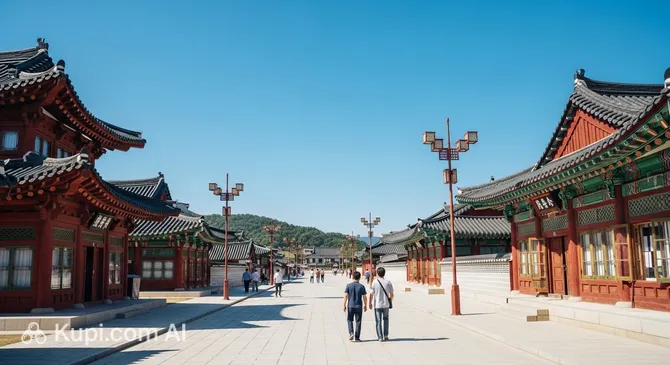
Located in the heart of North Hwanghae Province, Sariwon is often called the "southern gateway to Pyongyang." This city, with a population of about 310,000, is a fascinating blend of an industrial center and a carefully preserved cultural oasis in North Korea. Here, the modern daily life of the DPRK exists alongside recreated corners of antiquity, creating a unique atmosphere that attracts travelers seeking to see the authentic Korean province.
Sariwon. Illustration.
Source: Kupi.com AI
The city takes pride in its rich history, which is rooted deep in the region's past. Sariwon is known not only as an important railway junction but also as a place where entire ethnographic quarters have been reconstructed. Walking along its streets, one can see traditional wooden houses and workshops that allow visitors to touch the heritage of their ancestors and understand the lifestyle of the Korean people.
Beyond its cultural sites, the city is surrounded by picturesque natural landscapes, including the famous Mount Jongbang. A visit to Sariwon provides a rare opportunity to get acquainted with traditional crafts, national cuisine, and folklore festivals in their natural environment. This destination invites everyone who appreciates quiet beauty and wants to look behind the facade of capital city brilliance to discover the true spirit of the country.
Weather Overview
A temperate monsoon climate prevails in Sariwon, characterized by a clear change of four seasons. The weather in the city largely depends on seasonal winds: summers here are hot and humid, while winters are freezing and quite dry. Thanks to the proximity of the mountains, the city air is often refreshed, but on windless days, high humidity can be felt.
The summer period, especially July and August, brings heavy rainfall and daytime temperatures in the range of +25–30°C. Winter in Sariwon begins in December and lasts until February; during this time, the thermometer often drops to -10–15°C at night, although the sun often shines brightly during the day. Spring and autumn are considered the most comfortable times to visit: mild warmth reigns in April and October, and nature is painted in bright colors.
Average monthly temperature
Average monthly precipitation
Interesting Facts
Sariwon earned the honorable nickname "the southern gateway to Pyongyang" due to its strategic location on the main transport artery leading to the capital from the southern provinces.
The local Sariwon Fortress was built as early as the beginning of the 4th century during the Koguryo Kingdom era, making it one of the oldest defensive structures in the entire region.
The city is home to the famous Munjin Atelier, which specializes exclusively in tailoring traditional Korean clothing—hanboks—preserving unique cutting and embroidery techniques.
Sariwon Folk Custom Street is not just an open-air museum, but a detailed reconstruction of an ancient Korean village, where every house and fence is built in strict accordance with the canons of the past.
The Migok Agricultural Cooperative is considered a model in the country: it not only grows rice for the region's needs but also hosts demonstrations of farmer life for foreign delegations.
How to Get There
Sariwon is an important transport hub in the southwest of North Korea, making it easily accessible for organized travelers. Information on planning your trip can be found in the how to get there section. Travel to this city most often begins from the capital, as Sariwon is located on the main route connecting Pyongyang with the southern regions of the country.
The city does not have its own airport, so air passengers arrive at Sunan International Airport in Pyongyang. From there, Sariwon can be reached by comfortable tourist buses. The journey takes about 1–1.5 hours along a modern highway. Traffic on the roads is centrally regulated, so significant traffic jams are extremely rare, and the journey itself passes through picturesque flat landscapes.
Railway communication is another reliable way to reach the city. Sariwon Station regularly receives trains from the capital and other provincial centers. Travel time by train is between 1 and 2 hours. Group transfers and guide accompaniment are provided for foreign tourists, making travel between cities highly organized and safe.
Station
Passenger traffic
Distance
Chimchon Station
5
12 km
Chonggye Station
5
17 km
Pongsan Station
5
10 km
Chongbang Station
5
7 km
Sariwon Chongnyon Station
5
1 km
Hwangju Station
5
21 km
Kindŭng Station
5
27 km
Hŭkkyo Station
5
33 km
Chunghwa Station
5
40 km
Ryokpo Station
6
46 km
Main Attractions
The main attractions of Sariwon are concentrated around its historical and cultural heritage. One of the most popular places is the Folk Custom Street (or Ethno-street), which is a large-scale reconstruction of an old Korean town. Here, tourists can see traditional "hanok" houses, visit folk restaurants, and even participate in traditional games. It is an ideal place to learn about the art of making kimchi and see local artisans at work in their workshops.
Near the city lies the majestic Mount Jongbang, which attracts nature lovers with its hiking trails, scenic cliffs, and waterfalls. The ruins of an ancient fort, over 500 years old, have been preserved at the summit, making the walk both pleasant and educational. At the foot of the mountain is the famous Songbul Temple, founded in 898. The temple is renowned for its five-story wooden pagoda and elegant pavilions, which are considered masterpieces of Oriental architecture.
For those interested in the social structure of the DPRK, the Migok Agricultural Cooperative is a must-visit. This model farm demonstrates modern rice-growing technologies and the daily life of North Korean farmers. Despite the lack of modern entertainment complexes, Sariwon charms visitors with its sincerity and the opportunity to see historical monuments in their original or meticulously restored forms.
Local Cuisine
A gastronomic journey to Sariwon is impossible to imagine without tasting local variations of kimchi. The city's residents are rightfully proud of their mastery of fermenting vegetables, and workshops are often held on Folk Custom Street demonstrating the intricacies of this process. The local cuisine relies on fresh agricultural products from nearby cooperatives, so the dishes here are simple and have a rich, natural flavor.
In the folk restaurants of Sariwon, it is worth trying traditional sets of rice and many small side dishes called "banchan," which include marinated herbs, soybean curd, and seafood. Special attention should be paid to meat dishes prepared according to ancient recipes from North Hwanghae Province. The dining culture here is deeply traditional: lunches are often accompanied by folk songs and dances, turning a meal into a real performance.
Among drinks, traditional Korean rice liquor and various types of tea are popular in the city. Street food is available at local markets, where you can find "tteok" rice cakes and other traditional sweets; however, tourists are more often offered to dine at established venues within the Folk Custom Street. This culinary experience allows you not only to satisfy your hunger but also to gain a deeper understanding of the Korean people's cultural code through their love for national cuisine.
Travel Tips
A trip to Sariwon promises to be an exciting adventure, and these practical tips will help you make it as comfortable and interesting as possible.
Tour Organization: Remember that visiting the city is only possible as part of an organized group or on an individual tour with official guides. Independent route planning within the country is prohibited.
Finances and Payment: Bring enough cash (Euros, Chinese Yuan, or US Dollars). International bank cards and ATMs do not work here.
Clothing and Footwear: Choose modest and neat clothing. For visiting temples and monuments, the dress code should be respectful. Be sure to bring comfortable shoes for walking on Mount Jongbang.
Photography: Always ask your guide for permission before taking a photo. Avoid filming military sites, checkpoints, and strategic infrastructure.
Communication: Wi-Fi in hotels is extremely limited or non-existent. Local SIM cards for foreigners are expensive, so be prepared for a temporary "digital detox."
Local Etiquette: Be polite and punctual. When visiting memorials, it is customary to show respect. Greet locals with a slight bow—this is always appreciated.
What to Avoid: Do not attempt to leave the hotel grounds or a tourist site without a guide. Also, refrain from discussing political topics.
Weather: In summer, don't forget an umbrella or raincoat, as it is the monsoon season, and in winter, prepare for severe frost and wind.
Following these simple rules will allow you to fully enjoy Sariwon's hospitality and discover the amazing facets of Korean culture.
Entertainment & Nightlife
The entertainment program in Sariwon is primarily cultural and educational, closely intertwined with national traditions. The main center of activity is the Folk Custom Street, where folk ensembles perform during the day and evening. Here, you can not only listen to traditional music but also watch traditional games, in which visitors are often invited to participate.
There is no classic nightlife in the Western sense—with loud clubs and discos. Evening leisure is usually limited to visiting folk restaurants, where traditional dishes are served to the accompaniment of national instruments. The atmosphere in such establishments is calm and hospitable, and their operating hours are mostly tied to the schedule of tourist groups. For those looking for larger-scale spectacles, theaters, or modern shows, trips to Pyongyang are organized, which is just over an hour away.
Daytime entertainment includes walks through the natural areas around Mount Jongbang or visits to local parks. The city also has small cinemas and cultural centers aimed at local residents, where national films and theatrical productions are sometimes shown. Safety in the city is at a very high level, but tourists are advised to stick to the program prepared by their guide and visit only approved leisure facilities.
Parks & Museums
The cultural life of Sariwon is inextricably linked to its past, which is reflected in the local museums. In the very heart of the city, on the famous Folk Custom Street, is the History Museum. Its exhibition is dedicated to the traditions, folk crafts, and daily life of the province's residents from ancient times to the present day. Visitors can see unique items of clothing, ancient utensils, and archaeological finds telling of the glorious heritage of the Koguryo Dynasty.
Park areas in Sariwon are mostly of natural origin. The main place for walking in the fresh air is the Mount Jongbang area. This is not just a forest, but an entire ecosystem with well-maintained trails leading to waterfalls and observation decks. Here, natural beauty is complemented by historical sites: an ancient fort and a temple complex, making the walk rich and interesting for both history and nature lovers.
The greenery of the city itself is typical of a North Korean province—there are many squares and alleys that are kept in impeccable order. Although Sariwon does not have giant theme parks, the peace and quiet of its natural zones create excellent conditions for relaxation. Visits to these places are included in most tourist programs, allowing guests to enjoy the harmony of architecture and landscape.
Getting Around
The transport system of Sariwon is focused on meeting the needs of the local population and organized tourist groups. The basis of city public transport is buses, which connect residential areas with the center and the railway station. During peak hours, they can be quite crowded, but movement is strictly regulated. The city also has a developed railway connection: Sariwon Station is a key point for trips towards Pyongyang and the southern provinces.
For tourists, independent use of public transport in the city is not provided. All movements are carried out on dedicated tourist buses accompanied by guides. The roads in Sariwon and its surroundings are in good condition, making trips fast and comfortable. Due to the lack of many private cars, air pollution is minimal, and traffic on the streets is calm.
In the central part of Sariwon, especially in the area of Folk Custom Street and the main attractions, it is very convenient to move around on foot. This allows you to take your time looking at the architecture and details of daily life. There are no bicycle rental or car-sharing systems typical of Europe in the city. The fare system for local residents is based on fixed rates, and for tourists, all transport costs are usually already included in the price of the excursion tour.
Accommodation
The choice of accommodation in Sariwon is specific and fully oriented toward the needs of organized tourism. The main option for foreign guests is the Sariwon 3.8 Hotel. This hotel offers a standard level of comfort for the region, providing tourists with all necessary basic amenities. Hotels in the city are functional, without excessive luxury, but they allow for a good rest after a busy day of excursions.
Since Sariwon is often visited as part of one-day tours or as an intermediate point on the way to the south of the country, the number of hotels is limited. Most accommodation facilities are located in the central part of the city or in close proximity to major cultural areas, such as the Folk Custom Street. This is convenient for those who want to take an evening walk supervised by a guide before resting in their room.
There are no private apartments or hostels for independent booking in the city. All accommodation issues are handled through travel agencies when planning the trip. It is recommended to confirm bookings in advance, as hotels may be occupied by official delegations or large tourist groups, especially during national holidays and festivals.
Nearby Cities
Sariwon serves as an excellent starting point for exploring the surroundings and southern regions of North Korea. Thanks to its convenient location on the main transport axis, several significant cities can be easily reached from here, each with its own unique character and history.
Just 64 kilometers to the north lies the country's capital—the majestic Pyongyang. This is an ideal direction for a trip to visit monumental museums, theaters, and spacious parks. To the east, about 46 kilometers away, is the port city of Nampo, known for its grand dam and seaside landscapes. Also of interest is the industrial center of Songnim, located very close—only 29 kilometers from Sariwon.
For those ready for longer journeys, the historical city of Kaesong, famous for its Koryo Dynasty monuments, is a couple of hours' drive away. Exploring neighboring regions allows you to see the contrast between the quiet atmosphere of Sariwon and the dynamic rhythm of the capital or the power of coastal industrial giants.
Shopping & Souvenirs
Shopping in Sariwon is primarily an opportunity to purchase unique folk crafts. The main shopping area for tourists is Folk Custom Street, which features specialized souvenir stalls and workshops. Here you can find high-quality ceramics, handmade fans, and embroidery. Special attention should be paid to the Munjin Atelier, where you can order or buy ready-made national Korean clothing—hanbok—sewn according to traditional patterns.
For more everyday purchases, there are local markets in the city selling food, spices, and basic necessities. Although foreign tourists visit them less frequently, it is a great opportunity to see the real life of the townspeople. As souvenirs from Sariwon, people often bring back local ginseng, traditional sweets, and, of course, kimchi in special packaging, which is considered some of the best in the country.
There are no Western-style shopping centers in the city; shops operate according to a state-established schedule, usually from morning until early evening. Payments are made mainly in cash; it is recommended to have euros, yuan, or dollars with you, as international bank cards are not accepted in Sariwon. Tax-free shopping is not available here, but the prices for souvenirs and products of local craftsmen remain very affordable.