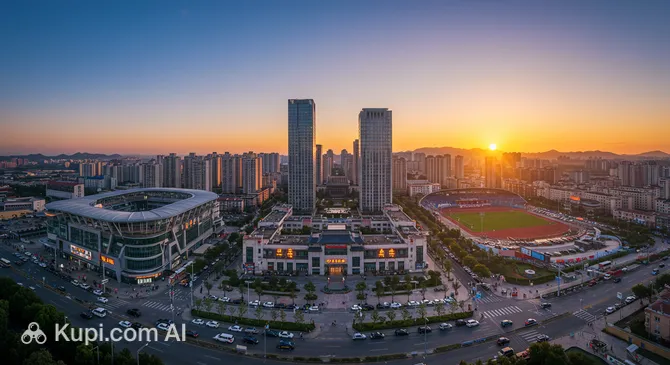
Liaoyuan is a fascinating city in Jilin Province in northeastern China, which harmoniously combines industrial heritage and natural splendor. Once an important coal mining center, today the city attracts travelers with its calm, measured atmosphere and proximity to picturesque landscapes. It is home to about 1.176 million people, making it quite lively yet free from the hustle and bustle of giant metropolises.
Liaoyuan. Illustration.
Source: Kupi.com AI
Surrounded by Manchurian forests and the majestic Longzhushan Mountains, the city offers unique opportunities for ecotourism. Liaoyuan's natural surroundings are a true oasis of silence, where you can enjoy clean air and authentic Chinese flavor. The city's history is closely linked to the development of the region; today, its streets preserve memories of industrial prosperity, intertwined with modern parks and recreation areas.
Visiting this region is an excellent choice for those who want to see a "different" China—provincial, hospitable, and very sincere. We invite you to get to know Liaoyuan to feel its unique rhythm of life and discover the beauty of northeastern landscapes.
Weather Overview
The climate of Liaoyuan belongs to the continental monsoon type, which means pronounced seasonality. Winter here is long, dry, and harsh: in January, the average temperature is about -12.3°C, but the thermometer often drops to -25°C and below. There is little snow, but due to stable frosts, it can linger for a long time.
Summer in the city is short but quite warm and humid. The hottest month is July, when the average air temperature reaches +24.5°C, and daytime maximums often exceed +28°C. The main volume of precipitation occurs during the summer months, especially in August, so it's worth taking an umbrella or raincoat on your trip. If you want to know more detail about what weather in the city awaits you in a specific month, we recommend checking the forecast in advance.
The transitional spring period deserves special attention. In March and April, the weather in Liaoyuan can be very changeable: pleasant daytime warmth is often replaced by night frosts. Overall, the most comfortable time to visit the city is from May to September, when nature is in bloom and the temperature regime is most favorable for walking and ecotourism.
Average monthly temperature
Average monthly precipitation
Interesting Facts
Coal Heart: For many decades, Liaoyuan has been one of the most important centers of the coal industry in the northeast of the country.
Manchurian Heritage: The city is surrounded by ancient Manchurian forests that have preserved their unique ecosystem and biodiversity.
Temperature Swings: In March, Liaoyuan often experiences sharp daily temperature fluctuations—from spring warmth during the day to noticeable frosts at night.
Natural Guardian: The Longzhushan Mountains are not only the main natural attraction but also serve as a natural shield for the city against strong winds.
Scale: Despite its "provincial" city status, Liaoyuan's population exceeds 1.1 million people, which is comparable to many large European capitals.
How to Get There
The transport accessibility of Liaoyuan is ensured by a developed railway network, making it a convenient destination for travelers exploring Jilin Province. If you are planning a trip, be sure to study the detailed information on how to get to the city in the most comfortable way.
The nearest major air hub is Changchun Longjia International Airport, located approximately 200 kilometers from Liaoyuan. From the airport, you can reach the city by taxi or order a transfer; the trip will take about 2–3 hours. There is currently no direct air service specifically to Liaoyuan.
The main way to get around is by train. Liaoyuan Railway Station accepts both high-speed trains and regular trains from major cities such as Changchun, Shenyang, and even Beijing (the journey from the capital takes about 6–8 hours). There is also a regular bus service; for example, a trip from Changchun by intercity bus lasts only about 2 hours.
The main attractions of Liaoyuan are inextricably linked to its natural surroundings. One of the most popular locations is the Longzhushan Mountains. This place is ideal for hiking and photography enthusiasts: the peaks offer breathtaking panoramic views of the city and its environs. Picturesque trails have been laid out here, allowing visitors to fully enjoy the silence and beauty of the wild nature.
No less attractive are the dense Manchurian forests surrounding the city. They represent an ideal platform for ecotourism, where you can get acquainted with the unique flora of the region. Walking along the forest paths gives a sense of complete privacy and tranquility, which is especially valued by tourists tired of the noise of big cities.
In the very center of Liaoyuan, it is worth paying attention to the historical buildings and city parks that reflect the city's rich industrial heritage. Although many sites here are oriented toward the daily life of local residents, they possess a special charm, allowing guests to immerse themselves in the authentic atmosphere of northeastern China. This is a place for those looking for understated but deep beauty in simple details and natural landscapes.
Local Cuisine
The culinary traditions of Liaoyuan are a vivid reflection of Jilin Province cuisine. Here, preference is given to hearty and simple dishes that help one keep warm in the cool climate of the northeast. The local diet is based on fresh vegetables, various mushrooms, and even game caught in the surrounding Manchurian forests. A characteristic feature of local gastronomy is the use of the freshest ingredients supplied by local farms.
Be sure to try classic North Chinese specialties: homemade noodles, aromatic dumplings with various fillings, and rich stews with meat and vegetables. These dishes can be found in small family taverns as well as larger restaurants in the city center. Local cuisine is characterized by moderate spiciness and rich flavor, which foreign tourists usually enjoy very much.
As for drinks, traditional tea culture is popular in Liaoyuan. Local establishments will offer you a wide selection of tea varieties. You can also find local varieties of rice wine here. For those who want to get to know the true taste of the city, street food markets are an excellent choice, where you can try hot snacks prepared right in front of you in a casual atmosphere.
Travel Tips
Preparing for your trip to Liaoyuan will help you make your journey as comfortable and enjoyable as possible. Here are some practical tips from experienced travelers:
Dress for the Season: If you plan to visit in winter, be sure to bring serious winter gear, as frosts can reach -25°C. For spring and summer trips, comfortable shoes for mountain walks and a light jacket for cool evenings will be useful.
Finance and Payment: Always carry cash Yuan with you. Although Alipay and WeChat Pay are used everywhere in China, international cards are not accepted everywhere, and small shops and markets may prefer cash.
Navigation: Install the Baidu Maps app or similar on your smartphone, as Google Maps does not work correctly in China. Offline maps will also be useful when hiking in the forests.
Communication: Buy a local SIM card at the airport or an official operator's office for stable internet. Wi-Fi is usually available in hotels, but a VPN may be required for many familiar services to work.
Etiquette: Be polite and patient. There are few foreign tourists in Liaoyuan, so locals may show curiosity toward you. Knowing a few basic phrases in Chinese (for example, "Nihao" for hello) will significantly simplify communication.
Health: Pharmacies are common in the city, but medicine names will be in Chinese. It is recommended to have a basic first-aid kit with medications you are used to.
What to Avoid: Do not discuss sensitive political topics and try not to photograph military or government facilities without permission.
Eco-Tip: When visiting the Longzhushan Mountains and Manchurian forests, be sure to take your trash with you to preserve the unique nature of the region in its original form.
May your introduction to this cozy corner of Jilin Province be filled only with positive emotions and amazing discoveries!
Entertainment & Nightlife
Entertainment in Liaoyuan is predominantly calm and contemplative, focused on the daytime. The main emphasis is on active outdoor recreation: hiking in the Longzhushan Mountains and walking through the surrounding forests are the primary leisure activities for both locals and visitors.
Nightlife in the classic sense—with noisy clubs and large-scale bars—is practically non-existent in the city. Instead, evening leisure can be spent in cozy local tea houses, where traditional varieties of tea are served in an authentic setting. This is a wonderful opportunity to get acquainted with the culture of provincial China and relax in silence after a busy day of walking.
For family vacations, city parks are excellent, becoming centers of social life in the evening. Here you can see citizens practicing gymnastics, dancing, or just walking by the ponds. The atmosphere in Liaoyuan is exceptionally safe and friendly, which is conducive to leisurely strolls along the illuminated central streets of the city.
Parks & Museums
The main assets of Liaoyuan are its natural areas. Longzhushan Mountain Park is a place where nature meets culture. Here you can find well-maintained walking trails, picnic areas, and observation decks. Liaoyuan's city parks are famous for their fresh air and abundance of greenery, making them ideal for relaxing after excursions.
The cultural component of the city is represented by small but interesting museums. A special place is occupied by exhibitions dedicated to the history of the coal industry. These museums tell the story of the local residents' hard work and how coal mining shaped the modern appearance of the region. Visiting such exhibitions allows for a deeper understanding of the city's economic importance to northeastern China.
For a more complete immersion in the region's atmosphere, it is recommended to combine visiting museums with trips to nearby nature reserves. The Manchurian forests surrounding Liaoyuan are an "open-air museum" themselves, where you can see rare plant species and enjoy the untouched beauty of northeastern landscapes.
Getting Around
The public transport system in Liaoyuan is mainly represented by an extensive network of bus routes. Buses run between the city center, the railway station, and the outskirts, providing stable connections between key areas. The fare is inexpensive, but tourists should prepare small cash in advance or use mobile payment applications if they are set up.
For more comfortable and faster trips around the city, taxis are ideal. Cars can be hailed directly on the street or called via the popular Didi app in China. Taxi prices in Liaoyuan are very affordable, making this type of transport the primary choice for travelers. If you are planning a trip to the mountains or suburban forest areas, you can use the services of local minibuses.
There are no metro or tram lines in the city, so the main load falls on ground transport. In the summer, bicycles become a popular way for locals to get around, which can be a great option for leisurely exploring the central streets. Overall, the city's transport system is simple and clear, allowing you to easily reach any desired point.
Accommodation
For tourists planning a visit to Liaoyuan, the most convenient option would be to stay in the city center. This is where most mid-range hotels and cozy guesthouses are concentrated, offering an optimal balance of price and quality. Proximity to the railway station and bus station makes these areas especially attractive for those who value mobility.
If your goal is ecotourism and outdoor recreation, look into small eco-lodges and holiday homes located closer to the foot of the Longzhushan Mountains. Such accommodation allows you to wake up with a view of the forest and enjoy the silence away from city blocks. In general, budget and mid-priced accommodation options prevail in the city, while international hotel chains are practically not represented here.
To book accommodation in Liaoyuan, it is recommended to use popular Chinese platforms such as Ctrip (Trip.com), which offer the most complete selection of properties. Keep in mind that during national holidays, demand for accommodation increases, so it is better to book a room in advance. Accommodation prices here are very affordable compared to China's major metropolises.
Nearby Cities
Liaoyuan serves as an excellent starting point for exploring the northeastern region, offering travelers several interesting destinations for short trips. Thanks to the developed road network and railway connections, you can easily visit neighboring cities and nature reserves.
Just 61 kilometers away is the city of Meihekou, which is famous for its park areas and is a great place for walking. It is also worth paying attention to Siping—a major transport and cultural hub of the region, located 72 kilometers away. If you have time for a longer trip, you can head to the provincial capital, Changchun, where rich museums and a famous movie theme park await you.
The region around the city is rich in forests and hilly landscapes, so any trip outside the city limits will give you many pleasant impressions from contemplating Jilin's nature. We recommend not limiting yourself to the center of Liaoyuan and definitely visiting neighboring towns to better understand life in this part of China.
Shopping & Souvenirs
Shopping in Liaoyuan is primarily an opportunity to purchase unique natural products and locally made goods. The city does not claim to be a fashion capital, but its central markets will offer you a lot of interesting things. Here it is worth paying attention to the gifts of the local forests: dried mushrooms, wild honey, and various medicinal herbs for which Jilin Province is famous.
As souvenirs from Liaoyuan, coal products are often brought back—these are unique crafts that recall the city's industrial past and present. Traditional Chinese teas and folk crafts are also popular. Shopping areas located near the railway station are convenient for buying everyday items and necessities.
There are large shopping centers in the city, but their number is limited. Most shops are open from morning until late evening, roughly from 9:00 to 21:00. Regarding payment, large outlets accept cards and payment systems (Alipay, WeChat Pay), but in markets and small shops, it is better to have cash Yuan with you.