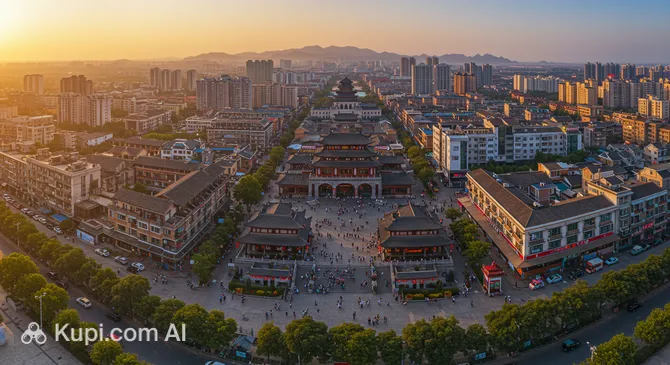
Located in the heart of Liaoning Province, Xinmin is a classic industrial and agricultural hub of Northeast China. As an administrative part of the major metropolis of Shenyang, this city maintains a calm, everyday atmosphere where life flows to the rhythm of production and seasonal work. Here, you won't find the hustle and bustle of tourist capitals, allowing travelers to see the authentic, unvarnished life of the provincial region.
Geographically, the city is situated on flat plains, which historically facilitated the development of agriculture and light industry. With a population of about 680,000, Xinmin is considered an important transit point. Despite its industrial character, the history of this region is rooted in ancient times, leaving behind archaeological traces of ancient cultures and monuments from various eras.
Xinmin. Illustration.
Source: Kupi.com AI
Among the city's key features are preserved cultural sites such as the ancient city of Liaobin and a local mosque, which testifies to the multi-ethnic composition of its residents. A visit to Xinmin is an excellent choice for those seeking authenticity and wanting to explore Liaoning's industrial heritage away from the usual routes. We invite you to take a walk through its streets and experience the sincere hospitality of the country's northeast.
Weather Overview
The climate in Xinmin is distinctly moderate continental, typical for the northeastern region. Travelers should prepare for significant seasonal temperature fluctuations. Winters here are cold and predominantly dry: in January, the average temperature is around -9°C, but it often drops to -15°C and below. Summers, by contrast, are warm and humid with frequent monsoon rains: in July and August, the air warms up to +26...+30°C.
Precipitation is unevenly distributed—most of it falls during the summer months, especially in July and August, when rainfall can reach 170 mm per month. Transition seasons, spring and autumn, are quite short but pleasant for walking, though sharp cold snaps are still possible in April and October. For those planning a trip, it will be useful to check a detailed weather forecast for Xinmin in advance.
An important feature of the local climate is the possibility of smog in winter due to the operation of heating systems and industrial activity. The terrain contributes to the accumulation of pollutants, so air quality may decrease on windless days. When packing, focus on warm, layered items for winter and light clothing with an umbrella for a summer visit.
Average monthly temperature
Average monthly precipitation
Interesting Facts
Metropolitan Connection: Although Xinmin is an independent administrative unit, it is closely integrated into Shenyang's infrastructure, serving as its industrial and residential satellite.
Ancient Roots: The Gaotaishan archaeological site is located within the city limits, preserving traces of settlements that date back thousands of years.
Religious Mix: The Xinmin Mosque is one of the oldest and most significant Islamic sites in the region, highlighting the centuries-old coexistence of different ethnic groups.
Agrarian Leader: The region around the city is known as one of the leading producers of corn and agricultural products in Liaoning Province.
Historical Memory: The nearby Pingdingshan Memorial is an important national heritage site dedicated to historical events from the period of the Japanese occupation.
How to Get There
The transport accessibility of Xinmin makes it convenient to visit as part of a trip through the northeast region. The city is located just 70 kilometers from Shenyang, making it easy to reach by both public transport and car. Most travelers arrive through neighboring major transport hubs, ensuring stable connections with the key cities of Liaoning Province.
The nearest major air hub is Shenyang Taoxian International Airport (IATA: SHE), located about 60 kilometers away. This is a modern terminal accepting flights from all over China and abroad. The journey from the airport to the center of Xinmin by taxi or bus takes about an hour, though potential peak-hour traffic at the metropolis exits should be considered.
Railway communication is the most reliable and fastest way to get to the city. Xinmin Railway Station serves trains running on the Shenyang–Changchun line. Travel time from Shenyang is between 40 and 60 minutes. Additionally, high-speed trains run from Beijing to Shenyang (2-3 hours), after which you can easily transfer to a local train. For those who prefer buses, regular services depart from Shenyang via the G1 expressway.
If you plan to study transport routes and schedules in detail, we recommend checking the latest information on how to get to Xinmin in advance. Self-driving via the G25 highway is also possible, but remember that traffic is heavy during morning and evening hours.
Main Attractions
Although Xinmin is not a major tourist hub, it hides several unique sites of great interest to history and archaeology enthusiasts. One of the most significant places is the Liaobin Ancient City. This historical site allows you to touch the heritage of Liaoning Province and see how settlements in this region developed over centuries.
For those interested in prehistoric times, the Gaotaishan Site is a must-visit. Artifacts from ancient cultures were discovered here, shedding light on the lives of the first settlers in the river valleys of Northeast China. This site is particularly valued by historians for the richness and preservation of its finds.
The region's cultural diversity is vividly reflected in the Xinmin Mosque. This active Islamic temple serves as an important spiritual center for the local community and is an interesting example of architectural fusion. The city also houses a memorial at the Pingdingshan Massacre Sites, which preserves the memory of tragic historical events from the last century and is a place of deep respect.
While residential and industrial quarters predominate in the city itself, its central squares and lively markets are attractions in their own right, showcasing authentic Chinese flavor. Here, you can observe the daily life of citizens, which has remained unchanged for many decades.
Local Cuisine
The gastronomy of Xinmin is inextricably linked to the traditions of Liaoning Province and Manchu heritage. Local cuisine is characterized by its heartiness and an abundance of meat dishes. The main focus is on the use of pork, beef, and fresh vegetables grown on nearby farms. Dishes often have a rich flavor thanks to the addition of soy sauce, garlic, and ginger.
Among the local specialties, be sure to try chaomian—stir-fried noodles with meat and seasonal vegetables—as well as hearty soups with sauerkraut, which are especially popular during the cold season. Manchu influence is evident in the locals' love for smoked meats and cornmeal products. Due to the proximity to the region's water resources, freshwater fish dishes are also frequently found on the menus of local establishments.
The food culture in the city is simple and authentic: the best flavors can be found in small family restaurants near the station or at food markets. Lunch in such an establishment will cost only 20–50 yuan. Street food is represented by various types of dim sum, steamed baozi buns, and fried rice. For drinks, locals prefer strong tea or local beer brands, which perfectly complement spicy and pungent snacks.
Travel Tips
Planning a trip to Xinmin requires considering the specifics of an industrial region. These tips will help make your stay more comfortable and avoid annoying surprises.
Clothing for the Season: In summer, take light clothes made of natural fabrics and insect repellent; in winter, bring very warm clothing, as temperatures can drop to -15°C. Comfortable shoes are essential for walking around industrial zones.
Transport Apps: Install Baidu Maps or Amap, as Google Maps does not work correctly in China. Use Didi for calling taxis—it will save time and nerves.
Financial Matters: International cards are rarely accepted. Be sure to set up Alipay or WeChat Pay linked to your card or carry a sufficient supply of cash yuan.
Health: Smog is possible during the winter and on windless days. It is recommended to carry a protective mask (N95 standard), especially if you have sensitive lungs.
Language Barrier: English is practically not spoken here. Download an offline translator and carry a card with the hotel's name in Chinese.
Etiquette: Be polite and patient. Loud talking in public places is normal; do not perceive it as aggression. Observe the dress code when entering the mosque (covered shoulders and knees).
What to Avoid: Do not photograph military or restricted industrial sites without permission. Also, it is not advisable to walk in unlit industrial outskirts late at night.
Connectivity: Buy a local SIM card in Shenyang upon arrival, as it might be harder to find a sales point serving foreigners in Xinmin itself.
Despite its simplicity, Xinmin will give you a unique experience of real life in Northeast China. Have a pleasant trip!
Entertainment & Nightlife
Leisure in Xinmin is largely oriented towards a traditional lifestyle and family values. Nightlife in the classic sense—with bright clubs and bars—is practically non-existent here. Local residents prefer to spend their evenings in cozy cafes or strolling through city parks and squares. For loud parties and modern concert venues, residents usually head to neighboring Shenyang, which is about an hour away.
Daytime entertainment is concentrated around the central districts of the city, where you can find small arcades, cinemas, and karaoke parlors—a popular way to spend time in China. The atmosphere in these establishments is simple and casual, with no strict dress code, and the crowd consists mainly of local workers and young people.
For those who prefer a quiet rest, the city offers walks through the central squares, where you can often see group dancing or outdoor gymnastics in the evenings. In terms of safety, Xinmin is considered a peaceful city, though it is recommended to use official taxi apps for nighttime travel, as lighting on the outskirts and in industrial zones may be insufficient.
Parks & Museums
The green zones of Xinmin are primarily functional, providing residents with space for recreation and sports. There are few parks, and the landscaping is typical for an industrial center: small squares and alleys along the streets. Nevertheless, Qixing Mountain may be of interest to tourists—a natural area suitable for leisurely walks and viewing the surroundings from a height.
The city's cultural life is reflected in its specialized museums. One of the most notable sites is the Gongrencun Living Museum, a museum of a workers' village that vividly demonstrates the daily life and living conditions of laborers during the region's industrial boom. This place allows for a deeper understanding of the social history of Northeast China and a chance to feel the spirit of a bygone era.
History buffs should also pay attention to archaeological sites such as the Ye Maotai Liao Dynasty Tombs. These sites, although located some distance from the center, are of great value for understanding the province's ancient heritage. The city's museum scene is modest, but each site carries an important piece of local identity.
Getting Around
The transport system of Xinmin is simple and efficient, fully meeting the needs of an industrial city. The basis of public transport consists of buses and numerous minibuses that connect the center with the outskirts and industrial zones. Fares are extremely affordable—usually ranging from 1 to 2 yuan—and daytime intervals vary from 10 to 20 minutes.
It should be noted that during peak hours (7 to 9 AM and 5 to 7 PM), transport can be very crowded with workers from local enterprises. There is no metro in the city, but thanks to the compactness of the center, many important sites are within walking distance of the railway station, which serves as the city's main transport hub.
Taxis serve as a convenient alternative to buses and are inexpensive here (a trip around the city costs between 5 and 15 yuan). It is recommended to use the official Didi app to hail a car to avoid misunderstandings with drivers. E-scooters and bicycles are also popular among residents—a great way to move quickly through the city's flat streets during the warmer months.
Accommodation
The hotel infrastructure in Xinmin is primarily aimed at business travelers and people visiting the city for work. Mid-range hotels and budget accommodation options predominate here. The main concentration of hotels is found near the railway station and along the main city thoroughfares, which is convenient for quick transport transfers.
A typical housing option is Chinese hotel chains, such as Jinjiang Inn, which offer a standard set of services at a reasonable price (usually from 100 to 300 yuan per night). Serviced apartments for long-term rent are also popular, often chosen by specialists coming to work at local enterprises. There are no luxury five-star resorts in the city itself; for those, it is better to look for accommodation in neighboring Shenyang.
When planning your trip, consider that during Chinese public holidays, availability in the best quality hotels may be limited. We advise booking accommodation in advance through major international or Chinese services (such as Trip.com). Also, remember that when checking into a hotel or private apartment, foreign citizens must ensure the property is licensed to host foreigners and performs the mandatory police registration.
Nearby Cities
Thanks to its favorable location, Xinmin can serve as an excellent starting point for exploring the attractions of Liaoning Province. Well-developed rail and bus connections allow tourists to easily plan day trips to neighboring cities, each of which has its own unique character.
Just 55 kilometers away is Shenyang, the region's largest metropolis. This is a must-visit destination for those wanting to see the Mukden Palace, visit numerous museums, and explore shopping centers. It can be reached in less than an hour by train or bus. Another interesting option is a trip to the ancient city of Liaoyang, famous for its rich history, temples, and pagodas reflecting the heritage of the Liao and Jin dynasties.
For lovers of quieter routes, Tieling or Diaobingshan are suitable choices. Meanwhile, Fushun is worth visiting to learn about China's industrial history and explore the picturesque natural parks nearby. Most of these cities are reachable within a 1.5–2 hour drive, making them ideal for short excursions.
The region around the city offers many options for expanding your horizons: from majestic architectural monuments to modern industrial landscapes. Exploring the surroundings will allow you to form a more complete picture of life in the country's northeast.
Shopping & Souvenirs
Shopping in Xinmin is primarily about experiencing local flavor and affordable prices. There are no massive, ultra-modern shopping malls with world-famous brands, but traditional markets and shopping streets are plentiful. Main commercial activity is concentrated near the railway station and on central avenues, where clothing stores sit alongside hardware shops.
For tourists, the local markets are of greatest interest, where you can find high-quality produce, fresh fruit, and everyday goods at very low prices. This is a great place to observe how locals shop. Outlets typically operate from early morning until 7–8 PM. Most places accept payment via popular apps like Alipay and WeChat Pay, though cash may still be required in small shops on the outskirts of the city.
As souvenirs from the city, it is worth bringing back products from the local craftsmen of Liaoning Province. Look for quality textiles, linen products, and local tea. The region is also famous for its agricultural products, which can make excellent gastronomic gifts. Despite the lack of a Tax-Free system in small shops, shopping in Xinmin remains profitable due to the absence of "tourist" markups.