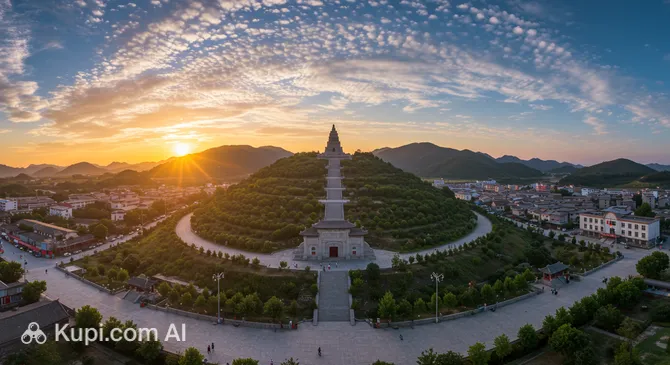
Beipiao is a colorful city in Liaoning Province, located in the northeastern part of China. As an important industrial center of the region, it attracts travelers not so much with metropolitan glitz, but with its authentic atmosphere of a working-class city and its unique paleontological heritage. Home to about 496,000 people, life here flows at the steady, measured pace typical of the country's industrial hubs.
Beipiao. Illustration.
Source: Kupi.com AI
Geographically, the city is surrounded by picturesque mountains and valleys, creating an interesting contrast with the industrial landscapes of coal mines. The region's rich history is inextricably linked to mining, which for decades defined the look and character of the local infrastructure.
For tourists, Beipiao reveals an unexpected side thanks to sensational fossil discoveries—it was here that the remains of unique feathered dinosaurs were found. We invite you to explore this rugged yet welcoming land, where industrial power meets the mysteries of the prehistoric era.
Weather Overview
Beipiao is dominated by a moderate continental climate, typical of the northeastern region of China. The weather here is characterized by distinct seasonality: harsh, dry winters give way to warm and fairly humid summers. If you are planning a trip, be sure to check the expected weather in the city for your visit dates.
Winter months, especially January, are characterized by low temperatures that can drop to -13°C and below. Summer brings pleasant warmth: in July and August, the average high is around +28..+30°C. Most precipitation occurs during the summer period, while winter remains practically snowless. The industrial nature of the city and its location in valleys can contribute to the accumulation of haze, especially on windless winter days.
Average monthly temperature
Average monthly precipitation
Interesting Facts
Fossil Capital of the World: Beipiao gained international fame due to finds in the Sihetun area, where the rarest remains of early feathered dinosaurs were discovered, changing scientific understanding of bird evolution.
Industrial Heritage: The city grew around massive coal deposits, and today you can see grand examples of industrial architecture, including old mines like Haizhou.
"Great Black Mountain": Daheishan National Forest Park is famous not only for its flora but also for a network of mysterious caves that attract speleologists and adventure seekers.
Rare Birds and Lizards: The local paleontological museum houses "Sinosauropteryx"—the first dinosaur for which scientists officially confirmed the presence of feathers.
How to Get There
Transport accessibility to Beipiao largely depends on the regional hubs of Liaoning Province. The city does not have a direct high-speed rail connection, so travelers often use combined routes through major neighboring centers.
The nearest air hub is Chaoyang Airport (IATA: BPP), which receives flights from Beijing and other major Chinese cities. Flight time from the capital is about 1–2 hours. After arriving at the airport, you can reach the center of Beipiao by transfer or taxi. If you are planning a trip, be sure to check the current information on how to get to the city by various modes of transport.
Railway communication is handled through stations in neighboring cities. Shenyang is the most convenient hub, with regular buses running to Beipiao. The journey by car or bus from Shenyang takes about 2–3 hours, though potential traffic delays on regional highways should be considered, especially during peak hours.
Despite its industrial status, Beipiao offers several unique locations that will truly surprise nature and history enthusiasts. One of the region's main gems is Dahei Mountain (Daheishan). This national park, with its dense forests and winding trails, is perfect for hiking and taking a break from the city bustle.
For those interested in archaeology, the Feng Sufu Tomb is a must-see. These ancient ruins allow visitors to touch the region's distant past and appreciate the cultural heritage of the ancient dynasties that once ruled these lands. Water lovers should head to the Baishi Reservoir, where architectural features are harmoniously integrated into the surrounding landscape.
The Beipiao Museum, located within the city, is also worth a visit. It houses exhibits telling the story of the region's formation and its industrial development. If you want to see where the city's heart beats, stop by Shiji Square—the central gathering point for locals where public events are frequently held.
Local Cuisine
The gastronomy of Beipiao reflects the traditions of Northeast China (Liaoning cuisine), where hearty, warming dishes with rich flavors are prized. The diet is based on pork, various noodles, and seasonal vegetables. A characteristic feature of the local cuisine is the combination of salty and spicy notes, as well as the active use of fermented products.
You should definitely try traditional jiaozi dumplings with various fillings and thick soups with sauerkraut, which are especially popular during the cold season. Among street foods, fried noodles prepared on large pans right in front of you stand out. As for drinks, locals prefer strong tea or local light beer, which complements spicy dishes perfectly.
The food culture in the city is centered around small family cafes and canteens located near the central squares. There are no fancy restaurants here, but the food is always fresh and simple. For the most complete immersion in local flavor, we recommend checking out establishments near the Beipiao Museum, where you can meet both workers and visiting fossil hunters.
Travel Tips
A trip to an industrial center in China requires some preparation. These practical tips will help make your visit to Beipiao more comfortable and interesting.
Clothing and Essentials: Pack your wardrobe based on the continental climate. You will need very warm clothes in winter (temperatures drop to -20°C) and light clothing with sun protection in summer. Be sure to bring comfortable shoes for visiting paleontological parks.
Transport: The best way to get around is the Didi app. For trips to remote areas like Sihetun, it is better to hire a taxi for the whole day, as it can be difficult to catch a car back.
Finance: The primary currency is the Chinese Yuan (CNY). Use of Visa/Mastercard is limited, so be sure to install AliPay or WeChat Pay and link a card in advance.
Health and Environment: Due to the coal industry, air quality can be low. In winter and windy weather, it is recommended to use protective masks to avoid inhaling mine dust.
Communication: English is practically not spoken in the city. Download an offline translator and carry a hotel card with the address in Chinese.
Local Etiquette: Beipiao is a city of workers; punctuality and politeness are valued here. Greet people with a slight nod, and hand over gifts or business cards with both hands.
What to Avoid: Do not attempt to enter the territory of active mines or closed industrial facilities—this is unsafe and prohibited by law.
Extra Tip: Visit the Fossil Museum in the morning hours when there are fewer tour groups from neighboring cities to view the exhibits in peace.
Beipiao is a place for those looking for the real, unvarnished life of provincial China. Be open to new experiences, and this city will reveal its ancient secrets to you!
Entertainment & Nightlife
Entertainment in Beipiao is primarily quiet and family-oriented. There are no noisy nightclubs or high-end bars, as the city lives in the rhythm of an industrial center. The main place for evening walks and meetings is Shiji Square, where locals gather in the warmer months, street stalls operate, and life flows at a leisurely pace.
Those looking for cultural leisure should focus on daytime activities. The city has cinemas and small cultural centers. If you are looking for more active nightlife, locals recommend heading to nearby major cities like Chaoyang or Shenyang, which are one to two hours away by train.
In winter, trips to nearby ski resorts, such as the Daogunan Mountain Ski Field, are a popular activity. For nighttime travel around the city, it is best to use official taxi services, as public transport stops running quite early. Generally, central districts are perfectly safe for evening walks, though it is best to avoid the industrial outskirts due to poor lighting.
Parks & Museums
The main pride of Beipiao is its specialized museums. The undisputed leader is the Beipiao Fossil Museum, which features unique collections of Mesozoic flora and fauna. Equally interesting is the research center in Sihetun (ZhongGuo SiHeTun), where you can see actual excavation sites and learn how ancient reptiles evolved into birds.
The city's natural areas are primarily represented by the Daheishan Forest Park. This is a vast territory covered with dense forests that serves as the "green lungs" of the industrial district. There are walking trails here, and the peaks offer panoramic views of the surroundings. Another interesting natural spot is Taohua Mountain, popular among local hiking enthusiasts.
For those who want to combine an outdoor walk with a history lesson, the Feng Sufu Tomb area is ideal. Although this site is primarily a historical monument, the surrounding landscape is perfect for quiet contemplation. In the very center of the city, Shiji Square remains a popular recreation spot; although it is an urbanized space, it serves as the main park for residents of the central quarters.
Getting Around
The public transport system in Beipiao is primarily represented by a network of bus routes and taxis. There is no metro or tram in the city, as its layout and scale allow for surface transport. Buses connect the main residential areas with the station, museum, and industrial zones, and the fare remains very affordable.
Tourists should keep in mind that during peak hours, buses can be very crowded with mine and factory workers. In such cases, it is more convenient to use a taxi or the Didi service (the Chinese equivalent of Uber). A taxi ride across the city usually takes 15–20 minutes, though traffic jams typical of industrial centers are possible on main thoroughfares.
In summer, bicycles and electric scooters are popular ways for locals to get around. For travelers without knowledge of Chinese, navigating by bus can be difficult due to the lack of English stop names, so it is recommended to prepare the names of required destinations in Chinese characters beforehand or use navigation apps on a smartphone.
Accommodation
Accommodation options in Beipiao are primarily focused on practicality and functionality. While it is difficult to find luxury five-star international chain hotels, the city offers a decent selection of mid-range hotels and apartments popular with business travelers and specialists visiting industrial sites.
For a short-term visit, tourists are recommended to choose accommodation in the central part of the city, close to Shiji Square. This provides the best access to the few cafes, shops, and transport links. For those seeking home comfort, local homestays like Beipiao Qike Xunmeng Homestay offer an authentic living experience.
If you plan to visit during holidays or major paleontological conferences, it is worth booking accommodation in advance, as the city's room capacity is limited. Most bookings are made through Chinese online platforms, but larger hotels are usually available on international services as well. The average price range here is significantly lower than in megacities, making stays very budget-friendly.
Nearby Cities
The city of Beipiao is an excellent starting point for exploring the surrounding attractions of Liaoning Province. Thanks to a developed bus network, many interesting locations are accessible as part of a day trip.
Just 37 kilometers away is the major cultural center of Chaoyang. A trip there takes about an hour and allows you to visit famous museums and ancient pagodas. You should also pay attention to the industrial city of Fuxin, known for its unique agate products, and historical Jinzhou, where magnificent temple complexes have been preserved.
We highly recommend setting aside time to explore these neighboring cities, as each complements the picture of life in Northeast China with its unique traditions and architectural monuments.
Shopping & Souvenirs
Shopping in Beipiao is primarily an introduction to local flavor and the daily life of the residents. There are no giant modern malls in the city, but trade is well-developed in traditional markets and small department stores. Most commercial activity is concentrated around Shiji Square and its adjacent streets, where you can find everything from clothing to household goods.
If you are looking for unusual souvenirs, look for fossil replicas sold in specialized shops at the museums. This is a unique gift that serves as a reminder of the region's paleontological fame. You should also look at local varieties of tea and stone products, which are traditionally valued in this part of Liaoning Province.
Most shops are open from morning until 7:00 PM or 8:00 PM. Payment is most often made through mobile apps (AliPay or WeChat Pay), so tourists should set up these services in advance. Cash is accepted everywhere, but international cards do not work in many places, so it is always useful to have a small supply of yuan on hand.