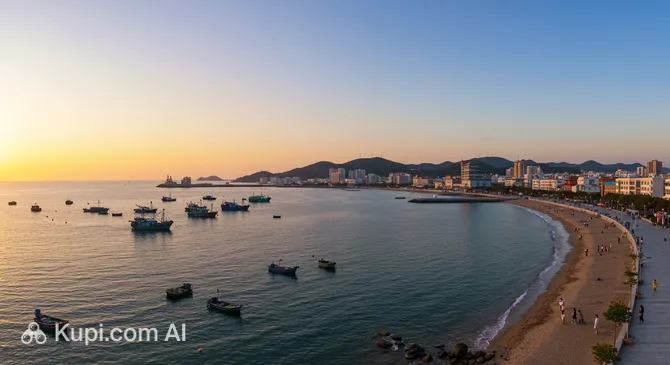
Linhai is a quiet and dynamically developing county-level city in China, located in Liaoning Province. As part of the Jinzhou prefecture-level city, this town combines the atmosphere of a traditional northeastern county with modern residential neighborhoods and industrial zones. With a population of about 412,000, Linhai serves as an important link on the route from Beijing to the region's major centers.
Linghai. Illustration.
Source: Kupi.com AI
The city's rich history is closely tied to the development of transport routes and agriculture in the province. Although Linhai is not a mecca for mass tourism, it attracts travelers with its authentic "real China" atmosphere, where life flows at a measured pace and local hospitality is evident in the details of daily life and traditional market rows.
Key features of the city include its role as a vital logistics hub and its proximity to natural areas such as Mt. Bijia. A visit to Linhai is an excellent addition to a journey through the country's northeast for those seeking tranquility and wanting to see life in the Chinese provinces without the usual tourist bustle.
Weather Overview
The climate in Linhai is moderate continental with monsoon characteristics, typical for the entire Liaoning Province. Winters here are quite harsh and dry: the average temperature in January is about -6.5°C, but it often drops to -11°C. Summer, on the other hand, delights with warmth and sunny weather — in July and August, the thermometer usually stays around +25...+29°C.
Precipitation falls mainly in the summer months, with August considered the wettest period of the year. If you are planning a trip, keep in mind that the weather in the city can be quite changeable during the transitional seasons. Winter is characterized by clear skies and low humidity, although the cool wind requires warm clothing.
Thanks to the flat terrain, good air circulation is maintained in the city; however, during dry periods or during the heating season, increased dust may be observed. The optimal time to visit is late spring or early autumn, when the most comfortable temperature balance is established without excessive humidity.
Average monthly temperature
Average monthly precipitation
Interesting Facts
Linhai is a city with a poetic name that hides interesting historical and geographical features.
Translated from Chinese, the name "Linhai" means "soaring over the sea." This name harks back to a time when the coast of the Bohai Sea was significantly closer to the city boundaries.
The county-level city possesses an impressive territory—its area is approximately 2,786 square kilometers, making it one of the largest administrative entities of its type in Liaoning Province.
Despite its "maritime" name, the modern city center is located about 100 kilometers inland from the coast.
Linhai officially received county-level city status relatively recently—this happened in 1986 during the region's administrative reform.
The city is a strategic transport link through which the vital Shenyang – Dalian railway line passes.
How to Get There
Linhai enjoys good transport connectivity due to its strategic position on the route from Beijing to the country's northeastern regions. The city serves as an important transit point, and getting here is quite simple. You can learn more about route details and schedules on the page describing how to get to the city.
The nearest aviation hub is Jinzhou Airport, located about 30 km away. It accepts regular flights from megacities such as Beijing and Shanghai. You can reach Linhai from the airport by taxi in about 40 minutes. Another popular option is flying to Shenyang, from where high-speed trains run to the city.
Railway transport is the most convenient and popular method. Linhai Station is on the Beijing–Shenyang line. A high-speed train journey from Beijing to neighboring Jinzhou takes about 6–8 hours, after which you can quickly transfer to a local bus or taxi to the center of Linhai. Direct bus services from Shenyang via the G1 expressway are also available.
Although Linhai is primarily an industrial and residential center, there are several places worth a traveler's attention. The city's Central Square serves as the main gathering place for residents: here you can feel the rhythm of local life, watch the locals' evening activities, and appreciate the modern architecture of the county center.
For nature lovers, the main point of attraction is Mt. Bijia (Bijia Mountain). This is the closest natural area to the city, offering well-maintained trails for hiking. Climbing the mountain allows you to take a break from the urban landscape and enjoy panoramic views of the surrounding Liaoning plains.
Visiting Linhai's local markets is another interesting experience. These are not just places to shop, but true centers of social life where you can find everything from fresh farm products to unique items of local household use. For those seeking more large-scale cultural experiences, Jinzhou, with its numerous parks and museums, is just 30 kilometers away.
Local Cuisine
Linhai's gastronomic traditions are closely linked to the culinary heritage of Liaoning Province, where preference is given to hearty and aromatic dishes. The foundation of local cuisine consists of flour-based items: be sure to try the famous jiaozi — Chinese dumplings filled with meat and vegetables, as well as the classic fried noodles with beef, prepared here according to traditional northern recipes.
A special place in street food culture is held by shaoshimi — appetizing fried dumplings that are extremely popular with locals. Due to the proximity to the Bohai Sea region, restaurants often serve seafood dishes, although they are not as varied as in coastal cities. For a drink, most people choose classic green tea or the local Liaoning light beer.
The city's culinary scene is concentrated around the central shopping streets and the railway station. Here you can find both cozy family restaurants and popular chain establishments specializing in hot pot (Chinese fondue). Food prices in Linhai are very democratic, and portions in local eateries traditionally please with their volume.
Travel Tips
When planning a trip to Linhai, check out these practical tips that will help make your stay in the city as comfortable and interesting as possible.
Clothing and Essentials: When packing for a winter trip, take a warm down jacket, as frosts can reach -10°C. In summer, light cotton clothing and comfortable shoes for walking will come in handy. Don't forget a universal travel adapter for power outlets.
Transport: The most convenient way to get around is by taxi via the Didi app. It is cheap and eliminates the need to explain the route to the driver.
Finances: The main currency is the yuan. International cards are rarely accepted, so be sure to install and link your card to Alipay — this is the universal payment method in China.
Health: The city is safe, but the air can be dusty during the heating season. People with allergies should carry a protective mask. Pharmacies are easy to find in the central district.
Communication: English is a great rarity here. Download an offline translator in advance and save the address of your hotel and the station in Chinese characters.
Local Etiquette: Residents of Linhai are very friendly. A traditional greeting is a slight nod. Remember that it is not customary to leave tips in Chinese restaurants.
What to Avoid: It is best not to plan long walks through industrial areas on the outskirts late at night due to poor lighting and heavy traffic.
Additional Tip: If you are looking for more comfort, use Linhai for day trips and choose neighboring Jinzhou as your base for accommodation.
May your introduction to Linhai bring only positive emotions and allow you to take a new look at the multifaceted culture of northeastern China!
Entertainment & Nightlife
Linhai is a city with a relaxed pace of life, so do not expect a boisterous night scene in the conventional sense. The main form of evening leisure for locals and guests is visiting karaoke clubs (KTV), which are concentrated in the railway station area. This is a great opportunity to see how modern Chinese people in the provinces relax and spend time in good company.
European-style nightclubs and bars are virtually non-existent in the city, and life here quiets down quite early. Those looking for more active nightlife usually head to neighboring Jinzhou, which can be quickly reached by taxi. In Linhai itself, the evening is best spent strolling across the illuminated Central Square or visiting cozy street cafes.
During the day, entertainment is mostly limited to walks in city squares and visits to local markets. In the summer, local festivals and fairs are sometimes held in the city, where you can see performances by folk groups. The city is completely safe for nighttime walks in central areas, and it is best to use the Didi app to call for transport.
Parks & Museums
The main place for outdoor recreation and walking in Linhai is Central Park, located next to the county's main square. This cozy space serves as a popular meeting point for residents: here you can see groups of people practicing Tai Chi or simply enjoy the silence among well-kept alleys. Although the park is small, it is an important oasis of nature in the urban environment.
For those who prefer active recreation and hiking, a visit to Mt. Bijia is recommended. This natural area offers several trails that lead through picturesque slopes to observation decks. From the summit, there is a beautiful view of the flat landscapes of Linhai and the surrounding fields, making it an ideal spot for a short weekend hike.
Linhai currently has no major museums of its own, so for a deep immersion into the region's history, tourists usually head to the museums of neighboring Jinzhou. Nevertheless, a walk through the old quarters of Linhai and an inspection of the railway station's architecture allow you to feel the historical spirit of the county, which served as an important transport and agricultural hub of northeastern China for many years.
Getting Around
The public transport system in Linhai is represented by an extensive network of bus routes. Buses run between the railway station, central markets, and residential outskirts at intervals of 15–30 minutes. This is the most economical way to get around the county, making it easy to reach the main points of interest during the day.
For faster and more comfortable travel, residents and tourists often choose taxis. A trip around the city usually costs between 5 and 20 yuan. It is most convenient to call a car via the Didi app, which allows you to see the cost and route of the trip in advance. Also, electric scooters and bicycles are extremely popular in Linhai and can be found at every turn.
The most important transport hub is Linhai Railway Station, connecting the city with the province's largest centers. Travelers should remember that bus services quiet down by evening, so for late-night trips, a taxi becomes the only reliable option. Overall, the city's transport infrastructure is simple and functional, making navigation intuitive.
Accommodation
The choice of accommodation directly in Linhai is primarily aimed at transit travelers and those visiting the region for business. The bulk of available accommodation consists of budget guesthouses and hostels located near the railway station. Prices here start from 100 yuan per night, making the city very affordable for budget-conscious tourists.
For those planning a longer stay, apartment rentals are common in Linhai, with prices significantly lower than in the province's larger cities. If you are looking for high-end hotels with international service standards, it is recommended to consider options in neighboring Jinzhou, where the selection of mid-range and luxury hotels is much wider.
When planning your trip, keep in mind that demand for accommodation increases during Chinese national holidays, so it is better to book in advance. Also, ensure that the chosen hotel is licensed to accept foreign citizens, and have your booking confirmation in Chinese to facilitate communication with the staff.
Nearby Cities
Linhai is an excellent starting point for exploring the surroundings and getting to know the culture of Liaoning Province. Due to the compact arrangement of cities in this region, tourists can easily make interesting day trips to neighboring metropolises and historical centers.
Just 21 kilometers away is Jinzhou — a large city with a rich cultural heritage, many parks, museums, and great shopping opportunities. A trip there by bus or taxi takes no more than 40 minutes. It is also worth noting the coastal city of Huludao, located 68 kilometers away, which attracts visitors with its beaches and historical sites.
History buffs will be interested in Xingcheng, located about an hour's drive away. This city is famous for its magnificently preserved Ming Dynasty city wall. Each of these destinations is easily accessible both by public transport and by rented car.
Exploring nearby cities will give you a more complete picture of life in northeastern China, combining the tranquility of Linhai with the dynamics and historical splendor of neighboring cultural centers.
Shopping & Souvenirs
Shopping in Linhai is primarily an opportunity to get acquainted with the authentic daily life of a Chinese province. Main trade activity is concentrated in the markets near the station, where a lively atmosphere prevails. Here you can purchase high-quality loose-leaf tea, spices, and locally produced goods at very attractive prices. It is a great place to find authentic gifts for friends and family.
For a more familiar shopping format, the Central Mall operates in the city. This modern complex features clothing, footwear, and electronics stores of popular Chinese brands. Although the choice of brands here is more modest than in megacities, the shopping center is a convenient place for purchasing everyday goods and relaxing in the food court.
As souvenirs from Linhai, it is worth bringing back traditional Chinese sweets or Liaoning folk crafts. Most shops are open daily until 20:00 or 21:00. Payments are most often made through Alipay and WeChat Pay, so it is recommended to set up these apps before the trip, although cash yuan is still readily accepted in the markets.