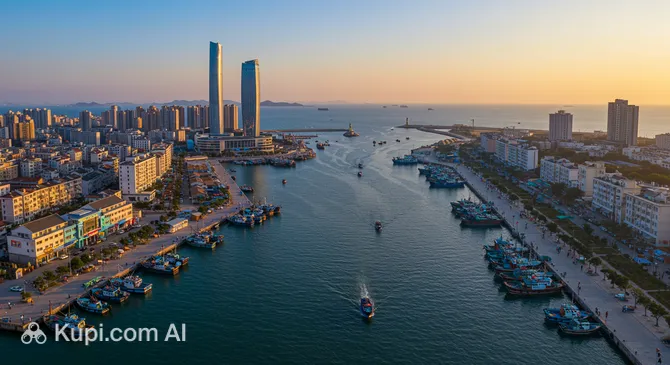
Zhuanghe is a picturesque county-level city within the Dalian metropolitan area in Liaoning Province. Located in Northeast China, this region occupies the central part of the Liaodong Peninsula. The city is famous for its extensive Yellow Sea coastline and the harmonious blend of developed agriculture with pristine nature.
For travelers, Zhuanghe reveals itself as an ideal destination for a peaceful getaway. Home to about 900,000 people, the city's vast territory covers more than 4,000 square kilometers, encompassing both mountain landscapes and coastal zones. The atmosphere here is permeated with a traditional Chinese lifestyle that surprisingly coexists with modern ecological projects.
Zhuanghe. Illustration.
Source: Kupi.com AI
The county's main treasure is Bingyu Valley, often called the "Northern Pearl" for its resemblance to the majestic landscapes of South China. The city's rich history, rooted in the Warring States period, complements its natural beauty with architectural heritage. A visit to this region will be a true discovery for those seeking authentic China far from the bustling megacities.
Weather Overview
The climate of Zhuanghe is temperate continental with clearly defined seasons. This region is characterized by frosty but dry winters and fairly warm summers. If you're planning a trip, keep in mind that the weather in Zhuanghe can vary greatly depending on the season: from –10°C in January to +28°C in August.
The ideal time to visit is during the spring months (April–June) and early autumn (September–October). During these periods, the temperature is most comfortable for hiking in Bingyu Valley and walking along the Yellow Sea coast. Summer brings more rainfall, especially in July and August, but it's the best time for beach holidays and water activities.
Winter in Zhuanghe is charming in its own way: lakes freeze over, and mountains are covered in snow, creating fairy-tale landscapes. However, at this time, you should be prepared for a cool breeze from the sea and the need for warm clothing. The dry air and plenty of sunny days make winter walks bracing and pleasant for those who aren't afraid of the cold.
Average monthly temperature
Average monthly precipitation
Interesting Facts
The territory of modern-day Zhuanghe was inhabited as far back as the Neolithic era, and during the Warring States period (5th–3rd centuries BC), these lands were officially part of the ancient state of Yan.
The city is an important center for green energy: massive offshore wind farms built by the China Huaneng Group are located along its coast.
Zhuanghe unofficially holds the title of the region's furniture capital—it is home to a manufacturing base for Huafeng Furniture Manufacturing, one of the country's largest furniture companies.
The famous Bingyu Valley earned the nickname "Northern Pearl" for its unique landscapes, which are considered atypical for the northeastern part of China.
How to Get There
Zhuanghe enjoys convenient transport links, making it easily accessible for travelers exploring Liaoning Province. Due to its location within the Dalian metropolitan area, the city is integrated into a network of expressways and railways. A journey here allows you to enjoy views of the Liaodong Peninsula right from your window.
The nearest air hub is Changhai Airport (CNI), located about 56 kilometers from the city. Despite its small size, it is convenient for those arriving from neighboring regions. However, the main flow of tourists usually uses Dalian International Airport, from which Zhuanghe can be quickly reached by express bus or taxi.
Railway service is one of the most reliable ways to reach the city. Zhuanghe Station serves trains connecting the county with central Dalian and other major cities in Northeast China. It is a fast and comfortable way to travel, especially popular among locals and tourists.
For those who prefer buses, regular services depart from Dalian's Victory Square. The journey takes a few hours, and the routes pass through scenic agricultural areas. Detailed information on routes and schedules can always be found by checking how to get to the city.
Main Attractions
The crown jewel of Zhuanghe is undoubtedly Bingyu Valley. This unique natural site, located about 60 kilometers from the center, is often called "Little Switzerland" or a miniature version of the Yangtze. The valley captivates the imagination with its steep cliffs, crystal-clear rivers, and cascading waterfalls. Travelers come here for hiking through dense forests and the opportunity to enjoy silence among majestic mountains.
For lovers of cultural heritage, a visit to Chengshan Ancient Town is a must. This historic settlement has preserved the spirit of old China: here you can see traditional architecture from the Ming and Qing dynasties. Walking through narrow streets among ancient temples and residential houses allows you to touch the region's centuries-old heritage and see a way of life that has changed little over the centuries.
The coastal zone of Zhuanghe also deserves attention thanks to its nature reserve on the Yellow Sea coast. This spot is perfect for those who appreciate rocky marine landscapes and birdwatching. Additionally, it's worth seeing the Jade Reservoir—an emerald lake nestled between three mountain peaks, creating an amazingly peaceful landscape that is especially beautiful in the rays of the setting sun.
Local Cuisine
The gastronomic identity of Zhuanghe is inextricably linked to its status as a major agricultural center. The local diet is based on fresh vegetables, grains, and succulent fruits grown on the county's fertile lands. The region's cuisine is characterized by simplicity and the use of natural ingredients, which are particularly valued in traditional Chinese festive dishes.
As a coastal city, Zhuanghe offers a magnificent selection of seafood. At local markets and restaurants near the Fisherman's Wharf, you can always find fresh fish, shrimp, and seaweed. Be sure to try local seafood dishes, steamed or stir-fried with minimal spices to preserve their natural flavor.
For a deeper introduction to local tastes, head to the city markets. There, you can not only see the full variety of seasonal produce but also try the street food loved by locals. Despite the absence of high-end restaurants, authentic small eateries will surprise you with the quality of their dishes and the hospitality characteristic of Northeast China.
Travel Tips
A visit to Zhuanghe promises to be an unforgettable adventure, and these practical tips will help you plan your trip as comfortably and efficiently as possible.
Clothing and gear: Choose your wardrobe based on the season—the climate here is continental. Be sure to bring comfortable hiking shoes, as most of the city's beauty is connected to walking through nature parks. In spring and autumn, don't forget a light jacket to protect against the sea breeze.
Transport: Buses are the main way to get around the city. For trips to remote attractions (Bingyu Valley is 60 km from the center), it's better to use a taxi or a rental car.
Finances: The official currency is the Chinese Yuan. Large shopping centers accept cards, but be sure to have cash for markets and small expenses. Mobile payments via WeChat and Alipay are popular.
Health and Safety: The city is considered very safe. Pharmacies can be found everywhere in the center. When walking in the mountains in winter, be careful—trails can be slippery.
Communication: The primary language is Chinese; English is not widely spoken. We recommend downloading an offline translator and carrying a hotel business card with the address in Chinese characters.
Local Etiquette: Local residents are friendly and value politeness. A traditional greeting is a slight nod. Observe peace and quiet in temples and historical sites.
What to avoid: Don't plan important trips on public transport during weekends without prior booking, as tourist buses can be overcrowded.
Additional tip: Allocate at least 2-3 days for your visit to enjoy both the mountains and the coastline without rushing.
May your journey to this amazing corner of China be filled with bright emotions and pleasant discoveries!
Entertainment & Nightlife
The entertainment program in Zhuanghe is mainly focused on natural and family-oriented sites. One popular spot is Sun Asia Ocean World—a modern marine park where visitors can meet deep-sea creatures. Evenings are best spent enjoying the panoramas from the observation deck on Lianhua Mountain. From here, a breathtaking view opens up over the lights of the sleeping city and the coastline.
For those who enjoy leisurely evening walks, East Water City is a perfect fit. This location attracts visitors with its architecture and lights that reflect beautifully in the water, creating a romantic atmosphere. If you are looking for something truly unique, check out the Fisherman's Wharf. Watching the traditional harvest of seaweed and the local fishermen at work is not just entertainment but a deep immersion into local culture.
As for nightlife in the traditional sense, the main venues are concentrated in the central districts. Here you can find small bars and restaurants that stay open until late evening. Despite the city's quiet character, central Zhuanghe is always safe for walking, and taxis are easily called via mobile apps at any time of day.
Parks & Museums
The main natural area and a true "open-air museum" is the Bingyu Valley National Park. This site, with its developed infrastructure, offers many hiking trails of varying difficulty. Here you can wander for hours along the winding river, admiring waterfalls and bizarre rock formations. For a comfortable rest, the park provides special picnic areas where you can catch your breath surrounded by pristine nature.
No less significant is the nature reserve on the Yellow Sea coast. This park attracts tourists with its rocky landscapes and sandy beaches. It is a key spot for birdwatching enthusiasts, as rare species can be observed during migration. Well-maintained trails make it easy to explore the most picturesque corners of the coast, making the walk pleasant even for casual tourists.
If you seek solitude and peace, pay attention to the Jade Reservoir. This emerald lake, surrounded by three majestic mountains, creates an ideal atmosphere for contemplation. While there are few traditional museums in the city center, a visit to the ancient town of Chengshan itself replaces any gallery: architectural monuments and historical artifacts are found literally at every step here, telling the region's story without words.
Getting Around
The transport system in Zhuanghe is simple and efficient, allowing tourists to move between key sites without difficulty. Buses are the main form of public transport within the city. They connect central squares, such as Victory Square, with residential areas and major attractions. Routes are logically planned, and the service intervals mean you won't spend much time waiting.
For trips outside the center, for example, to Bingyu Valley, it is convenient to use special tourist buses. These usually depart in the early morning hours (around 07:30) and run more frequently on weekends and holidays. Rail transport also plays an important role, providing fast connections between Zhuanghe, Dalian, and other neighboring hubs.
If you value time and comfort, a taxi is the optimal choice. Official taxi services operate in the city, and a car can be called through mobile apps. Car rentals are also available, which is an excellent solution for those planning to independently explore remote corners of the county and the Yellow Sea coast without being tied to public transport schedules.
Accommodation
The choice of accommodation in Zhuanghe is quite diverse and can satisfy the needs of both budget travelers and those who value increased comfort. In the city center, classic mid-range hotels and modern hotel complexes catering to business travelers and families predominate. For those who prefer a more secluded stay, lodging options can be found closer to the coast or nature parks.
It is recommended to book hotels in advance, especially if your trip coincides with peak periods: the spring months (April–June) or the golden autumn in September–October. During these times, the city is visited by many tourists wishing to see Bingyu Valley. The price range here is quite reasonable—comfortable accommodation and meals for a couple of days can cost around 1,000 yuan.
The most convenient area to stay is the county center, as it is easiest to reach the main transport hubs and shopping centers from there. If the primary goal of your visit is natural attractions, it is worth looking at guesthouses located in the immediate vicinity of the national parks, which will save travel time.
Nearby Cities
Thanks to its strategic location on the Liaodong Peninsula, Zhuanghe serves as an excellent starting point for exploring the surrounding areas. The city is surrounded by interesting neighbors that are easily reached by train or bus in just a couple of hours, making them ideal destinations for day trips.
Just 85 kilometers away is the city of Wafangdian, known for its industrial achievements and natural areas. For history buffs, a trip to Gaizhou—an ancient city with a rich past—will be of interest. It is also worth noting Dashiqiao and the border city of Dandong, which attracts tourists with its unique location on the border and views of the Yalu River.
Each of these cities offers its own unique atmosphere—from industrial landscapes to quiet historic streets. Exploring neighboring regions will allow you to build a more complete picture of life in Liaoning Province and see the diversity of Northeast China beyond the tourist trails.
Shopping & Souvenirs
Shopping in Zhuanghe is a pleasant combination of modern retail formats and colorful traditional markets. The main center of attraction for those who love brands and familiar comfort is the Yintai City shopping complex. Stores for clothing and electronics are concentrated here, along with recreation areas where the whole family can spend time.
One unique feature of the city is its furniture industry. Tourists often visit specialized showrooms to look for high-quality wooden interior items, for which the region is famous. But for the true atmosphere of the county, head to the local food markets. There you will find the freshest fruits and grain products, which are considered the best in the province and can make excellent gastronomic souvenirs.
Shops usually operate from early morning until 8 or 9 PM. Cards are accepted for payment in large centers, but it is better to have cash or use popular mobile payment systems at markets and small shops. Traditional souvenirs reflecting the region's agricultural heritage are best bought directly from local artisans and farmers.