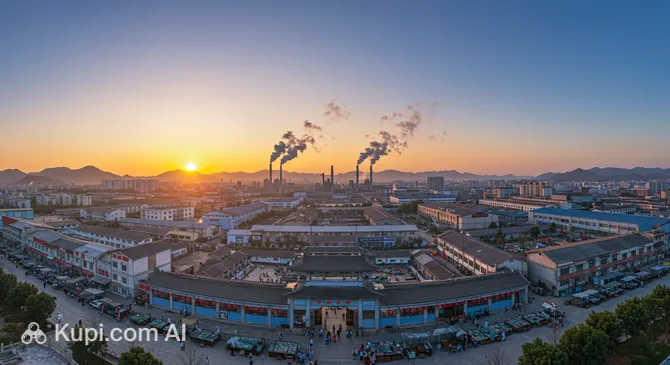
China hides many industrial gems, and Dashiqiao is one of them. Located in Liaoning Province, this county-level city within the Yingkou prefecture-level city serves as a vital industrial hub in the northeast of the country. The city got its poetic name, which translates as "Big Stone Bridge," from an ancient legend, although today its appearance is defined by modern architecture and large-scale factories.
Dashiqiao. Illustration.
Source: Kupi.com AI
Geographically, Dashiqiao occupies a favorable position on the left bank of the Liaohe River, with access to Bohai Bay. This has largely predetermined its development as a trade and transport center. A city with a population of over 700,000, it is known worldwide as the "magnesite capital": it is home to some of the richest deposits of this mineral, making it a key player in the production of refractory materials for export.
The history of the city is closely intertwined with the industrial boom of the second half of the 20th century, but it acquired its modern status relatively recently—in 1992. Visiting this place allows you to see the real, hardworking China from the inside, get acquainted with its industrial power, and appreciate the scale of urbanization, which in recent years has been supplemented by active measures to improve the environment.
Weather Overview
The climate in Dashiqiao is temperate continental, with distinct seasons, typical of Northeast China. Winters here are quite harsh and dry: in January, the average temperature is around -7...-10°C, and frosts can reach -12°C and lower. During this period, cold winds dominate, and precipitation is extremely rare, creating an atmosphere of frosty freshness.
Summer brings warmth and humidity to the city. The hottest month is July, when the thermometer rises to +26...+29°C. It is the summer months that account for the bulk of annual precipitation, with frequent heavy rainstorms. If you are planning a visit, it will be useful to check the current weather in the city in advance to prepare for nature's whims.
The proximity of Bohai Bay slightly moderates the climatic conditions, making summers less exhausting and winters slightly less severe than further inland. However, one should consider the region's industrial status: in calm weather, a haze may accumulate over industrial zones, so the most pleasant time for walks is on clear days with a moderate sea breeze.
Average monthly temperature
Average monthly precipitation
Interesting Facts
Dashiqiao is officially recognized as one of the world leaders in magnesite reserves, making it a key global center for the production of refractory products.
The city's name translates as "Big Stone Bridge" and is rooted in an ancient legend passed down through generations by local residents.
In 2002, a modern refractory brick factory was launched here, becoming a symbol of the region's rapid modernization in the early 21st century.
The city has a strategic geographical position, bordering major centers such as Anshan and Panjin, and providing access to the waters of Bohai Bay.
The administrative history of modern Dashiqiao as part of Liaoning Province began in 1954, evolving from a modest settlement into a powerful industrial hub.
How to Get There
The transport accessibility of Dashiqiao is largely determined by its proximity to the major port hub of Yingkou. Travelers heading here from Beijing or other metropolises will find it most convenient to use high-speed trains or buses, which take between 6 and 10 hours. Before your trip, it is recommended to check all details on the how to get there page for the city.
The nearest aviation hub is Yingkou Airport, located about 40 kilometers from the county center. It accepts flights from many major cities in China. Transfer to Dashiqiao by taxi or bus usually takes about an hour, though potential regional road congestion during peak hours should be considered.
Rail travel is a reliable way to move around the northeast of the country. The main stations serve both passenger and freight trains, providing connections to the key industrial centers of Liaoning. Additionally, the city is easily accessible by car via high-speed highways from Dalian (2–3 hours) or Shenyang (4–5 hours).
Dashiqiao is primarily a city of labor and production, so there are few classic tourist attractions in the traditional sense. The main interest for visitors lies in the monumental industrial landscapes: magnesite quarries and massive refractory brick factories that look particularly impressive against the industrial sky.
The center of social life is the city squares and markets, where you can feel the real rhythm of life in Northeast China. There are no ancient pagodas here, but there is a special aesthetic to the urbanized county, where every block is steeped in the spirit of creation and economic growth. Landmarks for locals include central administrative buildings and the offices of large financial organizations, reflecting the results of recent reforms.
For those interested in industrial heritage, it will be curious to learn about the city's connection with local manufacturing giants, such as enterprises of the "Dalong" brand. While specific excursion routes are absent, the influence of big business is felt in the city's modern layout and infrastructure. Visiting Dashiqiao is a unique chance to see the "engine" of the Chinese economy in action.
Local Cuisine
The gastronomic profile of Dashiqiao is closely linked to the culinary traditions of Liaoning Province. The local cuisine is dominated by hearty dishes typical of northern China, but with a distinct coastal accent. Thanks to the proximity to Bohai Bay, fresh seafood such as shrimp, mussels, and fish prepared with an abundance of aromatic spices are always present on local menus.
Be sure to try traditional jiaozi dumplings and homemade noodles, which are served here both in hot broths and fried with vegetables and meat. The food culture in the city is oriented towards workers, so portions in local canteens are usually generous, and the food is simple, honest, and very nutritious.
Among drinks, Dashiqiao residents prefer strong Chinese tea, local beer, and traditional rice wine. The main points of attraction for foodies are the markets and small restaurants in the county center. There is no refined haute cuisine here, but the authentic taste of regional specialties and the welcoming atmosphere of simple diners will leave you with the most pleasant impressions.
Travel Tips
A trip to the industrial center of Liaoning requires a practical approach. These tips will help you navigate Dashiqiao and make your stay as comfortable as possible.
Clothing and gear: Choose practical and durable clothing. A warm jacket is essential in winter to protect against winds, and light clothes are best for summer. For walks through industrial areas, prepare comfortable closed shoes.
Transport: The simplest way to get around is by taxi or bicycle. Be sure to install the Baidu Maps app, as it displays local routes and locations most accurately.
Finances: The primary currency is the yuan. Alipay or WeChat Pay are best for paying at markets and small shops. It is worth having cash on hand as a backup.
Health and safety: The city is safe, but due to its industrial nature, there can be a lot of dust in the air. It is recommended to wear a protective mask when visiting areas near magnesite factories.
Communication: English is practically not spoken in the city. Download an offline translator in advance and save the address of your hotel and necessary places in Chinese characters.
Local etiquette: Observe general norms of politeness. When entering residential premises or some private shops, it is customary to nod slightly as a greeting.
What to avoid: Do not plan walks near port zones and quarries after dark due to the active movement of heavy construction equipment.
Extra tip: Try local street food at the evening markets—it's the best way to get to know the true taste of the country's northeast.
May your journey to the industrial heart of the region be productive and full of interesting discoveries!
Entertainment & Nightlife
Nightlife in Dashiqiao is virtually non-existent, as the city lives at a strict working pace. You won't find noisy nightclubs or conceptual bars here. Locals prefer to spend their evenings with family or at lively markets where they can grab street food and purchase essential goods. The atmosphere after sunset is calm and measured.
For those seeking vibrant entertainment, the best option is to head to neighboring Yingkou, located just 20–30 minutes away. That is where cinemas, karaoke clubs (KTV), and more modern restaurants are concentrated. If you dream of full-scale dance floors and bars by the sea, you should plan a trip to Dalian, which takes about two hours.
Daytime entertainment in the county is limited to walking along the central shopping streets and visiting local squares. The main source of leisure for guests and visiting specialists remains the regional restaurants, where one can leisurely discuss the day's events over a cup of tea, immersing oneself in the authentic everyday life of industrial China.
Parks & Museums
As a major industrial center, Dashiqiao cannot boast an abundance of extensive park areas. The urban layout is predominantly utilitarian, however, small squares and alleys have been created in the central districts, serving as resting spots for residents from the city noise and bustle.
The main green zones are gradually developing along the banks of the Liaohe River and closer to the bay coast. These locations are being landscaped with walking paths and areas for sports. Although the ecological situation in the region requires attention due to the operation of magnesite plants, greening remains an important priority for local authorities.
As for cultural institutions, there are currently no full-fledged museums in Dashiqiao itself. For a deep immersion into the history and art of Liaoning, travelers usually head to neighboring Yingkou or Anshan. Visiting the county itself is primarily an opportunity to see a living industrial landscape, which is in itself a kind of monument to the industrial power of the region.
Getting Around
The public transport system in Dashiqiao is mainly represented by an extensive network of bus routes. They connect residential areas with industrial zones and provide regular service to Yingkou. It's worth considering that during shift changes at the factories, buses can be overcrowded with workers, and road traffic may be heavy due to a large number of trucks.
There is no metro or light rail in the city, which is typical for a county-level city. The fastest and most convenient way for a guest to get around remains a taxi. A car can be easily hailed on the street or called via an app. Bicycle rentals are also popular in Dashiqiao, which is great for short trips along central streets in good weather.
Fares are most often paid via QR codes from Chinese payment systems, so tourists are recommended to set up mobile wallets in advance. Be prepared for the roads in industrial areas to be dusty due to the proximity of magnesite quarries, so for longer trips, it is better to choose enclosed transport with air conditioning.
Accommodation
The choice of accommodation in Dashiqiao is specific and primarily oriented towards business travelers. Practical budget hotels and mid-range inns dominate the scene, providing everything necessary for a short stay. A popular option is the Hanting hotel on Hada Middle Road, which is often chosen by business travelers due to its convenient location.
For those planning a longer stay, rental apartments are available, mostly concentrated in the areas of major markets and shopping zones. It's worth noting that there are virtually no luxury five-star complexes in the county itself. If your priority is a high level of comfort and developed infrastructure, it's better to consider accommodation options in neighboring Yingkou.
It is recommended to book hotels in Dashiqiao in advance through specialized online services, especially during industrial exhibition periods. The price range here remains very affordable, allowing you to find a suitable accommodation option for any budget, depending on proximity to necessary industrial sites or transport hubs.
Nearby Cities
Thanks to its location in the northeast of Liaoning Province, Dashiqiao serves as an excellent starting point for exploring the surrounding areas. Very close by is the large port city of Yingkou, which can be reached in just 20–30 minutes. It offers guests developed infrastructure, waterfronts, and modern shopping centers.
If you want to see other important regional centers, look towards Gaizhou, bordering the county to the south, or industrial Anshan, which is about an hour's drive away. Also within reach are Haicheng and the historic Liaoyang, each possessing its own unique character and attractions.
Exploring neighboring cities will allow you to fully appreciate the scale and diversity of this region of China. Each of these destinations is suitable for a day trip, offering travelers new experiences—from seaside landscapes to majestic industrial panoramas.
Shopping & Souvenirs
Shopping in Dashiqiao is primarily about exploring local markets and bazaars located near industrial zones and in the central part of the county. Here you can find a huge selection of home goods, clothing, and electronics at very attractive prices. There are few large shopping malls with international brands; for those, local residents usually travel to neighboring Yingkou.
The city's markets are full of life: food stalls delight with an abundance of seafood from Bohai Bay, and clothing markets offer practical locally-made goods. An original souvenir from this trip could be small items made of magnesite or mineral samples—after all, it is the mining of this resource that made the city famous worldwide.
Shops in Dashiqiao usually stay open until late evening, and payment at most points is made via popular mobile apps. Although there are no specialized tourist shops, the authentic process of shopping at a local bazaar will allow you to feel the true flavor of Northeast China and purchase quality goods at honest prices.