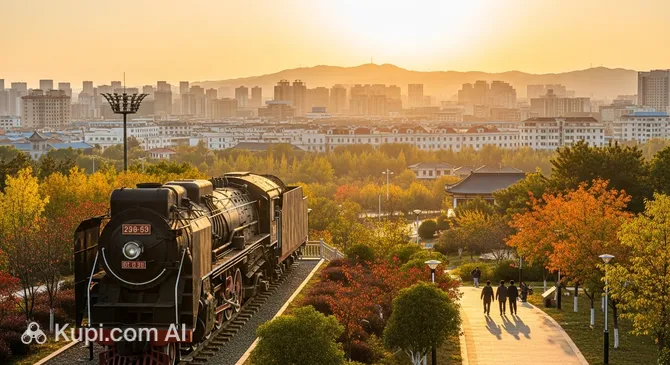
Diaobingshan is a dynamically developing industrial center located in Liaoning Province in Northeast China. The city is an important industrial hub of the Songliao Plain, where modern residential developments stand alongside large-scale production facilities. Despite its predominantly working-class status, the city possesses the distinct atmosphere of Northern China—straightforward, hospitable, and energetic.
Diaobingshan City. Illustration.
Source: Kupi.com AI
Geographically, the city enjoys a favorable position, located in close proximity to the region's major metropolises, such as Shenyang and Changchun. With a population of approximately 241,000 people, Diaobingshan functions as an important logistical point. By exploring the historical heritage of the region, one can see how the city has transformed from a small settlement into a significant economic component of Northeast China.
While Diaobingshan is not a classic tourist destination filled with ancient monuments, it attracts those who want to see the "real," unpolished China. Here, you can observe the daily rhythm of life in working-class neighborhoods, visit authentic local markets, and feel the scale of the country's industrialization. We invite you to get to know this city and see the inner workings of the region's industrial power.
Weather Overview
Diaobingshan is characterized by a humid continental climate, typical of the country's northeast. Winters here are cold and dry, while summers are warm and humid. Most of the precipitation falls during the summer months, which should be considered when planning your trip. You can review detailed data by checking the city's climate.
The winter period in the region is quite harsh: in January, the average temperature is around -10.2°C, and nighttime frosts can reach -15°C or lower. Summer brings long-awaited warmth—in July and August, the air warms up to +25–30°C. Expect a warm summer with occasional heavy rains and cold, clear winters with minimal snow.
As an industrial center, the city may experience increased levels of air pollution during the winter due to the operation of heating systems. The terrain of the Songliao Plain contributes to the stagnation of air masses, so tourists sensitive to air quality are better off planning their visit for the spring or autumn months, when the weather is most comfortable for walking.
Average monthly temperature
Average monthly precipitation
Interesting Facts
Diaobingshan occupies a strategic position at the crossroads of the so-called third "Eurasian Land Bridge," making it an important link in international logistics.
The city is situated in the central part of the Songliao Plain at an altitude of about 250–350 meters above sea level, which accounts for its flat landscape.
Economically, the district is closely integrated into the development belt of the country's central regions and serves as an important industrial satellite to larger administrative centers.
Despite its industrial focus, the city's population exceeds 240,000 people, which is comparable to the population of many European regional centers.
How to Get There
The transport accessibility of Diaobingshan is due to its location near one of the region's largest transport hubs—the city of Changchun. Most travelers arrive here through this metropolis, utilizing the well-developed network of roads and railways. Detailed information on routes can be found in the section on how to get to the city.
The nearest major air hub is Changchun Longjia International Airport (CGQ), located approximately 30–40 kilometers from Diaobingshan. A taxi ride from the terminal to the city center takes between 45 to 60 minutes. Regular buses also run between the airport and nearby districts, which is a more budget-friendly option for tourists.
Railway communication is another convenient way to reach the region. The main passenger flows pass through the stations of neighboring major cities, from where Diaobingshan can be reached by suburban bus or taxi in 30–45 minutes. During peak hours, travel time may increase, so it is worth planning your trip with some extra time.
Diaobingshan is a city where the landscape is defined not by ancient pagodas, but by modern industrial architecture and spacious residential areas. The main attraction for residents and visitors alike are the central squares, which transform into hubs of social activity in the evenings. Here, you can witness traditional Chinese dancing, Tai Chi practice, or simply enjoy the rhythm of life in this industrial hub.
For those seeking cultural diversity and large-scale landmarks, Diaobingshan serves as a convenient base. The local infrastructure is geared toward serving the needs of the population, so the primary points of interest here are modern shopping galleries and cozy city squares. It is an excellent place for "anthropological" tourism, allowing visitors to see the daily life of a typical Chinese industrial district.
If your goal is world-class museums or imperial palaces, it is worth taking advantage of the city's proximity to larger centers. Locals often head to neighboring metropolises for cultural leisure, leaving Diaobingshan as a territory of calm, steady labor and everyday relaxation in numerous authentic eateries.
Local Cuisine
The gastronomic identity of Diaobingshan is inextricably linked to the traditions of Northeast Chinese cuisine (Dongbei). It is hearty, aromatic, and home-style simple food, perfectly suited for the northern climate. The diet is based on dishes made from wheat flour, vegetables, and meat, and portions in local establishments are traditionally famous for their impressive size.
Be sure to try the steamed buns (baozi) with various fillings, pan-fried dumplings, and the famous buckwheat noodles. Lovers of spicy flavors will enjoy the rich soups with added spices. The city's culinary scene is represented by both small family-run diners and bustling night markets where street food is prepared right before your eyes.
As for drinks, local light beer is popular here, as in many industrial centers in China. For more formal occasions or cold winter evenings, locals choose baijiu—a strong traditional spirit. Tea drinking remains an important ritual, although trendy bubble tea shops and coffee houses are increasingly common in modern neighborhoods.
Travel Tips
Preparing for a trip to Diaobingshan requires attention to detail to ensure your stay in this industrial heart of the region is as comfortable and pleasant as possible. Here are a few tips to help you find your way around.
Dress for the Season: The climate here is continental. Warm clothing is essential in winter (temperatures can drop to -20°C), while light clothes made of natural fabrics and sun protection are needed in summer. Don't forget comfortable shoes for walking.
Language Barrier: English is not widely spoken in the city. Be sure to download an offline translator and save your hotel address in Chinese characters.
Finances: The main currency is the Chinese yuan. Although mobile payments (Alipay, WeChat) dominate, always carry some cash in case your international card doesn't work in a small shop.
Transport: Buses are overcrowded during peak hours, so take a taxi to save time. Install the DiDi app to easily hail a car.
Health: In industrial areas during winter, the air can be dry and dusty, so it's useful to have moisturizing eye drops and a mask. Pharmacies are common, but medicine names will be in Chinese.
Etiquette: Locals value politeness in communication. Greet people with a slight nod. Remember that tipping is not customary in Chinese restaurants.
Connectivity: For stable internet, it is best to purchase a local SIM card at the Changchun airport. Remember that a VPN may be required to access familiar Western services.
Choosing a Base: If you are not visiting for business reasons, consider staying in Changchun and taking day trips to Diaobingshan.
May your introduction to this working region be productive and reveal new facets of amazing China!
Entertainment & Nightlife
The entertainment scene in Diaobingshan is intimate and local in character, reflecting the interests of the city's working population. The main centers for evening leisure are modern cinemas located in large shopping complexes, showing both national blockbusters and international new releases. Karaoke bars (KTV) are also very popular, being an essential part of any friendly or business evening in China.
Nightlife in the traditional Western sense, with loud clubs, is practically non-existent here. Instead, the city offers an atmosphere of cozy evening walks and gatherings in small bars. The crowd is predominantly local, the dress code is casual, and the prices are pleasantly affordable compared to major metropolises. For those craving massive parties, a trip to neighboring Shenyang or Changchun is the perfect solution.
During the day, entertainment is centered around active recreation. Residents frequently visit bowling alleys and sports grounds. Safety in the city is high, so even late-night walks along the well-lit central streets are not a cause for concern. To call for transport at night, it is best to use popular mobile apps, as hailing a car on the street after midnight can be difficult.
Parks & Museums
The green zones of Diaobingshan consist of cozy city parks and squares that serve as the lungs of this industrial district. Locals come here for morning exercises, games of Mahjong, or leisurely strolls. These parks, though small, are well-maintained: they feature jogging tracks, modern playgrounds, and relaxation areas for the elderly, making them ideal places to observe authentic city life.
There are few large museums within Diaobingshan itself, as the district's cultural life is more focused on industrial development. However, for the curious tourist, small exhibitions dedicated to the history of local industry and the region's achievements may be of interest. These provide a better understanding of how the modern face of this working region was formed.
For those seeking grand art galleries or historical museums with artifacts from ancient dynasties, a trip to nearby cultural centers is recommended. Nevertheless, Diaobingshan's modest parks possess a special charm of tranquility, offering a necessary pause in the rhythm of a working city.
Getting Around
The public transport system in Diaobingshan is represented by an extensive network of bus routes. Buses are the primary and most affordable way to get around, connecting residential neighborhoods with industrial zones and shopping centers. Fares are paid in cash upon entry or via transport apps, and the cost per trip is fixed and low.
It is important to note that during morning (07:00–09:00) and evening (17:00–19:00) peak hours, buses can be crowded with employees of local enterprises. For more comfortable travel during these times, tourists are better off using taxi services. Both official taxi companies and ride-hailing aggregators operate in the city, allowing for quick and inexpensive travel to any point in the district.
Since the distances within Diaobingshan's residential areas are relatively short, many people prefer to get around on foot. Cycling infrastructure is not as developed as in China's largest cities; however, electric scooters—a favorite mode of transport for locals—are frequently seen on public roads. For tourists, taking a taxi remains the simplest and most straightforward option for getting around.
Accommodation
The hotel infrastructure in Diaobingshan is primarily geared toward business travelers and specialists visiting local industrial enterprises. Budget hotels and guesthouses predominate here, offering a basic set of services at very affordable prices. For those accustomed to international service standards, the choice may be limited to mid-range chain hotels.
Most accommodation options are concentrated in the central part of the city, near transport interchanges and shopping areas, which is convenient for quick travel. The long-term apartment rental segment is also popular in the district, often chosen by those coming to the city for work over an extended period.
If you are planning a visit for tourism purposes, it is recommended to book your accommodation in advance, especially during industrial exhibitions or national holidays. For more discerning tourists, a sensible solution would be to stay in hotels in large neighboring cities and take day trips to Diaobingshan.
Nearby Cities
Diaobingshan serves as a convenient starting point for exploring the industrial and cultural landscapes of Liaoning Province. Thanks to developed transport links, you can easily set off on a short trip to neighboring cities, each possessing its own unique character.
Just 31 kilometers away is the city of Tieling, known for its picturesque parks and mountains, which offer an excellent opportunity for outdoor recreation. Another interesting destination is Shenyang—the majestic provincial capital with a rich history, an imperial palace, and numerous museums, which can be reached in about an hour and a half.
It is also worth paying attention to Fushun and Kaiyuan, which allow for a deeper immersion into the industrial and cultural life of the region. Exploring the surroundings of Diaobingshan will reveal a multifaceted China, where traditions are closely intertwined with economic progress.
Shopping & Souvenirs
Shopping in Diaobingshan is focused on practicality and everyday needs. The main retail activity is concentrated in modern shopping centers and department stores in the city center. Here you can find clothing from popular Chinese brands, high-quality electronics, and home goods at prices that are often lower than in major tourist metropolises.
The city's unique character is revealed in its traditional markets and night bazaars. These are the best places to buy fresh local produce, textiles, and household sundries. Although there are few specialized souvenir shops in the city, high-quality Chinese tea, silk products, or local delicacies, which are widely available in chain supermarkets, make excellent gifts.
Shops typically operate from 9:00 AM to 9:00 PM, and night markets open after sunset. Large shopping centers accept bank cards and popular mobile payment systems such as WeChat Pay and Alipay. For trips to the markets, it is better to have some cash in yuan for convenience when dealing with private vendors.