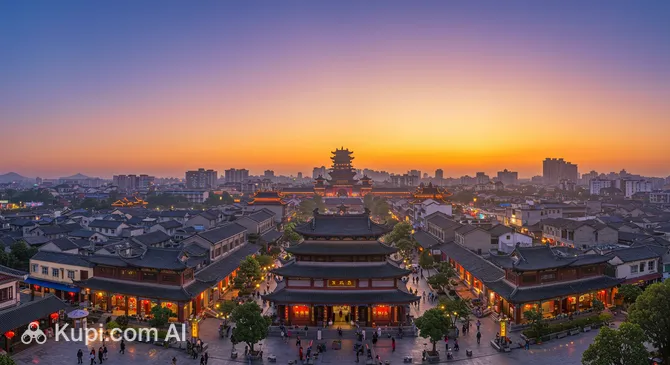
Located in the heart of Liaoning Province, Kaiyuan is a fascinating blend of ancient history and the modern industrial pulse of Northeast China. The city's name, which translates as "Open Plains," perfectly reflects its geographic location on fertile lands where trade and military routes have intersected for centuries. With a population of over 1.1 million people, this county-level city maintains the atmosphere of a quiet yet dynamically developing regional center.
Kaiyuan. Illustration.
Source: Kupi.com AI
The history of this place is rooted deep in the past. Back in the 13th century, it served as the Middle Capital of the Eastern Liao state, while its modern status and administrative boundaries began to take shape during the Ming Dynasty. For those interested in the region's past, Kaiyuan's historical heritage reveals itself through archaeological sites and the remains of ancient fortifications that testify to the city's former greatness as an important strategic outpost.
Today, Kaiyuan attracts travelers with its unique ethnic flavor. For centuries, the traditions of the Han, Manchu, Mongol, and Khitan peoples have coexisted and blended here. This cultural diversity is reflected in everything from local architecture to the gastronomic habits of the residents. A visit to the city is an excellent choice for those who want to see the real, non-touristy China, feel the spirit of Manchuria, and enjoy the vastness of the open plains.
Weather Overview
The climate of Kaiyuan has a pronounced humid continental character, typical of Northeast China. This means that travelers should prepare for sharp seasonal changes. Winters here are harsh and dry: in January, the average temperature drops to -9.6°C, and nighttime frosts can reach -15°C and below. There is little snow, but the cold wind from the plains makes being outside quite bracing.
Summers in the city, by contrast, are warm and fairly humid. The peak of the heat occurs in July with an average temperature of about +25.4°C, while daytime maximums often climb toward the +30°C mark. Most of the annual precipitation falls during the summer months, so it's worth bringing an umbrella or a raincoat. Spring and autumn pass quickly, offering changeable but generally comfortable weather for excursions.
When planning your visit, be sure to take local climate features into account and check the current weather forecast in Kaiyuan before your trip. The most favorable times for a visit are considered to be May, June, and September, when the air temperature is most pleasant for walking around historical sights and natural landscapes.
Average monthly temperature
Average monthly precipitation
Interesting Facts
In the early 13th century, the territory of modern Kaiyuan served as the Middle Capital of the Khitan state of Eastern Liao, which was a vassal of the Mongol Empire.
The city's name has Mongolian roots and literally means "Open Plains," which perfectly describes the landscape of the region.
Archaeologists have discovered unique 13th-century buildings here, created using a colonnade technique and decorated with gabled tiled roofs.
Kaiyuan is unofficially called the "City of Trains" due to its exceptional importance as a railway hub in Northeast China.
The city is a true cultural "melting pot": the traditions and customs of the Han, Mongol, and Manchu peoples have mixed here for centuries.
How to Get There
The transport accessibility of Kaiyuan is largely determined by its status as an important railway hub in Liaoning Province. The city is conveniently located at the intersection of key routes connecting the country's central regions with the northeastern provinces. To learn more about logistics and plan your visit, check out the information on how to get to Kaiyuan with maximum comfort.
The city does not have its own airport, so most tourists use the air harbors of neighboring metropolises. The nearest major international airport is Shenyang Taoxian (SHE), located approximately two to three hours away. From Shenyang airport, you can reach Kaiyuan by taxi, intercity bus, or high-speed train.
Railway transport is the heart of local logistics. The local station receives regular and high-speed trains from cities such as Shenyang and Tianjin. Thanks to the developed railway network, a trip from the provincial capital takes very little time, making Kaiyuan an excellent option for a weekend getaway.
Road connections are also highly developed. The G1 expressway, connecting Shenyang and Harbin, passes through the region. The distance from Shenyang is about 200 km, and the drive on the modern highway takes about two hours. Intercity buses run regularly; however, it is better to use popular Chinese booking services to check schedules.
Main Attractions
The main attractions of Kaiyuan are closely linked to its role as a strategic hub and an ancient capital. Of particular interest to history buffs are the archaeological zones, which preserve the remains of structures from the Jurchen state of Eastern Xia. Here, you can see the ruins of ancient palace complexes and powerful defensive walls typical of 13th-century architecture.
The city also preserves memories of the Ming Dynasty era. Walking through certain districts, you can notice characteristic architectural ensembles and planning elements that emphasize the city's historical significance as the "gateway" to Manchuria. The massive walls and rectangular shapes of the buildings from that time create a unique, rugged appearance of an old fortified settlement.
Although Kaiyuan is not overloaded with modern entertainment facilities, its primary value lies in its authenticity. The "Open Plains" themselves, which gave the city its name, are a natural attraction: they are the perfect place to feel the scale of the country's northeastern territories and see the traditional way of life of local farming communities.
Local Cuisine
A gastronomic journey through Kaiyuan is an introduction to the hearty and aromatic cuisine of Liaoning Province. Local culinary traditions are built on using fresh produce from the fertile plains. The main focus here is on grain-based dishes, soy, and meat, prepared with the pungent spices characteristic of the country's northeast.
Be sure to try traditional jiaozi (Chinese dumplings) with various fillings of local vegetables and pork. The region is also famous for its soy dishes, including various types of tofu and thick soy sauces that give the food a deep, rich flavor. The simplicity of ingredients combined with cooking mastery makes the local food truly home-style and warming.
As for drinks, residents prefer high-quality green tea and local varieties of rice wine. The dining culture in Kaiyuan centers around family-run establishments and small restaurants in the center. Street food markets are the heart of the city's food scene; that is where you can find the freshest products and try authentic snacks that the locals eat every day.
Travel Tips
A trip to Kaiyuan will be a unique experience of immersion into the history of northern China. To make your journey go as smoothly as possible, use our practical tips.
Clothing and Seasonality: The climate here is continental, so bring light clothing made of natural fabrics in summer, and very warm parkas for winter trips, as temperatures can drop below -15°C. Be sure to bring comfortable shoes for exploring archaeological zones.
Getting Around the City: Install the Didi app for calling taxis—it is reliable and convenient. For navigation, Baidu Maps or Amap are best, as international maps are often inaccurate.
Finances: Cash is rarely used in China. Link an international card to Alipay or WeChat Pay in advance. ATMs for withdrawing cash are only available in large bank branches in the center.
Health and Pharmacies: Pharmacies are common in Kaiyuan, but medicine names will be in Chinese. We recommend carrying a basic first-aid kit and using an online translator to communicate with the pharmacist.
Language Barrier: English is almost non-existent here. Be sure to download an offline translator and carry a card with your hotel's address in Chinese characters.
Local Etiquette: Residents of Kaiyuan are hospitable but value restraint. It is customary to remove your shoes when entering private homes or some traditional establishments. Loud behavior in public places is considered untactful.
What to Avoid: Do not attempt to photograph military installations or government buildings. It is also best not to engage in political discussions—instead, focus on discussing the region's rich history.
Connectivity: Buy a local SIM card at your arrival airport (e.g., in Shenyang), as finding a sales point for foreigners in Kaiyuan itself can be more difficult. Keep in mind that a VPN may be required to access familiar social networks.
Have a wonderful journey to this amazing corner of the "Open Plains"! May Kaiyuan reveal its secrets to you and give you unforgettable impressions.
Entertainment & Nightlife
The entertainment scene in Kaiyuan is geared toward the quiet and measured relaxation typical of small cities in Liaoning Province. You won't find noisy mega-clubs or huge concert halls here, but you can enjoy the evening atmosphere of China in its most sincere form. Most activity after sunset is concentrated on the central streets, where locals gather for walks and socializing.
Special attention should be paid to evening walks in the squares: you can often see traditional Chinese dancing or outdoor gymnastics sessions, which anyone is welcome to join. This is a great way to feel the rhythm of the city and meet its friendly residents in an informal setting. Safety in the city is high, so night walks through the well-lit central districts are quite comfortable.
For more active leisure during the day, look into local cultural centers or small cinemas. If you crave more vibrant experiences or large-scale shows, you can always take a short trip to nearby major hubs; however, Kaiyuan is the place to appreciate the quiet, authentic markets, and the opportunity to leisurely explore the city's historical corners.
Parks & Museums
The park areas of Kaiyuan are primarily the vast plains that surround the city, creating a sense of freedom and harmony with nature. Although there are no huge landscaped parks with rides, the local green zones are perfect for leisurely walks, picnics, and observing the rural life of the region, which itself resembles a living movie set.
The museum component of the city is represented mainly by open-air archaeological sites. The ruins of the 13th-century Khitan capital and the remains of Ming Dynasty fortifications allow you to literally touch history. Local cultural centers sometimes host exhibitions dedicated to finds from ancient settlements and the daily life of the peoples who inhabited Liaoning in different eras.
Travelers wishing to dive deeper into the history and culture of the region should visit small thematic exhibitions dedicated to traditional crafts and agriculture. Kaiyuan is a place for those who appreciate authentic historical landscapes and the opportunity to see the heritage of ancient civilizations in its natural environment, without excessive tourist polish.
Getting Around
The public transport system in Kaiyuan is fairly simple and efficient for the needs of a small city. The backbone of internal transport consists of bus routes that connect the central districts with the outskirts and the railway station. Bus fares are minimal, and you can pay for the ride either in cash or through popular Chinese transport apps.
There is no metro in the city, but this is compensated for by the availability of taxis and ride-sharing services such as Didi. Taxi rides around the city are inexpensive and are the fastest way to get to your destination, especially if you are not well-versed in the bus routes. Also, for short trips across the "Open Plains," locals and tourists often use bicycles and electric scooters.
The railway plays a key role not only for connecting with other cities but also as a landmark within Kaiyuan itself—the station is the main transport and commercial hub. For planning trips and checking bus schedules, it is recommended to use Baidu Maps or similar services, as English-language signs may not be found everywhere.
Accommodation
The choice of accommodation in Kaiyuan consists mainly of mid-range hotels and budget guesthouses catering to business travelers and transit tourists. Most quality accommodation options are concentrated in the central part of the city and in the immediate vicinity of the railway station, which is extremely convenient for those arriving by train.
The price range here is very affordable compared to China's major metropolises. You can easily find cozy 3-star hotels offering clean rooms and a traditional breakfast. When choosing a place to stay, pay attention to the availability of modern amenities and English-speaking staff, as this can be rare in provincial cities.
During peak tourist seasons or local festivals, rooms in the best hotels can fill up quickly, so it is recommended to book your accommodation in advance. For searching and booking, it is best to use major platforms such as Ctrip (Trip.com), which provide the most up-to-date list of available apartments and hotels in Kaiyuan.
Nearby Cities
Thanks to its fortunate location on the main railway line, Kaiyuan serves as an excellent starting point for exploring other interesting places in Liaoning Province. The city's surroundings are rich in cultural and historical centers that are easily accessible as day trips.
Just a half-hour drive away is the city of Tieling, which offers a chance to get acquainted with the local flavor and culture of the region. For those seeking scale and metropolitan polish, Shenyang—the largest metropolis in the northeast—is a must-visit. There you will find imperial palaces, massive parks, and modern shopping centers. Also of interest is the city of Siping, known for its historical past.
Exploring neighboring cities will allow you to see the multifaceted nature of life in this part of China: from cozy provincial streets to gleaming skyscrapers and ancient architectural monuments. The developed network of high-speed trains makes such travel fast and comfortable.
Shopping & Souvenirs
Shopping in Kaiyuan is primarily about visiting lively local markets where you can find the region's true treasures. There are no gleaming boutiques of international brands, but that is precisely the charm: the city offers authentic goods that are hard to find in the metropolises. The main shopping points are concentrated in the railway station area and along the main city thoroughfares.
Special attention should be paid to farm products: Kaiyuan is famous for its grain crops, high-quality soy, and soy products. As souvenirs, tourists often bring back traditional crafts created by local artisans, as well as souvenirs with motifs of ancient Khitan and Manchu cultures, including reproductions of historical maps and household items.
Shops and markets usually operate from early morning until late evening. To pay for purchases, it is most convenient to use mobile payment systems like Alipay or WeChat Pay, which are accepted everywhere. If you prefer cash, it is better to have small yuan denominations, as getting change for large bills can be a problem at markets. Don't forget that moderate bargaining is quite appropriate at local bazaars and can turn a purchase into an interesting cultural adventure.