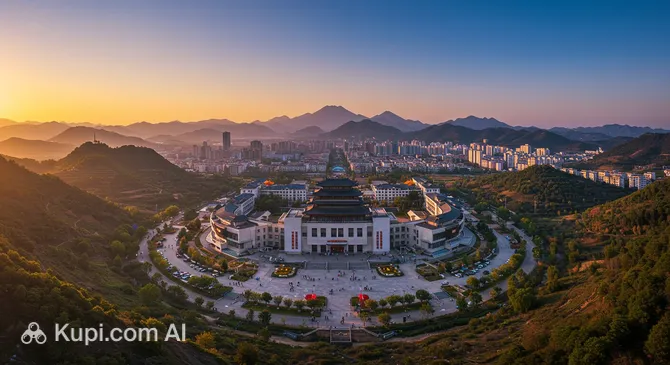
Wafangdian is a dynamically developing county-level city in Liaoning Province, located on the picturesque Liaodong Peninsula in China. This city harmoniously combines a powerful industrial character with natural charm, offering travelers a unique look at the country's modern northeastern region. With a population of over 1 million people, Wafangdian is an important economic hub that has nonetheless preserved the cozy atmosphere of a seaside territory.
Wafangdian. Illustration.
Source: Kupi.com AI
The city has gained worldwide recognition as the "bearing capital," yet its tourism potential extends far beyond industrial tourism. Thanks to its geographical location, Wafangdian includes the mainland and Changxing Island—one of China's largest islands, washed by the waters of the Bohai Sea. Here, industrial landscapes give way to endless apple orchards and marine horizons.
With its rich historical heritage, the city invites guests to explore architecture from different eras and unique manufacturing sites, some of which were founded in the first half of the 20th century. Visiting this city is an opportunity to see the "real" China, where traditions of hard work meet ambitious plans for the future.
Weather Overview
Wafangdian is characterized by a temperate continental monsoon climate, which provides distinct seasons. Thanks to its proximity to the Bohai Sea, a softening maritime influence is felt here, preventing extreme heat in summer and overly harsh frosts in winter. However, travelers should account for high humidity in the summer months and dry, windy winter periods.
Winter in the city is cool and dry: in January, the average temperature is around -5°C, while nightly lows can drop to -9°C. Summer is a warm and rainy season, with peak rainfall occurring in July and August (up to 200 mm per month), when the thermometer averages between +25°C...+30°C. Spring and autumn are considered the most comfortable periods to visit, offering mild weather with a fair number of sunny days.
When planning your itinerary, be sure to check current data on Wafangdian's climate in advance to choose the right wardrobe. During the spring and autumn periods, we recommend layering your clothes, and for summer walks, an umbrella or raincoat is a must, as monsoon rains can start suddenly.
Average monthly temperature
Average monthly precipitation
Interesting Facts
Diamond Treasure Trove: Wafangdian possesses colossal natural wealth—it is home to about 54% of China's proven diamond reserves.
Bearing Giant: The city has over 400 specialized enterprises, making it the absolute industry leader and a vital link in global mechanical engineering.
Energy Heart: This is where the Hongyanhe Nuclear Power Plant is located—the largest in the country—playing a strategic role in supplying the region with energy.
Island Variety: The city district includes Changxing Island, which is among the largest islands in the PRC, offering unique opportunities for maritime tourism.
Apple Country: In addition to industry, the region is famous for its agriculture, being one of the leading apple-growing centers in Liaoning Province.
How to Get There
Wafangdian boasts excellent transport connectivity thanks to its location on the Liaodong Peninsula. The city is integrated into the powerful transport network of northeastern China, making it easily accessible for both domestic and foreign tourists. The main flow of travelers arrives via neighboring major hubs using air and rail connections.
While the city itself does not have a large passenger airport, travelers typically use Dalian Zhoushuizi International Airport (DLC). It is located about an hour's drive away and receives flights from major cities in Asia and Europe. From the airport, Wafangdian can be quickly reached by high-speed train, taxi, or regular bus along modern highways.
Rail travel is perhaps the most convenient way to get around. Wafangdian Station serves many trains, including high-speed lines connecting the city with Shenyang, Beijing, and Dalian. The railway station is located in the city center, allowing tourists to be in the thick of things immediately upon arrival. To plan your route in advance, we recommend reviewing detailed information on how to get to Wafangdian.
One of the region's most striking natural gems is rightfully considered Mount Laomao. Located in the eastern part of the city, on the border with Pulandian District, it attracts outdoor enthusiasts with its scenic trails and breathtaking panoramic views. It is the perfect place for those who want to swap the city bustle for the tranquility of mountain forests and fresh air.
For those who prefer seascapes, Changxing Island is a must-visit destination. As one of the country's largest islands, it offers travelers a unique combination of developed infrastructure and long beaches. Here, you can enjoy walks along the Bohai Sea, go sea fishing, or simply watch the life of the port, which plays a key role in the economy of Liaoning Province.
Equally interesting is Wafangdian's industrial heritage. The city has preserved historical factories, including Asia's largest bearing production facility, established during the World War II years. Such sites allow you to trace China's transformation into a global industrial power and appreciate the scale of last century's engineering thought.
Local Cuisine
Wafangdian's gastronomy is a vibrant reflection of Liaoning Province's traditions. Local cuisine, known as "Dongbei," is famous for its hearty portions and rich flavors. Given its proximity to the Bohai Sea, seafood holds a special place in the residents' diet. Be sure to try sweet and sour shrimp or various dishes made from freshly caught fish, served in coastal restaurants on Changxing Island.
Another hallmark of the city is its local apples. Wafangdian is a major fruit-growing center, and its apples are prized for their juiciness and sweetness. They are used not only for desserts but also as ingredients for sauces for meat dishes. Also worth trying are traditional "jiaozi" dumplings with various fillings and braised pork with vermicelli—a classic of the northeastern table.
The food culture in the city is very widespread: from bustling night markets with street food, where you can try "chuan" skewers and fried flatbreads, to elegant restaurants in the center. Locals value the freshness of products and simplicity of preparation. Local beer or strong rice liquor, baijiu, is often offered with lunch, and for non-alcoholic options, there is always an excellent selection of Chinese tea.
Travel Tips
Planning a trip to Wafangdian will be easier and more enjoyable if you use these practical tips, prepared specifically to ensure your vacation is as comfortable as possible.
Clothing and Seasonality: Given the continental climate, the best time to visit is May–June or September–October. In spring and autumn, the weather is mildest. In winter, bring very warm clothes, as sea winds can be piercing.
Getting Around: Install the Didi app for calling taxis. This will save you from having to explain your destination to the driver in Chinese. For mountain hiking, be sure to bring comfortable shoes with good grip.
Finances and Payment: In China, payments are made almost everywhere via Alipay or WeChat Pay. Link your card (Visa/Mastercard) to the app in advance. Keep cash Yuan only as a backup for small stalls.
Connectivity: Buy a local SIM card at Dalian Airport upon arrival. Also, arrange for a VPN service if you need access to your usual Western messengers and social networks.
Language Barrier: English is not widely spoken in Wafangdian. Download an offline translator and save your hotel card with the address in Chinese characters to show to drivers.
Electricity: China uses several types of sockets (most commonly types A, C, and I). It is recommended to bring a universal adapter to avoid problems charging your gadgets.
Local Etiquette: Greet people with a slight nod of the head. Tipping is not customary in restaurants—it may be perceived as a mistake or even an insult.
What to Avoid: Try to avoid discussing sensitive political topics and always ask for permission before taking photos of local residents or secure facilities.
We wish you an unforgettable journey to Wafangdian, full of new discoveries and vivid impressions of this industrial and natural corner of China!
Entertainment & Nightlife
Wafangdian's entertainment scene is centered around its modern economic zones and central districts. The nightlife here is more relaxed and measured compared to major metropolises but offers quality relaxation in local restaurants and karaoke bars (KTV), which are an integral part of Chinese leisure culture. In these venues, you can not only listen to music but also immerse yourself in the hospitable atmosphere of northeastern China.
For daytime activities, the city offers walks along landscaped embankments and visits to park areas, which are being actively developed as part of tourism investment programs. Changxing Island is the hub for beach entertainment during the summer season, offering opportunities for active water sports and peaceful relaxation on the Bohai Sea coast.
Safety in the city is at a high level, allowing tourists to stroll comfortably in the evenings. For moving between entertainment venues at night, it is best to use licensed taxis, which are easily called through mobile apps. Entertainment prices in Wafangdian remain very affordable, making a vacation here accessible to a wide range of travelers.
Parks & Museums
The cultural and natural life of Wafangdian is largely focused on its unique landscapes. Although the city is primarily known as an industrial center, there are wonderful places for relaxation. Mount Laomao Park is the city's main natural area, offering not only hiking trails but also the chance to enjoy silence among ancient trees. This place is especially popular in spring during the blossoms and in autumn when the forests turn golden.
For those interested in industrial history, exploring factory grounds with industrial heritage status will be a true discovery. While there aren't many classical museums in the city, specialized exhibition halls at major enterprises, such as ZWZ, allow you to learn all about the evolution of the bearing industry. This is a unique experience, allowing you to see how technology has changed the life of an entire region for nearly a century.
As part of the tourism zone development on Changxing Island, new public spaces and coastal parks are being created. These zones are oriented toward family recreation and eco-tourism, offering modern walking paths and platforms for sea observation. Visiting these places gives tourists a chance to see the modern face of Wafangdian—a city that strives for a balance between industrial power and a comfortable urban environment.
Getting Around
The public transport system in Wafangdian is represented by an extensive network of bus routes connecting residential areas with industrial zones and shopping centers. Buses are the most affordable way to get around, with a trip usually costing 1–2 Yuan. Routes cover all key points in the city, including the railway station and administrative centers; however, it might be challenging for tourists to navigate without knowledge of Chinese.
For maximum comfort and time-saving, visitors are recommended to use taxis. Both traditional taxi services and the popular Didi Chuxing app (analogous to Uber), which has an English interface, operate in Wafangdian. This significantly simplifies trips, allowing you to see the cost and route in advance. Taxis are an excellent option for trips to remote attractions, such as Mount Laomao or the coast of Changxing Island.
Intercity travel is facilitated through bus stations, with regular buses departing for Dalian, Shenyang, and other cities in Liaoning Province. Rail transport remains the priority for long-distance trips due to its high speed and punctuality. Payment for city transport is most often done via QR codes, so it is worth setting up payment systems on your smartphone in advance or carrying small amounts of cash.
Accommodation
Wafangdian's hotel sector offers a variety of accommodation options aimed at both business travelers and tourists. In the central part of the city and near the railway station, there are mid-range hotels and business hotels providing a high level of comfort and modern service. For those seeking budget options, hostels and guesthouses are available, allowing for significant savings on accommodation.
Of particular interest to tourists are the resorts and recreation centers located on Changxing Island. Here you can find accommodation options with sea views, which are especially popular during the summer months. If you are looking for luxury international hotel chains, consider staying in nearby Dalian, which is in close proximity and offers premium living conditions.
We recommend booking your accommodation in advance, especially during China's national holidays or during major industrial exhibitions, when demand for hotels in the city rises sharply. Most establishments support booking through international online services; however, it is always useful to have a booking confirmation in Chinese to communicate with the front desk staff.
Nearby Cities
Wafangdian is an excellent starting point for exploring the southern part of Liaoning Province, offering convenient routes to neighboring cultural and economic centers. The developed network of railways and roads allows travelers to easily plan day trips to interesting locations in the region.
Just an hour's drive away is Dalian—one of China's most beautiful port cities. It attracts visitors with its Russian and Japanese architecture, vast squares, and famous aquarium. Also worth visiting is the city of Yingkou, located to the north, which is famous for its thermal springs and port atmosphere. If you are interested in authentic county charm, you can visit Zhuanghe or the historical Gaizhou.
Exploring the surroundings of Wafangdian will allow you to see the full diversity of the Liaodong Peninsula: from ultra-modern metropolises to cozy coastal villages. Each of these directions will provide new experiences and help you gain a deeper understanding of the history and culture of this part of China.
Shopping & Souvenirs
Shopping in Wafangdian is primarily an opportunity to purchase unique local products. The city is famous for its agriculture, so the most popular "item" here is its famous apples. At local markets, you can find many varieties of this fruit, as well as processed products. It's also worth looking for limestone products and souvenirs related to the city's industrial history, such as merchandise from leading machine-building plants.
Main shopping districts are concentrated in the city center, where modern department stores and specialized shops are located. Here you can find both clothing from popular Chinese brands and electronics. For those looking for larger-scale shopping with international brands, the shopping centers in neighboring Dalian are perfect, but Wafangdian offers everything necessary for comfortable purchases and daily needs.
To immerse yourself in the local flavor, be sure to visit the morning or night markets. These are the best places to buy fresh seafood, local spices, and tea. Shops usually operate from 9:00 AM to 9:00 PM, and payment in most places is made through mobile apps like WeChat Pay or Alipay, although cash in Yuan is also accepted. Don't forget that light bargaining is appropriate at markets—it's part of the local social culture.