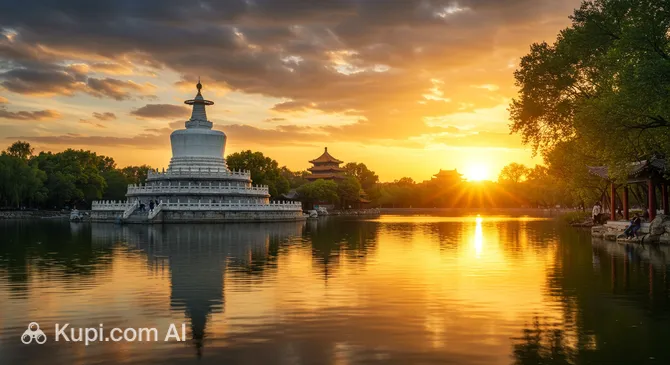
Xicheng is not merely one of Beijing's central districts, but the true heart of China, where a thousand-year history meets the modern rhythm of state life. Located in the western part of the old city within the Second Ring Road, this district serves as the political and cultural core of the capital. It is home not only to the headquarters of state authorities but also to the living soul of the ancient city, with a history spanning over 3,000 years.
The district's atmosphere is unique: majestic imperial parks sit alongside the narrow labyrinths of traditional hutongs, while the gleaming skyscrapers of the Jinrongjie financial center rise near ancient temples. The population of the district is approximately 1.1 million people, creating the feel of a dense yet incredibly dynamic metropolis, where an architectural monument or a cozy tea house waits around every corner.
Xicheng. Illustration.
Source: Kupi.com AI
Travelers are drawn to Xicheng by the opportunity to see the real Beijing without the excessive hustle. A walk along the shores of Shichahai Lake, a visit to the luxurious Prince Kung's Mansion, or shopping in the lively Xidan quarter allows one to experience the multifaceted history of the district. This is a place where every stone is steeped in the grandeur of the imperial past, while modern infrastructure makes exploring this heritage comfortable and exciting.
Weather Overview
The climate in the Xicheng district is characterized by a distinct continental monsoon nature, which makes the change of seasons very contrasting. Winters here are cold and dry, with temperatures often dropping to -6 to -10°C at night, while summer brings hot and humid weather, with the thermometer frequently reaching +30°C and above.
The highest amount of precipitation occurs in July and August when monsoon rains hit the city. During this time, humidity increases significantly. Spring and autumn are considered the "golden" seasons for tourists: the weather becomes mild and the air is clear. However, short-lived sandstorms are possible in spring, and smog is sometimes observed in winter, so it is worth checking current weather data in Xicheng before your walk.
The district's lakes, such as Beihai and Xihai, create a pleasant microclimate on hot days; however, due to dense historical development, Xicheng can experience an "urban heat island" effect. When packing for your trip, aim for a warm and dry wardrobe for the winter months and light, breathable clothing with an umbrella for the summer.
Average monthly temperature
Average monthly precipitation
Interesting Facts
The Political Heart of the Country: Xicheng is home to Zhongnanhai — the closed residence of the top leadership of the Communist Party of China, often referred to as "China's Kremlin."
UNESCO and the Central Axis: In 2024, a significant part of the district, including the scenic Jingshan Park, was included in the UNESCO World Heritage list as part of the historical "Beijing Central Axis."
Merging of Two Histories: Modern Xicheng in its current borders only appeared in 2010 when the ancient Xuanwu district was merged with it, significantly enriching the territory's cultural fund.
Record Heritage: There are more than 190 cultural heritage sites under official state protection within the district, making it one of the most attraction-dense places in the world.
The Oldest Cathedral: Here you will find Nantang — the Cathedral of the Immaculate Conception, which is the oldest Catholic church in Beijing, founded back in 1605.
How to Get There
Xicheng is located in the very center of Beijing, making it one of the most accessible districts in the capital. Thanks to a developed transport network, getting here is easy from both international airports and railway stations. If you are planning your trip in advance, it is useful to review general information on how to get to the center of Beijing.
The primary aviation hub is Beijing Capital International Airport (PEK). The journey from the airport to the district borders takes about 1 to 1.5 hours. The fastest way is to take the Airport Express subway line and transfer to the city lines. You can also take a taxi (travel time depends heavily on traffic) or use specialized airport shuttle buses.
For travelers arriving by train, Beijing North Railway Station is the most convenient point, as it is located directly within the district. Modern high-speed trains depart from here to various regions of the country. Xicheng is also easily accessible by subway from Beijing South Railway Station, where trains from Shanghai arrive.
Station
Passenger traffic
Distance
Beijingnan railway station
26
5 km
Beijing West railway station
25
5 km
Beijing North railway station
16
5 km
Pingguoyuan station
11
17 km
Beijing Railway Station
31
4 km
Beijing East railway station
12
9 km
Beijing Fengtai railway station
12
9 km
Qinghe railway station
10
16 km
Tianjin West railway station
13
107 km
Main Attractions
The main treasures of Xicheng are concentrated in its historical core, where the imperial heritage has been preserved in its original form. One of the most picturesque spots is Beihai Park — a former imperial garden featuring a vast lake and the famous White Dagoba. It is an ideal place for leisurely strolls, where you can feel the aesthetics of ancient China and enjoy the silence in the very heart of the metropolis.
Equally interesting is the Shichahai area, which connects three lakes. Authentic hutongs — traditional Chinese courtyard neighborhoods — have been preserved here, now housing cozy bars, cafes, and antique shops. For those who want to see how the empire's high officials lived, Prince Kung's Mansion is a must-visit. It is one of the best-preserved palace complexes in Beijing, striking visitors with its gardens and exquisite architecture.
The modern side of the district is epitomized by the Xidan shopping quarter, often called the "second Wangfujing." It is a paradise for shopping enthusiasts, featuring massive malls and food courts. Also worth noting are the Temple of the Ancient Monarchs and the city's oldest Catholic church, the Cathedral of the Immaculate Conception, which highlight Xicheng's centuries-old role as a religious and cultural crossroads.
Local Cuisine
The gastronomic scene of Xicheng is a true feast for foodies, where classic imperial recipes meet affordable street food. The main dish that is impossible to miss is the famous Peking duck. The district is home to both historical restaurants with a century of history and modern establishments offering contemporary takes on this delicacy.
For a quick snack, the labyrinthine hutongs in the Shichahai lake area and Dashilan Street are perfect. Here, you should try traditional noodles with thick soybean sauce (zhajiangmian), steamed jiaozi dumplings, and fragrant baozi buns. If you enjoy culinary experiments, stop by a "hot pot" eatery, where you cook the ingredients yourself in a boiling broth.
Among beverages, Chinese tea remains the favorite. Xicheng has many tea houses where you can experience a ceremony with the best varieties of Pu-erh or Oolong. In the evenings, locals like to spend time with a glass of beer or try the traditional Chinese spirit baijiu in small bars. Don't forget to try the local yogurt in ceramic jars, sold on every corner—it is a gastronomic symbol of old Beijing.
Travel Tips
Preparing for a trip to the heart of Beijing requires attention to detail to ensure your journey through Xicheng is as comfortable and rewarding as possible. Here are several proven tips to help you navigate this historical district.
Clothing and Comfort: Summer in the city is hot and humid, so choose light natural fabrics. In winter, a warm jacket is a must as cold winds blow. Most importantly, wear comfortable shoes, as you will be doing a lot of walking. No specific dress code is required when visiting temples, but it is better to avoid overly revealing clothing.
Transport Hacks: Use the subway to save time. Set up Alipay or WeChat and link your card — this is the only convenient way to pay for transit, bike rentals, and purchases.
Finance: Cash is going out of circulation, but it is worth having a small supply of yuan. Most ATMs accept Visa and Mastercard for cash withdrawals. Tipping in restaurants and taxis is not customary.
Health and Air Quality: Before heading out, check the air pollution levels in apps (AQI). On days with heavy smog, be sure to wear a mask. Pharmacies in Xicheng are on every corner, but English is rarely understood — keep a translator app handy.
Communication: Download an offline translator and map. English is mainly spoken in major hotels and shopping centers. It is useful to have a hotel card with the address written in Chinese.
Etiquette: Chinese people value politeness. Greet people with a slight nod. In queues and on the subway, be prepared for dense crowds — the concept of personal space here differs from European standards.
What to Avoid: Do not attempt to photograph military sites or government buildings in the Zhongnanhai area — this is strictly prohibited and can lead to trouble with the police. Also, do not agree to offers from strangers to go to a "tea ceremony" or an exhibition — this is a popular tourist scam.
Park Reservations: Many popular attractions, such as Beihai Park, require advance booking via WeChat mini-programs. Take care of this at least a day before your visit.
Xicheng will reveal itself as a hospitable and majestic district if you show a little patience and curiosity. Enjoy your journey to the very heart of the Chinese capital!
Entertainment & Nightlife
The nightlife in Xicheng has its own unique character, distinctly different from the club-heavy energy of other districts in the capital. After sunset, the waterfronts of Houhai and Shichahai lakes become the center of attraction. This area is packed with cozy bars featuring live music, where local acoustic bands and jazz musicians perform. The atmosphere here is relaxed and bohemian, with crowds preferring quiet conversations over cocktails or walks along the lantern-lit shores.
For lovers of high art, the district is home to the National Centre for the Performing Arts (NCPA), famous for its futuristic egg-shaped architecture. It hosts world-class opera performances, ballet productions, and classical music concerts. If you are looking for modern evening leisure, head to the Xidan area, where cinemas and entertainment complexes stay open late.
Active travelers and strollers should check out the night markets or the gastronomic alleys of the hutongs, where life doesn't quiet down until midnight. Safety in Xicheng is of a very high standard, making night walks pleasant and peaceful. Getting home late is easiest by taxi using the Didi app, as public transport usually stops running around 11:00 PM.
Parks & Museums
The green zones of Xicheng are true oases of tranquility amidst the dense urban landscape. The crown jewel of the district is undoubtedly Beihai Park, where 69 hectares host a lake adorned with imperial pavilions and gardens. Another must-visit location is Jingshan Park. Its summit offers arguably the best panoramic view of the Forbidden City and the endless rooftops of Beijing.
For those seeking solitude, Yuetan Park and Taoranting Park are excellent choices. These are places where you can witness the daily life of city residents: morning Tai Chi sessions, water calligraphy on the pavement, and traditional games of Mahjong. The district's greenery plays a key role in maintaining the ecology of the capital's center, creating comfortable conditions for resting after long walks through the concrete jungle.
The museum program in Xicheng is equally impressive. Prince Kung's Mansion is a unique open-air museum demonstrating the lifestyle of the Manchu aristocracy. Also worth visiting is the Temple of the Ancient Monarchs, dedicated to legendary rulers of the past. The large number of historical monuments within the district makes it one of the most important cultural reserves in China.
Getting Around
The public transport system in Xicheng is one of the most efficient in the capital. The backbone of movement is the subway: eight lines cross the district, including major hubs such as Xidan, Fuchengmen, and Ping'anli. The subway is the fastest and most reliable way to avoid the capital's traffic jams, especially during rush hours (7:00–9:00 AM and 5:00–7:00 PM), when trains and stations can become very crowded.
Surface transport is represented by an extensive network of buses and BRT (Bus Rapid Transit) lines. Fares are paid using the Yikatong transport card or via QR codes in the Alipay and WeChat apps. Subway fares start at 3 yuan and depend on the distance. For route planning, it is best to use the Baidu Maps or Amap (Gaode) apps, as Google Maps may not function correctly.
As an alternative, many tourists choose bike rentals (Meituan or HelloBike services). This is an ideal way to explore the narrow hutongs where cars have difficulty passing. Taxis in the district operate around the clock and are relatively inexpensive, though hailing a car on the street can be tricky — it is better to call one via the Didi app. Remember that traffic in the central part of the district can be very heavy, so allow extra time for your journey.
Accommodation
The choice of accommodation in Xicheng can satisfy a wide range of needs — from those seeking authenticity to those looking for modern business comfort. If you want to fully immerse yourself in the atmosphere of the old city, look for boutique hotels in the hutongs. These are often renovated traditional courtyards (siheyuan) offering guests a unique experience of living in a historical environment, with prices ranging from 300 to 800 yuan per night.
For those who prefer high service standards and panoramic views, the luxury five-star hotels in the Jinrongjie (Financial Street) quarter or the Xidan area are ideal choices. Leading global chains such as the Ritz-Carlton and Westin are represented here. Prices in this segment vary from 1,000 to 3,000 yuan. Business travelers value these locations for their proximity to government institutions and major offices.
When booking accommodation in Xicheng, it is recommended to use popular Asian services such as Trip.com (Ctrip) and to book in advance, especially during national holidays (early May and October). Remember that foreign tourists are required to present an original passport with a valid visa to check into a hotel.
Nearby Cities
Xicheng serves as an excellent starting point for exploring the surroundings and other districts of the metropolis, as it literally borders the most important cultural sites of the capital. Thanks to the dense network of subways and high-speed trains, you can easily plan day trips outside the central part of the city.
Just a few minutes away by subway is the Dongcheng district, home to the famous Forbidden City and Tiananmen Square. If you want a change of scenery to see modern Beijing in all its glory, head to the Chaoyang district with its skyscrapers and parks. For those ready for a longer trip, the port city of Tianjin is a great option—a high-speed train will take you there in just 30 minutes.
It is also worth paying attention to destinations such as Tongzhou, which is actively developing as a new administrative center, or quieter suburbs like Xinlinzhuang. Each of these places allows you to see different facets of Chinese urbanization and culture, complementing your travel impressions.
Shopping & Souvenirs
Shopping in Xicheng is an exciting journey between ultra-modern malls and authentic markets with centuries of history. The main commercial artery of the district is the Xidan quarter. Here, you'll find giant shopping centers like Joy City and Xidan Department Store, where you can find everything from the latest electronics to global and local fashion brands. This area is particularly popular with young people due to its dynamic atmosphere.
For those seeking traditional goods and unique gifts, Dashilan Street is a must-visit. It is one of the city's oldest commercial zones, where shops founded hundreds of years ago still operate. This is the place to buy famous Chinese silk, premium tea, jade products, and hand-painted fans. In the hutongs near the lakes, you can find small antique shops selling art pieces and vintage accessories.
Most shops are open from 10:00 AM to 10:00 PM. Malls accept international cards, but for small purchases and markets, it is highly recommended to set up Alipay or WeChat Pay, as cash is accepted less and less frequently. Don't forget to check for Tax Free options in large department stores — many of them support the VAT refund system for foreign tourists.