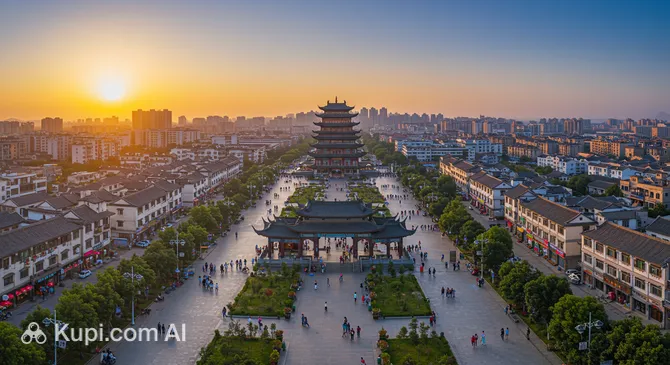
Sanhe is a fast-growing city in Hebei Province, representing a unique phenomenon on the map of China. Situated in a special exclave surrounded by the territories of Beijing and Tianjin, this city serves as a vital link in the metropolitan region. Although Sanhe is often perceived as a large industrial and residential suburb, it possesses its own distinct atmosphere of rapid urbanization and the pace of a modern metropolis.
Sanhe. Illustration.
Source: Kupi.com AI
Geographically, the city occupies a flat plain, which has facilitated its rapid growth: in just a few decades, the population has increased from a few thousand to nearly a million people. If you are interested in the region's development history, Sanhe serves as an excellent example of how small settlements transform into massive urban agglomerations. The city is part of the so-called "Northern Three Counties of Langfang," highlighting its strategic importance to the provincial economy.
For tourists, Sanhe may be primarily interesting as a base for exploring the surrounding areas or as a place to witness the everyday life of modern China without the frills. There are no classic tourist crowds here; instead, there is an abundance of modern residential complexes, wide avenues, and cozy local markets. Visiting Sanhe is an opportunity to feel the pulse of the "real" China, living in the shadow of the great capital but following its own unique path.
Weather Overview
Sanhe is located in a temperate continental climate zone, characterized by a clear change of seasons. Winters here are cold and predominantly dry, with average January temperatures around -3.4°C, although night frosts can reach -9°C. Summer, on the other hand, is very hot and humid: in July and August, the thermometer often rises above +30°C, and tropical downpours bring most of the annual precipitation.
The most comfortable time to visit the city is spring (April-May) and autumn (September-October), when mild and clear weather sets in. During this period, the city's climate is most favorable for walking. However, it should be noted that due to the high density of buildings and proximity to industrial zones, air quality issues are often observed in Sanhe during winter, so tourists are advised to monitor smog forecasts.
Precipitation is distributed unevenly: while winter sees occasional snow, July can receive up to 216 mm of rain. When packing your suitcase, dress for the season: in winter you will need a warm jacket to protect against the biting wind, and in summer, light clothing and an umbrella to save you from both the sun and sudden downpours.
Average monthly temperature
Average monthly precipitation
Interesting Facts
The name Sanhe literally translates to "Three Rivers." The city earned this name thanks to the Jushui, Rushui, and Baoqiushui rivers that flow through its territory.
The city occupies a unique geographical position as part of a Hebei province exclave. It is completely separated from the main part of its province by the territories of the municipalities of Beijing and Tianjin.
Sanhe demonstrates phenomenal population growth rates: in 1950, just over 3,000 people lived here, and by 2020, the population approached one million.
The population density in Sanhe is approximately 1,501 people per square kilometer, making it one of the most densely populated districts in its region.
In China's administrative division system, Sanhe ranks 230th in population among all cities in the country, while remaining only the 14th largest in its own Hebei province.
How to Get There
Thanks to its proximity to the capital, Sanhe boasts excellent transport accessibility. It is a vital logistics hub connecting Hebei province with China's largest metropolises. If you are planning a visit, it is useful to check detailed information in advance on how to get to the city in the most convenient way.
The nearest major air hub is Beijing Capital International Airport (PEK). It is located approximately 50–70 kilometers from Sanhe. A transfer from the airport by taxi or bus can take between one and two hours depending on traffic, which can be quite heavy in this region. The city does not have its own civil airport, as the proximity of the capital's terminals fully meets aviation needs.
Railway transport is the fastest and most reliable way to travel. High-speed trains (HSR) carry passengers from central Beijing to Sanhe station in just 20–30 minutes. The city is also connected by regular bus services to Beijing, Tianjin, and neighboring Langfang. However, keep in mind that during peak hours, a trip by bus or car can be delayed due to traffic jams on expressways like the G45.
Station
Passenger traffic
Distance
Beijing East railway station
12
57 km
Beijing Railway Station
31
62 km
Beijingnan railway station
26
67 km
Beijing North railway station
16
67 km
Qinghe railway station
10
70 km
Main Attractions
Sanhe is primarily a modern urban center, so it is difficult to find ancient temples or world-class historical ruins here. The main interest for visitors lies in the modern urban infrastructure and public spaces that reflect the region's rapid growth. The central point of attraction is Sanhe Square, where locals gather in the evenings, creating a lively and authentic atmosphere of a Chinese city.
The modern residential hubs and transport nodes, such as the railway station building, are also noteworthy, emphasizing the city's significance as a logistics center. While Sanhe rarely appears in classic guidebooks, a walk along its wide avenues and a visit to its large shopping complexes allow tourists to see how life is organized in one of the capital region's most densely populated suburbs.
For those looking for more traditional sights, the city serves as a convenient starting point for trips to cultural heritage sites located in neighboring Beijing or Tianjin. Within Sanhe itself, it is worth spending time exploring the local markets, which are a vibrant cultural experience in their own right, showcasing the daily life and gastronomic habits of Hebei province residents.
Local Cuisine
The gastronomic culture of Sanhe is steeped in the traditions of Northern China, where wheat-based dishes, warming meats, and an abundance of spices play the leading roles. While walking through the city, you will definitely encounter establishments offering lamian (pulled noodles) and jiaozi (Chinese dumplings). These dishes are prepared everywhere here and are the staple of the local diet. You should also try baozi—steamed buns with various fillings that are perfect for a quick snack.
Meat dishes, especially pork and mutton prepared in traditional "hot pots," hold a special place in the local cuisine. Sanhe has many chain restaurants of this type where you can cook selected ingredients yourself in a fragrant broth. Among street foods, the most popular are chuan'er—small skewers grilled right in front of you over an open fire—and mifen—tender rice noodles with spicy sauces.
Regarding drinks, it is customary to accompany meals with green or black tea. Among alcoholic beverages, the famous Tsingtao beer and traditional rice wine lead the way. Restaurants and eateries are concentrated in the central districts and in the food courts of large shopping malls. Prices in Sanhe remain very democratic: a hearty lunch at a local canteen will cost you 20–50 yuan. Although there are few elite restaurants in the city, the honest and simple cuisine of Hebei will not leave you indifferent.
Travel Tips
Planning a trip to Sanhe requires considering the specific characteristics of a Chinese suburb. Here are some practical tips to help make your journey comfortable and productive.
Navigation and Connectivity: Be sure to install Baidu Maps or Amap, as international mapping services often function incorrectly. For connectivity, it is best to purchase a local SIM card right at Beijing airport.
Payments: Cash is becoming a thing of the past, and international cards are rarely accepted. Set up Alipay or WeChat Pay by linking your card—this will save you from many headaches when paying for food and transport.
Environment and Health: Check the Air Quality Index (AQI) before heading outside. On days with heavy smog, be sure to use protective masks. Drink only bottled water.
Transport Nuances: Try to avoid traveling toward Beijing and back during peak hours (morning and evening), or you risk spending several hours in traffic jams or overcrowded transport.
Language Barrier: English is not widely spoken in Sanhe. Carry a card with your hotel address in Chinese and download an offline translator.
Clothing and Essentials: In summer, bring light clothing made of natural fabrics; in winter, bring warm clothes, as the frosts can be quite severe. Don't forget comfortable shoes for long walks.
Etiquette: Chinese people value politeness. Greet people with a slight nod of the head. Avoid loud conversations and arguments in public places.
Registration: If you are staying with friends or in a private apartment rather than a hotel, remember that you are required to register at the local police station within 24 hours.
Following these simple rules will allow you to focus on exploring the city and enjoy immersing yourself in the local culture.
Entertainment & Nightlife
The entertainment scene in Sanhe is predominantly local in character and focused on relaxation after the workday. Since the city is a major residential area for those working in the capital, the nightlife is not as vibrant as in neighboring Beijing. Nevertheless, evening leisure seekers can find modern karaoke halls (KTV), which are an integral part of Chinese entertainment culture. Cinemas located in large shopping centers are also popular, screening both global premieres and the latest Chinese films.
As dusk falls, city life moves to the streets where night markets open. This is the best place to experience the local flavor: here you can not only try street food but also observe the lives of the townspeople. The atmosphere at these markets is friendly and relaxed, with a crowd consisting mainly of young people and families with children. Bars and pubs are less common in Sanhe, and most close by 11:00 PM, so local residents often head to Beijing, just a short trip away, for serious clubbing.
For daytime relaxation and family leisure, the city provides fitness centers and play zones in shopping complexes. Safety at night is high, typical of most Chinese cities, though tourists are advised to stick to central, well-lit streets. For getting around the city late at night, it is most convenient to use ride-hailing apps like Didi.
Parks & Museums
The park infrastructure in Sanhe mainly consists of green zones within modern residential quarters and along river embankments. As a city in an active phase of development, it cannot yet boast massive forest-park areas; however, local residents highly value the spaces that have already been created. The walking areas along the Jushui River are popular spots for morning jogs and evening relaxation, offering a peaceful atmosphere away from busy highways.
As for museums, they are virtually non-existent in Sanhe itself, as the region's cultural focus is traditionally shifted toward Beijing. Nevertheless, tourists interested in history and art are encouraged to use Sanhe as a convenient base for visiting the capital's galleries and exhibition halls. Within the city itself, the role of cultural spaces is often filled by modern libraries and exhibition zones in administrative buildings, where local exhibitions are occasionally held.
The shortage of large parks and museums within the city limits is compensated for by the overall level of landscaping in the new districts. Wide sidewalks, modern landscape solutions near shopping centers, and small squares make walking through the central part of Sanhe pleasant. If you are looking for full-scale nature recreation or a deep dive into history, it is best to plan a trip to neighboring areas and leave Sanhe for an introduction to China's modern urban environment.
Getting Around
The public transport system in Sanhe is well-developed enough to meet the needs of both local residents and visitors. The backbone of internal communication is an extensive network of bus routes. The cost of a city bus ride is usually only 1–2 yuan, making it the most budget-friendly way to get around. However, remember that during peak hours (7 to 9 AM and 5 to 7 PM), buses can be very crowded.
A major milestone in transport development was the construction of Line 22 of the Beijing Subway, which reaches the borders of Sanhe, significantly simplifying the connection with the capital. Within the residential areas themselves, bike-sharing systems (such as Meituan or HelloBike) are a popular means of transport. This is a great way to quickly reach your destination while avoiding traffic on the main avenues.
For more comfortable trips, tourists often choose taxis. The Didi service (the Chinese equivalent of Uber) is active in the city, through which you can call both a standard car and a premium class vehicle. Payment in taxis and buses is most often made via QR codes of payment systems. If you plan to walk a lot, keep in mind that distances between districts in Sanhe can be significant, and the level of air pollution sometimes affects the comfort of walks.
Accommodation
The hospitality sector in Sanhe is primarily geared toward business travelers, expats, and those visiting the city for work. There aren't many classic tourist hotels here, but the choice of accommodation is wide enough for a comfortable stay. The majority of the inventory consists of 2-3 star hotels, where prices start at approximately 200 yuan per night.
For those planning a long-term stay, apartments in modern residential complexes are a popular option. Many such properties are offered through online platforms and are popular among those who work in Beijing but prefer more affordable housing in the suburbs. When choosing an area to stay, it is best to look for proximity to the railway station or major transport arteries, which will significantly simplify travel around the region.
It is recommended to book accommodation in advance, especially during major exhibitions or national holidays when the load on hotels increases. Most hotels accept payment via popular Chinese payment systems, although international cards may be accepted in large chain hotels. Always check for foreign national registration at check-in, as this is a mandatory legal requirement.
Nearby Cities
Thanks to its unique location in an exclave, Sanhe is an excellent starting point for exploring the key metropolises of Northern China. The city is surrounded by territories rich in attractions, making it a convenient hub for short trips.
Just a few dozen kilometers away is Yanjiao—another rapidly developing city that has virtually merged with the capital's districts. Also of interest for a short trip is Xiadian, which offers a glimpse into the lifestyle of neighboring counties. Of course, the main destination for day trips remains Beijing, which can be reached by high-speed train in less than half an hour to see the Great Wall of China or the Forbidden City.
Don't miss the opportunity to visit other nearby centers such as Zunhua or Langfang, each revealing the character of Hebei province in its own way. The region around Sanhe offers a variety of experiences—from ultra-modern quarters to traditional agricultural landscapes—making exploration of the surroundings an exciting addition to your trip.
Shopping & Souvenirs
Shopping in Sanhe reflects the needs of a modern Chinese suburb: here you will find everything necessary for life, from electronics to fashionable clothing. The main commercial activity is concentrated in large shopping and entertainment centers in the central part of the city. These complexes offer a familiar format with stores of famous brands, supermarkets, and relaxation areas, making them convenient for international guests.
A special local flavor can be felt at the local markets located near the railway station and in the old residential areas. Fresh produce, spices, tea, and everyday goods are sold here at very affordable prices. While Sanhe is not famous for unique folk crafts or exclusive souvenirs, you can advantageously purchase standard Chinese goods of good quality here—from gadgets to textiles.
Shops in the city usually operate from early morning until 9:00 PM–10:00 PM, seven days a week. It is worth remembering that in Sanhe, as throughout China, digital payments via WeChat Pay and Alipay are used everywhere, so tourists are advised to set up these apps in advance. Cash can still be used at markets, but international bank cards are not accepted everywhere, mainly only in large retail chains.