Support

Yanjiao

About

Yanjiao is a dynamic and fast-growing city in Hebei Province that has become an integral part of China's capital region. Located just a few dozen kilometers from the center of Beijing, it has transformed into one of the world's largest "bedroom communities." The city draws its unique atmosphere from a combination of rapid urbanization, industrial development, and the daily rhythm of hundreds of thousands of people commuting between their homes and the capital.

Geographically, Yanjiao is nestled on the banks of the Chaobai River. With a population of over 360,000, the city demonstrates incredible growth rates: just a couple of decades ago, rural areas predominated here, while today, the skyscrapers of residential complexes form an impressive urban skyline. Since 2010, its status as a national high-tech zone has allowed the city to attract innovative enterprises in the fields of biomedicine and electronics.
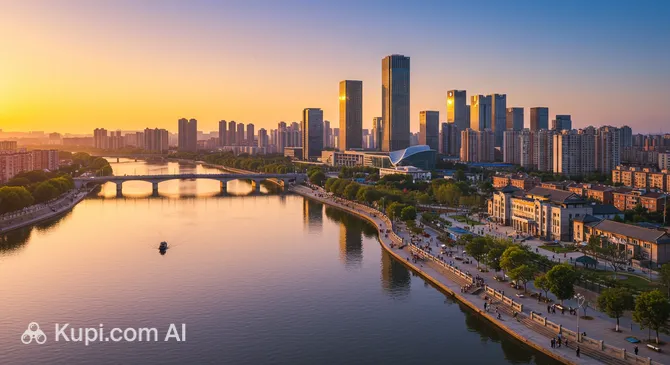
Yanjiao. Illustration.
Source: Kupi.com AI

Despite its modern appearance, the history of Yanjiao's founding dates back to ancient times. The city's name literally translates as "Yan's Suburb," recalling a time when these lands were the outskirts of the powerful State of Yan more than two thousand years ago. Later, during the Qing Dynasty, emperors used this location as their first stop during trips from the capital, earning the city the honorable nickname "the foot of the throne."

A visit to Yanjiao will be of interest to those who want to see a "different China"—not the showcase facade of megacities, but a living, functional environment where traditions of the past, such as the fairs at the Tianqi Temple, coexist with futuristic industrial parks. It is an ideal place for a transit stop or for studying how the modern middle class of the Middle Kingdom lives.

Weather Overview

The climate of Yanjiao has a pronounced temperate continental character, typical for North China. Winter here is cold and dry, with average January temperatures around -3.2°C, although night frosts can reach -8°C and below. Summer, by contrast, can be very hot and humid: in July and August, the thermometer often rises above +30°C, and tropical downpours bring the bulk of the annual precipitation.

The transitional seasons—spring and autumn—are considered the most comfortable times to visit the city, when mild and sunny weather sets in. However, tourists should take into account that the weather in Yanjiao largely depends on the winds: northern flows in winter can bring cold air, while a lack of wind in summer contributes to the accumulation of smog, which is characteristic of the entire capital region.

When planning your trip, expect warm summers with occasional thunderstorms and dry, frosty winters with rare snowfalls. It is recommended to bring clothing that can be layered to easily adapt to significant temperature fluctuations between day and night, especially during the spring and autumn periods.

Average monthly temperature

Average monthly precipitation

Interesting Facts

  • The city's name translates as "Yan's Suburb," referring to its location on the borders of the ancient State of Yan, which existed over 2,000 years ago.

  • During the Qing Dynasty, Emperor Kangxi built a summer palace in Yanjiao, as the city was the first stop for the imperial procession traveling from Beijing.

  • Yanjiao has held the status of a national high-tech zone since 2010, specializing in innovations in electronics and biomedicine.

  • The city officially changed its "residence": in 1950, it was transferred from the administrative management of Beijing to Hebei Province.

  • Due to its explosive population growth and proximity to the capital, Yanjiao is often called the "largest bedroom community in the world."

How to Get There

The transport accessibility of Yanjiao is driven by its role as a key suburb of the capital. The main flow of travelers arrives here from Beijing, using a developed network of roads and bus routes. The city does not have its own airport, so all air travelers use the infrastructure of neighboring megacities, which is quite convenient thanks to the proximity of high-speed highways.

The main air hub for a trip to Yanjiao is Beijing Capital International Airport (PEK), located about 60 kilometers away. You can get to the city from there by taxi or bus; however, keep in mind that during peak hours, travel time can take up to two hours. The new Daxing Airport (PKX) is also accessible, but the journey from there will be slightly longer.

AirportPassenger trafficDistance
Beijing Capital International Airport67.4 mln24 km
Beijing Nanyuan Airport40 km
Beijing Daxing International Airport49.4 mln59 km
Tianjin Binhai International Airport18.5 mln102 km
Tangshan Sannuhe Airport668 950104 km

Rail service within the city itself is limited, and most tourists prefer to use Beijing or Langfang train stations. Buses depart regularly from the Dongzhimen metro station in Beijing, reaching the center of Yanjiao in 1–1.5 hours. This is the most economical and popular way to travel among locals and visitors. You can find more details on the page describing how to get to Yanjiao by various modes of transport.

StationPassenger trafficDistance
Tianjin Economic-Technological Development Area Railway Station125 km
Tianjin Port Free Trade Zone Railway Station126 km
Baoding Railway Station12 mln166 km
Shijiazhuang Railway Station43.5 mln292 km

Main Attractions

Yanjiao is not a typical tourist center, but there are several places worth seeing. One of the city's main natural prides is the Yanjiao Botanical Garden. This is a massive green zone home to more than 10,000 plant species. The garden serves as an important "green lung" for the densely built-up area and is a favorite walking spot for locals wishing to escape the city noise.

For those interested in historical heritage, Tianqi Temple is an essential stop. In the past, this site was the cultural heart of the old town, famous for its annual fairs. Although modern construction has significantly changed the surroundings, the temple remains a silent witness to the region's rich history, recalling the times when Yanjiao served as an important trade and transport hub on the Chaobai River.

The Chaobai River embankment itself is also of interest for a quiet pastime. While there isn't an abundance of attractions here, the open spaces by the water allow you to feel the scale of North China's flat terrain. A walk along the shore provides an opportunity to see the contrast between the river's quiet flow and the energetic growth of new residential areas that are changing the face of the city right before your eyes.

Local Cuisine

The gastronomic map of Yanjiao is a real feast for lovers of Northern Chinese cuisine. The basis of the local diet consists of hearty dishes made from wheat flour. You should definitely try traditional hand-pulled lamian noodles and various jiaozi dumplings with meat and vegetable fillings. Due to its proximity to the capital, the famous Peking duck is also very popular here and is prepared in many local restaurants.

Street food plays an important role in city life. At evening markets and in small eateries, you can find unusual treats such as Chinese-style corn dogs or fragrant soups with tofu and spices. The overall character of the local cuisine can be described as simple but very rich in flavor, with a dominance of soy sauce, garlic, and ginger. This is food designed to provide energy and warmth during the cold winter months.

As for drinks, tea culture is highly valued in Yanjiao, though young people increasingly choose modern tea drinks with milk and fruit. Local restaurants also frequently offer local beer brands, which perfectly complement hot and spicy dishes. Dining in this city is always a social process, so the best establishments are usually full of large groups enjoying shared dishes in the center of the table.

Travel Tips

A trip to Yanjiao promises to be an interesting experience of immersion into the life of a modern Chinese suburb. To make your journey as comfortable as possible, we have prepared a list of practical tips.

  1. Dress for the season: The region has a temperate continental climate with hot summers and cold winters. Be sure to bring comfortable shoes, as distances in residential areas are significant, and for winter walks, you will need a warm jacket with wind protection.
  2. Plan your travel time: The main feature of the city is traffic jams at the exits toward Beijing. If you have a meeting or a flight scheduled, allow at least an hour extra for the journey during morning (07:00–09:00) and evening (17:00–19:00) hours.
  3. Digital payments: Cash is rarely accepted in Yanjiao. Be sure to install and link a card to Alipay or WeChat Pay—these are the primary payment methods everywhere, from street stalls to taxis.
  4. Language barrier: English is very rarely encountered here. Download an offline translator and save your hotel address in Chinese characters in advance to show to a driver or passersby.
  5. Air quality: Due to the industrial status of the region and heavy traffic, smog levels can rise. It is recommended to install an AQI monitoring app and carry a protective mask on days with unfavorable readings.
  6. Registration: As everywhere in China, foreigners are required to register at their place of stay. If you are staying in a hotel, the staff will do this for you, but if renting private apartments, check if the host is ready to help with police registration.
  7. Etiquette and communication: Locals are friendly but value personal space in queues and transport. A nod of the head as a greeting is quite appropriate. Avoid discussing political topics and loud conversations on public transport.
  8. Connectivity: Buy a local SIM card in Beijing or Langfang for internet access. Remember that you may need a VPN to access familiar Western services.

May your introduction to Yanjiao be rich and pleasant, and may these tips help you feel confident in any situation!

Entertainment & Nightlife

The entertainment scene in Yanjiao is primarily oriented toward local residents and has a quiet, family-oriented character. Most life after work is concentrated in large shopping malls, which house modern cinemas, children's play areas, and numerous karaoke (KTV) venues—an essential part of Chinese leisure. After 10:00 PM, the city quietens down as most residents prepare for an early departure to Beijing.

For those looking for a vibrant nightlife with clubs and bars, the best solution is to head to neighboring Beijing or the central part of Langfang. In Yanjiao itself, night venues are rare and consist of small local pubs or restaurants that stay open late. Daytime leisure usually includes visiting parks or participating in corporate events held within the high-tech development zones.

Safety in the city is high, and walking along the central lit streets in the evening is quite comfortable. If you need to get home late at night, it is best to use official taxi services. Remember that Yanjiao is primarily a place to rest before an active day, so you shouldn't expect noisy parties until dawn here.

Parks & Museums

The city's main natural jewel is the Yanjiao Botanical Garden. This place captures the imagination with the scale of its collection, which includes more than 10,000 plant species. Amidst dense urban development, the garden has become a true oasis where you can take a break from the hustle and bustle, strolling among themed exhibits and well-kept alleys. For tourists, this is the best opportunity to see the diversity of northern flora in one place.

While there are no classic museums with historical artifacts in the city yet, the area around Tianqi Temple serves as a cultural hub. This space allows you to touch the history of the old town through its architectural elements and the atmosphere of a former trade hub. In recent years, the city has been actively integrating elements of modern art into its public spaces, creating small squares and relaxation zones that are gradually changing the industrial look of the district.

Another important recreational area is the coast of the Chaobai River. Despite the lack of complex park infrastructure, this space attracts fans of jogging and walking in the fresh air. The flat landscape and open views of the water create a sense of space that is sometimes lacking in the city's crowded neighborhoods. This is an ideal place to see how nature and urbanism coexist on the border of Hebei Province and Beijing.

Getting Around

The public transport system in Yanjiao is actively developing, striving to keep pace with the population growth. The main form of transport is buses, which connect the city not only with internal districts but also with key transport hubs in Beijing and Langfang. Routes to the capital, for example, to the Dongzhimen metro station, run every 15–30 minutes, though they can be very crowded during morning and evening peak hours.

Inside the city itself, the bus network covers the main residential and industrial zones, but for trips to remote areas, tourists often prefer to use taxis or car-hailing services via the Didi app. This is a convenient and relatively inexpensive way to get around, especially if you are traveling with luggage or a group. It is worth remembering that Yanjiao does not yet have its own metro line, so ground transport remains the only option.

Bus fares are most often paid using transit cards or via QR codes in mobile apps. It is useful for tourists to know that bicycles and electric scooters are extremely popular here for short-distance trips. The infrastructure for them is basic, but the widespread presence of rental points allows you to move quickly between neighborhoods, bypassing traffic jams on the main highways.

Accommodation

The choice of accommodation in Yanjiao largely reflects its status as a business and residential center. You won't find luxury historic hotels here, but there is a wide selection of modern mid-range hotels and apartments. These accommodation options are particularly popular among those coming to the city for business in the high-tech zone or those looking for a budget alternative to expensive Beijing housing.

One of the most comfortable options for foreign tourists is chain hotels like Holiday Inn Express, which offer a familiar level of service. Most hotels are concentrated along the main highways and near large shopping centers, providing easy access to transport and dining options. Accommodation prices here are significantly lower than in the capital, making the city attractive for long-term stays.

When planning your trip, keep in mind that Yanjiao is oriented toward the domestic market, so staff in smaller guesthouses may not speak English. It is recommended to book accommodation in advance through major services and always have the hotel address in Chinese for communicating with taxi drivers. During Chinese national holidays, demand for housing increases, so you should take care of booking several weeks before your visit.

Nearby Cities

Yanjiao occupies a strategically advantageous position, making it an excellent starting point for exploring the surroundings and major cultural centers. Thanks to a developed road network, it is easy to plan day trips from here to places rich in history and modern entertainment.

Undoubtedly, the main destination for travelers remains the majestic Beijing. In just an hour's drive, you will find yourself in the heart of the capital, where you can visit the Forbidden City, the Great Wall of China, or modern art zones. It is also worth paying attention to Sanhe, the administrative center of which Yanjiao is a part, and the Tongzhou district, which is actively developing as Beijing's new sub-center with its canals and parks.

CityPopulationDistance
Xiadian32 68612 km
Sanhe652 04228 km
Tongzhou21 84830 km
Beijing18 522 00035 km
Xicheng459 78137 km

No less interesting will be a visit to the small town of Xiadian or the Xicheng district, each of which has its own unique flavor. The proximity of these locations allows tourists to enjoy the diversity of the Hebei and Beijing regions, returning in the evening to the quieter and more affordable Yanjiao.

Shopping & Souvenirs

Shopping in Yanjiao is primarily a practical experience, focused on the daily needs of residents and visitors. There are no luxury boutiques of global brands here, but there is an abundance of large shopping centers (malls) where you can find high-quality clothing, electronics, and household goods from Chinese brands. The main shopping areas are concentrated along the main transport arteries, making them easily accessible for those staying in local hotels.

For those who want to feel the local flavor, it is worth looking into the markets located near the Chaobai River. The region's trading traditions are preserved here: you can buy fresh farm products, tea, and folk crafts. Although souvenir products are minimally represented in Yanjiao, small handmade items from local craftsmen can be a great commemorative gift from your trip.

Most shops are open from morning until late evening, usually until 9:00 PM or 10:00 PM. Mobile payment systems WeChat Pay and Alipay are accepted everywhere and have almost entirely replaced cash. If you need extensive shopping with global brands, locals usually recommend heading to neighboring Beijing for the weekend, where the choice of goods is significantly wider.

Reached the end of the page?

That means the route is fully explored