Support

Špilberk Castle

About

At the top of a hill in the heart of the city of Brno stands Špilberk—a majestic castle-fortress that has become one of the main symbols of Czechia. This historical and architectural landmark is visible from almost anywhere in the city, drawing the eye with its monumentality. Founded in the 13th century by the Czech King Přemysl Otakar II, the castle originally served as a royal residence and defensive citadel.
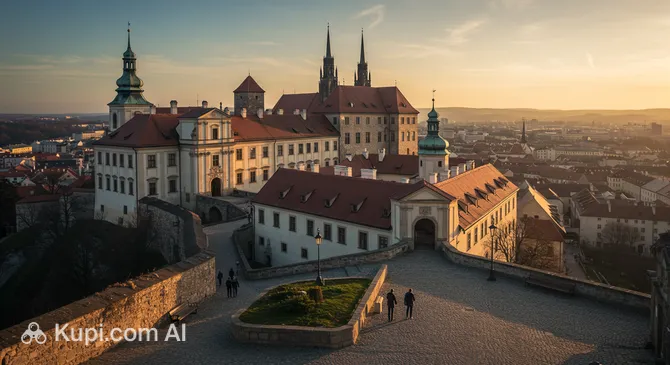
Špilberk Castle. Illustration.
Source: Kupi.com AI

Traveler photos:

The history of Špilberk spans many centuries, and each has left its mark on its appearance. The castle's architecture harmoniously combines elements of the austere Gothic style and elegant Baroque, making it a unique witness to the past. A walk along its walls is a true journey through time, allowing you to touch different eras.

Today, Špilberk is not just a fortress but a living cultural center and the Brno City Museum. It hosts various exhibitions dedicated to the history of the city and the Moravia region, as well as art displays. Recognized as a national cultural monument, the castle is one of the country's most important attractions, a must-visit for anyone wishing to better understand the history and culture of this region.

Contacts

To make your visit to Špilberk Castle as comfortable as possible, we recommend checking the latest information in advance: opening hours, ticket prices, and event schedules. The most reliable way to get this data is to visit the official website.

How to contactContact
AddressŠpilberk 210/1, 662 24 Brno, Czechia
Phone number+420 542 123 611
Websitewww.muzeumbrna.cz

What to Do

A visit to Špilberk Castle is an opportunity to immerse yourself in centuries of history preserved in the exhibitions of the Brno City Museum. Guests can explore permanent and temporary displays dedicated to the history of the castle itself, the city of Brno, and the entire Moravia region. Of particular interest are the famous casemates—the former prison that was known in the 18th and 19th centuries as the "Prison of Nations." In addition, the museum features fine art collections, reconstructed interiors, and archaeological finds that tell the story of this land's past.

Beyond the museum exhibits, Špilberk offers other experiences. Its lookout tower, terraces, and courtyards provide magnificent panoramic views of Brno. This makes the castle a popular spot for leisurely walks and memorable photoshoots, allowing you to see the city from a new perspective.

During the warmer months, the castle grounds transform into a lively cultural hub. In the summer, concerts, theatrical performances, and various open-air festivals are regularly held here, filling the ancient walls with music and art.

Getting There

Špilberk Castle is conveniently located in the very heart of Brno, on a hill of the same name, making it easily accessible for tourists. The most popular and pleasant way to reach it is a walk from the historic part of the city. The journey from the main square will take no more than 10–15 minutes. The path leads uphill, but it is well-equipped with comfortable walkways and signs, so the climb won't feel too tiring.

If you prefer public transport or are staying in a more distant area of the city, you can use trams or buses. The nearest stops, such as Šilingrovo náměstí, are located just a few minutes' walk from the foot of the hill where the fortress stands. From there, it is just a short stroll up through the park to reach the castle gates. This is a great option to save your energy for exploring the attraction itself.

For travelers arriving by car, parking spaces are available near the park at the base of the hill. However, please note that driving directly up to the castle is not possible—the final stretch must be completed on foot. This final stage of the walk allows you to enjoy the views and fresh air of the park surrounding Špilberk.

Nearest city: Brno

History & Facts

The history of Špilberk Castle dates back to the 13th century, when the Czech King Přemysl Otakar II founded it as a royal residence and a powerful fortress to protect the city of Brno. The first written mention of the castle dates back to 1277, and since then, it has witnessed many key events in the region's history. Throughout the 14th and 15th centuries, Špilberk served as the residence of the Moravian margraves, who ruled all of Moravia from here.

One of the most heroic chapters in Špilberk's history was its defense during the Thirty Years' War. In 1645, the fortress garrison and the city's residents withstood a four-month siege by superior Swedish forces, which became a turning point in the war and earned the castle a reputation as an impregnable citadel. Before that, in 1560, the castle had passed into the city's ownership, but after the anti-Habsburg uprising in 1621, it was confiscated and once again became crown property.

Starting in the 18th century, the castle's history took a dark turn: it was transformed into a prison known throughout Europe as the "Prison of Nations." Its casemates held not only dangerous criminals but also political prisoners from various parts of the Habsburg Monarchy who fought for the freedom of their countries. This harsh period lasted until 1855, after which Špilberk was used as military barracks for a long time, remaining so until 1959.

Fortunately, the dark times are in the past. In 1960, Špilberk found new life as the home of the Brno City Museum, and in 1962, it was granted the status of a national cultural monument of Czechia. Today, it is not just a historical site but an important cultural center hosting exhibitions, concerts, and festivals that introduce visitors to the rich past of the city and all of Moravia.

Time Needed

When planning a visit to Špilberk Castle, it is worth setting aside enough time to enjoy everything it has to offer without rushing. For a full and detailed tour of the castle, including the museum exhibitions, the famous casemates, and a walk through its extensive grounds, it is recommended to allow 2 to 4 hours. This time is usually sufficient to fully immerse yourself in the atmosphere of this unique historical site.

The duration of your visit will directly depend on your interests. If you only want to take a leisurely stroll through the courtyards, admire the panoramic views of Brno from the observation decks, and take a few photos, one to two hours might be enough. However, if your plans include a detailed study of the permanent and temporary exhibitions of the Brno City Museum, descending into the gloomy casemates, and climbing the lookout tower, it is better to plan for a longer visit—around 3–4 hours.

In any case, Špilberk is a place where time flies by. No matter how many hours you spend here, the impressions from visiting this important symbol of Czechia will stay with you for a long time. It is worth spending enough time exploring the castle and its surroundings to fully appreciate its grandeur.

Working Hours

The opening hours of Špilberk Castle depend on the season, so it is important to check the current schedule before your visit. In the summer season, which usually lasts from May to September, the castle is open to visitors daily from 10:00 to 18:00. In the winter period, from October to April, the hours are shorter—from 9:00 to 17:00, with Mondays typically being a closing day. It is worth noting that certain sections, such as the casemates or the lookout tower, may have their own schedules.

As Špilberk is one of the main attractions in the city of Brno, it can get crowded during high season. Booking tickets in advance is usually not required, but it is highly recommended to check the information on the castle's official website before visiting. This will help you not only find the exact opening hours for a specific date and ticket prices, but also stay informed about any temporary closures of certain parts of the castle for restoration or events.

9:00 – 18:00

Nearby

A visit to Špilberk Castle is just the beginning of your acquaintance with the rich history and culture of Brno. The castle itself is located on a hilltop surrounded by a picturesque park, which is a wonderful place for walks and relaxation. Exploring the area around the fortress will allow you not only to enjoy the views but also to discover other iconic landmarks located just a few steps away.

Thanks to its central location, Špilberk serves as an ideal starting point for a walking tour of the historical center. Descending from the hill, you will find yourself in the heart of the action, where ancient streets and squares hide many interesting sights. Each of them adds new layers to the portrait of this amazing Moravian city.

NameDistance
Museum of Applied Arts0.4 km
Bunker 10-Z0.4 km
Jalta Palace0.5 km
Water Reservoirs under Žlutý Kopec0.6 km
Old Town Hall0.7 km
Ossuary at St. James Church0.7 km
Hostinec U Blahovky0.7 km

Have you reached the end of the page?

So the route has been studied inside and out