Support

Anthropos Pavilion

About

In the picturesque Pisárky park on the banks of the Svratka River lies one of the most fascinating scientific spaces Brno has to offer. The Anthropos Pavilion is more than just a museum; it’s a journey to the origins of humanity, part of the prestigious Moravian Museum in a country like Czechia.
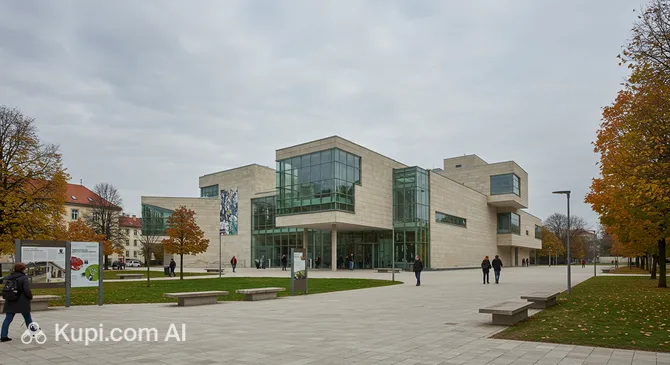
Anthropos Pavilion
Anthropos Pavilion. Иллюстрация. Источник: Kupi.com AI

The pavilion's exhibition is recognized as one of the largest and most modern in Europe. Here, visitors can trace human evolution, see unique Paleolithic finds, and learn about the art of ancient hunters and gatherers. The museum building, constructed in the early 60s and fully renovated in the 2000s, is an interesting piece of architecture in itself, featuring glass facades and spacious halls.

The "star" of the collection is the famous full-sized model of a woolly mammoth, which never fails to delight both children and adults. By combining classic dioramas, rare archaeological artifacts, and modern multimedia technologies, a visit here becomes a truly exciting adventure deep into the centuries.

Contacts

To clarify visit details or book a group tour, you can use the museum's official contact information. The administration responds promptly to visitor inquiries.

How to contactContact
Address5, Pisárecká 273, 603 00 Brno-střed-Pisárky, Czechia
Phone+420 515 910 560
Websitewww.mzm.cz

What to Do

First, head to the monumental figure of the woolly mammoth—an essential photo spot and the pavilion's symbol. Next to it, you can see a realistic reconstruction of early human habitats, allowing you to literally feel the scale of that time. Be sure to spend time studying prehistoric art: the halls feature replicas of famous Paleolithic Venuses and examples of cave paintings.

The interactive part of the museum offers an immersion into genetics and primate ethology. Thanks to audiovisual presentations, dry scientific facts are transformed into visual stories about our distant ancestors. If you are lucky enough to catch a temporary exhibition, such as one dedicated to archaeology from the skies, you can see how modern technology helps find ancient settlements hidden underground.

After an intellectual marathon through the museum halls, it’s nice to change the scenery and take a stroll through Pisárky Park. Forest trails and fresh air are the perfect end to the walk. There is also a cozy cafe on-site where you can discuss what you've seen over a cup of coffee before continuing your exploration of the city's sights.

Getting There

Getting to the pavilion from the city center is quite simple. The most popular way is to take tram No. 8 or No. 9. You need to get off at the "Pisárky" stop (the trip takes about 20–30 minutes) and then walk for about 5–10 minutes along the park's scenic paths, following the signs.

If you prefer buses, routes No. 30, 31, and 96 serve the Pisárky area. For those using a taxi, the ride from the city center will be short and comfortable. The museum is also easy to reach by bicycle: there are convenient bike paths leading from the center along the river.

Travelers by car should head west from the center along the E461 road. Free parking is available near the museum, making a visit by private transport as convenient as possible. The area is very quiet and green, so the journey itself sets a pleasant mood for relaxation.

Ближайший город: Brno

History & Facts

The history of this place began in 1928, when the prominent archaeologist Karel Absolon presented a large-scale exhibition titled "Man and His Ancestors" at a trade fair in Brno. This was Czechoslovakia's first attempt to cover the Paleolithic history of mankind so broadly, gathering unique artifacts in one space.

After World War II, Absolon's work was continued by anthropologist Jan Jelínek. Thanks to his efforts, the pavilion's modern building was erected between 1961 and 1962, designed by architect Evžen Šteflíček. Since its opening, the museum has become an important scientific center, realizing Absolon's dream of an international institute for the study of the origins of culture.

Between 2003 and 2006, the building underwent a major renovation. The interiors were updated, exhibition halls expanded, and modern tourist infrastructure was created. Despite all the changes, the main symbol of the museum for decades has remained the giant mammoth model, which gained a small baby mammoth during the latest update.

Time Needed

To leisurely explore all three parts of the permanent exhibition and look into the temporary exhibits, it usually takes from 2 to 3 hours. The interactive panels and detailed dioramas deserve sufficient attention.

If you also plan to relax in the local cafe or walk through the shaded alleys of Pisárky Park after your tour, it’s better to set aside half a day for the visit. This will allow you to fully immerse yourself in the prehistoric atmosphere and enjoy the surrounding nature without any rush.

Working Hours

When planning your visit, keep in mind that the museum is closed at the beginning of the week. On weekdays, the pavilion opens earlier, which is convenient for those who want to avoid large crowds.

Opening Hours:

  • Monday: Closed
  • Tuesday: Closed
  • Wednesday: 09:00 – 17:00
  • Thursday: 09:00 – 17:00
  • Friday: 09:00 – 17:00
  • Saturday: 10:00 – 17:00
  • Sunday: 10:00 – 17:00

DayWorking hours
ПонедельникЗакрыто
ВторникЗакрыто
Среда9:00 – 17:00
Четверг9:00 – 17:00
Пятница9:00 – 17:00
Суббота10:00 – 17:00
Воскресенье10:00 – 17:00

Nearby

The museum's location in a park area makes it an excellent starting point for further exploration of the city. By combining a trip to the pavilion with visits to nearby sites, you can create a full day's program.

Below are interesting places located near the pavilion:

NameDistance
Villa Stiassni0.7 km
Pension Integrity0.8 km
VIDA! Science Center1.4 km
Kamenný vrch Nature Reserve1.4 km
Pasque Meadow1.5 km
Campus Square1.7 km
Water Reservoirs under Žlutý Kopec1.8 km

Reached the end of the page?

That means the route is fully explored