Support

Japanese Garden

About

The Japanese Garden in Wrocław is a unique and magical place, a true slice of Japan in the heart of Poland. Located in the scenic Szczytnicki Park, it is the oldest Japanese garden in the country and offers visitors a chance to immerse themselves in an atmosphere of peace and harmony. The garden is a beautiful example of Japanese landscape art, attracting not only enthusiasts of Eastern culture but also anyone seeking silence and a connection with nature.

The history of this site began over a hundred years ago when the garden was created specifically for the World Exhibition of 1913. Over time, it underwent many changes, but at the end of the 20th century, it was carefully restored with the help of Japanese specialists, preserving its authenticity and adherence to the canons of landscape design.
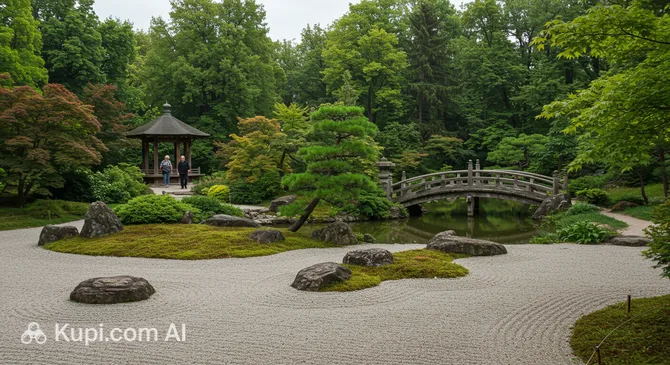
Japanese Garden. Illustration.
Source: Kupi.com AI

Traveler photos:

The garden's plant collection is impressive in its diversity: it features about 270 groups of woody plants and 78 species of Asian plants, 38 of which are native to Japanese flora. Walking paths lead visitors past picturesque ponds with koi fish, across elegant bridges and cascades, past traditional stone lanterns, and a cozy tea pavilion. Every element here is carefully thought out and carries deep symbolic meaning.

Visiting the Japanese Garden is a wonderful opportunity to escape the city's noise, enjoy the beauty of nature, and experience another culture. It is truly a magical place that leaves visitors feeling calm and inspired, making it a must-see on any Wrocław itinerary.

Contacts

For the most up-to-date information regarding opening hours, ticket prices, and scheduled events, it is recommended to consult official sources. Below are the contact details for the Japanese Garden in Wrocław.

How to contactContact
AddressAdama Mickiewicza 1, 51-618 Wrocław, Poland
Phone number+48 71 323 50 00
Websitezzm.wroc.pl

What to Do

The main activity in the Japanese Garden is a leisurely stroll, during which you can immerse yourself in an atmosphere of peace and harmony. Everything here encourages you to slow down and enjoy every moment. It is a journey into the world of Japanese aesthetics, where preference is given to natural forms and soft curves that create a sense of tranquility. Walking along the winding decorative paths, you will admire picturesque views that reveal themselves gradually.

Every element of the garden—from the stone lanterns to the elegant bridges and carefully selected plants—carries deep symbolic meaning. A walk here becomes an introduction to Japanese culture and philosophy, expressed through the art of landscape design. Notice how harmoniously water, stone, and greenery combine—this is the foundation upon which the entire composition is built. You can see about 270 types of trees and shrubs, including rare Asian plants.

The Japanese Garden is the perfect place for those seeking inspiration or simply wanting to rest from the urban rush. You can sit on a bench in a shaded corner, watching the slow life of koi fish in the pond, or have an unforgettable photoshoot against the backdrop of scenic cascades and bridges. For those wishing to dive deeper into the culture, traditional tea ceremonies are sometimes held in the tea pavilion. A visit to the garden is a great chance to refresh your soul and take beautiful photos as keepsakes.

Getting There

Getting to the Japanese Garden in Wrocław is easy, as it is located within the city limits and is a popular destination. The garden is situated inside Szczytnicki Park, near famous landmarks like the Centennial Hall and the Wrocław Fountain, making it highly accessible for tourists. Regardless of where you are staying, this oasis of tranquility can be conveniently reached by public transport, taxi, or even on foot if you are nearby.

The most convenient and economical way to reach the Japanese Garden is by using Wrocław's efficient public transport system. There are several stops nearby. Look for trams No. 1, 2, 4, 10 or buses No. 115, 145, 146. The key stop to get off at is Hala Stulecia (Centennial Hall). From there, it is just a few minutes' walk to the garden entrance, following the signs through the park.

If you prefer more comfort, a taxi or car ride from the city center will take approximately 15–20 minutes, depending on traffic. Paid parking is available near the Centennial Hall. You may also find free parking spots in the adjacent residential areas, but spaces are limited. For those who enjoy walking, the journey to the Japanese Garden can be part of a pleasant route through the picturesque Szczytnicki Park, especially in good weather.

Nearest city: Wroclaw

History & Facts

The history of the Japanese Garden in Wrocław is a fascinating tale of creation, neglect, and rebirth. Its origins date back to the early 20th century, when the garden was established between 1909 and 1913 as an exotic exhibit for the World Exhibition, timed to coincide with the opening of the Centennial Hall. The project was initiated by Count Fritz von Hochberg, a diplomat and connoisseur of Eastern culture, who invited Japanese master gardener Mankichi Arai to lead the work. Unfortunately, after the exhibition ended, many authentic elements, such as pavilions and lanterns, were removed, and the garden lost its original appearance for many years.

The idea of restoring the site's Japanese character only resurfaced in 1994. In 1995, a reconstruction project was developed under the guidance of Tokyo professor Ikuya Nishikawa. Over the next two years, thanks to the joint efforts of gardeners from Wrocław and Japan and with the support of the Japanese embassy, the garden was meticulously restored. The work was overseen by Yoshiki Takamura, who managed to recreate the atmosphere of real Japan in the heart of Poland. After the grand reopening in 1997, it seemed the garden had found a second life.

However, fate had a harsh trial in store. Just two months after the opening, in July 1997, a catastrophic flood hit the city, known to history as the "Flood of the Millennium." The garden remained underwater for three weeks, leading to the loss of about 70% of its unique plants. This event was a true tragedy, but it did not break the spirit of those who had poured their hearts into the project. A second, equally painstaking reconstruction was required, and in October 1999, the revived Japanese Garden once again opened its gates to visitors, becoming a true symbol of resilience and beauty.

Time Needed

When planning a visit to the Japanese Garden, you should allow for about 1–2 hours. This is generally enough time to leisurely walk through its entire territory, which, while not very large, is rich in detail. In an hour and a half, you can stroll along all the paths, admire the picturesque bridges, watch the koi fish in the pond, and fully enjoy the peaceful atmosphere of the place.

If you are into photography or simply want to take a break from the city bustle, your stay here might take longer. The garden invites you to sit on a bench in a shaded corner and meditate while enjoying the views. Many visitors note that rushing is out of place here, as the beauty of the site reveals itself through slow contemplation. Therefore, while you can see the main part of the garden in an hour, it is better to set aside some extra time to truly feel its harmony.

Working Hours

It is important to remember that the Japanese Garden is a seasonal attraction. It is not open to visitors year-round, but only during the warmer months. Usually, the season begins on April 1 and lasts until October 31. During this period, the garden is open daily, typically from 9:00 AM to 7:00 PM. In winter, from November 1 to March 31, the garden is closed for maintenance.

Advance ticket booking is usually not mandatory; they can be purchased at the ticket office at the entrance. However, to avoid queues, especially on weekends and holidays, it is recommended to buy tickets online on the official website. Although opening hours are quite stable, it is always a good idea to check for current information on the garden's official portal before your visit, as there may be changes in the schedule due to weather conditions or special events.

9:00 – 19:00

Nearby

A visit to the Japanese Garden in Wrocław is a wonderful adventure in itself, but its prime location in Szczytnicki Park offers many additional opportunities for a full day out. This part of the city is a cultural and entertainment hub, with many interesting sites concentrated in a small area. Exploring the surroundings will not only allow you to dive deeper into the atmosphere of Wrocław but also help you create a diverse itinerary that appeals to travelers of all tastes.

Turn your visit to the Japanese Garden into a full-scale walk through one of the city's most picturesque districts. Just a few steps from the garden, you will find architectural masterpieces, modern entertainment centers, and vast green spaces. Below is a list of nearby attractions that are easy to visit on the same day.

NameDistance
Centennial Hall0.3 km
Wroclaw Zoo0.5 km
Wroclaw Aquarium0.6 km
Hydropolis1.7 km
Kilimanjaro1.9 km
Bungee Wroclaw2 km
National Museum in Wrocław2.2 km

Have you reached the end of the page?

So the route has been studied inside and out