Support

Musée du Masque de fer et du Fort Royal

About

Perched on the rocky shores of Île Sainte-Marguerite, just a kilometer from the famous city of Cannes, stands the majestic Royal Fort. Within its walls lies the unique Museum of the Iron Mask and Fort Royal, which transports visitors to an era of mysteries and maritime adventures of the great power that is France.

This site is primarily famous for serving as a state prison in the 17th century, where the most mysterious prisoner in history was held — a man whose face was always hidden by a mask. Today, the museum combines the somber charm of ancient casemates with a wealth of marine archaeology, offering guests a deep dive into the region's history.
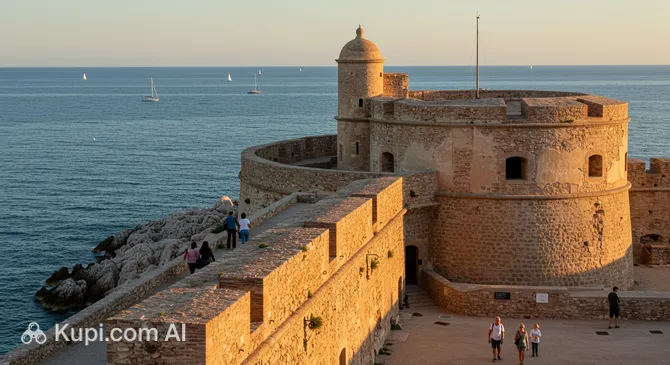
Museum of the Iron Mask and Fort Royal
Museum of the Iron Mask and Fort Royal. Иллюстрация. Источник: Kupi.com AI

The exhibition is divided into several themed zones. The first floor presents unique Roman artifacts and the remains of shipwrecks dating from the 1st century BC to the 10th century AD. The second part of the museum is dedicated to the fortress's prison past, where you can see authentic prisoner cells and learn about the daily lives of those who languished here centuries ago.

Contacts

For more details about your visit or to organize group tours, you can use the museum's official contact information. The administration provides up-to-date information on visiting rules and exhibition availability.

How to contactContact
AddressIle Sainte Marguerite, 1 Place Bernard Cornut-Gentille, 06400 Cannes, France
Phone+33 4 89 82 26 26
Websitebit.ly

What to Do

The main highlight of the museum visit is seeing the cell of the famous prisoner in the iron mask. Contrary to expectations, the room is quite spacious, retaining a fireplace, a window, and even traces of elaborate wall paintings. Next to the cell, a list of 60 historical hypotheses is presented, attempting to solve the mystery of this person's identity.

A stroll through the fort itself is equally interesting. You can climb the bastions and visit the old chapel with its bell tower, which offers breathtaking panoramic views of the Bay of Cannes. Be sure to look into the cell where six Protestant pastors served life sentences — this place preserves a difficult but important page of the country's religious history.

For antiquity enthusiasts, there is a section on marine archaeology. Fragments of ancient ships and everyday objects recovered from the seabed around the island are on display here. Studying these finds allows you to imagine how trade flourished in the Mediterranean thousands of years ago. To finish your visit, take a look at the fort's water supply system — ancient wells that once made life possible on this arid island.

Getting There

The journey to the museum begins with a boat trip, as it is located on Île Sainte-Marguerite, the largest of the Lérins Islands. The island is situated about one kilometer off the coast of Cannes and can only be reached by water.

Regular ferries depart from the Quai La Pantiero in the old port of Cannes. The trip takes about 15–20 minutes, during which you can enjoy a magnificent view of the French Riviera. After disembarking on the island, you will need to follow the signs on foot toward Fort Royal, which stands majestically on the edge of a cliff.

Since there is no car traffic on the island, plan to explore on foot. The port is easily accessible from the city center via local public transport or taxi. Remember that the final leg of the journey is always by water, so check the boat schedule in advance to catch your return trip.

Ближайший город: Cannes

History & Facts

The history of the Royal Fort began in the 17th century when the Duke of Guise initiated its construction to protect the coast. Later, during a brief Spanish occupation of the island in 1635, the fortifications were significantly strengthened. The French regained control of the citadel two years later and gave it its current name.

In 1687, by the will of King Louis XIV, the fort changed its purpose, turning into one of the most severe state prisons. It was here that the most mysterious prisoner in history — the man in the iron mask — was held. His identity remains a subject of debate among historians: candidates include the disgraced minister Fouquet, the Italian adventurer Mattioli, and the servant Eustache Dauger.

Legend has it that the mysterious prisoner tried to attract attention by throwing silver plates with messages scratched on them out of the window. Besides him, the walls of the fort remember other famous prisoners, such as a group of Protestant pastors who spent decades here at the end of the 17th century for their religious beliefs.

Time Needed

For a thorough exploration of the museum's exhibitions and a walk around the fort, it is recommended to set aside 2 to 3 hours. This is quite enough time to view the prison cells, study the archaeological finds, and enjoy the panoramic views from the bastions.

However, since the museum is located on an island, many tourists prefer to plan a half-day or even a full-day trip. In this case, a visit to the museum can be combined with a walk along the shaded paths of Île Sainte-Marguerite and some relaxation by the sea. Don't forget to factor in extra time for the round-trip ferry crossing.

Working Hours

The Museum of the Iron Mask and Fort Royal is open to visitors daily. The standard schedule allows you to plan your visit for either the morning or afternoon:

Monday – Sunday: from 10:00 AM to 5:45 PM.

Please note that last entry may be restricted, and the museum's opening hours are closely tied to the ferry schedule between the island and the mainland.

10:00 – 17:45

Nearby

Île Sainte-Marguerite and its surroundings offer many interesting locations that allow you to dive deeper into the atmosphere of the region. A walk through the fort and along the island's coastline is perfectly complemented by exploring historical monuments and natural areas.

NameDistance
Fort Royal0.1 km
Lérins Abbey1.9 km
Port Pierre Canto2.1 km
Zamenhof Public Beach2.8 km
Hôtel Martinez3 km
Beryte Night Club3.1 km
La Croisette3.2 km

Reached the end of the page?

That means the route is fully explored