Support

Lisieux

About

Lisieux is a charming city nestled in the heart of Normandy and serves as the capital of the picturesque Pays d'Auge region. As one of the oldest settlements in the region, this historic Norman city holds a special place on the map of France as the second most important center of pilgrimage after Lourdes, attracting hundreds of thousands of believers and tourists every year. The city's population is around 20,000 people, but its spiritual significance draws far more visitors.
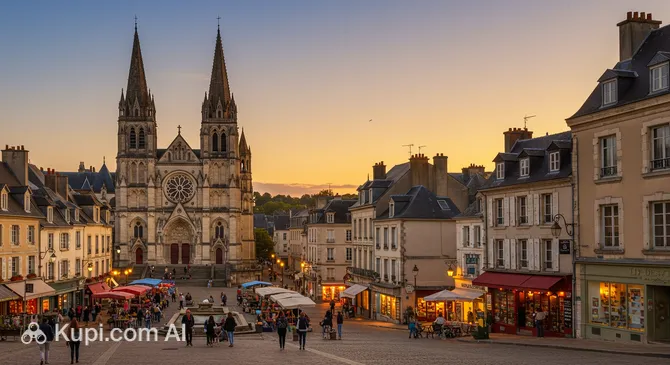
Lisieux. Illustration.
Source: Kupi.com AI

Although a significant part of Lisieux was destroyed during the Second World War, the city managed to rebuild, preserving its unique atmosphere and historical heritage. A stroll through its streets allows you to feel the spirit of old Normandy, harmoniously blending with modern life.

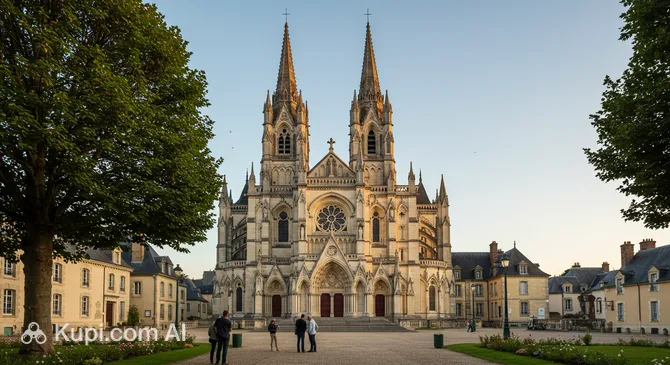
The main gem and symbol of Lisieux is undoubtedly the majestic Basilica of Saint Thérèse. This grand structure, built in a Romano-Byzantine style with Art Deco elements, is striking in its size and beauty both by day and by night, when its exquisite illumination is turned on. It is this rich religious heritage, inextricably linked with the name of Saint Thérèse of Lisieux, that draws pilgrims from all over the world.

Lisieux also serves as a convenient starting point for exploring other parts of Normandy, sitting at the crossroads leading to famous sites like Caen or the popular resorts of Deauville and Trouville. If you are looking for a place that combines spiritual peace, historical charm, and Norman character, Lisieux is certainly worth your attention.

You can find more interesting facts on the history of Lisieux page.
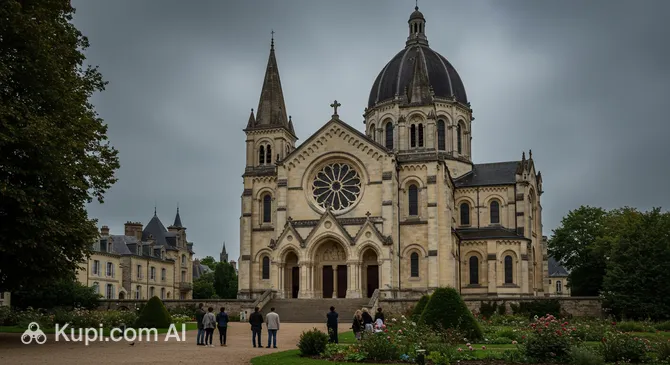
Weather Overview

The weather in Lisieux is characterized by a temperate maritime climate. Summers are typically warm, with average temperatures in July and August around 18-19°C, while maximum values can reach 23°C. Winters are mild but wet, with average temperatures in January and December around 6-7°C and minimum temperatures dropping to 3-4°C. Precipitation is fairly evenly distributed throughout the year, although the number of rainy days can be significant, especially in the autumn-winter period. Expect warm summers with occasional light rain and cool, damp winters. The highest amount of rainfall in millimeters occurs in June, October, November, and December (3 mm), while March and December see the highest number of rainy days (16 days).

For more detailed information on weather conditions and the forecast, you can visit the Lisieux Climate page.

Average monthly temperature

Average monthly precipitation

Interesting Facts

In addition to its famous shrines, Lisieux hides several surprising stories and facts that make it even more alluring for curious travelers. This city in Normandy is not just a point on the map, but a place with a rich heritage and unexpected details.

Basilica of Saint Thérèse of Lisieux. Illustration.
Source: Kupi.com AI

Traveler photos:

  • The city is inextricably linked with the name of Saint Thérèse, whom Pope Pius X called "the greatest saint of modern times." Marie-Françoise-Thérèse Martin lived in Lisieux for most of her short but vibrant life, and it was here that she passed away at the age of 24. Her canonization in 1925 turned Lisieux into one of the most important pilgrimage centers in France.

  • The majestic Basilica of Saint Thérèse of Lisieux, one of the largest churches built in the 20th century, was constructed in just eight years, from 1929 to 1937. Its dome reaches nearly 100 meters in height, and for those brave enough to enjoy a panoramic view of the city from its top, there are 300 steps to climb.

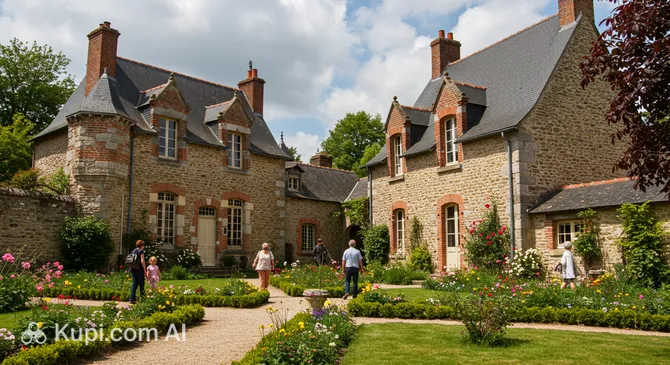
  • Near Lisieux lies the picturesque Château de Saint-Germain-de-Livet, owned by the city since 1958. This architectural ensemble is unique for combining a 15th-century half-timbered manor with an elegant late 16th-century building made of glazed brick and stone, surrounded by a moat and a garden with peacocks.

How to Get There

There are several ways to reach Lisieux, the most popular being a flight followed by a transfer or a train journey. The city is conveniently located in Normandy, making it accessible from Paris and other major centers in France.

While Lisieux does not have its own passenger airport, travelers can use several airports in relatively close proximity. The nearest is Saint-Gatien Airport (DOL), located in the city of Deauville, about 25 km from Lisieux. This is a small regional airport from which you can reach the center of Lisieux by taxi or rental car in approximately 30-40 minutes. For most international flights, tourists usually choose the major Parisian airports. The main one is Charles de Gaulle Airport (CDG), one of Europe's largest, located about 170 km away. A car journey from here to Lisieux takes about 2-2.5 hours; alternatively, you can take a train from Paris (requiring a transfer from the airport to the station), with a total travel time of around 2.5-3 hours. Another major capital hub is Orly Airport (ORY), located 163 km from Lisieux. Travel time from Orly is comparable to the route from Charles de Gaulle. It's also worth mentioning Beauvais-Tillé Airport (BVA), which is often used by budget airlines and is 141 km from Lisieux; the drive from there takes about 2 hours.

For clarity, here is a summary of the main airports through which you can reach Lisieux:

AirportPassenger trafficDistance
Saint Gatien Airport65 66425 km
Carpiquet Airport329 63250 km
Beauvais-Tille Airport6.5 mln141 km
Paris Orly Airport33.1 mln163 km
Charles de Gaulle Airport70.3 mln170 km

Lisieux has its own railway station (Gare de Lisieux), which is an important hub on the Paris – Cherbourg line and serves both regional trains (TER) and Intercités trains. This is the most convenient and direct way to reach the city by rail, especially from Paris (from Saint-Lazare station) and other cities in Normandy. The journey from Paris usually takes about 1 hour 40 minutes to 2 hours.

If your route involves arriving at larger railway hubs that require a further transfer to Lisieux, notable stations include Gare du Nord (XPG) or Gare de Lyon (LYY) in Paris. These stations are massive transport hubs serving many international and national destinations and are located about 160 km from Lisieux. From these stations, you will need to get to Paris Saint-Lazare station, where direct trains to Lisieux depart. Another significant hub in the region is Le Mans Station (ZLN), located about 128 km south of Lisieux. Travel options toward Normandy may also be available from there, though direct trains to Lisieux from Le Mans are less frequent than from Paris.

Below is information on some major railway hubs in the region that may be part of your route for long-distance travel:

StationPassenger trafficDistance
Le Mans Railway Station5.4 mln128 km
Massy TGV Station1.5 mln156 km
Gare du Nord Station220 mln158 km
Gare de l'Est34 mln159 km
Gare de Lyon113.2 mln161 km

Main Attractions

Lisieux, a charming city in the heart of Normandy, is primarily known as an important pilgrimage site associated with Saint Thérèse. However, its history and architectural heritage offer much more for the curious traveler. The city carefully preserves the memory of its past, offering visitors a unique blend of spirituality and Norman flavor.

Basilica of Saint Thérèse of Lisieux. Illustration.
Source: Kupi.com AI

Traveler photos:

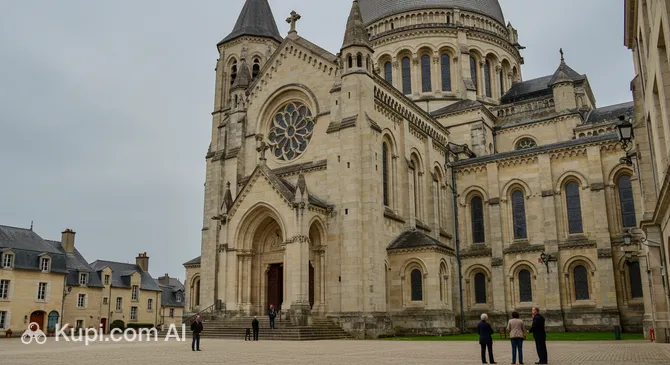
The main jewel of the city is undoubtedly the Basilica of Saint Thérèse of Lisieux. This grand 20th-century structure—one of the largest built during that period—impresses with its scale and the splendor of its interior. The mosaics decorating the walls and dome tell the story of the saint's life, attracting pilgrims and tourists from worldwide. The majestic architecture and spiritual atmosphere make this a must-visit location.

An equally significant historical monument is Lisieux Cathedral (Saint-Pierre Cathedral). It is one of the oldest Gothic cathedrals in Normandy, with construction beginning in the 12th century. The cathedral has survived many historical events, including the Second World War, and has retained its authentic atmosphere. Inside, you can see beautiful stained glass and early Gothic elements, as well as learn about its connection to Joan of Arc and the parents of Saint Thérèse.

Lisieux Cathedral. Illustration.
Source: Kupi.com AI

Traveler photos:

For those who want to dive deeper into the history of Saint Thérèse, a visit to the Carmelite Monastery in Lisieux is essential. This is where Saint Thérèse spent most of her monastic life. Visitors can see the chapel where her relics are kept and learn more about her spiritual journey. The site is imbued with silence and peace, offering an opportunity for reflection.

Carmel of Lisieux. Illustration.
Source: Kupi.com AI

Traveler photos:

Another iconic site linked to Saint Thérèse is Les Buissonnets. This is the house where Thérèse Martin spent her childhood and youth before entering the Carmel. Visiting this house-museum allows you to see the environment in which the future saint grew up, her personal belongings, and to better understand the origins of her spirituality. The house has preserved its 19th-century atmosphere and serves as a touching testimony to the Martin family's life.

Local Cuisine

The cuisine of Lisieux is a true immersion into the gastronomic traditions of Normandy, a region famous for its high-quality products. Local dishes are based on the freshest gifts of nature: the famous Normandy apples, excellent dairy products (cream, butter, cheese), and, of course, seafood, which is abundantly represented in markets and restaurant menus.

Among the drinks, the region's calling card is Calvados—a strong apple brandy produced here according to centuries-old traditions. Local ciders, both sweet and dry, are also a must-try, as they pair perfectly with Normandy cheeses and other dishes. For those who prefer non-alcoholic drinks, freshly squeezed apple juice, full of the flavor of Normandy apples, is an excellent choice.

Speaking of Lisieux gastronomy, it is impossible not to mention the famous Normandy cheeses. Be sure to sample varieties such as Camembert, Livaro, Pont-l'Évêque, and Neufchâtel. These soft cheeses with their characteristic taste and aroma are the true pride of the region. Also, look out for dishes with rich cream sauces, such as meat or fish "à la normande," and, of course, desserts, among which the queen is the apple tart (Tarte Tatin) and other fragrant pastries.

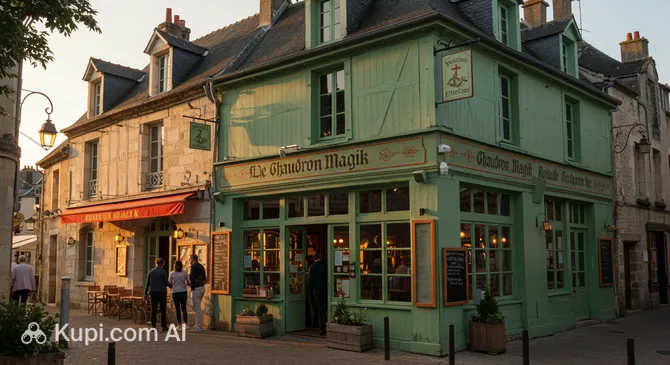
Locals and tourists enjoy meals in cozy restaurants and traditional bistros, where you can taste both classic Normandy fare and modern French cuisine. Many also prefer to buy fresh produce at local markets. If you want to dive into the atmosphere of Norman hospitality and try authentic dishes, look for establishments such as the restaurant Le Chaudron Magique.

Le Chaudron Magik. Illustration.
Source: Kupi.com AI

Traveler photos:

Travel Tips

Welcome to Lisieux, a charming city in the heart of Normandy, known for its spiritual atmosphere and beautiful architecture! To ensure your trip is as comfortable as possible and leaves only pleasant memories, we have prepared some practical tips.

  1. Clothing and Essentials:

    The climate in Lisieux is temperate, with mild winters and warm but not hot summers. Always be prepared for Normandy's changeable weather: even in summer, a light jacket or sweater might come in handy, as well as an umbrella or raincoat. In autumn and spring, dress in layers. Be sure to bring comfortable shoes, as the city is situated on hilly terrain and you will likely want to walk a lot. To charge electronic devices, you will need a type E adapter. When visiting the Basilica of Saint Thérèse and other religious sites, observe the dress code: clothing should cover shoulders and knees.

  2. Transport:

    Lisieux city center is quite compact and easy to explore on foot. For traveling longer distances, you can use the local Lexobus network. Taxis are available in the city, but there may not be as many as in larger centers; it is better to book in advance or look at designated taxi ranks. Car rental is convenient if you plan to explore the Normandy countryside, but it is not necessary for getting around Lisieux itself, plus parking in the center may be limited.

  3. Finances:

    The official currency in France is the Euro (EUR). You can exchange currency at banks, but their opening hours may be limited, especially on weekends. Credit and debit cards (Visa, Mastercard) are accepted in most hotels, restaurants, and shops. International cards generally work without problems, but it is always useful to have some cash for small purchases or at markets. ATMs (distributeurs automatiques de billets) are quite common. Tips in restaurants are often included in the bill (service compris). If the service was particularly good, you can leave an additional 5-10%. In cafes, it is customary to round up the amount for a drink.

  4. Health and Safety:

    Lisieux is generally a quiet and safe city. Nevertheless, always observe standard precautions: keep an eye on your belongings, especially in crowded places like the Basilica. Pharmacies (pharmacies) are easy to find by the green cross; information about duty pharmacies (pharmacie de garde) operating at night and on weekends can be found on the door of any pharmacy or online. In case of emergencies, call the pan-European number 112. It is recommended to have travel medical insurance.

  5. Communication:

    The official language is French. In tourist areas such as hotels and major attractions, staff may speak English, but do not expect this everywhere. Knowing a few basic phrases in French (e.g., "Bonjour" - Hello, "Merci" - Thank you, "S'il vous plaît" - Please, "Parlez-vous anglais?" - Do you speak English?) will be very useful and appreciated by the locals. Mobile SIM cards can be purchased at service provider shops or supermarkets. Wi-Fi is available in most hotels, cafes, and restaurants.

  6. Local Etiquette:

    The French value politeness. When entering a shop, cafe, or other establishment, it is customary to say hello ("Bonjour" during the day, "Bonsoir" in the evening) and goodbye ("Au revoir"). Using the formal "You" (Vous) is the standard for strangers. Avoid speaking too loudly in public places. Showing respect for local traditions will make your interaction with the residents of Lisieux more pleasant.

  7. What to Avoid:

    Try not to start a conversation immediately in English without first greeting the person in French and asking if they speak English. Also, avoid comparing French culture or cuisine with others in a disparaging way, as the French are very proud of their heritage. Do not make noise in public places, especially near residential buildings in the evening.

  8. Special Tip for Lisieux:

    Lisieux is the second most important pilgrimage center in France after Lourdes, thanks to Saint Thérèse of Lisieux. Visiting the majestic Basilica of Saint Thérèse is a key experience for many tourists. Check the service schedule in advance if you plan to visit. It is also worth visiting the Carmel, where Saint Thérèse lived, and Les Buissonnets, her childhood home. If your trip coincides with market days (usually Wednesday and Saturday mornings), be sure to visit the local market to try fresh Normandy products, especially cheeses and cider.

We hope these tips help you better prepare for your trip and enjoy every moment of your stay in Lisieux. We wish you an unforgettable journey through this wonderful corner of Normandy!

Entertainment & Nightlife

Lisieux, known primarily as a major pilgrimage center, offers its guests a calm and relaxed evening leisure experience that differs from the bustling nightlife of megacities. Here, you won't find noisy nightclubs or districts filled with bars open until dawn, but you can enjoy a pleasant time in the cozy atmosphere of local establishments.

Evening entertainment in Lisieux is mainly centered around restaurants and cafes where you can enjoy a delicious dinner. Most activity is concentrated in the central part of the city. The atmosphere here is generally welcoming and quite peaceful, perfect for leisurely conversations. The crowd mostly consists of locals and pilgrim tourists. There is no specific dress code in most places, with smart-casual style being welcomed. Restaurants are usually open until late evening, though it's worth noting they may close earlier than in larger tourist cities.

Among the places to dine, the restaurant Le Chaudron Magique is worth noting, as it offers local cuisine. For those who prefer Asian flavors, Fuji Sushi might be a good choice. It is recommended to arrive for dinner during standard evening hours, especially during the tourist season when popular spots may be busy. The average check in Lisieux restaurants is considered moderate.

Le Chaudron Magik. Illustration.
Source: Kupi.com AI

Traveler photos:

Regarding safety, Lisieux is a fairly quiet city. Walking through the center in the evening is usually safe, though standard precautions should always be observed. If you need to get to your hotel late at night, it's better to use a taxi, which is recommended to be ordered in advance, especially if you are not in the very center.

During the day, Lisieux offers a rich program for those interested in history and spirituality. The city's main gem is undoubtedly the majestic Basilica of Saint Thérèse of Lisieux, striking in its size and interior beauty. Also deserving of attention are the ancient Lisieux Cathedral (Cathédrale Saint-Pierre de Lisieux), the Carmelite Monastery, where Saint Thérèse lived, and her family home Les Buissonnets. These places immerse you in historical atmosphere and are the main points of attraction for visitors.

Basilica of Saint Thérèse of Lisieux. Illustration.
Source: Kupi.com AI

Traveler photos:

While Lisieux has no theme parks or large concert venues, its charm lies elsewhere—in the opportunity to touch history and enjoy the peace and quiet of the Normandy province.

Parks & Museums

Lisieux, a well-known pilgrimage center and a city with a rich history in the heart of Normandy, offers its guests not only a spiritual legacy but also pleasant green corners for relaxation, as well as interesting museums and historical monuments that introduce its culture and past.

For those seeking peace and fresh air, the Garden of the Bishopric (Jardin de l'Évêché), adjacent to Lisieux Cathedral, is a wonderful place for a stroll. This well-maintained French-style garden, with its geometric flowerbeds and quiet alleys, provides a break from the city bustle and offers beautiful views. While there are no large park zones in Lisieux, the city squares and the banks of the Touques River also offer pleasant routes for leisurely walks.

Les Buissonnets. Illustration.
Source: Kupi.com AI

Traveler photos:

One of the key places for understanding the history of Lisieux as it relates to Saint Thérèse is Les Buissonnets. This is the house where Saint Thérèse spent her childhood. Today, it has been converted into a museum where visitors can see the environment in which the future saint grew up and view her personal belongings. This site provides a deeper understanding of a personality who had a huge influence on the city.

Beyond sites associated with Saint Thérèse, Lisieux also features the Museum of Art and History (Musée d'Art et d'Histoire de Lisieux). Located in one of the historic half-timbered houses, the museum houses collections detailing the city's history from ancient times to the present day, as well as artworks, including Pré-d'Auge ceramics. It is an excellent opportunity to explore the broader cultural context of the region.

Basilica of Saint Thérèse of Lisieux. Illustration.
Source: Kupi.com AI

Traveler photos:

The main architectural and spiritual landmark of the city is undoubtedly the Basilica of Saint Thérèse of Lisieux. This grand 20th-century structure, built in the Romano-Byzantine style, is breathtaking in its scale and rich interior decoration, particularly its magnificent mosaics. The Basilica is one of the most important pilgrimage centers in France and attracts believers and tourists from all over the world.

Lisieux Cathedral. Illustration.
Source: Kupi.com AI

Traveler photos:

An equally significant historical site is Lisieux Cathedral (Cathédrale Saint-Pierre de Lisieux). This is one of the oldest Gothic cathedrals in Normandy, with construction starting in the 12th century. The cathedral witnessed many historical events, including the marriage of Henry Plantagenet (the future King Henry II of England) and Eleanor of Aquitaine. Its architecture combines elements of Romanesque and early Gothic styles.

Carmel of Lisieux. Illustration.
Source: Kupi.com AI

Traveler photos:

An important site for pilgrims is also the Carmelite Monastery in Lisieux (Carmel de Lisieux). This is where Saint Thérèse spent her monastic life. The monastery chapel houses her relics, and the place is filled with an atmosphere of peace and prayer. A visit to the monastery completes the picture of the life of the saint so revered in Lisieux.

For those who want to discover the lesser-known corners of Lisieux, we recommend strolling through the ancient streets with half-timbered houses away from the main tourist routes. You can also take a pleasant walk along the banks of the Touques River, which flows through the city, offering picturesque views and moments of tranquility.

Getting Around

When planning your travel around Lisieux, you will find that public transportation is quite convenient for tourists. The backbone of the city's transport system consists of buses that provide connections between different districts and allow you to reach key points of interest.

The fare payment system in Lisieux generally includes the option to purchase tickets directly from the bus driver. Tickets can also often be bought at newsstands or tobacco shops (tabac). Single tickets are usually available, as well as passes for multiple trips or for a specific period (for example, a day or a week), which can be more economical if you use transport frequently. It is best to check the approximate cost on-site, but in general, fares in cities of this size in France are considered reasonable.

Practical tip for tourists: always have some small change on hand to buy a ticket from the driver. Do not forget to validate your ticket immediately after boarding the bus—special machines are usually provided for this. Buses in Lisieux run on a schedule, which can be found at stops or on the local transport operator's website. Generally, service starts early in the morning and ends in the evening, but intervals may be longer on weekends and holidays.

As an alternative to public transport, taxi services are always available in Lisieux. Given the relatively small size of the city, many central attractions can be explored on foot, which allows you to better feel the city's atmosphere. For more active travelers, renting a bicycle might be suitable—it's a great way to explore not only Lisieux itself but also its picturesque surroundings.

While Lisieux does not have large-scale transport systems like subways or tram networks, the existing bus infrastructure is quite capable of handling passenger needs and ensures a comfortable introduction to the city for tourists.

Accommodation

In Lisieux, travelers will find a variety of accommodation options to suit different preferences and budgets. The city offers a choice ranging from cozy guesthouses and short-term rental apartments to mid-range hotels. You can find both budget options and more comfortable offers geared toward family vacations or romantic trips.

Many tourists prefer to stay in the central part of Lisieux to be within walking distance of major attractions, such as the famous Basilica of Saint Thérèse of Lisieux or Lisieux Cathedral. Areas with good transport accessibility are also popular, making it easy to explore the surrounding region. While there may not be as many large chain hotels in Lisieux as in bigger cities, small private hotels and guesthouses with an authentic atmosphere predominate here.

Basilica of Saint Thérèse of Lisieux. Illustration.
Source: Kupi.com AI

Traveler photos:

To guarantee the best choice and prices, it is recommended to book accommodation in advance, especially if your trip is planned for the peak tourist season or during major local events. The price range varies from very affordable options to mid- and high-level comfort offers. The most common booking methods are popular online platforms and travel aggregators, as well as contacting the chosen hotel or guesthouse directly.

Nearby Cities

For those who want to explore the surrounding area, Lisieux serves as an excellent starting point for day trips to several interesting nearby locations.

Of the neighboring cities, Le Havre is particularly noteworthy—a major port city whose modern architecture, designed by Auguste Perret after the Second World War, is a UNESCO World Heritage site. Also worth visiting is Caen, a city with a rich thousand-year history closely linked to William the Conqueror, known for its medieval castles, abbeys, and impressive Memorial for Peace. A more detailed list of nearby settlements suitable for short visits is presented below:

CityPopulationDistance
Deauville3 70026 km
Bernay9 95128 km
Ouistreham9 34438 km
Gonfreville l'Orcher9 16240 km
Le Havre169 73340 km

These nearby destinations allow for a deeper acquaintance with the diverse culture, history, and picturesque landscapes of the Normandy region.

Shopping & Souvenirs

Shopping in Lisieux offers a pleasant mix of local specialties and souvenirs that reflect the rich history and culture of this Norman city. Although Lisieux is not a major fashion hub, you can find charming boutiques, shops with regional products, and, of course, items related to Saint Thérèse, the city's patron saint. The main focus is on authentic goods and a relaxed shopping atmosphere.

The primary shopping areas in Lisieux are concentrated in the historic city center. Stroll along the main commercial streets and adjacent alleys to discover a variety of shops: from small clothing and accessory boutiques to confectioneries, bookstores, and local grocery shops. The atmosphere here is conducive to leisurely shopping and searching for unique finds.

In Lisieux, you are unlikely to find large modern shopping malls typical of major metropolises. However, there may be small commercial zones or supermarkets with shop galleries in and around the city where you can buy daily necessities and other essentials.

The local markets add special charm to shopping in Lisieux. A traditional market usually takes place once or twice a week (often on Saturday mornings) in one of the central squares. Here, you can immerse yourself in a real French atmosphere and purchase fresh farm products—cheeses, sausages, fruits, vegetables, cider—as well as local delicacies and sometimes handmade crafts. This is a great place to taste and buy Normandy specialties.

Souvenirs reflecting the city's uniqueness are worth bringing back from Lisieux. Primarily, these are items related to Saint Thérèse: icons, figurines, medallions, books, and postcards, which can be found in shops near the Basilica of Saint Thérèse of Lisieux. Gastronomic souvenirs from Normandy are also popular: Calvados, Pommeau, cider, local cheeses (such as Livaro or Pont-l'Évêque), salted butter caramel, and apple jams. Small craft items and textiles with Norman symbols can also be a pleasant reminder of your trip.

Most shops in Lisieux are typically open from 9:00-10:00 to 19:00, with a lunch break from approximately 12:30/13:00 to 14:00/14:30. On Sundays, many shops are closed, except for some souvenir shops and bakeries. Large supermarkets may operate without a lunch break and sometimes on Sunday mornings. Bank cards (Visa, Mastercard) and cash are widely accepted for payment.

Tourists from non-European Union countries can take advantage of the VAT refund system (Tax Free) for purchases over a certain limit (usually around 100 euros, though the amount may vary) in one shop on a single day. To do this, you must ask the salesperson for a special form (bordereau de détaxe) at the time of purchase. Present this form along with your purchases at customs when leaving the EU to receive a refund.

Reached the end of the page?

That means the route is fully explored