Support

Natural History Museum of Nantes

About

The Nantes Natural History Museum is one of the fascinating attractions in the city of Nantes, France. It is rightfully considered one of the country's leading natural science museums and boasts an extensive collection of exhibits. Here, you will find zoological specimens, impressive minerals and rocks, ancient fossils, herbaria, and ethnological items revealing the diversity of nature and cultures.
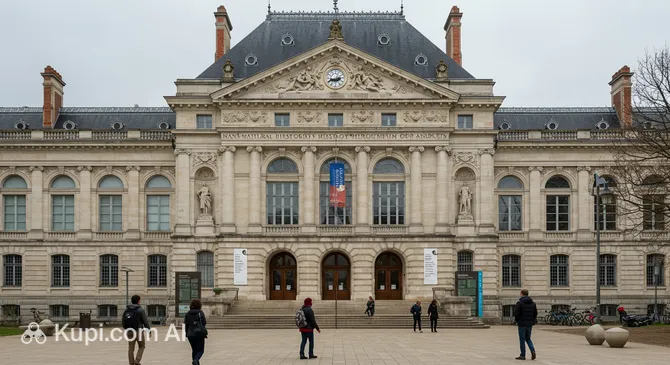
Natural History Museum of Nantes. Illustration.
Source: Kupi.com AI

Traveller photos:

The zoological gallery deserves special attention, where the centerpiece is an impressive whale skeleton reaching over 18 meters in length. Additionally, the museum has operated a vivarium since the 1950s. This part of the exhibition allows visitors to see live animals, making the visit particularly educational and interactive, especially for young nature explorers.

The museum occupies part of the historic Hôtel de la Monnaie building, which gives it a special atmosphere. Based on the number of specimens on display, it ranks among the top museums in the country, offering visitors of all ages a unique opportunity to immerse themselves in the study of natural history and marvel at the richness of the world around us.

Contacts

For the most up-to-date information on opening hours, ticket prices, special exhibitions, and events at the Nantes Natural History Museum, we recommend visiting the museum's official website. You can also find helpful information at tourist information centers in the city of Nantes or on specialized travel portals.

How to contactContact
Address12 Rue Voltaire, 44000 Nantes, France
Phone+33 2 40 41 55 00
Websitemuseum.nantesmetropole.fr

What to Do

At the Nantes Natural History Museum, a fascinating journey through the natural world awaits visitors. On the ground floor, you can immerse yourself in the kingdom of minerals, exploring a rich collection of diverse specimens. Also located here are exhibits dedicated to the structure of the human body and its physiology, helping you understand ourselves better. The meteorite collection deserves special mention; it is considered one of the most significant in France, offering a look at messengers from space.

Moving up to the second floor, you will find yourself surrounded by representatives of the animal kingdom—this floor primarily features taxidermy of various animals. It is a wonderful opportunity to see up close creatures that are not easily encountered in the wild. For many visitors, a pleasant surprise is the museum's vivarium, where you can observe live reptiles, adding an interactive element to your visit.

The museum is not limited to permanent exhibitions. It regularly hosts temporary themed exhibitions that make every visit unique. For example, the "Plumes de dinosaure" (Dinosaur Feathers) exhibition clearly demonstrated the evolution of dinosaurs into birds, showcasing remarkable fossils with feather impressions. Additionally, the museum organizes guided tours, educational workshops for children and adults, and other educational events to broaden your knowledge of natural history.

Getting There

Getting to the Nantes Natural History Museum, located in Nantes, is quite simple as it is situated within the city limits and well-integrated into the transportation system. Regardless of where you are staying in Nantes, you will have several convenient options to reach this fascinating destination.

One of the most popular ways is to use public transport. Nantes has a well-developed network of buses and trams. You should find the stop closest to the museum using a city map or dedicated transport apps. Routes passing through central districts usually have stops within walking distance of the main attractions, including museums. Traveling by public transport also gives you a chance to see a bit more of the city.

If you prefer a faster and more direct method, a taxi is an excellent choice. A taxi ride from central Nantes or the main railway stations to the Nantes Natural History Museum will not take long. This is particularly convenient if you have limited time or are traveling with young children. You can also use ride-sharing apps, which are widely available in European cities.

Before your trip, it is recommended to check the museum's exact location on a map and verify current public transport schedules or taxi availability in your area. This will help you plan your route most effectively and reach your destination without hassle to enjoy the rich collection of the Nantes Natural History Museum.

Nearest city: Nantes

History & Facts

The history of the Nantes Natural History Museum dates back to the 18th century, when it began as a private cabinet of curiosities. Its founder was a local pharmacist, François-René Dubuisson, a passionate collector of natural artifacts. Over time, his collection grew and attracted increasing attention, and by the early 19th century, this valuable collection became the property of the municipality of Nantes, laying the foundation for a future major museum.

Over the following decades, the museum continued to develop and grow. A significant event was the creation of a vivarium in the 1950s, where visitors could see live animals, making the exhibition even more engaging. In the 1990s, the museum underwent an important expansion, occupying part of the historic Hôtel de la Monnaie building. This allowed not only for an increase in exhibition space but also gave the museum a unique atmosphere, blending history and science.

Today, the Nantes Natural History Museum is proud of its extensive and diverse holdings. Within its walls is an impressive collection of 300,000 herbarium sheets, representing flora from various corners of the globe. Additionally, you can find 400 ethnological items collected by naturalist travelers during their expeditions. A particular point of pride for the museum is one of the richest collections of meteorites in France, allowing visitors to touch the mysteries of space.

Time Needed

To explore the Nantes Natural History Museum, most visitors typically find that about two hours is sufficient. This is usually enough time to leisurely browse the main exhibits and temporary displays without rushing. The museum is not overly large, which allows you to get a general overview of its rich collections in this timeframe.

Of course, if you are a major natural science enthusiast or plan to study a specific section in detail—such as the extensive mineral collection or the zoological gallery—your visit might take a bit longer. You should also consider potential participation in guided tours or special events offered by the museum, which can affect the total duration of your visit.

In general, when planning your trip to Nantes and your visit to its Natural History Museum, aim for a couple of hours for a comfortable and informative introduction to its wonders. This will allow you to enjoy the exhibits without rushing and get the most out of the experience.

Working Hours

To find out the exact opening hours of the Nantes Natural History Museum, as well as information on potential schedule changes (for example, on public holidays or depending on the season), it is highly recommended to visit the museum's official website or contact them directly. Typically, museums of this caliber are open to visitors year-round, but hours may vary on different days of the week or across seasons (e.g., summer and winter).

Regarding ticket bookings, for popular attractions—especially during peak tourist season or for visiting temporary exhibitions—purchasing tickets online in advance is often advisable to avoid queues and guarantee entry. Therefore, when planning your visit to the Nantes Natural History Museum, check the official website to see if this option is available and recommended.

DayOpening hours
Monday10:00 – 18:00
TuesdayClosed
Wednesday10:00 – 18:00
Thursday10:00 – 18:00
Friday10:00 – 18:00
Saturday10:00 – 18:00
Sunday10:00 – 18:00

Nearby

Visiting the Nantes Natural History Museum is undoubtedly a fascinating activity, but Nantes offers so much more! Exploring the area around the museum will allow you to dive deeper into the atmosphere of this wonderful French city and discover its other treasures. There may be equally interesting places nearby that will complement your experience and make your trip even more fulfilling.

Combining a museum visit with a walk to nearby attractions is a great way to optimize your time and see as much as possible. Below is a list of some notable places located near the Nantes Natural History Museum, along with their approximate distances.

NameDistance
Dobrée Museum0.1 km
Passage Pommeraye0.4 km
Place Royale0.5 km
Basilica of Saint Nicholas of Nantes0.6 km
Machines of the Isle of Nantes0.7 km
The Great Elephant0.7 km
Carrousel of the Marine Worlds0.8 km

Reached the bottom of the page?

Looks like you know this route inside out