Support

Stade de France

About

Stade de France is not just a stadium, but a true icon of modern Paris and all of France. Built for the 1998 FIFA World Cup, it is the largest sports arena in the country. Its capacity is around 80,000 spectators for sporting events, making it one of the largest stadiums in Europe.

Located in the northern suburb of Saint-Denis, the stadium serves as the main venue for France's national football and rugby teams, and hosts major cup finals. Additionally, it is a popular venue for massive concerts by world celebrities and grand shows.

The main architectural feature of the arena is its massive elliptical roof weighing 13,000 tons, which seems to float above the stands. This impressive structure protects all spectators from the weather without covering the playing field, creating a unique atmosphere inside the stadium bowl. A visit to this grand structure will be of interest not only to sports fans but also to anyone who appreciates modern architecture and engineering.
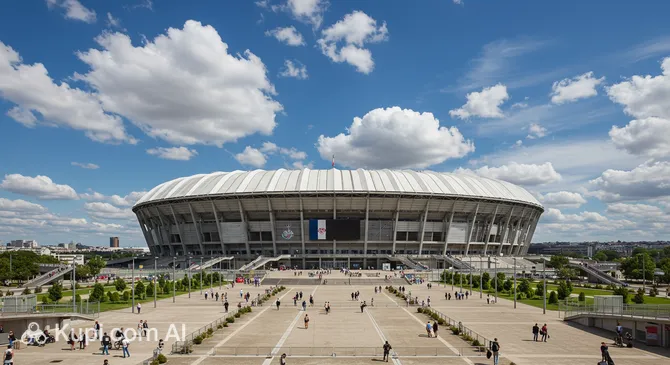
Stade de France. Illustration.
Source: Kupi.com AI

Traveler photos:

Contacts

To get the most up-to-date information on event schedules, stadium tours, or to clarify other details, it is recommended to contact the Stade de France administration directly. All necessary information is usually available on the official website.

How to contactContact
Address93200 Saint-Denis, France
Phone number+33 1 55 93 00 00
Websitewww.stadefrance.com

What to Do

A visit to Stade de France offers a wealth of experiences for both sports enthusiasts and fans of grand spectacles. First and foremost, it is the main arena for the national football and rugby teams of France. You have the chance to attend world-class matches, including UEFA Champions League finals or World Cups, and feel the incredible energy of the 80,000-seat stands. Additionally, the stadium regularly hosts international track and field competitions.

Beyond sporting battles, Stade de France is one of Europe's most prestigious concert venues. World stars such as The Rolling Stones, Madonna, Coldplay, and Lady Gaga have performed on its stage. Thanks to its scale and technical equipment, any concert here turns into an unforgettable show. Before your trip to Paris, it's worth checking the event schedule—perhaps your visit will coincide with a performance by your favorite artist.

Even on days when there are no games or concerts at the stadium, its doors are open to tourists. Special guided tours allow you to peek behind the scenes of the sports world. You can walk through the tunnel the players use to enter the pitch, visit the locker rooms, and the VIP boxes, which are usually closed to the public. To top off the tour, you can visit the museum dedicated to the arena's history, which houses memorabilia from legendary matches and concerts.

Getting There

Getting to the Stade de France, located in the northern suburb of Paris, Saint-Denis, is quite simple thanks to an excellently developed public transport system. This is the most convenient and fastest way, especially on match or concert days when traffic can be heavy. A trip from the city center will take you an average of 15–25 minutes.

The main transport arteries leading to the arena are the RER commuter train lines and the Paris Metro. You can take the RER B line and get off at the "La Plaine – Stade de France" station or the RER D line to the "Stade de France – Saint-Denis" station. Both options involve a short walk to the stadium entrances. Additionally, Metro Line 13 leads to the stadium; your stop is "Saint-Denis – Porte de Paris".

For those who prefer traveling by car, there are parking facilities near the stadium. However, it's worth noting that finding a free spot on major event days can be difficult, so it's recommended to leave early or opt for public transport. Taxis are also a comfortable option, but the cost and travel time will largely depend on the traffic situation.

Nearest city: Paris

History & Facts

The history of Stade de France is closely linked to one of the major sporting events of the late 20th century. Although the idea of building a new national stadium had been discussed since the 1980s, the deciding factor was the decision to host the 1998 FIFA World Cup in France. Initially, the arena was planned to be built south of Paris, but due to complaints about the distance from the center, the construction site was moved to the northern suburb of Saint-Denis.

The project was designed by a group of architects including Michel Macary, Aymeric Zublena, Michel Regembal, and Claude Costantini. An unusual site was chosen for the stadium—the territory of former gas works. Construction took 31 months, and the grand opening took place on January 28, 1998. The event was marked by a friendly football match between the national teams of France and Spain. It was in that game that the future legend Zinedine Zidane scored the only and winning goal.

Since its opening, Stade de France has become more than just a sports facility; it is a symbol of a new era. It was the first stadium in the country to meet the most modern capacity and safety requirements. Interestingly, its football pitch is located 11 meters below ground level. The stadium is the only arena in the world to have hosted finals for both the FIFA World Cup (1998) and the Rugby World Cup (2007), highlighting its unique multi-functional status.

Time Needed

When planning a visit to Stade de France, it's worth considering how exactly you want to visit it. For a standard tour, which allows a look behind the scenes of the sports arena, you will need approximately 1.5–2 hours. This time is usually enough to leisurely explore the players' locker rooms, walk through the tunnel used by athletes to enter the field, and visit the museum dedicated to the stadium's history.

If your goal is to attend a football match, rugby game, or concert, budget significantly more time. In this case, your stay at the stadium—including passing through security, finding your seat, the event itself, and exiting—will take from 3 to 5 hours. Given the scale of the arena and the large number of spectators, it's better to arrive early to avoid queues and fully enjoy the atmosphere of a grand event.

Working Hours

Stade de France does not have fixed opening hours like traditional attractions, as its schedule is entirely dependent on the event calendar: football matches, rugby competitions, and large-scale concerts. Nevertheless, special behind-the-scenes tours are organized for tourists. Generally, tours are held daily during the daytime, but they are not available on the days of major events. The duration of a standard tour is about an hour and a half.

Since the tour schedule can change, it is strongly recommended to check the current timetable and availability of spots on the stadium's official website in advance. You can also book tickets online there, which is particularly important to do beforehand during peak tourist season to guarantee your place on the tour. The stadium is open for guided visits year-round, but always subject to the event calendar.

DayOpening hours
Monday8:00 – 16:00
Tuesday8:00 – 16:00
Wednesday8:00 – 16:00
Thursday8:00 – 16:00
Friday8:00 – 16:00
SaturdayClosed
SundayClosed

Nearby

Visiting Stade de France is a great reason to get acquainted not only with the world of professional sports but also with other treasures of Paris. Although the arena is located in the suburb of Saint-Denis, thanks to the convenient transport system, you can easily reach the iconic landmarks of the French capital, expanding your cultural itinerary.

Exploring the stadium's surroundings will help you gain a fuller understanding of the city's diversity. Just a few kilometers from this modern arena, you'll find world-famous attractions as well as cozy restaurants and popular leisure spots that will add vibrant colors to your journey.

NameDistance
The People Belleville6.2 km
Galerie Vivienne6.6 km
Maison de la Pêche et de la Nature6.8 km
Hôtel de Crillon7 km
Louvre Museum7.3 km
Petit Palais7.3 km
Arc de Triomphe7.4 km

Have you reached the end of the page?

So the route has been studied inside and out