Support

Musée National de la Marine

About

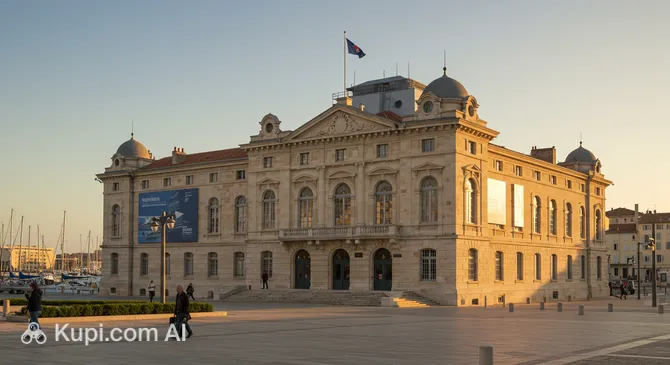
On the picturesque Mediterranean coast lies one of the most significant cultural venues that France is proud of. The National Maritime Museum in the city of Toulon is a true portal into naval history, bringing together art, science, and the spirit of adventure under one roof.
\n\n
National Maritime Museum
National Maritime Museum. Иллюстрация. Источник: Kupi.com AI
\n\n

Founded in 1814, this museum is considered one of the oldest in the world. It occupies a majestic 18th-century building that was once the main gate to the city's arsenal. Today, this site is a key branch of the country's primary maritime treasury, offering guests a unique look at the development of seafaring through the centuries.

\n\n

Here, you can sense the scale of French naval power established during the reign of King Louis XIV. The museum harmoniously combines the functions of a scientific archive and a dynamic educational space, making history accessible and engaging for every visitor.

Contacts

To plan your visit to this maritime treasury, it's worth checking the official contact details in advance. The museum is open to interaction with visitors and provides all necessary information through its main resources.

\n\n
How to contactContact
AddressPlace Monsenergue, Quai de Norfolk, 83000 Toulon, France
Phone+33 4 22 42 02 01
Websitewww.musee-marine.fr

What to Do

The collection's main pride is its unique ship models, crafted with exquisite precision. Visitors can examine detailed replicas of legendary 18th and 19th-century vessels, such as the majestic Le Soleil Royal. These exhibits allow you to trace the evolution of shipbuilding—from massive wooden sailing ships to modern steel giants.

\n\n

Special attention should be paid to the hall dedicated to the submarine fleet. On display here is a model of the Gymnote, one of the world's first electric-powered submarines. Interactive displays help visitors understand the nuances of underwater navigation, making the exhibition especially popular with younger audiences.

\n\n

The museum halls showcase numerous maritime life artifacts: from navigation instruments and antique maps to sailors' uniforms from various eras. Large-scale canvases depicting historical sea battles adorn the walls, allowing you to almost feel the gunpowder smoke of past encounters. For deeper immersion, you can use modern multimedia screens or take an audio guide.

Getting There

Finding this cultural heritage site is easy, as it occupies a strategic position in the historic city center, right on the waterfront. The museum is located on Place Monsenergue, adjacent to the famous clock tower of the old arsenal.

\n\n

If you are using public transport, city bus routes passing through the coastal zone are suitable. Stops are within walking distance of the entrance. For those who prefer comfort, a taxi ride from the city center or the railway station takes only 5–10 minutes.

\n\n

Travelers with their own or rented cars can use parking lots located near the port. Easy access from the Quai de Norfolk embankment makes visiting the museum highly accessible for all types of tourists.

Ближайший город: Toulon

History & Facts

The history of the collection began in 1748, when naval inspector Henri-Louis Duhamel du Monceau presented King Louis XV with a collection of detailed sailing ship models. This gift became the foundation for the future museum, which aimed to demonstrate the country's naval power.

\n\n

The institution officially opened in 1814. Since then, the National Maritime Museum has carefully preserved artifacts related to the development of the fleet. The initial exhibition focused on technological achievements in shipbuilding and artillery, emphasizing the port's status as a vital Mediterranean base.

\n\n

Significant diplomatic milestones are also reflected within the museum's walls. For example, there is a "Russian Room" dedicated to the visit of the Russian squadron to France in 1893. This section of the exhibition commemorates the period of a close alliance between the two countries and is of particular interest to Russian-speaking tourists.

\n\n

The building that houses the museum today is a historical monument in its own right. It survived the large-scale transformations of the port, preserving the spirit of the era of Louis XIV, by whose decree the arsenal was built in this location.

Time Needed

For a complete exploration of the exhibits, experts recommend planning for 2 to 3 hours. This is the optimal time to look at the ship models in detail and study the antique maps and navigation tools without rushing.

\n\n

If you prefer to study every exhibit in depth or plan to use an audio guide, your visit could last half a day. In any case, the museum leaves a vivid impression without being overly tiring, thanks to its logically designed routes.

Working Hours

You can visit the museum any day of the week except Tuesday. The exhibition is open to guests from 10:00 AM to 6:00 PM. This schedule is consistent, making it easy to fit the visit into your travel itinerary.

\n\n

Remember that Tuesday is the official closing day. It is recommended to arrive an hour and a half or two hours before closing to have enough time to see the main halls without rushing.

DayWorking hours
Понедельник10:00 – 18:00
ВторникЗакрыто
Среда10:00 – 18:00
Четверг10:00 – 18:00
Пятница10:00 – 18:00
Суббота10:00 – 18:00
Воскресенье10:00 – 18:00

Nearby

Exploring the port's surroundings will allow you to deeper experience the atmosphere of this ancient fortress city. A walk along the bay offers views of majestic defensive structures, many of which have retained their rugged historical appearance.

\n\n
NameDistance
Street Bar0.2 km
Ochi Ramen0.3 km
Hotel des Arts0.4 km
Manofica – Port of Toulon0.4 km
Toulon Museum of Art0.5 km
Toulon Cathedral0.5 km
Alexandre I Garden0.6 km

Reached the end of the page?

That means the route is fully explored