Support

Musée de Valence, art et archéologie

About

Located in the heart of the historic quarter, the Valence Museum: Art and Archaeology is one of the region's premier cultural gems. This unique complex occupies the former Bishop’s Palace in the city of Valence, offering guests a journey through the ages—from prehistoric times to modern art.
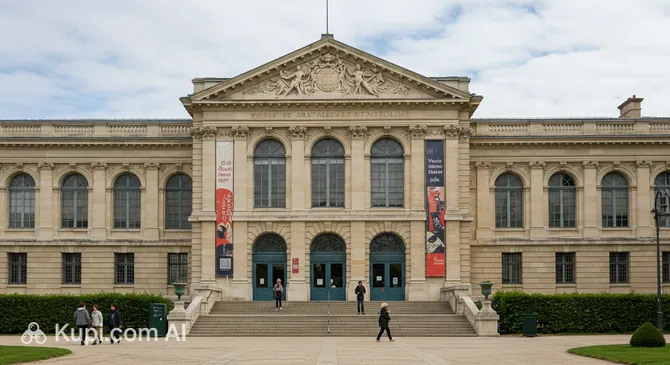
Museum of Valence, Art and Archaeology
Museum of Valence, Art and Archaeology. Иллюстрация. Источник: Kupi.com AI

In this place, France reveals itself in all its architectural diversity: the majestic estate combines elements of a medieval tower, Gothic galleries, and ultra-modern extensions. Thanks to a recent large-scale restoration, the ancient halls are now filled with light, creating an ideal space for a dialogue between the past and the present.

The museum’s gardens and terraces, which offer breathtaking views of the Rhône River, add a special atmosphere. It is not just a repository of artifacts, but a living space where the region's history is closely intertwined with the world's artistic heritage, making it a must-visit destination in the Drôme department.

Contacts

To inquire about current exhibitions or to arrange group tours, you can contact the museum administration directly.

How to contactContact
Address4 Pl. des Ormeaux, 26000 Valence, France
Phone+33 4 75 79 20 80
Websitewww.museedevalence.fr

What to Do

In the halls of the archaeology department, a grand panorama of life in the Rhône Valley unfolds before you. Here, you can see unique finds from the Neanderthal era, Bronze Age artifacts, and, of course, magnificently preserved Ancient Roman mosaics, which serve as a reminder of the region's importance in antiquity.

Art lovers should head to the fine arts department, which houses an impressive collection of works from the 16th century to the present day. The museum's primary treasure is the collection of paintings and sculptures by Hubert Robert—a prominent 18th-century French master whose romantic landscapes featuring ruins are world-renowned.

Be sure to go up to the museum's belvedere. This observation deck offers a 360-degree panoramic view, encompassing the bends of the Rhône and the surrounding landscapes. The building itself also deserves close attention: the combination of the Bishop’s Palace's ancient stonework and modern architectural solutions turns a simple stroll through the corridors into a fascinating quest.

Getting There

Finding the museum is easy, as it is located in the very heart of the historic center, just steps away from the majestic St. Apollinaris Cathedral. If you are strolling through the old quarters, follow the cathedral spire—the museum is situated on Place des Ormeaux.

For those who prefer public transport, city buses running through the center stop within walking distance. If you are taking a taxi, simply give the driver the address: 4 Place des Ormeaux. The trip from the main train station will take only a few minutes.

Drivers are recommended to leave their cars in one of the paid parking lots in the city center, such as near the Rhône embankment or adjacent to Parc Jouvet. It is worth noting that there may be few signs when approaching from the river side, so it is best to plan your route to the cathedral square in advance.

Ближайший город: Valence

History & Facts

The history of this cultural institution began in 1850 when it was officially opened to the public. However, the building itself has much older roots: for centuries, it served as the Bishop’s Palace, which still retains an atmosphere of past grandeur and the spiritual authority of the region.

The museum's architectural ensemble is a true chronicle in stone. Here, you can see a medieval tower, an elegant Gothic gallery, and magnificent painted ceilings dating back to the 15th and 17th centuries. Each hall serves as a reminder of how the tastes and styles of the French aristocracy and clergy evolved over the centuries.

A major milestone in the museum's modern history was the extensive renovation completed in December 2013. The project, led by architect Jean-Paul Philippon, harmoniously combined historical ruins and ancient walls with modern glass and metal structures, transforming the museum into a high-tech, light-filled space.

Time Needed

To explore the rich archaeological collections and art galleries without rushing, most visitors need between 1.5 and 3 hours. If you plan to study the Ancient Roman mosaics in detail or spend time admiring the landscapes of Hubert Robert, it is better to set aside half a day for your visit.

Don't forget to leave time to visit the belvedere and stroll through the museum gardens. The panoramic view of the Rhône Valley and the surrounding area is so impressive that you will want to linger here, enjoying the peace and the beauty of the landscape.

Working Hours

The museum's schedule is fairly consistent but has its own specifics. The doors are open to visitors from Wednesday to Sunday. The morning session runs from 10:00 AM to 12:00 PM, followed by a break, and the museum reopens from 2:00 PM to 6:00 PM. Please note that Monday and Tuesday are closing days.

For those who enjoy evening strolls, the museum stays open until 9:00 PM on the third Thursday of every month. A pleasant bonus: admission remains free for children and teenagers under 18, as well as for all visitors on the first Sunday of every month (with the exception of July and August).

DayWorking hours
ПонедельникЗакрыто
ВторникЗакрыто
Среда10:00 – 12:00, 2:00 – 18:00
Четверг10:00 – 12:00, 2:00 – 18:00
Пятница10:00 – 12:00, 2:00 – 18:00
Суббота10:00 – 12:00, 2:00 – 18:00
Воскресенье10:00 – 12:00, 2:00 – 18:00

Nearby

The museum's location in the historical core of the city allows you to combine your visit to the exhibits with a pleasant walk. Just beyond the doorstep, cozy streets and architectural monuments await, helping you better experience the spirit of old France.

NameDistance
House of Heads0.1 km
Chez Grand-mère0.2 km
Café de la Bastille0.3 km
Victor Hugo Shopping Center0.3 km
Jouvet Park0.3 km
Escape Game Valence0.4 km
Monumental Fountain0.4 km

Reached the end of the page?

That means the route is fully explored