Support

Deutsches Museum Flugwerft Schleissheim

About

The Deutsches Museum Flugwerft Schleißheim is a captivating branch of the legendary Deutsches Museum, entirely dedicated to the history of conquering the skies. Located in a picturesque suburb of Munich, this complex occupies the site of one of the oldest airfields in Germany. Here, the atmosphere of the past meets high technology, creating a unique space for explorers of all ages.
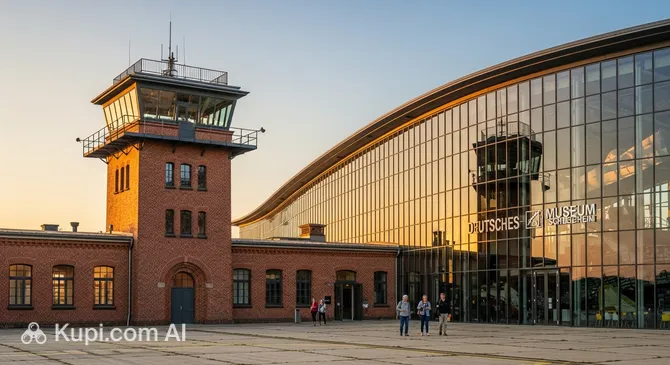
Deutsches Museum Flugwerft Schleißheim
Deutsches Museum Flugwerft Schleißheim. Иллюстрация. Источник: Kupi.com AI

The museum complex, opened in 1992, covers an area of more than 8,000 square meters. Its main feature is the combination of historic hangars and a modern glass pavilion, where dozens of aircraft are on display—from fragile early 20th-century gliders to powerful modern fighter jets. This site is rightfully considered one of Europe's most important aviation collections.

In addition to the vast amount of machinery, visitors can witness the unique restoration process of exhibits in real-time. The museum serves not just as a display case, but as a living monument to engineering, allowing visitors to understand how aviation has evolved over the course of a century.

Contacts

For your convenience, we have compiled the museum's current contact details. We recommend checking in advance for information about possible special events on the official website.

How to contactContact
AddressEffnerstraße 18, 85764 Oberschleißheim, Германия
Phone+49 89 2179333
Websitewww.deutsches-museum.de

What to Do

Inside the museum halls, you'll encounter unique exhibits: from replicas of Otto Lilienthal's first flying machines to the legendary designs of Willy Messerschmitt. Visitors can examine piston and gas turbine engines in detail, view the instrument panels of aircraft from different eras, and even climb the stairs into the cargo hold of a massive transport aircraft to feel the scale of engineering thought.

The restoration workshop, separated from visitors by a glass wall, is of particular interest. Here, you can watch specialists painstakingly restore aircraft damaged by time, returning them to their original appearance. If you are lucky, demonstration flights may be taking place at the adjacent active airfield, adding dynamic energy to your visit.

For those who prefer interactive experiences, the museum features exhibits available for tactile exploration. This is a great opportunity for both children and adults to literally touch aviation history by studying pilot equipment or rare experimental models of light aircraft and gliders.

Getting There

The museum is located in the cozy suburb of Oberschleißheim, which is very close to the metropolis. The easiest way to get here from the city center is by taking the S-Bahn line S1. You need to get off at the Oberschleissheim station, from which you can take a short walk to the museum hangars while enjoying the local scenery.

If you prefer the comfort of a private vehicle or a taxi, the drive from the city center will take about 20–30 minutes, depending on traffic. Free parking is available for motorists directly on the complex grounds. Navigator coordinates: 48.2453861, 11.5559503.

Ближайший город: Munich

History & Facts

The history of this place is inextricably linked to the birth of German aviation. The site where the museum stands today was established as early as 1912 as one of the country's first military airbases. It was once the home of the Royal Bavarian Flying Corps, and the first fragile biplanes soared through the skies above the airfield. It is remarkable how the vintage hangars from the early 20th century blend harmoniously with modern architectural solutions.

Over the decades, the airfield changed its purpose: it housed flight schools, Luftwaffe units, and, after World War II, units of the US Army. After the military finally left the site in 1981, an extensive restoration began. The museum branch was officially opened on September 18, 1992, becoming a vital repository of technical achievements in Germany.

Today, the exhibition covers a vast period: from early experiments in gliding to the era of jet engines. The restored historical buildings are of particular value, as they are monuments of industrial architecture in their own right and allow visitors to feel the spirit of a bygone era of pioneer aviators.

Time Needed

To explore all the exhibits, peek into the workshops, and read the information boards without rushing, most tourists need 2 to 3 hours. The exhibition is quite extensive, covering an area of 8,000 square meters, so comfortable shoes will come in very handy.

If you are a true fan of technology and want to study the design of engines in detail or watch the restoration process in the workshops, it is better to set aside about 4 hours for your visit. This time will be enough for both the outdoor areas and a quiet inspection of rare aircraft models.

Working Hours

The museum warmly opens its doors to visitors daily from 09:00 to 17:00. The schedule remains the same on both weekdays and weekends, making it a convenient stop on any traveler's itinerary.

Nevertheless, before planning your trip on public holidays, we recommend checking the official website to ensure there are no temporary changes to the schedule or any private events being held.

09:00–17:00

Nearby

After visiting the aviation hangars, you can diversify your leisure time by exploring interesting nearby locations. The outskirts of Munich offer many options for active recreation and entertainment for the whole family.

NameDistance
Motorworld Munich6.6 km
BMW Museum7.6 km
BMW Welt7.6 km
Garden Arena8.5 km
Nymphenburg Palace10.4 km
Alte Pinakothek10.8 km
Lenbachhaus11 km

Reached the end of the page?

That means the route is fully explored