Support

Peenemunde

About

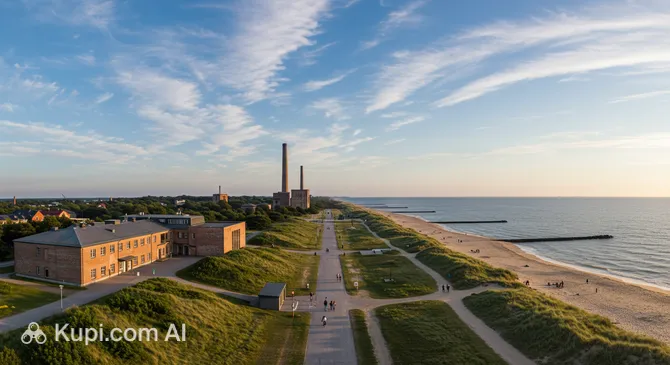
Peenemünde is a tiny yet incredibly atmospheric town tucked away on the northern tip of Usedom Island. Located in the northeasternmost part of Germany, it is washed by the cool waters of the Baltic Sea and separated from the mainland by the Peene River and picturesque lagoons. Here, where the river meets the sea, a special tranquility reigns: the fresh wind and endless horizons make this place perfect for finding inspiration.

Peenemunde. Illustration.
Source: Kupi.com AI

The town is home to only about 350 people, which helps maintain a cozy, almost family-like atmosphere. In Peenemünde, there is none of the usual city bustle, but rather a rare sense of harmony with nature. This place seems designed for leisurely walks, reflection by the water, and watching endless sunsets.

However, silence and nature are not the only things this region is rich in. The eventful history of Peenemünde attracts travelers from all over the world. The town is famous for its unique museums, which will be of interest to fans of technology and historical mysteries. Additionally, guests can look forward to walks through scenic parks, visits to old fishing villages, and maritime adventures.

Peenemünde is an excellent choice for those who love finding the extraordinary in simple things. Come here to feel like an explorer and enjoy moments of true peace on the Baltic coast.

Weather Overview

The climate in Peenemünde is defined by its proximity to the Baltic Sea, which makes it mild and moderately humid throughout the year. Extreme temperature fluctuations rarely happen here: the sea smooths out summer heat and softens winter cold, creating comfortable conditions for outdoor walks.

Summer is the most pleasant time to travel. The warmest month is August, with an average temperature of 19.2°C, when the air during the day warms up to a comfortable 22°C. Winters here are cool but usually without severe frosts: in January and December, average figures stay around 3–3.5°C. Before your trip, we recommend studying the detailed weather in Peenemünde to be prepared for the variability of the seaside climate.

One feature of the local weather is the regularity of precipitation. Although the number of rainy days varies from 10 to 15 per month, the rains themselves are usually short and light (only 1–3 mm of precipitation). Expect a moderately warm summer with refreshing sea breezes and cool, damp winters.

Average monthly temperature

Average monthly precipitation

Interesting Facts

Beyond the main attractions, Peenemünde holds many fascinating secrets that only reveal themselves to the most attentive travelers. This town wonderfully combines a massive industrial heritage with the soothing silence of Baltic nature.

  • Museum in a Power Plant. The famous Historical-Technical Museum occupies the impressive building of a former power station. It is not just an exhibition space, but a place where you can see unique artifacts from the history of rocket science and astronautics, immersing yourself in the lives of the people who worked on the technologies of the future.

  • "The Gate" to Usedom Island. Peenemünde serves as a kind of entrance to the second-largest island owned by Germany. It is from here that many tourists begin their acquaintance with the region's natural riches: endless sandy beaches, picturesque dunes, and dense coniferous forests.

  • A Train into the Past. Small trains, known as "rail buses," arrive at the local railway station from neighboring Zinnowitz. The station itself is miniature, and a trip here—especially during the uncrowded off-season—gives the feeling of a journey through time, where peace and space prevail.

  • Ruins Amidst the Greenery. The surroundings of the town resemble movie sets for a film about a forgotten civilization. Scattered throughout the territory are the remains of industrial structures and launch pads that have become overgrown with grass and trees over time, creating an atmosphere of mystery and the romance of an open-air museum.

How to Get There

When planning a trip to Usedom Island, it's worth thinking about the logistics in advance, as this historical corner is located somewhat away from busy highways. You can explore all ways to get to the city on our dedicated page, but here we will look at the key transport hubs that serve as convenient starting points for a trip to Peenemünde.

If you prefer to fly, it is important to note that there is no airport in Peenemünde itself. One of the nearest options is Solidarity Szczecin–Goleniów Airport (IATA: SZZ), located in the Polish city of Szczecin, about 96 km from the resort. This is a small regional airport from which you can reach your destination by rental car or transfer in a few hours.

For international flights, Copenhagen Airport (IATA: CPH) is often chosen. This is a major hub receiving flights from all over the world. It is located about 180 km away in a straight line, but the land route will take more time due to the region's geography. Another convenient alternative is Rostock–Laage Airport (IATA: RLG) near the city of Rostock (about 102 km), which handles domestic and some European flights.

Below is information on airports located relatively close to Peenemünde:

AirportPassenger trafficDistance
Heringsdorf Airport19 54338 km
Goleniow Airport483 00096 km
Laage Airport148 000102 km
Bornholm Airport236 000121 km
Malmo Airport905 000159 km

A train journey is a scenic and reliable way to reach the Baltic coast. Peenemünde has its own small station, but it is only served by local lines. The main transfer hub for many tourists is Berlin Hauptbahnhof in the German capital (about 181 km). From here, trains depart toward the coast, where a transfer to regional expresses or the local railway (Usedomer Bäderbahn) is usually required.

A closer major hub is Rostock Central Station, located about 108 km away. Traveling via Rostock is convenient for those coming from the west or north of the country. A combined route using the train and local transport allows you to enjoy the views and reach your holiday destination comfortably.

List of the nearest major railway stations:

StationPassenger trafficDistance
Rostock Hauptbahnhof6.6 mln108 km
Malmö Syd Station8.3 mln167 km
Malmö Central Station17 mln171 km
Lund Central Station11 mln179 km
Berlin Hauptbahnhof127.8 mln181 km

Main Attractions

Despite its modest size, Peenemünde offers guests a rich cultural program. Most of the attractions here are connected to the unique history of the location and technical progress, but there are also spots for family holidays and nostalgia.

The undisputed landmark of the town is the Historical-Technical Museum. It is housed in a monumental red-brick building of a former power plant, which is itself considered an outstanding monument of industrial architecture. The museum's exhibition is dedicated to the history of rocket technology and the aerospace industry. Here, you can see original rocket parts, documents, and models that tell the story of how technologies born in this place influenced space exploration. This site invites reflection on the complex interplay between scientific progress and 20th-century history.

In Peenemünde Harbor, the U-461 Submarine Museum invariably catches the attention of tourists. This is the world's largest diesel-electric submarine with cruise missiles, now converted into a museum. Visitors can descend into the depths of this steel giant, walk through narrow corridors, peek into the crew quarters, and experience the atmosphere in which sailors lived and served. A tour of the boat's compartments is a thrilling adventure that allows you to literally touch naval history.

Science enthusiasts and fans of interactive entertainment should visit the "Phänomenta" center. This is a space where physics stops being boring textbook theory and turns into an exciting game. It features many exhibits that can and should be touched: visitors can conduct their own experiments with light, sound, and mechanics. It is an ideal place for a family visit, where both children and adults discover the laws of the world around them with wonder.

For a quieter and more sentimental pastime, the Toy Museum is perfect. Its halls house a touching collection spanning several centuries. Here, you can see teddy bears, dolls, model railways, and construction sets that past generations played with. The exhibition of toys from the GDR era is of particular interest, evoking warm nostalgic feelings in many visitors.

Local Cuisine

The cuisine of Peenemünde and the entire island of Usedom is a real feast for seafood lovers. The proximity to the Baltic dictates the rules here: fresh fish and seafood are the constant stars of the table. Local culinary traditions are characterized by simplicity and an emphasis on the natural flavor of the ingredients, without unnecessary complications.

An absolute hit of street food that every tourist must try is the Fischbrötchen. This is a crispy bread roll with fish that can be bought literally at every turn—at small kiosks on the waterfront or in family cafes. Most often, they contain "Bismarck" pickled herring, fresh onions, and lettuce leaves, but variations with fried fish or shrimp are also common. It is the perfect snack for a walk along the sea.

For a more substantial lunch, you should visit local restaurants and order dishes made from smoked eel or pike-perch. Fishermen bring in fresh catches daily, so the quality of the products here is always top-notch. The traditional side dish is potatoes grown in the island's fields, which are also often added to thick and rich fish soups—another pride of the local gastronomy.

The food culture in Peenemünde is very informal. In addition to restaurants, farmers' markets are extremely popular. A special cozy atmosphere prevails here: you can buy homemade cheeses, fresh honey, seasonal berries, and even wine from small regional wineries. Gastronomic festivals are often held in the summer, where travelers can try famous German sausages, fresh pastries, and meet local farmers.

Travel Tips

A journey to Peenemünde is an immersion into complex history against the backdrop of harsh but alluring Baltic nature. To ensure your trip to this unique corner of Usedom Island is comfortable and goes without surprises, we have prepared a list of important recommendations.

  1. Clothing and Essentials: The weather on the Baltic coast is changeable and windy, even in the height of summer. Be sure to bring a windproof jacket, a raincoat, and a warm sweater—the layering principle works best here. Since museum areas (especially open-air ones) are extensive, choose the most comfortable and closed footwear for long walks.

  2. Transport: Within the village itself, it is most convenient to get around on foot or on a rented bicycle, as distances are small. To connect with other resorts on the island, the local UBB (Usedomer Bäderbahn) train is ideal—it's fast and scenic. If you arrive by car, be prepared for the fact that parking near the main attractions is paid.

  3. Finances: The official currency is the Euro. International cards are accepted without issues at museum ticket offices and large restaurants; however, Germany is conservative regarding payments: snack stalls (Imbiss), small cafes, and souvenir shops often require cash. There are few ATMs in the village itself, so it is better to withdraw money in advance in larger towns, such as Zinnowitz.

  4. Health and Safety: Peenemünde is a very quiet place with a low crime rate. However, you should consider that it is a tiny settlement: there are no 24-hour pharmacies or a hospital here. The nearest medical assistance and pharmacies are in neighboring Karlshagen (about 6 km). Be sure to bring a personal first-aid kit with you.

  5. Communication: The main language is German. Museum and hotel staff generally speak English, but older local residents might not. We recommend learning a few phrases in German or downloading an offline translator. Wi-Fi is available in museums and cafes, but the mobile signal in forested areas can be unstable.

  6. Local Etiquette: In the north of the country, the universal greeting is "Moin," which is appropriate at any time of day. It is also important to remember the special status of the place: when visiting the Historical-Technical Museum and memorials, maintain restraint and silence, respecting the tragic pages of history associated with this site.

  7. What to Avoid: It is strictly not recommended to go off the marked tourist trails in the forest zones around the village. This territory was subject to heavy bombing during World War II, and hazardous items may still be in the ground. Pay attention to warning signs and fences.

  8. Useful Tip: If you plan a dense cultural program, ask at the ticket office about combined tickets. Often, visiting the Historical-Technical Museum and other exhibitions on a single ticket is cheaper. Also, don't miss the chance to take the passenger ferry to the fishing village of Freest on the mainland—it is inexpensive and very beautiful.

By preparing for these nuances in advance, you can avoid being distracted by everyday trifles and focus entirely on the atmosphere of the place. May Peenemünde be remembered by you not only for its museums but also for the feeling of freedom on the shores of the Baltic Sea.

Entertainment & Nightlife

Entertainment and nightlife in Peenemünde have their own special Nordic character, which is fundamentally different from noisy metropolises. Since it is a tiny village with a population of only a few hundred people, you won't find neon signs for nightclubs, thumping discos, or 24-hour party districts here. Evening leisure here is synonymous with comfort, silence, and contemplation, making it perfect for travelers seeking a break from the city's hustle and bustle.

The center of evening life is rightfully Peenemünde Harbor (Peenemünder Hafen). This is where tourists flock to watch the sunset with views of the water and anchored ships. The atmosphere here is as relaxed and informal as possible: there is no dress code, and warm, comfortable clothing is preferred as a cool breeze often blows from the Baltic. The crowd mostly consists of families, couples, and history buffs discussing what they have seen during the day.

The main "nightlife" format is a long dinner at one of the local establishments. Most restaurants close quite early, around 9:00 PM – 10:00 PM, so it is worth planning your evening in advance. The most popular spots are restaurants with water views, where you can sample fresh fish with a glass of German beer or white wine. For instance, it's worth checking out places in the waterfront area, such as "Hafenrestaurant" or cafes at local guesthouses serving hearty regional cuisine. Dining on board one of the ships converted into gastronomic spots can also be an interesting experience if they are operating during the current season.

For those looking for later entertainment, the only options may be bars at large hotels or a trip to neighboring, livelier resort towns on Usedom Island, such as Karlshagen or Zinnowitz. You can only get there at night by taxi, as the regional train service (UBB) stops in the evening. It is better to call a car in advance through the hotel reception or a special app, as "hailing" a taxi on the street is not common and practically impossible here.

In terms of safety, Peenemünde is one of the calmest places in the region. You can walk safely here at any time of day; however, you should take into account the poor lighting on the outskirts and in forest zones. For night walks along the shore, we recommend bringing a flashlight. This is a safe area where the main "threat" might only be a sudden rain shower or a piercing wind.

Daytime entertainment in the town is much more varied and focused on educational leisure. As mentioned, there are impressive museums such as the Historical-Technical Museum and the U-461 submarine. Additionally, during the day, cycling trips along the island's scenic routes and nature excursions are popular, allowing you to build up a pleasant tiredness before a quiet evening by the fireplace or on the seashore.

Parks & Museums

Peenemünde is a unique spot on the map where harsh industrial aesthetics coexist with the protected nature of Usedom Island. For travelers coming to this corner of Germany, the town reveals itself not only as a historical monument but also as a place for secluded walks among dunes, forests, and the mirror-like water.

The main natural treasure of the area is the Peenemünder Haken landscape reserve. This vast territory jutting into the sea has become home to many rare birds, including white-tailed eagles and cormorant colonies. Although access deep into the reserve is restricted for safety and ecosystem preservation, picturesque routes are laid out along its borders. This place attracts birdwatching enthusiasts and those who want to see the wild, untouched beauty of the Baltic landscape.

For those seeking peace by the water, Peenemünde Beach is a real find. Unlike the crowded resorts in the southern part of the island, silence and tranquility reign here. This is a "wild" stretch of coastline with soft sand, surrounded by a dense pine forest. There are no rows of sun loungers or beach bars, only the sound of the waves and a fresh sea breeze, making it an ideal place for meditative walks and sunset picnics.

The town's cultural landscape is inextricably linked with its past, and the central role here is played by the Historical-Technical Museum. Housed in the monumental building of a former power plant, it is interesting not only for its exhibition on the development of rocket technology but also as an architectural object. The glass elevator leading to the roof observation deck is particularly popular with tourists, offering a breathtaking panorama of the Peene River delta and Rügen Island.

The Toy Museum (Spielzeugmuseum) offers a completely different atmosphere. It is a space filled with warmth and nostalgia, where dolls, toy cars, and construction sets from different eras are collected. The exhibition allows you to trace the cultural history of the region through the prism of children's entertainment, with special attention paid to toys from the GDR era. This place gives bright emotions and allows adults to return to childhood for a while.

For fans of active learning, the "Phänomenta" interactive exhibition is open. This is a museum where the main rule is "touching is allowed." More than 200 experiments demonstrating the laws of physics turn science into an engaging game. Tourists value this place for the opportunity to have fun and educational time with the whole family, taking a break from serious historical themes.

Insider Tip: To see Peenemünde from an unexpected side, rent a bicycle and head along the forest trails toward the old airfield. Nature here surprisingly swallows the remains of concrete structures, creating surreal landscapes reminiscent of sci-fi movie sets. This is the best way to feel the mysterious aura of this place away from the main tourist groups.

Getting Around

Given the miniature size of Peenemünde and its status as a historical village, there is no public transport system typical for metropolises, such as a metro, trams, or trolleybuses. Within the settlement itself, all key sites are within walking distance, so the need for transport arises mainly for connections with other resorts on Usedom Island or the mainland. The main transport artery is the railway.

The primary way to get here or leave is the trains of the UBB (Usedomer Bäderbahn) regional network. The railway line ends right here, at Peenemünde station. Trains run regularly, connecting the village with the Zinnowitz hub station, where you can transfer to trains running along the entire coast of the island or toward the mainland. UBB carriages are modern, comfortable, and equipped with spaces for transporting bicycles, which is very popular in this region.

Bus service is also available, but it is less frequent than the railway. Regional buses connect Peenemünde with neighboring towns such as Karlshagen. Bus schedules are often tied to school hours or the tourist season, so services can be rare, especially on weekends. Stops are marked with a sign featuring a green letter "H" in a yellow circle.

Passenger ferries can be considered a special type of transport. Small boats regularly depart from the harbor to the fishing villages of Freest and Kröslin, located on the mainland. This is not just a mode of travel but also a scenic sea trip. However, it's worth remembering that ferry services depend on the weather and the season: in winter, trips may be canceled or reduced.

The fare system is unified. UBB train tickets can be purchased from machines installed on the platforms (the menu is usually available in several languages) or directly from the conductor on the train if there was no working machine at the station. For buses, tickets are bought from the driver upon boarding (it is better to have small change). Nationwide passes apply in the region, including the popular Deutschland-Ticket, which allows unlimited use of regional trains and buses.

To plan your routes, it is strongly recommended to use the DB Navigator mobile app. It shows current train and bus schedules, prices, and possible transfers. Note: paper tickets bought from a machine sometimes require validation (stamping) in special orange or red boxes on the platform before boarding, if they do not indicate a specific validity time.

The most popular alternative to public transport is the bicycle. Usedom Island is covered by a dense network of cycle paths, and getting from Peenemünde to neighboring beaches on two wheels is often faster and more pleasant than waiting for a bus. Rental points (Fahrradverleih) are available both in the village and at many hotels. The UsedomRad rental system also operates here, allowing you to take a bike at one station and return it at another.

As for taxis, it is impossible to "hail" a car on the street here. There are no car-sharing services or apps like Uber in the village. If you need a taxi, it must be ordered by phone in advance through a hotel administrator or a local tour operator. Keep in mind that the waiting time for a car can be long, as they come from neighboring, larger towns.
Accommodation

The choice of accommodation in Peenemünde perfectly matches the character of this quiet and secluded place. Here, you won't find huge chain hotels, noisy "all-inclusive" resort complexes, or high-rise buildings. The bulk of the accommodation consists of cozy vacation apartments (Ferienwohnungen), small family pensions, and guesthouses. This allows tourists to feel like local residents and enjoy the calm rhythm of island life.

Territorially, accommodation options can be divided into two main zones. The first is the Harbor (Hafen) area. It is worth staying here if you want to be within walking distance of the main museums and enjoy views of the water and ships. The second zone is the residential part of the village, nestled in greenery. Absolute silence reigns here, broken only by the sound of the wind in the pines, which is ideal for nature lovers and those seeking a secluded getaway.

For those looking for a unique experience, water-based accommodation options—such as converted ships serving as floating hostels or hotels—are sometimes available in the harbor during the summer season. This is a great opportunity to feel the maritime romance of the region, falling asleep to the gentle swaying of the Baltic waves.

Booking Tip: Since Peenemünde is very small and the tourist flow in season is high, the best accommodation options are snapped up long before the start of summer. If you are planning a trip for July or August, it is recommended to book your stay at least 3–4 months in advance. In the off-season, finding a free room or apartment is much easier, and prices become more affordable.

The price range in the town varies from medium to high, which is typical for the popular Usedom Island. There are practically no budget hostels in the classic sense, but renting apartments as a group or family often proves to be a cost-effective solution. It is most convenient to book accommodation through major international online platforms or on local German websites dedicated to Baltic holidays.

Nearby Cities

For those who want to explore the surroundings, Peenemünde serves as an excellent starting point for day trips to several interesting nearby locations. Its position at the junction of Usedom Island and the mainland makes it easy to reach gems of German architecture and culture.

One of the most attractive neighbors is Greifswald. This is an old university town steeped in the spirit of Romanticism: it was here that the famous painter Caspar David Friedrich was born. Greifswald enchants with its Brick Gothic architecture, cozy Market Square, and picturesque museum harbor where historical ships are moored.

Also worth noting is Stralsund, whose historical center is a UNESCO World Heritage site. The city is famous for its majestic churches and rich Hanseatic heritage. Additionally, it is home to the famous Ozeaneum aquarium, which will be of interest to both adults and children thanks to its impressive tanks featuring the marine fauna of the North.

If you are willing to drive a bit further, head to Rostock—the largest city in the region. This is a lively port with an 800-year history and one of the oldest universities in Northern Europe. Rostock offers excellent opportunities for shopping, gastronomic discoveries, and walks through a beautiful historical center.

CityPopulationDistance
Wolgast12 02810 km
Greifswald59 38226 km
Anklam12 38532 km
Heringsdorf9 00032 km
Swinoujscie41 47940 km

These nearby destinations provide an insight into the diverse culture and landscapes of the region, harmoniously complementing a quiet nature holiday in Peenemünde.

Shopping & Souvenirs

General Overview. Shopping in Peenemünde has its own characteristics dictated by the size of this small village. You won't find large shopping centers, famous brand boutiques, or noisy shopping alleys here. Shopping opportunities are limited to souvenir shops at museums, small grocery stores, and kiosks. Shopping here is more of a pleasant addition to the cultural program, allowing you to acquire unique keepsakes related to the history of the place or local delicacies.

Main Shopping Areas. Commercial life is concentrated mainly in the Harbor (Hafen) area and near the main attraction—the Historical-Technical Museum. Walking along the waterfront, you can find small pavilions offering goods for tourists. Hauptstraße also features several shops where you can buy essentials and beach accessories during the summer season.

Shopping Centers. There are no classic shopping centers in Peenemünde itself. If your goal is large-scale shopping with visits to clothing, shoe, or electronics stores, it is recommended to head to neighboring, larger towns on Usedom Island. The nearest supermarkets and shopping rows are located in the villages of Karlshagen or Zinnowitz, which can be quickly reached by car or local train.

Markets. The market culture of the village is inextricably linked with the sea. Although there is no large permanent market here, you can often buy the freshest fish directly from the boats in the port or at specialized kiosks. Smoked fish, prepared according to traditional recipes, is especially popular. This is a great opportunity not only to try local delicacies but also to take home a tasty "souvenir."

Souvenirs. It is worth bringing back items from Peenemünde that reflect its unique past and nature. The shop at the Historical-Technical Museum offers a wide selection of literature, documentaries, and rocket models that will interest history and technology buffs. Additionally, Usedom Island is famous for its sea buckthorn (Sanddorn) products: be sure to look for jams, liqueurs, juices, and cosmetics based on this healthy berry. Amber products and maritime souvenirs are also popular.

Opening Hours and Payment. Shops are usually open from 9:00 or 10:00 AM until 6:00 PM. It is worth considering that Germany strictly observes weekend schedules: on Sundays, most shops—except for souvenir stalls and some bakeries—are closed. As for payment, museum shops and large restaurants accept cards, but small kiosks in the harbor and souvenir tents often require cash, so it is recommended to have small bills with you.

Tax Free. The tax refund system (Tax Free) operates in Germany for tourists from non-EU countries when purchasing goods totaling over 50 euros on a single receipt. However, finding shops in Peenemünde that support this system is extremely difficult due to their small size and specific range of goods. You are most likely to be able to arrange Tax Free only when shopping in the larger cities of the region.

Reached the end of the page?

That means the route is fully explored