Support

Stralsund

About

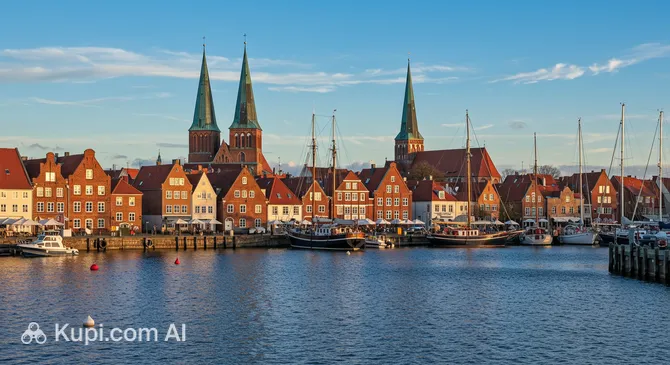
Stralsund is a northern pearl nestled along the Baltic Sea coast. This city, a key part of the Mecklenburg-Vorpommern region, seems to float between water and land: on one side, it is washed by the waves of the Strelasund strait, and on the others, it is surrounded by historic ponds that once served as part of its defensive system. It is here that Germany opens its maritime gates to travelers, leading to the picturesque island of Rügen.

Despite its relatively small size—home to about 59,000 people—the city possesses the grandeur of a major cultural center. Its heart, the historic center, is deservedly included in the UNESCO World Heritage list. Walking through the cobbled streets, it is impossible not to feel the spirit of the powerful Hanseatic League. The rich history of Stralsund is etched into every brick of its ancient buildings, turning the city into a true open-air museum.

Stralsund. Illustration.
Source: Kupi.com AI

The architectural face of the city is captivating: majestic Brick Gothic cathedrals stand alongside cozy modern cafes and restaurants. The promenade and harbor are always full of life, offering tourists a chance to enjoy the fresh sea breeze and magnificent views. Here, medieval legends harmoniously intertwine with the rhythm of modern life, creating a unique atmosphere of comfort and tranquility.

Stralsund is a must-visit for anyone seeking a harmony of nature and architecture. It is the perfect place for leisurely walks, discovering local traditions, and tasting the freshest seafood. Allow yourself to immerse in the charm of old Europe and take home warm memories of this amazing city on the water.

Weather Overview

The climate in Stralsund is shaped by its proximity to the Baltic Sea, making it temperate and maritime, without extreme temperature fluctuations. If you are planning a trip, it's helpful to know that the weather here can be changeable, and a fresh sea breeze is felt almost year-round.

Summer in the city is usually mild and comfortable, ideal for long walks. The warmest months are July and August, when the average temperature is around 18–19°C, and daytime air warms up to 21–22°C. Sweltering heat is rare here. Winters are generally cool but not harsh: in January and February, average temperatures stay around +3...+4°C, though they can drop to +1°C at night.

Precipitation is distributed fairly evenly throughout the year, so keep an umbrella handy in any season. The number of rainy days ranges from 10 to 15 per month, with the probability of precipitation being slightly higher in autumn and winter. More detailed weather in Stralsund by month will help you choose your travel dates more accurately and pack your suitcase correctly.

Spring arrives in the city gradually: it is still cool in March (about +4.5°C), but by May, the air warms up to a pleasant +12°C. In autumn, the temperature gradually decreases from +15°C in September to +6°C in November. Expect moderately warm summers with occasional rain and cool, damp winters.

Average monthly temperature

Average monthly precipitation

Interesting Facts

Beyond its main attractions, Stralsund holds many fascinating secrets and historical features that reveal themselves only to the most attentive travelers.
  • A unique feature of the city is its "island" status. Stralsund's historic center is almost entirely surrounded by water: the strait on one side and a system of ponds on the others. In ancient times, this made the city an almost impregnable fortress, and today it gives it a unique charm that distinguishes it from other cities in Northern Germany.

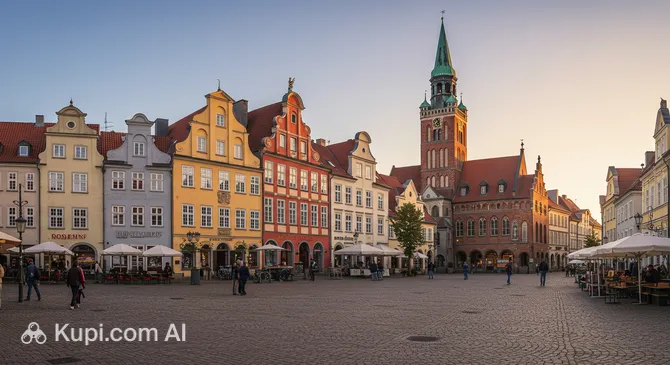
  • In the Middle Ages, Stralsund's wealth and influence in the Hanseatic League were so great that the city became a magnet for merchants from all over Europe. The heart of commercial life was the Alter Markt, where today you can still see the buildings where influential traders sat and world-class deals were struck.

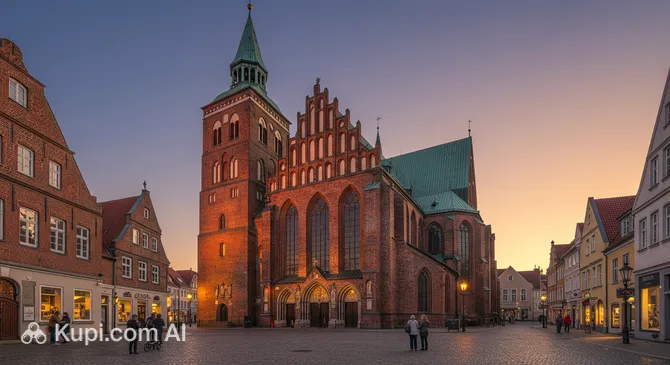
  • Among the architectural landmarks of the city, St. Mary's Church holds a special place. This masterpiece of Brick Gothic not only graces the city skyline but also serves as a reminder of the skill of medieval architects who created majestic temples reaching for the sky.

  • Stralsund is the birthplace of the famous astronomer Ernst Wilhelm Leberecht Tempel. This outstanding scientist discovered several comets and asteroids, forever linking his hometown's name to the history of space exploration.

  • Fans of the mystical will appreciate the old city legend of the "good sailor's spirit." They say he dwells in one of the historic houses and helps lost travelers find their way to the sea. Locals also love to tell stories of mysterious treasures that supposedly still lie at the bottom of the Baltic Sea.

Alter Markt (Old Market Square) Stralsund. Illustration.
Source: Kupi.com AI

Traveler photos:

How to Get There

When planning your route to the Baltic coast, it is important to research the transport logistics in advance. Although the city is on the mainland and connected by bridges to Rügen island, there are no direct flights to the city itself. We recommend learning more about how to get to Stralsund to choose the best combination of air and ground transport.

The nearest air hub is Rostock-Laage Airport (RLG), serving the city of Rostock and located about 68.7 km from your destination. It is a small regional airport, convenient for those who want to be as close to the coast as possible. The journey from there by car takes about two hours.

For international tourists flying from afar, Copenhagen Airport (CPH) in Denmark is often a more suitable option. Despite the 148 km distance, this major hub offers a vast number of flights from all over the world. From here, you can continue your journey by rental car or use the extensive public transport network, crossing straits and borders.

Below is a summary table of the nearest airports for flight planning:

AirportPassenger trafficDistance
Laage Airport148 00069 km
Heringsdorf Airport19 54385 km
Bornholm Airport236 000137 km
Malmo Airport905 000139 km
Goleniow Airport483 000144 km

Rail travel is one of the most comfortable ways to get to Stralsund, as the city has its own train station located near the historic center. If you are traveling from afar, a convenient transfer point is Rostock Main Station (about 67 km from the city). High-speed trains from many parts of Germany arrive here, after which you can simply change to a regional express (RE), which will quickly and comfortably deliver you straight to the Stralsund platform, saving you from searching for a taxi or bus.

You can also consider routes through Scandinavia, for example, via Copenhagen Central Station. This is an excellent option for those who want to combine a visit to Germany and Denmark while enjoying the views from the train window.

List of the nearest major railway hubs:

StationPassenger trafficDistance
Rostock Hauptbahnhof6.6 mln67 km
Malmö Syd Station8.3 mln140 km
Malmö Central Station17 mln145 km
Copenhagen Central Station36.5 mln155 km
Lund Central Station11 mln156 km

Main Attractions

Stralsund's attractions are a harmonious blend of Hanseatic grandeur, maritime romance, and modern interactive museums. The city, whose historic center is UNESCO-protected, offers routes that will interest both history buffs and families with children.

The undisputed highlight of the city's modern tourism is the Ozeaneum Stralsund. This futuristic building in the harbor hides an amazing world of the northern seas within. Visitors can walk through giant aquariums, observe the life of the inhabitants of the Baltic and North Seas, and see the impressive "1:1 Giants of the Seas" exhibition featuring life-size whale models. This place is breathtaking and provides a fresh perspective on the underwater ecosystem.

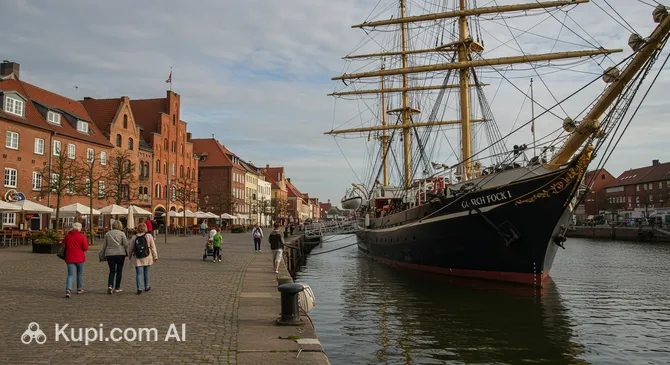
Gorch Fock I. Illustration.
Source: Kupi.com AI

Traveler photos:

A true symbol of the city's maritime history is the legendary bark Gorch Fock I. This snow-white sailing ship, launched in 1933, has now been converted into a floating museum. Stepping on board, tourists can explore the officers' wardroom, the sailors' quarters, and the engine room. It is a unique opportunity to touch maritime history and feel like part of an old ship's crew.

For fans of panoramic views and Gothic architecture, St. Mary's Church is a must. This grand temple is considered one of the masterpieces of North German Brick Gothic. Inside, you can admire the historic organ by Friedrich Stellwagen and medieval murals. However, the main adventure awaits those who dare to climb the 366 steps of the tower: from a height of over 100 meters, there is a stunning view of the city's red-tiled roofs, the strait, and Rügen island.

Another unique site is the German Oceanographic Museum (Meeresmuseum). Its uniqueness lies in its location: the exhibits are housed in the halls of the former Dominican St. Catherine's Monastery. Here, Gothic vaults sit alongside a huge aquarium for tropical fish and skeletons of marine mammals. The museum tells the story of ocean biology and the history of fishing, making the tour both educational and atmospheric.

Local Cuisine

Stralsund's gastronomic scene is inextricably linked to the Baltic Sea. For tourists, this city is a true paradise where the morning begins with the smell of the fresh catch and restaurant menus are filled with fish delicacies. Here on the coast, the main culinary rule is the freshness of ingredients: fishermen deliver cod, flounder, eel, and herring to local markets and kitchens daily, which are then prepared according to old Hanseatic recipes.

The undisputed king of local cuisine is the famous "Bismarck herring" (Bismarckhering). This is a tender fillet of pickled herring traditionally served with onion rings and dark bread. Legend has it that the recipe so impressed Chancellor Otto von Bismarck during his visit that he allowed the dish to be named after him. It is also worth trying smoked mackerel or fried eel—these dishes are prepared here with exceptional skill.

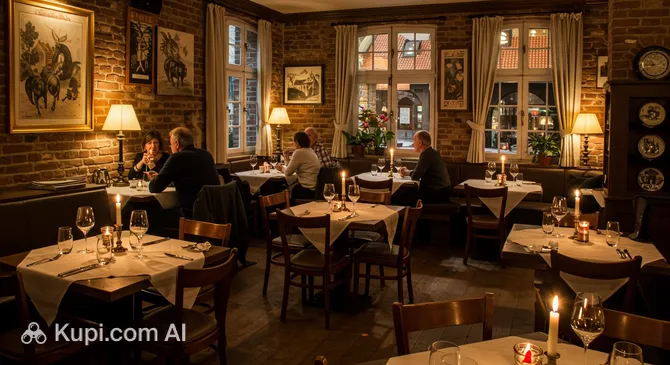
Scheelehof Restaurant. Illustration.
Source: Kupi.com AI

Traveler photos:

The food culture in Stralsund is democratic and diverse. For a quick snack, the street stalls in the port are perfect, offering Fischbrötchen—crispy rolls with fish that have become a true symbol of the German North. If you want to enjoy fine dining in a historic atmosphere, it is worth visiting the Scheelehof Restaurant. Here, within the walls of an ancient building, you can experience modern interpretations of regional dishes.

Meat lovers will enjoy the braised cabbage with sausages, while those with a sweet tooth should try the traditional pastries with marzipan and poppy seeds. It is customary to spend an evening in Stralsund over a mug of local beer or a glass of wine in cozy establishments. You can feel the spirit of an old port tavern at the Zur Fähre bar, which is famous for its authentic atmosphere and a history that stretches back centuries.

Travel Tips

Welcome to Stralsund! To ensure your trip to this Hanseatic city is as comfortable and surprise-free as possible, we have prepared a list of useful recommendations to help you feel confident in any situation.

  1. Clothing and Weather. The climate on the Baltic coast is changeable, and winds blow almost constantly. The best principle for clothing is "layering": bring items that can be easily added or removed. Be sure to pack a windproof jacket with a hood or a raincoat, even if the forecast promises sun. Since the historic center is paved with old cobblestones, opt for comfortable flat shoes or sneakers instead of heels.
  2. Transport and Getting Around. Stralsund's historic center is compact and best explored on foot—this way you won't miss any architectural details. For trips to distant areas or the station, you can use buses from the local company VVR. Taxis are easy to find at stands or call by phone, but this is not a cheap option. Renting a car is only worth it if you plan to travel outside the city, for example, to Rügen island.
  3. Finances and Payment. The currency is the Euro (EUR). Although Germany is a modern country, small bakeries, fish sandwich stalls (Fischbrötchen), and souvenir shops may not accept cards. Always have some cash (Bargeld) with you. ATMs (Geldautomat) are available everywhere. Tipping in restaurants is welcomed: usually, the bill is rounded up or 5–10% is left for good service.
  4. Health and Safety. Stralsund is a calm and safe city where you can walk without fear even in the evening. Pharmacies (Apotheke) are easily recognized by the red letter "A"; duty pharmacies work around the clock, and information about them can be found on the door of any closed pharmacy. A specific "danger" for tourists is the cheeky seagulls in the port, which can snatch food right out of your hands, so be vigilant during your snack on the promenade.
  5. Communication. The official language is German. In tourist spots, hotels, and museums (such as the Ozeaneum), staff speak English well, but this is not guaranteed in small shops. Learn a couple of words: "Hallo" (hello) and "Danke" (thank you)—this always wins over the locals. Free Wi-Fi is available in major museums and some cafes, but for stable connectivity, it's better to buy a local prepaid SIM card at a supermarket or mobile shop.
  6. Local Etiquette. Germans value punctuality and order. When entering a shop, it is customary to greet the shopkeeper. On Sunday, most shops and supermarkets are closed—it is a rest day (Ruhetag), so it's better to buy groceries and necessities in advance. Exceptions are only a few shops at the station and gas stations.
  7. What to Avoid. The most common mistake for tourists is walking on bicycle paths. In Germany, this is a serious breach of unwritten rules: bike lanes are often highlighted with different colored tiles or markings, and pedestrians should stay off them. This can cause sharp disapproval from cyclists and even lead to a collision.
  8. Useful Life Hack. If you plan to visit the Ozeaneum—one of the city's main attractions—buy your tickets online in advance. During high season and on rainy days, ticket lines can stretch out onto the street, and an electronic ticket will save you precious vacation time.

We hope these tips help you plan the perfect trip to Stralsund. Enjoy the sea air, the delicious fish, and the unique atmosphere of the old port!

Entertainment & Nightlife

Stralsund is a reserved city, steeped in the spirit of the old Hanseatic League, so don't look for noisy metropolitan raves that last until morning. The nightlife here is more cozy and intimate. Most activity is concentrated in the Old Town (Altstadt) and along the harbor promenade. An evening in Stralsund is a time for leisurely strolls on cobblestones, live music in small pubs, and heartfelt conversations over a glass of local beer in historic settings.

The epicenter of evening attraction is the area around the Market Square and the port. Here you will find establishments with an authentic maritime atmosphere. The crowd in the bars is mixed: from students of the local university to tourists and long-time residents discussing the latest news. There is no dress code in most places—casual style is appropriate everywhere. Most bars stay open until midnight or 1:00 AM, and slightly later on weekends.

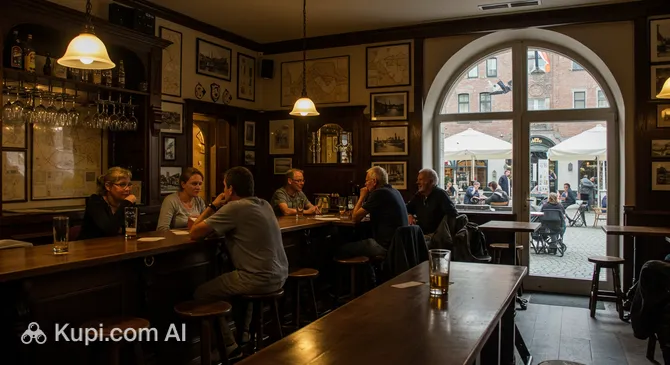
Zur Fähre. Illustration.
Source: Kupi.com AI

Traveler photos:

If you want to touch living history, be sure to visit Zur Fähre. This is one of the oldest port taverns in Europe, possessing incredible charisma. In this small room with low ceilings, time seems to have stopped several centuries ago. It is the perfect place to try sailors' strong spirits and hear local tall tales.

For those looking for a more lively atmosphere closer to the night, Hafenkneipe Zum Goldenen Anker is a great choice. This establishment combines the spirit of a classic pub with a place for dancing. It often hosts themed parties and plays music that creates a festive mood right by the water. In summer, the nightlife spills out onto the streets: terraces fill with people enjoying the sunsets over the Strelasund strait.

Practical Tips and Safety: Stralsund is a very calm and safe city. You can walk around the center without worry even late at night. The streets are well-lit, and the crime rate is extremely low. If you stay out late and your hotel is far away, taxis can be found at designated stands at the station and in the center, or called by phone. An average trip across the city costs 10–15 euros. Bar prices are moderate: a glass of beer costs about 4–5 euros, and cocktails start from 8 euros.

Regarding daytime entertainment, the city offers excellent opportunities for family and cultural leisure. Besides museum visits, it is worth stopping by Stralsund Zoo, which is famous for its well-maintained grounds and animal collection. If you are interested in shopping, head to Strelapark or the Tribseer Center, where you can find both well-known brands and local souvenirs.

Parks & Museums

The cultural and natural landscape of Stralsund is surprisingly diverse: here, austere Brick Gothic sits alongside picturesque park zones, and modern exhibitions share space with century-old monastery walls. The city offers tourists not only an immersion into Hanseatic history but also excellent opportunities for outdoor recreation surrounded by water and greenery.

One of the city's main green arteries is the Wallanlagen. These park areas were created on the site of former fortifications and now form a "green ring" around the historic center. A walk here, along the picturesque Knieperteich and Frankenteich ponds, offers a sense of peace and seclusion despite the proximity to busy streets. In summer, you can rent a boat here and admire the church spires from the water, while the white bridges crossing the ponds serve as excellent backdrops for photos.

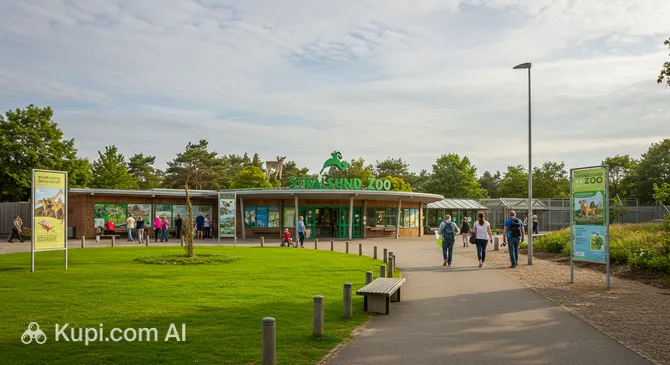
For nature lovers, Stralsund Zoo will be a real discovery. It stands out by focusing on regional farm animals and local species, although it also houses exotic representatives like lions and chimpanzees. The zoo's territory seamlessly blends into a natural forest, creating the feeling of a walk through the wild. It is an ideal place for a family holiday, where you can not only observe animals but also visit a historic farmhouse.

Stralsund Zoo. Illustration.
Source: Kupi.com AI

Traveler photos:

Speaking of museums, it is impossible to overlook the Stralsund Museum, the oldest in the state of Mecklenburg-Vorpommern. Its main exhibition is located in the former St. Catherine's Monastery. It houses the famous "Hiddensee treasure"—unique gold jewelry from the Viking Age. The museum provides a deep dive into the city's history, telling of its heyday during the Hanseatic League and the lives of its merchants and craftsmen.

Another gem of the museum world is the German Oceanographic Museum. It also occupies part of the monastery complex, creating a striking contrast between medieval sacred architecture and maritime exhibits. Visitors can see whale skeletons suspended under Gothic vaults and huge aquariums with tropical fish. This is a place where marine science intertwines with the history of fishing and seafaring.

The modern side of maritime themes is represented by the Ozeaneum Stralsund. Unlike a classic maritime museum, this complex focuses on interactivity and environmental education, showcasing the richness of the northern seas' underwater world. Its architecture and large-scale exhibitions make it one of the most visited museums in Northern Europe.

The city's historic appearance is defined by its architectural landmarks. The heart of Stralsund is the Alter Markt—the Old Market Square. The square's ensemble, including the majestic Town Hall with its decorative facade, is considered one of the most beautiful on the Baltic. Nearby stands St. Mary's Church, a grand monument of Brick Gothic. Climbing its tower, you can see how green parks and the blue expanse of the strait embrace the city's ancient tiled roofs.

Insider Tip: If you want to escape the city bustle, head to the small island of Dänholm, located between Stralsund and Rügen. This is the cradle of the Prussian Navy, featuring preserved old fortifications, a museum, and quiet paths where tourists are rarely seen, and the views of the city from the water are simply mesmerizing.

Getting Around

Stralsund's transport system is compact, logical, and convenient for travelers, even if it lacks the scale of a metropolis. Since the historic city center is relatively small, many attractions are within walking distance of each other. There are no subways or trams here; the main form of ground public transport is the bus. The route network covers both the old town and residential areas, and also connects the center with the railway station.

Bus services are operated by the company VVR (Verkehrsgesellschaft Vorpommern-Rügen). For tourists, the most relevant routes are those connecting the main station (Hauptbahnhof) with the port and the Old Market (Alter Markt). Buses run strictly on schedule, which can be found at every stop or in mobile apps like DB Navigator. Keep in mind that in the evenings and on weekends, intervals between buses increase, and night services may be unavailable.

A special type of transport in Stralsund is water-based. Ferries from the Weiße Flotte ("White Fleet") company are not just an attraction but a full-fledged means of travel. Regular trips connect Stralsund harbor with the village of Altefähr on Rügen island. The crossing takes about 15 minutes and offers a stunning view of the city skyline from the water. Ferry tickets are purchased separately at the ticket offices on the pier or on board.

The bus fare system is simple. A ticket (Einzelfahrschein) can be bought directly from the driver upon boarding (usually for cash, so have change ready) or from machines at major stops. There are single tickets valid for 60 minutes and day passes (Tageskarte), which are cost-effective if you plan to travel a lot. If you are traveling in a group or family, look for group day tickets—these can save you a significant amount.

An important detail: a ticket bought from a machine often needs to be validated (entwerten) immediately upon entering the bus, otherwise it will be considered invalid. Tickets bought from the driver are usually already validated. Fines for fare evasion in Germany are high, so keep your ticket until the end of your journey.

For those who prefer independence, a bicycle is an excellent alternative. Stralsund is a very bicycle-friendly city with flat terrain and a well-developed network of bike lanes. Rental points can be found at the station, in the port, and at many hotels. This is perhaps the most pleasant way to explore the promenade and the surrounding areas.

Taxis are available in the city but are not cheap. Cars usually wait for passengers at designated stands at the station and in the center, but it is more reliable to order a ride by phone or through an app. Car sharing is not as widespread as in larger cities, so you shouldn't rely solely on it. Within the historic center, a car is more likely to be a burden due to narrow streets and paid parking, so it is better to leave your car at a park-and-ride lot and enjoy exploring on foot.

Accommodation

The choice of accommodation in Stralsund is pleasantly diverse: from atmospheric boutique hotels in restored merchant houses to modern apartments with water views. The city offers options for every taste and budget, allowing tourists to stay in budget hostels and guesthouses as well as high-class hotels. Ferienwohnungen—holiday apartments—are particularly popular here and are ideal for families and those who prefer independence.

If you want to be in the center of the action, the best choice is the Old Town (Altstadt). Staying here will put you within walking distance of the main historic monuments, such as the Alter Markt and the Town Hall. Living in this area means waking up to the sound of bells and stepping out for morning coffee onto cobbled streets steeped in Hanseatic spirit. Many hotels here are located in historic buildings with centuries of history, which adds a special charm to your stay.

St. Mary's Church. Illustration.
Source: Kupi.com AI

Traveler photos:

Another popular location is the harbor district. Hotels located by the water offer stunning views of the Strelasund strait, Rügen island, and the sailing ship Gorch Fock I. This area is perfect for romantic trips and those who love maritime romance. From here, the Ozeaneum and the promenade, where life buzzes in the evening, are just a stone's throw away.

Booking tip: Stralsund is a popular tourist destination, especially during the summer months (July-August) and the period of Christmas markets. To guarantee a good option at a reasonable price, it is recommended to book accommodation 2–3 months before your trip. During peak season, the best offers are snapped up very quickly.

The price range varies depending on the season and comfort level. Budget accommodation (hostels or simple rooms) will cost about 50–70 euros per night. Mid-range hotels and apartments usually cost between 90 and 130 euros, while staying in historic suites or rooms with a view can exceed 150–200 euros. Booking is most convenient through major international online platforms; however, sometimes direct booking on the hotel's website can offer pleasant bonuses, such as a complimentary breakfast or free parking.

Nearby Cities

For those who want to explore the surrounding area, Stralsund serves as an excellent starting point for day trips to several interesting nearby locations:

Just a half-hour drive away is Greifswald—a charming university town steeped in the spirit of Romanticism. This is the birthplace of the famous painter Caspar David Friedrich, and a walk through its historic center with its Brick Gothic churches offers true aesthetic pleasure. Be sure to visit the picturesque ruins of Eldena Abbey, which became a symbol of German Romanticism.

If you are drawn to scale and maritime power, head to Rostock. This is the region's largest city, where life buzzes in the old port and on busy shopping streets. Here you can see the oldest university in Northern Europe and enjoy the resort atmosphere in the Warnemünde district with its wide beaches and lighthouse.

Fans of medieval fortifications should visit Neubrandenburg, known as the "City of the Four Gates." Its main pride is the fully preserved city wall with four majestic brick gates, considered some of the most beautiful in the Brick Gothic style. A walk along the ramparts allows you to immerse yourself in the atmosphere of past centuries.

CityPopulationDistance
Grimmen9 57223 km
Barth8 69224 km
Greifswald59 38232 km
Ribnitz-Damgarten15 45142 km
Sassnitz9 32043 km

These nearby destinations provide insight into the diverse culture and landscapes of the region, making your journey through northern Germany even more rewarding.

Shopping & Souvenirs

Shopping:

General Overview: Shopping in Stralsund is more of a pleasant addition to sightseeing than a main goal. You won't find endless blocks of luxury boutiques like in major cities, but the city charms with its cozy and calm atmosphere. Trade here is harmoniously integrated into the historic setting: modern storefronts sit alongside the Gothic facades of Hanseatic houses. The city is famous for shops with maritime themes, regional delicacies, and handmade products that make excellent reminders of the Baltic.

Main Shopping Streets: The heart of commercial life is the pedestrian zone in the Old Town, with Ossenreyerstraße serving as the main artery. It stretches from the Old Market (Alter Markt) to the New Market (Neuer Markt) and is full of diverse shops: from well-known European clothing and footwear brands to small bookstores and jewelry salons. Walking here, you can easily combine architecture viewing with shopping. It is also worth checking out the neighboring Heilgeiststraße, where you often find more authentic shops and boutiques.

Shopping Centers: If you are looking for larger-scale shopping under one roof, you should pay attention to Strelapark. This large shopping center is located on the outskirts of the city in the Grünhufe district, but it is easily accessible by bus or car. It offers a wide selection of electronics, fashion, sports goods, and groceries. Another option closer to the center and the train station is the Tribseer Center, where you can also find everything needed for daily needs and travel.

Markets: For those who want to feel the true taste of local life, a visit to the weekly market on Neuer Markt is a must. Here, farmers from the surrounding area sell fresh vegetables, fruits, regional cheeses, and flowers. The fish trade in the harbor adds a special flavor: fresh catches can often be bought directly from the fishermen's boats. It is an ideal place to not only buy groceries but also to try the famous fish sandwiches (Fischbrötchen) right by the water.

Souvenirs: From Stralsund, tourists most often bring home gastronomic gifts. First and foremost is the famous "Bismarck herring" (Bismarckhering)—pickled fillets sold in beautiful glass jars or souvenir buckets. Products made from sea buckthorn (Sanddorn), called the "lemon of the north," are also very popular: jams, liqueurs, teas, cosmetics, and sweets. It is also worth noting the beer from the local Störtebeker brewery, marzipan, and various maritime souvenirs ranging from ship models to amber jewelry.

Opening Hours and Payment: Most shops in the center are open Monday to Saturday from 10:00 AM to 6:00 PM or 8:00 PM. Large shopping centers usually stay open until 8:00 PM. It is important to remember that Sunday in Germany is a strict rest day (Ruhetag), and almost all shops are closed, except for some souvenir stalls in tourist areas and shops at the station. Visa and Mastercard are accepted in most places, but in small cafes, bakeries, and street stalls, cash euros are still necessary.

Tax Free: Tourists who reside permanently outside the European Union can take advantage of the Tax Free system for purchases over 50 euros on a single receipt in partner stores. Look for the Global Blue logo in windows or at checkouts, or ask the salesperson for a Tax Free form when paying to get a VAT refund when leaving the EU.
Reached the end of the page?

That means the route is fully explored