Support

Deutsches Spielzeugmuseum

About

Imagine a place where the dreams and memories of several generations come to life. The German Toy Museum, located in the charming town of Sonneberg, is the oldest institution of its kind in Germany. Founded in 1901, it has become a world-class treasure trove, housing around 100,000 exhibits that tell the story of play from ancient times to the present day.
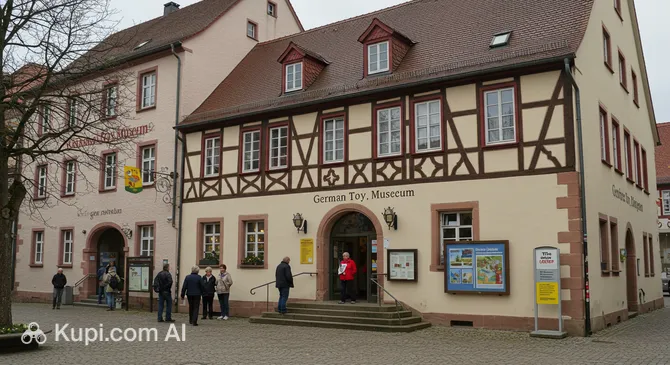
German Toy Museum
German Toy Museum. Иллюстрация. Источник: Kupi.com AI

The museum is rightfully considered the cultural heart of the Thuringia region. Its collection is striking in its diversity: from Egyptian artifacts and ancient figurines to exquisite 19th-century porcelain dolls and the early works of the famous Käthe Kruse. Special attention should be paid to the "Thuringian Fair" — a massive diorama with nearly life-sized figures that once won a Grand Prix at the World's Fair.

A visit here is not just about looking through glass cases, but a journey back to the times when Sonneberg was known as the "capital of toys." Here, you can witness the evolution of the craft: wooden figures by masters of past centuries, rare figurines made of papier-mâché and bread dough, and unique toy collections from Asia and Africa brought back by famous explorers.

Contacts

To plan your visit and check for the most up-to-date information, you can use the museum's official contact channels.

How to contactContact
AddressBeethovenstraße 10, 96515 Sonneberg, Germany
Phone+49 3675 42263427
Websitewww.spielzeugmuseum-sonneberg.de

What to Do

The main reason to visit the museum is the opportunity to witness the evolution of childhood dreams. You will walk through themed rooms featuring everything from ancient archaeological finds to modern high-tech toys. Be sure to linger at the "Thuringian Fair" exhibit: its detail and scale create a complete sense of being at a festival from the beginning of the last century.

In addition to observation, visitors can actively interact with history. The museum regularly hosts workshops where, under the guidance of experienced mentors, you can try your hand at making traditional toys. This is especially engaging for families with children, turning the visit into a creative process. It is also worth noting the exhibition of tools used by old masters — it offers a unique chance to look "behind the scenes" of toy production.

For fans of ethnography and art, the collections of artist dolls and rare examples of traditional Japanese toys will be a true discovery. Exploring these halls turns into a fascinating quest to find the differences and similarities in how children played in different corners of the planet, from Europe to Africa and America.

Getting There

The museum is located at Beethovenstraße 10, in the heart of the city. If you are traveling by public transport, the most convenient way is to take a train to the Sonneberg Hauptbahnhof (main station). From the station, you can reach the museum on foot in about 10–15 minutes or take a local bus that will drop you off right near the entrance.

For those preferring to drive, the city is easily accessible via the A71 and A73 autobahns. Parking spaces are available near the museum, making it a comfortable trip for travelers from neighboring regions like Erfurt or Bayreuth. If you are already in the city center, you can use a taxi, though a walk through the city's green streets is a pleasant addition to your excursion.

Ближайший город: Sonneberg

History & Facts

The history of this unique place began in 1901 through the initiative of teacher Paul Kuntze. Initially, he envisioned it as an industrial and commercial museum to train future toy-making masters. At that time, Sonneberg was a true global giant: until the beginning of the 20th century, up to 20% of all toys on the planet were produced here, and the city itself proudly bore the title of the "world capital of toys."

The collection grew rapidly, enriched not only by local products but also by exotic exhibits from all over the world. A landmark event was the museum's participation in the 1910 Brussels World's Fair, where Sonneberg masters presented grand dioramas that captured the imagination of the public and experts alike. These masterpieces remain the crown jewels of the collection today.

During the GDR years, the museum continued to develop, focusing on industrial design and toys of that period. Today, it serves not just as a repository of objects, but as a living testament to an era when the city was a cosmopolitan center of craftsmanship, combining tradition and innovation in the production of childhood joys.

Time Needed

To leisurely explore all the halls and study the miniature exhibits in detail, an average visitor will need about 2–3 hours. This is enough time to walk through the main thematic sections and admire the famous dioramas.

If you are planning a trip with children, we recommend setting aside at least 4 hours. The interactive areas, the chance to participate in workshops, and the opportunity to examine ancient dollhouses usually captivate young guests for a long time, turning a simple tour into a real adventure.

Working Hours

The museum's doors are open to visitors throughout the week, except for Mondays. The operating schedule is very convenient for planning family leisure:

Tuesday — Sunday: 10:00 AM to 5:00 PM.
Monday: Closed.

DayWorking hours
ПонедельникЗакрыто
Вторник10:00 – 17:00
Среда10:00 – 17:00
Четверг10:00 – 17:00
Пятница10:00 – 17:00
Суббота10:00 – 17:00
Воскресенье10:00 – 17:00

Nearby

After immersing yourself in the world of childhood at the museum, be sure to find time for a stroll through the city itself. Exploring the surroundings will help you better experience the atmosphere of the historic toy industry center and see the architectural landmarks of Thuringia.

NameDistance
Ganesha Indian Restaurant0.7 km
Nautiland Aquarium and Exotarium0.8 km
Metropol0.9 km
Sonneberg-Neufang Zoo1 km
Cafe Isis1.1 km
Rhodos Restaurant1.5 km
Astronomy Museum at Sonneberg Observatory1.9 km

Reached the end of the page?

That means the route is fully explored