Support

State Museum of Natural History Stuttgart

About

The State Museum of Natural History Stuttgart is one of the leading centers for nature studies in Germany, located in the city of Stuttgart. This fascinating museum offers visitors a chance to dive into the world of natural history, from ancient eras to modern ecosystems, and is a true treasure trove of knowledge for curious travelers of all ages.
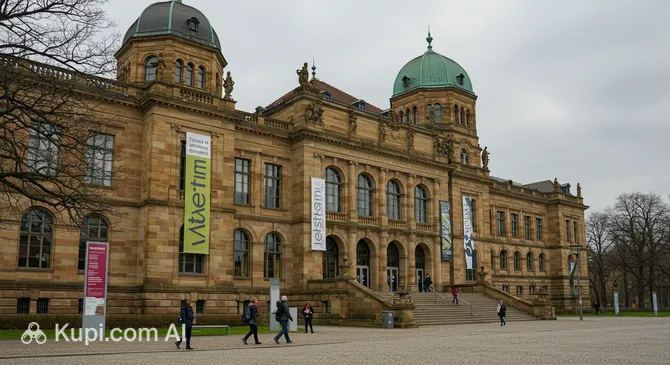
State Museum of Natural History Stuttgart. Illustration.
Source: Kupi.com AI

Traveler photos:

What makes the museum unique is that its exhibitions are housed in two separate buildings located in the picturesque Rosenstein Park, about a 15-minute walk from each other. The first building, Museum am Löwentor, invites you on a journey through time, showcasing impressive paleontological finds, including dinosaur skeletons and evidence of the Ice Age. The second building, located in the historical Schloss Rosenstein (Rosenstein Palace), is dedicated to biology and introduces the diversity of the modern animal world and the main ecosystems of our planet.

The State Museum of Natural History Stuttgart is not just an exhibition space, but an important scientific and educational center. Here, you can see unique fossils, detailed reconstructions of ancient animals and plants, and numerous exhibits that vividly illustrate the evolution of life on Earth. The exhibitions are carefully designed to appeal to both specialists and those just beginning their introduction to the natural world, offering a deep understanding of the natural history of the region and the world at large.

Contacts

For information about guided tours, prices, and to book a visit to the State Museum of Natural History Stuttgart, as well as to clarify current opening hours, you can use the following contact details. We also recommend visiting the museum's official website for the most complete and up-to-date information.

How to contactContact
AddressRosenstein 1-3, 70191 Stuttgart, Germany
Phone number+49 711 89360
Websitewww.naturkundemuseum-bw.de

What to Do

A visit to the State Museum of Natural History Stuttgart promises to be a real adventure through the ages. Here, you can take a fascinating journey hundreds of millions of years back in time by exploring unique original fossils. The meticulously crafted reconstructions of ancient animals, plants, and entire biotopes are particularly striking, allowing you to imagine what life on Earth looked like in the distant past. It’s a wonderful opportunity to see firsthand the evidence of evolution and the geological history of southwestern Germany and the world.

In one of the museum's buildings, the Museum am Löwentor, visitors can trace the amazing evolutionary path of dinosaurs right up to their modern descendants—birds. One of the highlights of the collection is the famous Steinheim skull—one of the oldest human fossil remains found in Central Europe, estimated to be about 300,000 years old. Equally exciting is the immersion into the world of miniature forms in the famous "Amber Cabinet," which features incredible inclusions trapped in amber.

The other part of the exhibition, located in Schloss Rosenstein, is dedicated to the modern biodiversity of our planet. Here, you can take a close look at animal species from different corners of the Earth and explore major ecosystems—from tropical rainforests to polar regions. The biological exhibition vividly demonstrates the interconnections in nature and helps visitors better understand the fragility and beauty of the world around us.

Getting There

Getting to the State Museum of Natural History Stuttgart is quite easy, as its two buildings—Museum am Löwentor and Schloss Rosenstein—are conveniently located in the picturesque Rosenstein Park (Rosensteinpark) in Stuttgart. Thanks to its park location, the museum is accessible by various modes of transport, making it easy for tourists to reach.

The most convenient way to get to the museum is by using Stuttgart's extensive public transport system. You can take the metro (U-Bahn), suburban train (S-Bahn), or buses. Look for stops serving Rosenstein Park, such as "Rosensteinpark," "Mineralbäder" (for Museum am Löwentor), or stops near Schloss Rosenstein. We recommend checking current routes and schedules in advance on the official website of the Stuttgart Transport Association (VVS) or using mobile travel planning apps.

An alternative to public transport is a taxi or ridesharing services. This is especially convenient if you are traveling with young children, have a lot of belongings, or simply prefer maximum comfort. A taxi ride from Stuttgart Central Station or other key points in the city to one of the museum buildings usually doesn't take long, though this depends on current traffic conditions. Also, if you are staying nearby, a pleasant stroll to Rosenstein Park can be a great start to your visit.

Since the State Museum of Natural History Stuttgart is housed in two separate buildings—Museum am Löwentor and Schloss Rosenstein—it's important to account for moving between them. They are located within the same Rosenstein Park, about a 15-minute walk from each other. This walk along the park's well-kept paths can be an enjoyable part of your visit, allowing you to easily combine both unique exhibitions in one day.

Nearest city: Stuttgart

History & Facts

The history of the State Museum of Natural History Stuttgart is closely intertwined with the development of natural science research in the Baden-Württemberg region. Since its founding, the museum has become an important center for collecting, studying, and displaying a rich natural heritage, reflecting a drive for deep knowledge of the surrounding world and its evolution. Its collections and research activities have significantly contributed to the understanding of natural history both within the region and beyond.

One notable feature of the State Museum of Natural History Stuttgart is its status as one of the two state natural history museums in the state of Baden-Württemberg, highlighting its key role in scientific and cultural life. The museum's uniqueness is further enhanced by its location: the exhibitions are housed in two separate historical buildings—Museum am Löwentor and the majestic Schloss Rosenstein (Rosenstein Palace). Both buildings are situated in the picturesque Rosenstein Park, creating a special atmosphere for visitors.

Housing museum collections in such historically significant structures is an interesting fact in itself. Schloss Rosenstein, built in the 19th century as a summer villa for King Wilhelm I of Württemberg, eventually found a new purpose as a repository of knowledge about the living world. Museum am Löwentor, which also has its own history, completes this ensemble. This decision not only helped preserve historical buildings but also created a unique space where architectural history harmoniously blends with the history of the Earth, offering visitors an immersion into different eras—from ancient fossils to modern biodiversity.

Time Needed

When planning a visit to the State Museum of Natural History Stuttgart, it's worth noting that it consists of two separate exhibitions located in different buildings: Museum am Löwentor and Schloss Rosenstein (Rosenstein Palace). To fully enjoy both parts of the museum, it is recommended to set aside at least half a day. This will allow you to explore the extensive collections without rushing and immerse yourself in the fascinating world of natural science.

Each exhibition—the paleontological one at Museum am Löwentor and the biological one at Schloss Rosenstein—usually takes about 2-3 hours to tour, depending on your level of interest and how deeply you explore the exhibits. Don't forget to account for the travel time between the buildings, which is about a 15-minute pleasant walk through Rosenstein Park. Thus, the total time needed for a complete experience can range from 4 to 6 hours, including a break.

If your time is limited, you can choose one building to visit based on your interests: Museum am Löwentor for fans of dinosaurs and fossils, or Schloss Rosenstein for those more interested in modern biodiversity. However, to get the most complete picture of the wealth of the State Museum of Natural History Stuttgart collections, it is highly recommended to visit both parts.

Working Hours

The State Museum of Natural History Stuttgart, which consists of two buildings—Museum am Löwentor and Schloss Rosenstein—is generally open to visitors year-round, except for certain public holidays. Typically, museums of this type have standard operating hours during the week, often with one closing day (e.g., Monday). However, exact opening hours may vary depending on the season, the day of the week, and the specific museum building.

It is highly recommended to check the current opening hours for both Museum am Löwentor and Schloss Rosenstein on the official State Museum of Natural History Stuttgart website before your visit. There, you can also find information about potential schedule changes, ticket prices, and the need for advance booking, especially if you plan to visit during the peak tourist season or are interested in special exhibitions or guided tours.

DayOpening hours
MondayClosed
Tuesday9:00 – 17:00
Wednesday9:00 – 17:00
Thursday9:00 – 17:00
Friday9:00 – 17:00
Saturday10:00 – 18:00
Sunday10:00 – 18:00

Nearby

A visit to the State Museum of Natural History Stuttgart is undoubtedly a highlight, but Stuttgart offers much more than just one significant attraction. Exploring the area around the museum will allow you to dive deeper into the city's atmosphere, discover its many facets, and make your trip even more fulfilling and memorable.

Right near the museum, there are other interesting spots that can complement your experience and expand your cultural program. Whether it’s scenic parks, other museums, or unique urban corners, everyone will find something to their liking, turning a museum visit into part of a larger, exciting journey through Stuttgart.

NameDistance
Eliszis Fairground Theater and Tango Tent1.3 km
Stuttgart Museum of Natural History – Rosenstein Palace1.3 km
Stuttgart Tram Museum2.2 km
Staatsgalerie Stuttgart2.8 km
Schlossplatz3.1 km
New Palace Stuttgart3.1 km
Old Castle3.2 km

Have you reached the end of the page?

So the route has been studied inside and out