Support

World of Trams Stuttgart

About

If you're looking for a way to touch the living history of transport in Stuttgart, then the Tram Museum (Straßenbahnmuseum Stuttgart) is a must on your itinerary. Located in Germany, this unique exhibition center occupies a historic tram depot built back in 1929. The museum space itself is a protected architectural monument, adding a special layer of authenticity to your visit.

The impressive 2,500 m² exhibition covers more than a century of urban transport history. Here you'll see everything from the very first horse-drawn tram from 1868 to the classic GT4 series cars, which were an integral part of the cityscape for decades.
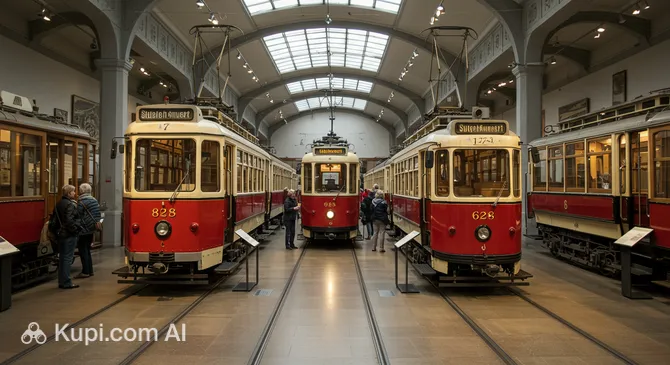
Stuttgart Tram Museum
Stuttgart Tram Museum. Иллюстрация. Источник: Kupi.com AI

This museum is not just a collection of old machinery, but a modern interactive space. It masterfully combines historical artifacts with contemporary design elements, dividing the halls into general viewing areas and special exhibition zones, allowing every guest to feel the city's rhythm of years gone by.

Contacts

For your convenience, we have gathered the essential contact information for the Stuttgart Tram Museum. This will help you find your way and clarify any visit details before your trip.

How to contactContact
AddressVeielbrunnenweg 3, 70372 Stuttgart, Germany
Phone+49 711 78857770
Websitewww.strassenbahnmuseum.com

What to Do

The main reason to visit is the chance to literally touch history. The collection features about 35 historic tram cars, each of which can be explored in detail. For curious visitors, there are special inspection pits: by going down into them, you can see the tram's undercarriage, which is usually hidden from passengers' eyes.

The museum offers a deep dive through interactive zones. You can step inside vintage cars, sit on wooden or leather seats, and imagine yourself as a city resident at the beginning of the last century. In addition to trams, there are rack railway cars, buses from different eras, and even prototypes of modern light rail vehicles (Stadtbahn).

Special attention is paid to children and families. Play areas and miniature models make the visit interesting even for the youngest tourists. And on Sundays, visitors have the chance to take a nostalgic journey on an operational retro-tram that runs along a special route, bringing history to life right before your eyes.

Getting There

Getting to this industrial landmark in the Bad Cannstatt district is quite simple. The most convenient way is to use the extensive public transport network that Stuttgart is famous for. From the central railway station (Hauptbahnhof), a tram ride takes just a few minutes. You need to get off at the stop near Vasen square, following the address Veielbrunnenweg 3.

If you prefer the comfort of a taxi, the ride from the city center will be short and pleasant. For those deciding to travel by car, it's worth noting that parking spaces in this area can be limited, so public transport remains the most prioritized and reliable option.

Ближайший город: Stuttgart

History & Facts

The history of rail transport in this region began as early as 1868, when the first horse-drawn tram took to the city streets. This event laid the foundation for a massive transport network that evolved over decades. The museum we see today is the successor to the Zuffenhausen exhibition, which operated from 1995 to 2007.

The modern chapter of the museum's life began on July 4, 2009. The exhibition found a new home within the walls of the historic Bad Cannstatt tram depot, built in 1929. The building itself is a protected architectural monument and still preserves the atmosphere of the early 20th century, although some tracks were removed during reconstruction to create a convenient exhibition space.

A particular highlight is that the museum brings different eras together under one roof. Here you can trace the evolution from simple horse-drawn cars to the famous GT4 four-axle cars. These legendary machines served the city for almost half a century — from 1959 to 2007 — becoming a true symbol of the local streets.

Time Needed

To leisurely explore all the exhibits and feel the spirit of bygone eras, most visitors need about 2–3 hours. This is plenty of time to carefully study the collection of tram cars, peek into the inspection pits, and explore the multimedia materials in the themed zones.

If you plan to visit the museum on a Sunday, it's worth allocating extra time for a retro-tram ride. This unique addition to the main program is very popular and allows you to see historic machinery in action, which is definitely worth an extra hour of your time.

Working Hours

The museum's schedule has its own peculiarities, so it's worth planning your visit in advance. On weekdays, the doors are open on Monday, Tuesday, and Wednesday from 10:00 AM to 4:00 PM. Please note that on Thursday, Friday, and Saturday, the museum is closed to the public.

Sunday is a special day in the museum's calendar, when the exhibition stays open longer: from 10:00 AM to 6:00 PM. It is on this day that additional events and trips on historic transport are often held, making a Sunday visit the most fulfilling and interesting.

DayWorking hours
Понедельник10:00 – 16:00
Вторник10:00 – 16:00
Среда10:00 – 16:00
ЧетвергЗакрыто
ПятницаЗакрыто
СубботаЗакрыто
Воскресенье10:00 – 18:00

Nearby

A visit to the museum can easily be combined with exploring other interesting places nearby. Exploring the Bad Cannstatt district and neighboring locations will allow you to dive deeper into the city's atmosphere and find entertainment for every taste, from thermal complexes to themed venues.

NameDistance
Stuttgart Museum of Natural History – Rosenstein Palace1 km
Fridas Pier1.4 km
Mercedes-Benz Museum1.6 km
State Museum of Natural History Stuttgart2.2 km
Staatsgalerie Stuttgart3.2 km
Eliszis Fairground Theater and Tango Tent3.5 km
New Palace Stuttgart3.6 km

Reached the end of the page?

That means the route is fully explored