Support

Rio Dulce

About

Rio Dulce is a true emerald of the east, nestled comfortably among dense tropical jungles. The town is situated on the banks of the river of the same name, which connects Lake Izabal with the Caribbean Sea, and serves as an ideal starting point for those wishing to explore waterways and nature reserves. When visiting Guatemala, many travelers head here to experience the unique atmosphere where time seems to slow down.
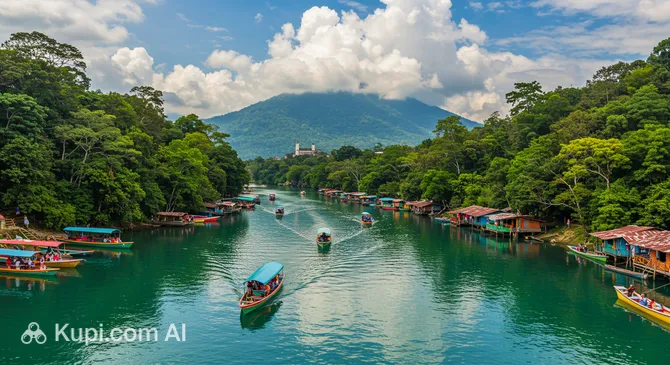
Rio Dulce. Illustration.
Source: Kupi.com AI

Administratively, the town belongs to the Izabal department and has about 18,000 residents. Despite its modest size, Rio Dulce plays the role of an important transport hub: it is home to a major bridge connecting the coast with the central regions. The climate here is tropical, the air is filled with the freshness of the river and the scents of mango, and life flows at a relaxed pace characteristic of the Caribbean region.

The local culture is a fascinating blend of Mayan traditions, Spanish influence, and Caribbean flair. The captivating history of Rio Dulce has left its mark on the architecture and the daily lives of its residents. The main points of attraction for tourists remain natural and historical sites: from ancient fortresses that once guarded the lake's entrance to healing hot springs and picturesque waterfalls hidden in the lush greenery of the forests.

This town is worth visiting for its unforgettable boat trips, introduction to authentic cuisine, and the chance to take a break from the hustle and bustle of megacities. Rio Dulce hospitably welcomes everyone, offering a harmonious combination of wild nature and comfortable recreation on the water.

Weather Overview

Rio Dulce is under the influence of a warm tropical climate, so it's virtually never truly cold here. The temperature remains comfortable throughout the year: average figures range from 23.5°C in January to 28.9°C in May, which is considered the hottest month with daytime highs up to 33°C.

A feature of the region is high humidity and regular rainfall, which feeds the lush jungle surrounding the river. Expect hot weather year-round with frequent rains; the wettest period falls in summer and early autumn (June-September), when the number of rainy days can reach 30 per month. A relatively dry season is observed in spring, especially in April. To plan your perfect trip, check the detailed monthly weather in Rio Dulce.

Average monthly temperature

Average monthly precipitation

Interesting Facts

Beyond its main attractions, Rio Dulce holds many fascinating secrets and stories that make this place truly special. Here are a few facts that will help you see the town and its surroundings in a new light:

  • The first national park. Rio Dulce is not only the name of the town but also the name of the river, which is only 43 kilometers long. This picturesque waterway became the basis for creating Guatemala's first national park in 1955, aimed at protecting the unique jungle ecosystem and its inhabitants.

  • Pirate heritage. Near the town lies the San Felipe de Lara Castle—a 17th-century stone outpost built to protect trade routes from Caribbean pirates. Local legends say that treasures of sea robbers may still be hidden in the castle's dungeons, and its walls hold memories of past battles.

  • A grand panorama. The bridge spanning the river within the town limits is considered one of the longest in Central America. For travelers, it's not just part of the road but the best observation deck: it offers stunning views of moored yachts and the endless green jungle, especially beautiful at sunset.

  • A haven for sailors. Rio Dulce is known among yachting circles as a "hurricane hole"—a reliable shelter from tropical storms. Thanks to its protected landscape, the town has become a popular wintering spot for vessels from all over the world, creating a unique international atmosphere right in the middle of the tropical forest.

How to Get There

When planning a trip to this picturesque corner of Guatemala, it's wise to consider logistics in advance, as there are no direct international flights to the town itself. However, getting here is not as difficult as it might seem. You can find out all the ways to get to the town on our detailed page, and below we will look at the main air hubs located nearby.

Rio Dulce town does not have its own airport serving regular passenger flights. The nearest major transport hub is Ramón Villeda Morales International Airport (IATA: SAP), located in San Pedro Sula. It's important to note that this airport is in neighboring Honduras, about 107 km from Rio Dulce. A trip from there will require a border crossing, and the travel time by taxi or transfer is about 3 hours.

An alternative for those already in Guatemala or wishing to avoid land border crossings is to fly into Mundo Maya International Airport (IATA: FRS) in Santa Elena. It is located in the town of Flores, known as the gateway to the Tikal ruins. The distance to Rio Dulce is about 168 km. The journey by car or bus takes approximately 4.5 hours, but this route passes through scenic areas within the country.

You can also consider flying through Belize. For example, Placencia Airport (IATA: PLJ) is only 105 km from the town, but as with Honduras, you will need to cross a national border. The journey takes about 3 hours.

For clarity, here is a summary of the region's main airports:

AirportPassenger trafficDistance
Puerto Barrios17 14032 km
Punta Gorda25 00042 km
Placencia75 000106 km
Ramon Villeda Morales International Airport1.3 mln107 km
San Ignacio Town Airstrip15 000154 km

As for rail connections, they are non-existent in this region. There are no active passenger railway stations in Rio Dulce or its vicinity. The main ground transport remains intercity buses (for example, popular routes from Guatemala City or Flores) and shuttle minivans. Another popular way to arrive is by water—boats ("lanchas") from the town of Livingston, traveling upriver through the scenic canyon.

Main Attractions

The main attractions of Rio Dulce are inextricably linked to the water and the surrounding tropical nature. This region offers not so much classic museum tours as exciting adventures in the jungle and on the water. Here are the places you should definitely include in your travel itinerary.

San Felipe de Lara Castle. This colonial-era Spanish fort, located at the very entrance to Lake Izabal, is the most recognizable structure in the region. Tourists are drawn to the opportunity to explore ancient bastions, narrow corridors, and prison cells. The fortress walls offer a magnificent panoramic view of the river and lake, making it an ideal spot for catching the sunset and taking beautiful photos.

Finca Paraiso. An amazing natural open-air spa located a short drive from the town. The main feature of this place is a hot waterfall fed by thermal springs that falls directly into a cool river. Travelers come here to enjoy contrast baths, standing under hot streams and diving into refreshing water, as well as for natural mud masks.

Chocón Machacas Biotope. This protected nature reserve is a realm of mangrove forests and water labyrinths. The reserve was primarily created to protect the population of manatees (sea cows). A boat trip ("lancha") here allows you to immerse yourself in the silence of the jungle, observe pelicans and herons, and with a bit of luck, see manatees in their natural habitat.

Rio Dulce Canyon. Although it's not a single point on the map but a section of the river, passing through the canyon is considered one of the most vivid experiences in Guatemala. Heading by boat towards the sea, you enter a gorge with sheer limestone walls up to 100 meters high, densely covered with tropical greenery. This place is striking for its majesty and the feeling of complete isolation from civilization.

Local Cuisine

The gastronomy of Rio Dulce is a vibrant reflection of the region's multi-ethnic history, where Mayan culinary traditions, Spanish heritage, and relaxed Caribbean rhythms harmoniously intertwine. The city's main culinary signature is undoubtedly tapado. This thick, rich soup is made with coconut milk, fresh fish, crabs, shrimp, and plantains. The dish has a unique sweet and spicy flavor and is served in almost every waterfront establishment.

Due to its location between Lake Izabal and the sea, the foundation of the local menu is fresh-caught fish and seafood. In restaurants, you should order river fish grilled whole or fried in oil, traditionally served with rice, black beans, and hot corn tortillas. Fans of simple but hearty snacks will enjoy fried plantains, often eaten here with sour cream or salty cheese, creating an interesting flavor contrast.

Street food in Rio Dulce deserves special attention and is an important part of the food culture. At local markets and busy intersections, you can try chuchitos—small corn dough tamales filled with meat and sauce, wrapped in dry corn husks. Grilled corn on the cob, generously drizzled with lime juice and sprinkled with salt, is also popular. This is a great way to have a quick and inexpensive snack while immersing yourself in the daily atmosphere of the townspeople.

Among drinks, the king of the table is fresh coconut water, sold right in the nut on every corner—a perfect remedy for the tropical heat. You should also definitely try natural juices and smoothies made from local fruits: mango, papaya, pineapple, and watermelon. Eating in Rio Dulce is not just about satisfying hunger, but a ritual: tourists and locals prefer to dine in open-air cafes on stilts by the water, enjoying the light breeze and the view of passing boats.

Travel Tips

A trip to Rio Dulce is an immersion into the world of tropical nature and waterways, which requires special preparation. To ensure your vacation is as comfortable as possible and without surprises, we have gathered the most important practical recommendations for this unique region of Guatemala.

  1. Clothing and Protection. The climate here is hot and very humid year-round. Bring light, breathable clothing made of natural fabrics or quick-drying synthetics. Be sure to pack a raincoat or poncho (tropical downpours are sudden and heavy), as well as a swimsuit. It is critically important to have a powerful mosquito and insect repellent, as well as sunscreen, since the sun is particularly active on the water.
  2. Water Transport is Key. In Rio Dulce, boats (lanchas) serve as the main "taxis." Most hotels and attractions are only accessible by water. Agree on the price of the trip in advance, before boarding the boat. On land (around the bridge and Fronteras), it's most convenient to get around by tuk-tuk; renting a car doesn't make much sense if you plan to relax by the river.
  3. Cash and Currency. The local currency is the Guatemalan quetzal. While large lodges and restaurants may accept cards (often with a 5-10% fee), cash is necessary for paying for boats, market food, and small purchases. ATMs are available in the town center (Fronteras), but they are often empty or out of order, so it's best to withdraw money in advance in a larger city or the airport.
  4. Health and Water. Categorically avoid drinking tap water; buy only bottled water or use dispensers in hotels. Pharmacies are concentrated in the main shopping area by the bridge and usually close by evening; 24-hour ones are hard to find. Rio Dulce is considered relatively safe, but do not leave your belongings unattended in boats and avoid unlit alleys in Fronteras at night.
  5. Communication and Language. The official language is Spanish, and locals also speak the Q'eqchi' Mayan language. English is understood in hotels and marinas (due to the abundance of sailors), but in the town itself, knowing basic Spanish phrases is a huge plus. Wi-Fi is available in almost all hotels, but the signal can be unstable due to the jungle. For reliable communication, we recommend buying a local SIM card (Tigo or Claro).
  6. Etiquette and Interaction. Guatemalans are very polite and appreciate greetings. When entering a shop or boarding a boat, say "Buenos días" (good morning) or "Buenas tardes" (good afternoon). Despite the resort atmosphere, in town (at markets, in shops), it's not customary to walk around in swimsuits or shirtless—this is considered disrespectful.
  7. What to Avoid. Do not swim in the river in the immediate vicinity of the docks and under the bridge due to heavy motorboat traffic and water quality. For swimming, choose designated spots at hotels or head to the hot waterfall. Also, avoid walking across the main bridge—the sidewalks are narrow and the truck traffic is dangerous.
  8. Lifehack: The Magic of Morning. Try to wake up at dawn, around 5:30–6:00 AM. This is the only time when the river is absolutely calm, the mirror-like surface of the water is undisturbed by boats, and the jungle is filled with the loud roar of howler monkeys. A morning kayak trip at this time will give you the best impressions of the journey.

By following these simple tips, you can avoid everyday hassles and fully focus on the wild beauty of Rio Dulce. May your journey be filled with the sounds of the jungle, warm winds, and only pleasant discoveries!

Entertainment & Nightlife

The nightlife in Rio Dulce is drastically different from the usual urban rhythm. You won't find multi-story clubs with laser shows or theaters here, but you will immerse yourself in the unique atmosphere of the "river brotherhood." Evening entertainment in this corner of Guatemala is centered around the water: bars on stilts, restaurants in marinas, and open terraces where travelers from all over the world, yacht owners, and locals gather.

The epicenter of evening activity is the area directly under the bridge in the town of Fronteras and the numerous lodges (eco-hotels) scattered along the river. The atmosphere here is as casual and relaxed as it gets. There is no dress code: shorts and flip-flops are appropriate almost everywhere. The crowd is very diverse—from backpackers discussing jungle routes to round-the-world sailors wintering in local bays. The music ranges from Caribbean reggae and salsa to classic 80s rock.

If you're looking for a place to spend the evening, Sundog Cafe is a must-visit. It is perhaps the most famous establishment in town, located right by the water near the bridge. People come here for excellent cocktails, wood-fired pizza, and some of the best sunsets in the region. Another popular spot is the restaurant-bar at the Tortugal hotel. It's located on the opposite bank and is famous for its calmer, "lounge" atmosphere, perfect for a candlelit dinner to the sounds of the river.

For those seeking a more authentic and noisy experience, you can walk along the main street of Fronteras. Local bars (cantinas) and karaoke spots where residents hang out are located here. However, tourists should be cautious: noise levels are extremely high, and the atmosphere may seem chaotic.

Important safety and logistics tips:

  • Transport is the main issue. Public boats ("lanchas") stop running after dark (around 5:30 PM–6:00 PM). If you live in a river hotel and want to go to a bar in town, you'll have to hire a private boat, which can be expensive (from 100-150 quetzals and up). Arrange a return time with the boatman in advance.
  • Safety. Marina and river hotel areas are perfectly safe. However, walking through dark alleys in Fronteras late at night is not recommended. Stick to the well-lit main street and the bridge area.
  • Prices. In popular tourist bars, prices are average by international standards (a cocktail may cost 30–50 quetzals); in local town establishments, they are significantly lower.

Regarding daytime entertainment, Rio Dulce doesn't boast museums, theaters, or amusement parks in the classic sense. All daytime activity is eco-tourism. The main "stages" here are the mangroves, and the "exhibits" are exotic birds and monkeys. Travelers go kayaking, visit hot springs, or simply explore the endless water labyrinths by boat.

Parks & Museums

Rio Dulce is more than just waterways and mangroves. If you want to delve into the history of ancient civilizations or learn about the unique ecological and social initiatives of the region, it's worth checking out the sites in the vicinity. Here, nature is closely intertwined with cultural heritage, offering tourists routes that go beyond standard boat trips.

Quiriguá Archaeological Park. This UNESCO World Heritage site is about an hour's drive from Rio Dulce, and visiting it is a true discovery for history buffs. Quiriguá is an ancient Mayan city famous for its monumental sculptures. It preserves the tallest stone stelae ever erected in the New World, some reaching 10 meters in height. The intricate carvings covering the sandstone tell of dynastic wars and past rulers, while giant zoomorphs—boulders carved into the shapes of mythical animals—amaze with the detail and skill of ancient artists.

To immerse yourself in the modern culture of indigenous peoples, visit the Ak' Tenamit project. This is a development association for the Q'eqchi' Maya community, located in the jungle upriver. This place is not a traditional museum with display cases, but a living space demonstrating the harmonious coexistence of man and nature. Tourists can visit craft workshops where traditional textiles and jewelry are created, learn about local educational programs, and try authentic dishes in a community-run restaurant. A visit here is a way to support locals and see the real life of the region.

Hiking and wildlife enthusiasts should definitely head to the Cerro San Gil Protective Spring Reserve. This protected area is often called the "green lungs" of the eastern part of the country. The reserve protects a vast tropical forest covering a mountain range and serves as an important source of fresh water. There are ecological trails leading through dense vegetation to observation decks with breathtaking views of the Caribbean Sea. This is one of the best places in Guatemala for birdwatching: hundreds of bird species, including toucans and parrots, live in the tree canopies and can be observed in their natural environment.

Getting Around

The public transport system in Rio Dulce is unique and fundamentally different from typical urban schemes. You won't find a metro, trams, or trolleybuses here. The main transport artery is the river itself, while roads play a secondary role. The town is effectively divided into two parts (Fronteras and El Relleno), connected by a massive bridge, so getting around is a combination of water and land travel.

The primary mode of transport, replacing buses and shuttles here, is motorboats, which locals call "lanchas". They come in two types: collective (colectivos) and private (fletes). Collective boats run on a schedule between Rio Dulce and the town of Livingston on the coast, picking up passengers along the way. Private boats work like taxis: they will take you from the town pier to your hotel, restaurant, or attraction. Since many sites are located right on the water and have no land access, a boat is often the only way to reach your destination.

On land, especially in the busy center of Fronteras, the kings of the road are tuk-tuks (auto-rickshaws). These nimble three-wheeled vehicles are perfect for short trips through narrow streets, trips to the market, or the bus station. Regular car taxis are less common and used mainly for longer trips, such as to San Felipe Castle or the waterfall, if you don't want to go by boat.

The payment system in Rio Dulce is as simple and conservative as it gets: it is cash only. No transport cards, passes, or mobile apps for payment exist. The currency used is local quetzals. It is highly recommended to carry small bills, as tuk-tuk drivers and boatmen often don't have change for large banknotes. You can pay in dollars, but the exchange rate will be extremely unfavorable.

Fares vary. A tuk-tuk ride within the town is very cheap (usually 5–10 quetzals per person), but it's better to confirm the price before boarding. Water transport is more complex: the price depends on the distance and your bargaining skills if it's a private boat. Collective trips to Livingston have a fixed price (about 150–200 quetzals). It's important to remember that the "gringo price" (inflated price for tourists) is a common occurrence here, so polite bargaining is appropriate.

For tourists planning to move around Rio Dulce, it is critical to know the water transport schedule. Public boats and most private operators stop working at nightfall (around 5:30 PM–6:00 PM). Navigating the river at night without lighting is dangerous, and finding a boat at that time will be difficult and very expensive. Plan all your movements to return to your hotel before sunset.

If you decide to rent a car for your trip through Guatemala, keep in mind that in Rio Dulce, a car can become a burden. Many hotels are on the water and have no parking. You will have to leave your car in a paid secure parking lot near the bridge (for example, under the bridge itself or at large marinas) and transfer to a boat. Bicycle rental is not developed in town due to chaotic traffic and lack of bike lanes, and walking is comfortable only within the Fronteras shopping street.

Accommodation

Choosing accommodation in Rio Dulce is not just about finding a place to sleep, but the start of a real jungle adventure. The local hotel infrastructure is unique: there are virtually no standard chain hotels or high-rise buildings. The basis of the room stock consists of atmospheric eco-lodges, cozy bungalows with thatched roofs (palapas), and wooden houses built on stilts right over the water. The range of offers varies from budget hostels with hammocks for backpackers to comfortable mid-range and high-end resorts with pools, air conditioning, and their own yacht marinas.

In terms of geography, accommodation options can be clearly divided into two zones. The first is the town center (Fronteras) and the area near the bridge. It's noisy, dusty, and bustling, but it offers direct access to shops, the market, and buses. Staying here is only convenient for a transit overnight stop. The second and most popular zone is the hotels along the river. They are scattered along the banks and in side channels, surrounded by mangroves, and offer peace and harmony with nature. These are the options chosen by most tourists who want to experience the magic of Rio Dulce.

When booking riverfront accommodation, logistics are critical. Most of the best lodges are not accessible by land—they can only be reached by boat. Many hotels offer a free transfer from the town pier upon arrival and departure, but be sure to clarify this in advance. If you plan to visit town often, budget for water taxi expenses, as regular service ends at sunset.

Pricing in the region remains quite affordable. A budget spot in a shared room (dormitory) can cost from $10–15 USD, while a private bungalow with amenities averages between $40–90 per night. It is recommended to book in advance, especially if your trip falls during "Semana Santa" (Holy Week) or Christmas, when tourists from all over the world flock to Guatemala. Popular international online platforms are useful for finding options, but many small eco-hotels also actively respond to inquiries via social media or messaging apps.

Nearby Cities

For those looking to explore the surroundings, Rio Dulce serves as an excellent starting point for day trips to several interesting nearby locations:

Puerto Barrios. Located just 30 kilometers from Rio Dulce, this bustling port city is the country's main gateway to the Caribbean. Tourists go here to experience the atmosphere of a real port town, try excellent seafood, and reach the beaches of Punta de Palma. It's also a convenient spot to catch boats toward Belize or neighboring Caribbean settlements.

El Estor. This town is situated on the western shore of Lake Izabal, about 53 kilometers from Rio Dulce. El Estor attracts travelers with its proximity to the Bocas del Polochic nature reserve, home to many birds and rare animals. This place is suitable for those seeking tranquility and wanting to enjoy lake views far from the main tourist trails.

Morales. A major commercial center for the region, located in close proximity to Rio Dulce. Although Morales is not a classic tourist resort, it is interesting as an example of everyday Guatemalan life unrelated to tourism. The town is surrounded by vast banana plantations that play a vital role in the region's economy.

CityPopulationDistance
Livingston80 24918 km
Morales107 40029 km
Puerto Barrios110 84630 km
Punta Gorda5 02642 km
El Estor82 49153 km

These nearby destinations offer a glimpse into the diverse culture and landscapes of the region.

Shopping & Souvenirs

Shopping in Rio Dulce is significantly different from typical boutique browsing in major cities. Since the town is an important hub for sailors and travelers heading into the jungle, local trade is primarily focused on practicality. You won't find high-fashion stores here, but you can purchase everything needed for an independent journey: from provisions and gear to colorful local products. The trade here is lively, noisy, and very authentic.

The heart of commercial life is the village of Fronteras (often referred to simply as Rio Dulce), located at the northern end of the bridge. The main street, which is part of the highway, is one continuous row of shops. Here, amid the chaotic movement of tuk-tuks and trucks, are pharmacies, hardware stores (ferreterías), clothing stalls, and small grocery points. This is the place where you can buy rubber boots for a forest hike, a sun hat, or fresh pastries while soaking in the true atmosphere of a Guatemalan province.

If you're looking for a more familiar shopping format with comfort and air conditioning, it's worth checking out small shopping complexes like Parador Del Rio. Conditions here are more civilized than on the street. To restock food and drinks, chain supermarkets like Despensa Familiar are ideal. Tourists can find a wide range of products, household chemicals, and hygiene products at fixed prices, which is especially convenient before a long boat trip.

The true flavor of the country can be felt at local markets. Stalls spring up along the main road and near the docks, where farmers sell tropical fruits: mangoes, papayas, pineapples, and bananas directly from the plantations. Special attention should be paid to the fish stalls by the water—thanks to the proximity of Lake Izabal and the river, you can always find fresh fish and seafood, often sold by the fishermen themselves.

As souvenirs from Rio Dulce, you should bring items that reflect the culture of the region and all of Guatemala. Look out for:

  • Mayan textiles: bright fabrics, tablecloths, and bags with traditional patterns.
  • Jade items: this stone was considered sacred by the ancient Maya, and jewelry made from it is very popular.
  • Coffee and rum: the country is famous for its high-altitude coffee and premium rum (e.g., Zacapa), which make excellent gifts.
  • Wooden crafts: local artisans carve beautiful figurines and utensils from tropical woods and coconut shells.

Shops in Rio Dulce usually operate from 8:00 AM to 6:00 PM, though supermarkets may stay open later, until 8:00 PM. Regarding payment, cash (quetzals) is absolutely necessary here. Credit cards are only accepted in supermarkets, large hotels, and some restaurants. It is impossible to pay by card at markets and street stalls, and large bills can sometimes be a problem for getting change.

The Tax Free system (VAT refund) is not widely available here for tourists making regular purchases. There are no specialized tax refund points in Rio Dulce, so you shouldn't count on this option. Prices on tags are final.

Reached the end of the page?

That means the route is fully explored