Support

Porbandar

About

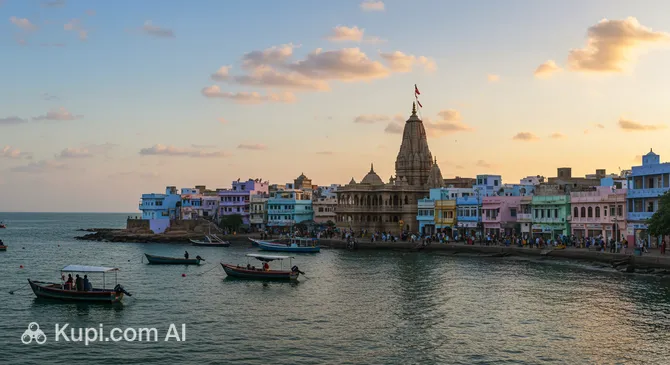
Porbandar is a cozy coastal city located on the western coast of India, in the state of Gujarat. Washed by the waters of the Arabian Sea, it possesses a special charm and attracts travelers with its calm atmosphere and rich history. The city occupies a strategically important position on the coast yet maintains a sense of intimacy and peace.

Porbandar. Illustration.
Source: Kupi.com AI

With a population of about 200,000 people, Porbandar is not a bustling metropolis, allowing guests to enjoy its authenticity. Here, ancient streets with traditional houses, ancient temples, and more modern quarters are harmoniously interwoven. The city is known for its port and fishing industry, as well as being a place where one can touch important pages of Indian history.

One of the main reasons to visit Porbandar is that it is the birthplace of Mahatma Gandhi. His home, transformed into the Kirti Mandir memorial complex, is a key attraction and a pilgrimage site for people from all over the world. Additionally, the city is famous for its picturesque Chowpatty Beach, where you can watch stunning sunsets over the Arabian Sea and enjoy the fresh sea breeze.

Porbandar offers a unique opportunity to immerse yourself in the leisurely rhythm of Indian life, explore its historical corners, and experience genuine hospitality. It is a place that leaves warm memories and a desire to return again to discover new facets of its charm.

You can find more interesting facts on the history of Porbandar page.

Weather Overview

The weather in Porbandar is characterized by a hot climate throughout most of the year. The average annual temperature ranges from 21.3°C in January to 29.8°C in June. The hottest months are April, May, and June, when maximum temperatures can reach 32.5-32.6°C. Expect a hot and humid summer with a distinct monsoon season, which usually lasts from June to September, bringing the bulk of the rainfall (July is the wettest month with 13 mm of rain and 29 rainy days). Winters, from December to February, are cooler and drier, with average temperatures around 21-23°C and almost no precipitation.

For more detailed weather information, including monthly forecasts, we recommend checking the Porbandar Climate page.

Average monthly temperature

Average monthly precipitation

Interesting Facts

In addition to its famous links with historical figures, Porbandar holds many curious details and stories that make it a truly unique place. Here are a few interesting facts about this coastal city:

  • Porbandar is known worldwide as the birthplace of Mahatma Gandhi, one of the greatest leaders of the 20th century. The house where he was born is now part of the Kirti Mandir memorial complex, attracting pilgrims and tourists from all over the world who wish to touch the history of this outstanding man.

  • According to ancient legends, it was in Porbandar that Sudama, a close childhood friend of Lord Krishna, was born. This mythological connection gives the city a special spiritual atmosphere and makes it a significant site for followers of Hinduism and admirers of ancient Indian epics.

  • The city boasts interesting architectural sites, among which the Huzoor Palace stands out. Built in the early 20th century by the last ruler of the Princely State of Porbandar, it impresses with its European style and sea view. Although indoor access for tourists is closed, its majestic facade can be admired from the promenade while enjoying the sea breeze.

  • Fishing plays a key role in the life of Porbandar. For centuries, local residents, especially members of the Kharva community, have been engaged in this trade. The city's port remains one of the busiest and most colorful places today, where you can observe the daily life of fishermen and their traditional boats, as well as taste the freshest seafood.

How to Get There

When planning a trip to the homeland of Mahatma Gandhi, it is important to plan your route in advance. The city has decent transport accessibility, but the choice of travel method depends on your starting point. You can find all the details and consider all ways to get to the city on our detailed page.

If you prefer air travel, it is worth noting that many tourists use airports in neighboring cities, which may offer a wider range of flight destinations. One of the nearest options is Govardhanpur Airport (IATA: JGA), located in the city of Jamnagar. It is about 99 km from Porbandar. A taxi or bus ride from Jamnagar Airport will take about 2–2.5 hours. You can find information about this hub at the link: Govardhanpur Airport.

Another popular option is flying into Rajkot Hirasar (IATA: HSR). This is a larger transport hub located in the city of Rajkot, approximately 166 km from Porbandar. Due to the high passenger traffic, there are more flights here from major Indian cities. The drive from here will take roughly 3.5–4 hours. Read more about this airport here: Rajkot Hirasar Airport.

For clarity, here is a summary of the main airports in the region:

AirportPassenger trafficDistance
Keshod19 32276 km
Govardhanpur Airport169 09999 km
Rajkot Hirasar1.1 mln166 km
Diu Airport104 218169 km
Kandla48 408170 km

Rail travel is one of the most economical and convenient ways to reach Porbandar. The city has its own railway station (station code: PBR), which connects it to major cities like Ahmedabad, Mumbai, and Delhi (via transfers). Trains in India are very popular, so it is recommended to book tickets in advance. Traveling by train also provides a great opportunity to enjoy the landscapes of Gujarat state.

In addition, Porbandar is connected by a developed network of roads to other parts of the state. State (GSRTC) and private buses regularly run here from Ahmedabad, Rajkot, Dwarka, and Somnath. Taking a bus is a budget-friendly option often chosen for travel between neighboring cities.

Main Attractions

Porbandar, a small town on the coast of Gujarat, is primarily known as the birthplace of one of the most iconic figures of the 20th century—Mahatma Gandhi. However, beyond this historical fact, the city offers tourists other interesting sites steeped in history and culture.

The main attraction of Porbandar, without a doubt, is Kirti Mandir. This is a memorial complex built next to the house where Mahatma Gandhi was born. Visitors can see the modest home of the Gandhi family and learn more about his life and philosophy. The home of Kasturba Gandhi, his wife, is also located nearby. This site attracts pilgrims and tourists from all over the world who wish to connect with the history of the Indian independence movement.

Another important spiritual site in Porbandar is Sudama Mandir. The temple is dedicated to Sudama, a childhood friend of Lord Krishna, and serves as a symbol of true friendship. Legend has it that Sudama lived here and set out from this very spot to meet Krishna in Dwarka. The temple attracts many devotees and is an important pilgrimage center, especially during religious festivals.

For those wishing to relax by the sea, Porbandar Beach, also known as Chowpatty, offers a pleasant atmosphere. It is a popular spot among locals for evening strolls and relaxation. While it may not be as developed as some other Indian beaches, it provides an opportunity to enjoy the sea breeze and observe the life of a port city.

Bharat Mandir is another interesting site, featuring a hall with a large relief map of India and statues of heroes from Indian mythology and history. This place is designed to introduce visitors to the country's rich cultural and historical heritage. Nearby is Tara Mandir, or the Nehru Planetarium, which may interest astronomy enthusiasts by offering educational programs and celestial shows.

Local Cuisine

The cuisine of Porbandar is a vibrant gastronomic journey into the heart of Gujarati traditions. As a coastal city, Porbandar is famous for dishes made from the freshest fish and seafood, which form the basis of the local menu. Every gourmet will find something to their liking here, from spicy curries to aromatic vegetarian delicacies.

Be sure to try the famous spicy fish curry, fried prawns, or squid dishes, which are prepared in cozy family restaurants as well as right at street stalls. Among the vegetarian hits are dhokla—airy steamed cakes made from fermented flour, khandvi—delicate rolls made from gram flour with spices, and, of course, the traditional Gujarati thali. This is a large platter served with an assortment of several types of vegetable curries, rice, fresh flatbreads, and spicy pickles—a true kaleidoscope of flavors!

Street food in Porbandar is an attraction in itself. Don't pass by the stalls with appetizing samosas filled with potatoes and peas, various chutneys, and, of course, sweets such as jalebi and rasgulla. Popular drinks include refreshing lassi (a yogurt drink), nimbu pani (spiced lemonade), and aromatic masala chai. It's worth noting that Gujarat is a state with restrictions on the sale of alcohol, so its availability may be limited.

Locals and tourists often eat in small family restaurants serving authentic dishes or enjoy quick and tasty snacks at busy street markets. Farmers' markets will delight you with an abundance of fresh fruits, spices, and ingredients for the famous Gujarati chaats. The city's gastronomic life comes alive during religious festivals, when feasts are organized on the streets, and cafes and restaurants offer special menus. The cuisine of Porbandar is not just food, but a real cultural adventure where every lunch becomes a small celebration of taste.

Travel Tips

Welcome to Porbandar, a historic city on the coast of Gujarat! To make your journey to the birthplace of Mahatma Gandhi as comfortable and memorable as possible, we have prepared several practical tips to help you better navigate and enjoy every moment.

  1. Clothing and Essentials:

    The climate in Porbandar is mostly hot and humid, especially from March to June. We recommend bringing light, breathable cotton clothing. For visiting temples like Kirti Mandir, choose modest clothing that covers shoulders and knees. Don't forget sunscreen, a hat, sunglasses, and, of course, comfortable walking shoes. A universal travel adapter for electronics will also come in handy (India uses type C, D, and M sockets).

  2. Local Transport:

    The primary and most convenient mode of transport in Porbandar is the auto-rickshaw—they are available everywhere. Local buses also run, but they can be crowded and less convenient for tourists. Ride-hailing apps like Ola or Uber may have limited coverage compared to India's major metropolises; it's more reliable to negotiate with auto-rickshaw drivers or book a taxi through your hotel. Car rental is possible, but driving in Indian cities requires experience.

  3. Money and Payments:

    The local currency is the Indian Rupee (INR). You can exchange currency at banks or authorized exchange offices. Credit and debit cards (Visa, Mastercard) are accepted in most hotels, large restaurants, and shops. However, for purchases at markets and small stalls, it's better to carry cash. ATMs are fairly common. Tipping is not mandatory but appreciated: 5-10% in restaurants if a service charge is not included, and small amounts for porters or drivers.

  4. Health and Safety:

    Porbandar is generally considered a safe city, especially during the day. Always drink only bottled water. Pharmacies are available in the city, but 24-hour ones may be rare; check with your hotel for the nearest one. Carry a basic first-aid kit. Arrange medical insurance before your trip. As anywhere, keep an eye on your belongings and avoid poorly lit areas at night.

  5. Language and Connectivity:

    The main language in Porbandar is Gujarati, and Hindi is also widely spoken. English is understood in tourist spots, hotels, and large shops, but knowing a few phrases in the local language will be helpful when interacting with locals or auto-rickshaw drivers. For example: "Kem chho?" (Hello/How are you?), "Aabhaar" (Thank you). A local SIM card (Airtel, Jio) can be purchased by presenting your passport and visa. Wi-Fi is available in most hotels and some cafes.

  6. Local Etiquette and Respect:

    Indians highly value politeness. The traditional greeting is "Namaste" (palms joined at chest level). It is customary to remove your shoes when visiting homes or temples. Always ask permission before photographing people. In public places, try to dress modestly (especially women) and avoid excessive displays of affection.

  7. What to Avoid:

    Try not to use your left hand for handing over money, food, or important items, as it is traditionally considered "unclean." Also, avoid pointing at something or someone with your index finger—it's better to use an open palm or a nod of the head.

  8. Porbandar Speciality: Gandhi Heritage and Coastline:

    Porbandar is the birthplace of Mahatma Gandhi, and visiting Kirti Mandir, his ancestral home-museum, is a key experience. Show respect at this iconic site. The city is also situated on the Arabian Sea coast. You can stroll along Chowpatty Beach, but keep local norms regarding swimwear in mind—they are more conservative here than on popular tourist beaches.

We hope these tips help you plan an unforgettable trip to Porbandar. We wish you vivid impressions and a pleasant stay in this unique corner of India!

Entertainment & Nightlife

Evening Porbandar offers its guests an atmosphere of tranquility and cultural immersion, quite different from the noisy nightlife of large metropolises. Here, the focus shifts to relaxing leisure, delicious dinners, and enjoying the coastal coolness, rather than bar hopping and clubbing.

The main evening entertainment in Porbandar is visiting numerous restaurants and cafes where you can get acquainted with authentic Gujarati cuisine. Many establishments are open until late evening and offer a cozy, often family-oriented, setting. The atmosphere here encourages a leisurely meal and conversation. Try a traditional vegetarian thali or the fresh seafood that this coastal city is famous for.

Besides dinner, a popular activity is an evening walk along the Chowpatty Beach promenade. It is a great place to admire the sunset, breathe in the fresh sea air, and observe local life. Sometimes you can find street vendors here selling local delicacies. Also, some temples and public buildings are beautifully illuminated at night, creating a pleasant atmosphere for leisurely walks around the city.

It is important to remember that the state of Gujarat, where Porbandar is located, is a "dry state." This means there are strict restrictions on the sale and consumption of alcohol. Consequently, you will not find traditional bars or nightclubs in the Western sense here. The city's nightlife is centered around restaurants, cafes, family gatherings, and cultural events, if any are being held.

In Porbandar, you won't find an active club scene or a large selection of European-style bars, which is due to cultural traditions and the policies of the state of Gujarat. Evening leisure here is mainly focused on visiting restaurants offering local cuisine and quiet walks. Popular areas for evening dining and relaxation are the Chowpatty promenade, where many snack bars and restaurants can be found, as well as the city's central streets. It is best to choose specific establishments on the spot, guided by reviews and personal preferences, as specialized "night" venues are typically few in this city.

The atmosphere in evening Porbandar is generally very calm and safe, especially in busy areas like the promenade. The dress code in most places is casual and modest, reflecting local cultural norms. To get around the city in the evening, you can use auto-rickshaws or taxis. It is recommended to agree on the fare in advance or use pre-order services, especially late at night. Average restaurant prices are moderate.

Regarding safety, Porbandar is considered a relatively safe city for tourists. However, as in any other place, it is worth observing common precautions: avoid poorly lit and deserted areas after dark and keep an eye on your belongings. You can call a taxi through local services or ask for assistance at your hotel.

During the day, Porbandar offers many interesting places to visit that will complement your impressions of the city. Be sure to stop by Kirti Mandir, the memorial built at the birthplace of Mahatma Gandhi. Also worth noting are Sudama Mandir, dedicated to Krishna's friend, and the city's scenic beaches. If time permits, you can visit the Porbandar Bird Sanctuary, which is particularly interesting for nature lovers.
Parks & Museums

Porbandar, a city with a rich history and coastal charm, offers its guests both peaceful green corners for relaxation and a deep immersion into the cultural heritage of India. Here, you can find interesting places that tell the story of the city's past and allow you to enjoy its nature.

Among the green zones and natural spots of Porbandar, Chowpatty Beach stands out. It is a popular spot for both locals and tourists, where you can enjoy the fresh sea breeze, stroll along the sandy shore, and watch the picturesque sunsets. The beach is especially lively in the evenings, offering a relaxing atmosphere. For nature lovers, the Barda Hills Wildlife Sanctuary, located near the city, offers a chance to explore the local flora and fauna.

When speaking of cultural heritage, it is impossible not to mention Kirti Mandir—it is not just a temple, but a memorial built at the birthplace of Mahatma Gandhi and his wife Kasturba Gandhi. Inside the complex is a small museum with an exhibition dedicated to Gandhi's life and philosophy, as well as a library. This place has enormous historical significance and is a center of attraction for people from all over the world who wish to touch the history of the great leader.

Another important spiritual and historical site is Sudama Mandir. This temple is dedicated to Sudama, a friend of Lord Krishna, and is a significant pilgrimage site. Its architecture and atmosphere reflect the deep religious traditions of the region. For those interested in the broader cultural context of India, Bharat Mandir will be of interest—it is a kind of exhibition hall where the country's rich history and mythology are presented through sculptures and paintings.

For a more authentic experience, it is worth strolling through the old quarters of Porbandar, where you can feel the spirit of the past. Also, don't miss the opportunity to visit the local markets, where you can find unique souvenirs and observe the daily life of the city's residents.

Getting Around

Getting around Porbandar can be done in several ways, and public transport plays an important role here, especially for locals. For tourists, the most convenient and common options are buses and auto-rickshaws.

The core of the public transport system in Porbandar consists of city buses. They run on various routes, connecting the main areas of the city and its surroundings. Buses can be either state-run or private. Schedules and routes are not always obvious to newcomers, so don't hesitate to ask locals or check at bus stops. Traveling by bus is the most economical way to get around, but be prepared for them to be crowded during peak hours.

Auto-rickshaws (often called "tuk-tuks") are perhaps the most popular and flexible form of transport in Porbandar for short and medium distances. They are easy to find almost anywhere in the city. It is important to agree on the fare before starting the trip, as meters are not always used or may be faulty. Auto-rickshaws are convenient for door-to-door trips and can take you to places where buses do not go.

The fare payment system in Porbandar is quite simple. On buses, tickets are usually purchased from the conductor directly on board, and payment is made in cash. Try to have small bills with you. For auto-rickshaws, payment is also made in cash to the driver at the end of the trip, according to the prior agreement. Specialized tourist passes or unified transport cards are generally not available in the city.

A few practical tips for tourists: buses usually start running early in the morning and stop in the evening, but the exact schedule can vary. If you plan to travel by bus, it is best to check the time of the last trip. For auto-rickshaw rides, always have cash on hand and be prepared for active communication with the driver, especially regarding the route and cost. In central areas of the city, for short distances, it is quite possible to get around on foot to better experience the atmosphere of Porbandar.

As an alternative to public transport, you can consider taxis, although they are less common than auto-rickshaws and can be more expensive. These are usually private cars operating on call or waiting for customers in popular tourist spots. Organized bike rental systems may be absent, but you can sometimes find private offers for bicycle rentals. Car-sharing services are typically not available in cities of this size.

Accommodation

When planning a trip to Porbandar, you will find a variety of accommodation options catering to different budgets and preferences. The city offers a range from economical guesthouses and lodges to mid-range hotels that ensure a comfortable stay.

When choosing a place to stay in Porbandar, pay attention to areas located near major attractions or transport hubs. Hotels and guesthouses situated near the coast are popular with tourists, allowing them to enjoy the sea breeze, as are those near iconic sites like Kirti Mandir (Mahatma Gandhi's birthplace). Staying in these areas will provide you with convenient access to interesting sites and allow you to immerse yourself more deeply in the city's atmosphere.

To guarantee yourself the best accommodation option, especially if your trip coincides with the peak tourist season or local festivals, it is recommended to book your stay in advance. Most hotels and guesthouses in Porbandar are available for booking through popular online platforms. You can also always contact your chosen hotel directly to clarify details and room availability.

The price range for accommodation in Porbandar varies: you can find both budget options and more expensive offers with an expanded range of services. Overall, the city offers fairly affordable options for travelers. Using online aggregators will help you compare prices and conditions, as well as read reviews from other tourists before making a decision.

Nearby Cities

For those who want to explore the surroundings, Porbandar serves as an excellent starting point for day trips to several interesting nearby locations:

Rajkot, located about 142 km away, is an important cultural and industrial center. The city is known for its connections to Mahatma Gandhi; here you can visit Kaba Gandhi No Delo, the house where he spent part of his youth, as well as the Watson Museum, which houses artifacts from the colonial era.

Mandvi, situated about 135 km away, is famous for its picturesque beaches and historic shipyard, where traditional wooden vessels are still built. It is also worth visiting the majestic Vijay Vilas Palace, a beautiful example of Rajput architecture.

Jamnagar (about 102 km from Porbandar) is known for its Lakhota Lake, in the center of which sits the fort-palace of the same name. The city is also the gateway to Marine National Park, India's first, offering unique opportunities for observing marine life.

Junagadh, about 87 km away, is a city with a rich history, where the ancient Uparkot Fort stands with Buddhist caves and stepwells. Nearby are the sacred Girnar Hills, an important pilgrimage site for Jains and Hindus.

Veraval (about 111 km) is a major fishing port, but its main attraction is its proximity to the famous Somnath Temple. This ancient temple dedicated to Lord Shiva is one of the twelve Jyotirlingas and attracts pilgrims from all over India.

CityPopulationDistance
Manavadar30 85055 km
Upleta58 77568 km
Salaya30 00074 km
Keshod76 19375 km
Mangrol55 09477 km

These nearby destinations provide an insight into the diverse culture, history, and landscapes of the Gujarat region.

Shopping & Souvenirs

Porbandar, a charming city on the coast of Gujarat in India, offers tourists an authentic shopping experience far from the bustle of metropolises. Here you won't find huge shopping malls with global brands; instead, you can immerse yourself in the atmosphere of local markets and small shops selling traditional goods and handmade items. The city is famous for its textiles, especially Bandhani tie-dye work, as well as items related to the life of Mahatma Gandhi, who was born here.

Main Shopping Areas/Streets

Main shopping activity in Porbandar is concentrated in the central part of the city and on the busy streets adjacent to the main attractions. Walking along the main shopping arteries or exploring the lanes of the old city, you will find many shops selling clothing, fabrics, jewelry, spices, and daily essentials. The atmosphere here is usually lively, especially in the evenings.

Shopping Centers

Traditional trading formats prevail in Porbandar. There are few large modern shopping centers familiar to residents of big cities. Instead, you can find small shopping complexes or rows of shops offering a variety of goods. Shopping here is more about searching for unique items in small shops than visiting malls.

Markets

Markets are the heart of Indian commerce, and Porbandar is no exception. Be sure to visit the local bazaars where you can find fresh fruits, vegetables, and spices and soak up the daily life of the townspeople. While there may not be specialized flea markets, there is always a chance to find something interesting and authentic in the general markets. Look for stalls selling local handicrafts and souvenirs.

Souvenirs

It is worth bringing home traditional Gujarati souvenirs from Porbandar. Look for:

  • Textiles: bright Bandhani (tie-dye) fabrics, embroidered items, shawls, and saris.
  • Handicrafts: wooden figurines, items with inlay work, and mirror embroidery (abhla).
  • Mahatma Gandhi Souvenirs: books, postcards, small busts, or images that can be found near Kirti Mandir (Gandhi's birthplace).
  • Incense and Spices: aromatic sticks and local spices will serve as a great reminder of your trip to India.

Opening Hours and Payment

Most shops in Porbandar are open from approximately 10:00–11:00 AM to 8:00–9:00 PM. Some small shops may close for a lunch break (usually from 1:00 PM to 3:00 PM). Markets often start earlier in the morning. Regarding payment, cash (Indian Rupees) is widely accepted everywhere, especially in markets and small shops. In larger and more tourist-oriented shops, you can pay with credit or debit cards. Also, the UPI mobile payment system is very popular in India and used by many vendors.

Tax Free

The Tax Free (GST refund) system for tourists in India is not as common or simple as in some other countries, especially for everyday purchases. If you make a large purchase in a specialized export-oriented shop (for example, expensive jewelry or carpets), it is worth checking with the seller about the possibility of processing documents for a GST (Goods and Services Tax) refund. However, for most souvenirs and regular goods, this option is generally unavailable.

Reached the end of the page?

That means the route is fully explored