Support

Khorramshahr

About

Khorramshahr is a true southern gem of Iran, cozily nestled on the banks of the wide and majestic Karun River, just a few kilometers from where it flows into the Persian Gulf. Thanks to its location, the city literally breathes the freshness of river breezes, while its embankments invite you for leisurely strolls in the shade of date palms. This city is the gateway to the rich and diverse world of Khuzestan Province, where desert sands meet green oases and tranquil waters.
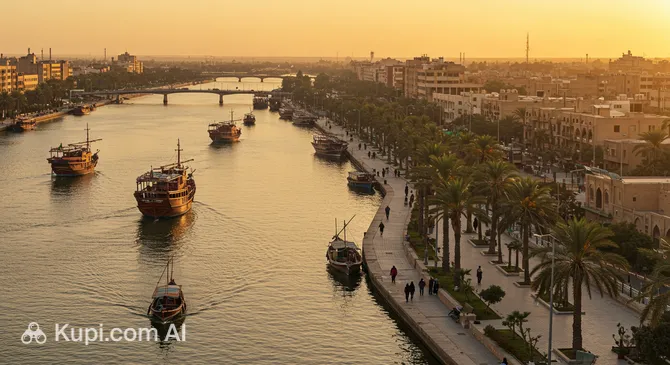
Khorramshahr. Illustration.
Source: Kupi.com AI

With a population of about 133,000 people, Khorramshahr is an important port center famous for its multicultural atmosphere. Here, the traditions of Persians, Arabs, and other peoples are intricately interwoven, which can be felt in the language, the cuisine, and the daily rituals of the inhabitants. Life in the city moves at a relaxed pace, yet it is full of energy and hospitality, making every traveler feel like a welcome guest.

Strolling through the streets of Khorramshahr, you will immerse yourself in the wonderful world of the oriental bazaar with its vibrant spices, the aromas of coffee, and fresh fish. Local markets are a true celebration of taste and color, where you can meet smiling merchants and feel like part of a large and friendly community. In the evenings, the city is transformed: the embankments fill with laughter, music plays, and the air is filled with the sweet scent of jasmine.

Khorramshahr is a city worth visiting for its authentic atmosphere, warm climate, and unique cultural heritage. Here, a real adventure awaits you at the intersection of ancient traditions and modern life, and every day spent in this southern port will leave a bright mark on your memory.

You can find more interesting facts on the city history of Khorramshahr page.

Weather Overview

The climate in Khorramshahr is characterized by very hot and arid summers and mild, relatively dry winters. During the summer months, especially from June to September, the average air temperature stays within the range of 36°C to 40°C, with maximum values reaching 46-47.5°C. Precipitation is virtually non-existent during this period. In winter, from December to February, the weather is significantly milder: the average temperature is between 14.3°C and 16.6°C, with rare rainfall. Spring and autumn are transitional seasons with gradual increases or decreases in temperature. Expect hot, dry summers and mild winters with little precipitation.

For a more detailed forecast and information on weather by month, you can visit the Khorramshahr Climate page.

Average monthly temperature

Average monthly precipitation

Interesting Facts

In addition to its well-known features and rich history, Khorramshahr hides many surprising details and little-known stories that make it truly special. Ready to learn some interesting facts about this Iranian city?

  • Khorramshahr is known as one of the main river ports of Iran. Its strategic position on the Karun River, which flows into the Shatt al-Arab, has made the city a vital trade and transport hub for the region. Cargo ships from the Persian Gulf dock here, and the port quarters are always full of life and business activity.

  • The city exhibits an amazing cultural diversity. Historically, both Persians and Arabs have lived side by side here, making Khorramshahr a meeting place for various languages, traditions, and customs. This blend of cultures is reflected in the architecture, festive rituals, and even in the daily communication of the locals.

  • One of the striking features of Khorramshahr is the unique style of decorating boats and fishing vessels. On the banks of the Karun, you can see painted wooden boats with bright, intricate patterns. These colorful ornaments are not just decoration—they are considered symbols of luck and prosperity for sailors and fishermen.

  • The city is famous for its vibrant musical traditions. Local performers often hold impromptu concerts right on the streets, playing both Arabic and Persian melodies. Folk dances are particularly popular, traditionally accompanied by drums and flutes, creating a unique atmosphere.

How to Get There

When planning a trip to this important port in southwestern Iran, it is worth thinking about the route in advance. The city has good transport accessibility thanks to its proximity to several air gateways and a developed road network. You can find out more about how to get to Khorramshahr by studying various route options and choosing the one that best suits your budget and schedule.

The most convenient way to reach the city is by flying through Abadan Airport (ABD). It is located not in Khorramshahr itself, but in the neighboring city of Abadan, which is only 7.1 km from the center. Due to this close proximity, the trip from the terminal to your destination will take very little time—approximately 30 minutes by taxi. It is a small but functional regional airport that receives flights from the country's main cities.

If you need more options for transfers, consider Ahvaz Airport (AWZ). It is located in the city of Ahvaz, the administrative center of the province, about 115 km from Khorramshahr. This is a large transport hub with a high passenger flow, serving many domestic directions. The journey from here to Khorramshahr by taxi or intercity bus takes about 3 hours. The road passes through the flat terrain of Khuzestan, making the trip relatively tireless.

For clarity, here is a summary of the main airports located in the region and neighboring countries:

AirportPassenger trafficDistance
Abadan Airport620 0007 km
Basra International Airport535 08252 km
Mahshahr Airport175 42894 km
Ahwaz Airport2.9 mln115 km
Kuwait International Airport15.6 mln135 km

In addition to air travel, Khorramshahr can be reached by land transport. The city is the terminus of one of the branches of the Trans-Iranian Railway, connecting it with Ahvaz and further with the capital and other regions. Trains in Iran are a comfortable and budget-friendly way to travel. Bus service is also well-developed: regular flights connect Khorramshahr with major cities in Khuzestan Province and the rest of the country.

Main Attractions

Khorramshahr is a city with a rich and complex history, which is reflected in its landmarks. Travelers interested in the culture and history of the region will find much to see here.

One of the key points of attraction is the Shalamcheh Memorial Complex. This significant site is located in the border zone and is dedicated to the memory of important historical events. For many, it is a place of pilgrimage and reflection, allowing for a deeper understanding of the recent history of Iran and Khorramshahr itself. Visitors come here to pay their respects and learn more about the past.

The Grand Mosque of Khorramshahr (Masjed-e Jameh) is not just a religious center, but a true symbol of the city's resilience. The building was significantly affected during past historical events; however, it was restored and today serves as a reminder of the past and a symbol of rebirth. Its architecture and special atmosphere attract both believers and tourists interested in local culture.

For a deeper immersion into the city's history, it is worth visiting the Khorramshahr Museum of History. This museum is considered one of the most important in the city and tells in detail about the period of historical challenges and the heroic defense of Khorramshahr. The exhibits include photographs, documents, and personal belongings of those involved, as well as historical artifacts, giving visitors a comprehensive understanding of that difficult but significant stage of history.

If you want to take a break from historical sites and enjoy nature, you can head to Minu Island. It is located near Khorramshahr and is famous for its dense date palm groves, picturesque water canals, and traditional villages. It is a wonderful place for quiet walks, getting to know the local way of life, and, of course, tasting fresh dates.

Local Cuisine

The cuisine of Khorramshahr is a real discovery for foodies, as unique gastronomic traditions have formed here at the crossroads of cultures. The city is famous for its dishes made from the freshest fish and seafood caught in the Karun River and the Persian Gulf. A trip to Khorramshahr promises an unforgettable culinary experience full of bright flavors and aromas.

Be sure to try masgouf—fish masterfully grilled over an open fire with fragrant spices and herbs. It is usually served with fluffy rice and a fresh vegetable salad. Equally popular is the traditional Arabic flatbread samoon, which perfectly complements a variety of meze appetizers such as hummus, baba ghanoush, and pickled vegetables. Meat lovers should look out for spicy lamb kebabs, and seafood connoisseurs for fried shrimp. Local cuisine also features interesting legume dishes prepared according to old family recipes.

Finish your meal with local sweets. Try delicate date cakes or aromatic baklava with pistachios. Among drinks, strong Arabic coffee is particularly popular, providing a boost of energy, or refreshing cardamom tea, which perfectly quenches thirst.

The food culture in Khorramshahr is very colorful. Many local delicacies can be tasted right at street markets, where there is always a lively atmosphere. Here, you can not only eat delicious food but also observe the cooking process. During the warmer months, the city sometimes hosts gastronomic festivals where local chefs demonstrate their art, especially in preparing fish dishes, and treat guests to fresh fruits and sweets. Of course, the city also has restaurants offering both traditional and more modern dishes.

Khorramshahr's gastronomic scene is characterized by a richness of flavors, the influence of different cultures, and an emphasis on fresh local products, especially fish and seafood. Visiting this city is a chance not only to enjoy exquisite dishes but also to experience the ancient culinary traditions of Iran.

Travel Tips

Planning a trip to Khorramshahr? Wonderful! This city with a rich history and a unique atmosphere in southwestern Iran is ready to offer you unforgettable experiences. To make your journey as comfortable as possible and leave only positive emotions, we have prepared some practical tips.

  1. Clothing and Essentials: The climate in Khorramshahr is hot and arid, especially in summer. Choose light, loose clothing made from natural, breathable fabrics (cotton, linen). Strict dress code rules apply in Iran: women need to cover their heads with a scarf (hijab) and wear clothing that conceals the figure (long sleeves, trousers, or ankle-length skirts). Men are also advised to avoid shorts and tank tops in public places. Be sure to bring sunscreen, a hat, sunglasses, and comfortable closed shoes for walking. Don't forget a universal adapter for electronics (types C and F sockets are used in Iran, voltage is 220V).
  2. Transport in the City: To get around Khorramshahr, you can use taxi services. This is the most common and convenient way. It is recommended to use official taxis or ride-hailing apps popular in Iran, such as Snapp!, if available in the city. Public transport may consist of buses, but route information can be difficult to understand without knowledge of Farsi. Car rental is possible, but take note of the local traffic characteristics.
  3. Finances: The official currency is the Iranian Rial (IRR). It is important to know that international bank cards (Visa, Mastercard, etc.) are practically not accepted in Iran due to local banking regulations. Therefore, it is necessary to bring a sufficient amount of cash in US dollars or euros to exchange for rials. Only use official exchange offices (sarrafi) or banks for currency exchange. ATMs do not work for withdrawing cash from foreign cards. Tipping is not strictly mandatory but is always appreciated for good service. Be prepared for the local tradition of "taarof"—out of politeness, your payment might be refused several times before it is accepted.
  4. Health and Safety: Pharmacies (darukhaneh) can be found in the city. It is recommended to carry a basic set of medicines. For medical assistance, tourists should go to local hospitals; having international medical insurance is highly desirable. Khorramshahr is generally a safe city, but as with anywhere, follow basic precautions: keep an eye on your belongings, especially in crowded places, and avoid walking in poorly lit areas after dark. Drink plenty of bottled water, especially in hot weather.
  5. Communication: The main language is Persian (Farsi). Arabic may also be common in Khuzestan Province. English is not widely spoken, mostly among young people and in the tourism sector. Learn a few basic phrases in Farsi: "Salam" (Hello), "Merci/Tashakkor" (Thank you), "Lotfan" (Please), "Bale" (Yes), "Na" (No). For mobile communication, you can purchase a local SIM card (e.g., Irancell or Hamrahe Aval), for which a passport is required. Wi-Fi is available in some hotels and cafes, but speed and access may be limited.
  6. Local Etiquette: Iranians are very hospitable. Greetings usually involve a handshake (between people of the same gender; men should wait for a woman to offer her hand first). Show respect for local customs and traditions. It is customary to remove your shoes when entering a home or a mosque. Modesty in behavior and dress is very important. Avoid public displays of affection. Remember "taarof"—this is a complex system of politeness that can manifest in offers of services or treats, which it is customary to politely refuse at first.
  7. What to Avoid: Categorically avoid photographing government buildings, restricted sites, and personnel without special permission. The consumption and import of alcohol into Iran are strictly prohibited. Do not engage in political discussions or criticize local regulations or religion.
  8. Specialty of Khorramshahr: This city has significant historical importance, especially in the context of 20th-century events. Take a walk along the Karun River embankment, which merges here with the Shatt al-Arab. Khorramshahr is also known for its date palms—be sure to try the local dates, which are considered some of the best in the region.

We hope these tips will help you better prepare for your trip to Khorramshahr and fully enjoy the hospitality and unique culture of this interesting Iranian city. Have a pleasant trip!

Entertainment & Nightlife

The nightlife in Khorramshahr has its own unique flavor, which differs significantly from the usual European format. Here, you will not find noisy nightclubs or bars serving alcohol, as this is contrary to the laws and cultural traditions of Iran. However, this does not mean that the city goes to sleep at sunset. On the contrary, it is in the evening, when the daytime heat subsides, that the streets fill with life, families, and young people looking to relax and socialize.

The epicenter of evening activity is the Karun River embankment. This is the main attraction for both locals and tourists. As darkness falls, lights are lit, reflecting in the waters of the majestic river, and the leisurely promenade begins. Numerous park areas are located along the shore, where Iranians hold traditional picnics: they spread carpets right on the grass, brew tea, and enjoy the cool air. The atmosphere here is very friendly and safe.

If you are looking for gastronomic experiences, head to the streets adjacent to the embankment and the central market. Khorramshahr's nightlife is inextricably linked with food. Be sure to visit the local falafel shops and snack bars. Southern Iran is famous for its spicy and aromatic falafel, as well as samosas. Street food here is a whole ritual: inexpensive, tasty, and very colorful. Many establishments stay open late into the night, offering guests freshly squeezed juices, saffron ice cream, and traditional sweets.

Instead of bars, traditional chaykhanehs (tea houses) and coffee shops are popular in the city. These are places where men and families gather to drink strong tea with sugar (nabat), discuss the news, and simply relax. The interiors of such establishments are often decorated in an oriental style. A relaxed atmosphere reigns here, and no one is in a hurry. For tourists, this is an excellent opportunity to observe the local way of life.

Shopping enthusiasts should check out the city bazaars, which often stay open late. In the evening, the market rows look particularly picturesque. Here, you can leisurely choose souvenirs, spices, or clothing while enjoying the cool air and the aromas of the oriental market. The crowd here is very diverse, and the merchants are always happy to chat and bargain.

Practical tips for evening walks:

  • Time: The busiest time is from 20:00 to 23:00. On weekends (Thursday evening and Friday), there are significantly more people on the streets.
  • Dress Code: Even in the evening, it is necessary to follow the established dress rules (hijab for women, covered shoulders and legs for everyone).
  • Safety: Khorramshahr is a safe city for night walks, especially in the center and on the embankment. However, as elsewhere, you should keep an eye on your personal belongings.
  • Transport: At night, it is most convenient to get around by official taxi or use local ride-hailing apps.

As for daytime entertainment, it is more educational in nature. Guests of the city can rent a boat and take a trip along the Karun River, enjoying views of the port and date palm groves. Also, during the day, the doors of museums telling the heroic history of the city are open, as well as small parks where you can take shelter in the shade of trees.

Parks & Museums

Khorramshahr offers its guests opportunities for both outdoor recreation and an introduction to its rich cultural and historical heritage. A city that has endured much, it carefully preserves its history and invites you to explore its green corners and memorial sites.

Although Khorramshahr is better known for its historical significance, you can find places for quiet relaxation here. Coastal zones along the Karun and Shatt al-Arab (Arvandrud) rivers can offer pleasant walks, especially in the evening, creating a peaceful atmosphere. City parks, though not always extensive, serve as oases for locals to rest and socialize. For those seeking broader natural spaces, the city's surroundings can reveal the beauty of Khuzestan Province.

A key place for understanding the modern history of Khorramshahr is undoubtedly the Khorramshahr History Museum (or a similar memorial complex dedicated to the city's past). Such museums play an important role in preserving the memory of the defense of the city and its residents. The exhibits usually include photographs, personal belongings, documents, and sometimes historical items, telling of the resilience and trials that befell the city. For tourists, this is an opportunity to deeply understand the spirit of Khorramshahr and its challenging but heroic story. In addition, small cultural centers or galleries reflecting local traditions and art may operate in the city, though they may be less known to the general public.

The historical buildings of Khorramshahr were significantly damaged, but an attentive traveler will be able to find individual buildings or fragments that recall the city's past before historical challenges. Some mosques have retained their architectural value and continue to be important spiritual and social centers. A walk through the old quarters, even if they are significantly changed, can give an idea of the traditional urban planning of this region of Iran.

For a more authentic experience and immersion into local life, it is worth visiting the city markets. Here, you can not only find fresh produce and goods from local artisans but also feel the daily rhythm of Khorramshahr. Communicating with local residents, many of whom are witnesses and keepers of the city's history, can be one of the most memorable and valuable experiences of the trip.

Getting Around

Getting around Khorramshahr is possible using the local public transport system, which, like in many Iranian cities of this size, has its own characteristics. The main types of transport here are likely to be buses and taxis, including shared taxis.

Buses are usually the most affordable way to get around. Routes connect various districts of the city. Fares are most often paid in cash directly to the driver upon entry or to a conductor. In some Iranian cities, transport cards may be used, but for Khorramshahr, it's better to be prepared to pay in cash. The fare is generally low. Buses run on a schedule that may not always be strictly followed, so it's worth allowing extra time for your trip.

Taxis are a more comfortable and faster way to travel. In Khorramshahr, official taxis, private drivers, and shared taxis (savari) are likely common. Shared taxis follow specific routes and pick up several passengers. It's best to agree on the fare for an official taxi in advance or ensure the driver has turned on the meter (if there is one). Shared taxis have a fixed, lower cost per seat. Taxi tickets are not required; payment is made in cash to the driver at the end of the trip.

Practical tips for tourists:

  • Always carry small bills for fares, as drivers may not have change for large ones.
  • Bus stops may not always be clearly marked; locals will usually tell you where it's best to wait for the desired route.
  • Public transport operating hours may be limited, especially in the evening and on Fridays (the day off in Iran). Clarify this information on-site.
  • If you don't speak Farsi, it's helpful to have your destination's name written down.

Alternatives: Besides public transport, you can always use private taxi services for more individual trips. Taxi apps similar to international ones may be less common or have local equivalents that are worth asking about upon arrival. Bicycle rental or car sharing are unlikely to be widely developed options in Khorramshahr.

Overall, Khorramshahr's transport system is oriented toward local residents, but with a bit of preparation and willingness to adapt to local specifics, tourists can also use it. Don't hesitate to ask for directions or clarify information with city residents—they are generally responsive and ready to help.

Accommodation

When planning a trip to Khorramshahr, you can choose a suitable accommodation option according to your preferences and budget. The city offers various types of housing to tourists, ranging from hotels of different comfort levels to more modest options, such as guest houses or apartments, if available.

When choosing a place to stay in Khorramshahr, you should consider its location. Many travelers prefer to stay in areas with convenient access to the main city facilities, transport hubs, or potential attractions. The choice of neighborhood may depend on your travel plans—whether it's a business meeting or exploring the city.

The price range for accommodation in Khorramshahr can vary. As a rule, you can find both budget options and mid-range hotels or more comfortable offers. You can most often book accommodation through popular international and local online booking platforms, as well as by contacting the hotel directly.

To guarantee the best choice and most favorable conditions, especially if your trip falls during the peak tourist season or during major local events, it is recommended to book your stay in advance. This will help avoid a shortage of available rooms and allow you to plan your trip more calmly.

Nearby Cities

For those who want to explore the surrounding area, Khorramshahr serves as an excellent starting point for day trips to several interesting nearby places:

CityPopulationDistance
Abadan370 18011 km
Abi al Khasib240 30030 km
Basra1 326 56441 km
Az Zubayr370 00047 km
Arvandkenar11 17348 km

These nearby destinations provide insight into the diverse culture and landscapes of the region.

Shopping & Souvenirs

Shopping in Khorramshahr is more about immersing yourself in local flavor than chasing global brands. The city is not famous for huge shopping malls like the capital, but here you can find interesting local goods and feel the atmosphere of traditional Iranian trade. Special attention should be paid to regional products such as dates, spices, and the work of local artisans.

The main shopping spots in Khorramshahr, as in many Iranian cities, are concentrated along the central streets and in the area of the traditional bazaar. Strolling along the main streets, you will find many small shops offering clothing, shoes, household goods, and, of course, local products. This is where the daily commercial life of the city bustles.

There may be few or no large modern shopping malls in the Western sense in Khorramshahr. However, you may come across small shopping complexes or passages where various shops are gathered under one roof. The main focus of shopping here is still on street trade and bazaars.

The heart of trade in Khorramshahr is undoubtedly the local bazaar. It is the best place to experience the authentic atmosphere and find fresh products, such as the famous Khuzestan dates, a variety of spices, nuts, as well as fresh vegetables and fruits. At the bazaar, you can also look for handmade items, fabrics, and other daily necessities. Sometimes you can also find fresh fish, given the city's proximity to the Persian Gulf.

From Khorramshahr and Khuzestan province, it is worth bringing back, as souvenirs, first and foremost, dates of the highest quality—they are truly special here. Local spices are also popular, giving dishes a unique oriental aroma. Pay attention to the work of local artisans: these can be small rugs or mats (hasir-bafi), ceramics, traditional clothing, or its elements. Don't forget about Iranian sweets; although the famous gaz or sohan are more characteristic of other regions, they can also be found here.

Shops in Khorramshahr are usually open from the morning (around 9:00-10:00) until the evening (until 20:00-21:00); however, many of them may close for a few hours in the afternoon, especially during the hot season (around 13:00 to 16:00 or 17:00). Friday in Iran is a day off, and most shops will be closed or work on a reduced schedule. The primary means of payment is cash Iranian Rial (IRR). International bank cards (Visa, Mastercard, etc.) are generally not accepted for payment in Iran, so tourists need to carry a sufficient amount of cash.

The Tax Free refund system for tourists in Iran is currently not common or non-existent in the usual international sense. Therefore, you should not count on a VAT refund on purchases.

Reached the end of the page?

That means the route is fully explored