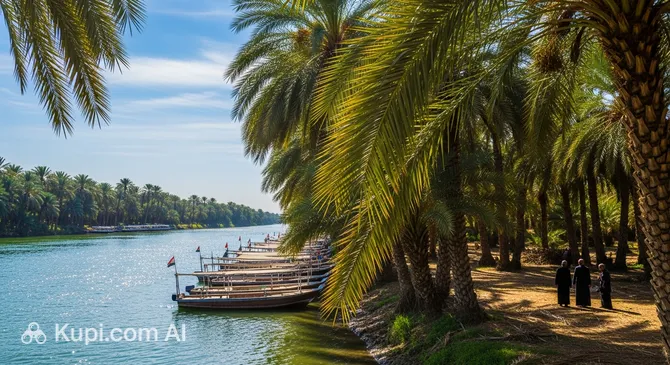
Abu Al-Khasib is a picturesque agricultural center located in southern Iraq, in the Basra Governorate. The city stretches across the fertile valley of the Shatt al-Arab River, which defines its unique atmosphere: here, endless date palm plantations border the slow current of the great river. It is a place where you can feel the authentic rhythm of life in the southern region, away from the noise of major metropolises.
Geographically, the city sits at an elevation of just 14 meters above sea level, and its founding history dates back to 1873. The name of the settlement translates as "rich, fertile area," a title fully justified by its status as the region's main agricultural supplier. Despite the fact that the city's population, according to current data, exceeds 240,000 people, it retains the charm of a cozy provincial center.
Abi al Khasib. Illustration.
Source: Kupi.com AI
Tourists are drawn to Abu Al-Khasib primarily for its natural landscapes and the opportunity to witness traditional Iraqi agriculture. Walks among date palms that are decades old and getting acquainted with local life leave an unforgettable impression. The city serves as a perfect example of how nature and human labor create a thriving oasis amidst arid lands.
Visiting this region is an excellent choice for those seeking authenticity and wanting to see Iraq from its most hospitable and peaceful side. We invite you to discover this "green corner" and enjoy the tranquility on the banks of the Shatt al-Arab.
Weather Overview
The climate in Abu Al-Khasib is typical of southern Iraq and is characterized as subtropical, with very hot summers and mild winters. Thanks to the proximity to the Shatt al-Arab river, the humidity here is slightly higher than in desert areas, which has a favorable effect on vegetation. Detailed weather in Abu Al-Khasib is available in our monthly overview.
The summer months, especially July and August, bring extreme heat: average daytime temperatures reach 47°C, and sometimes rise even higher. During this time, there is virtually no rain. Winter, by contrast, is very comfortable and short. In January, the average temperature is about 14.2°C, and during the day, the air often warms up to a pleasant 19–20°C, making this period ideal for a visit.
Precipitation falls mainly between November and March, with November usually being the wettest month. Nevertheless, most days of the year remain dry and sunny. Spring and autumn are transitional seasons when the grueling heat has not yet arrived or has already subsided, providing the best conditions for exploring the local date plantations.
Average monthly temperature
Average monthly precipitation
Interesting Facts
The city was officially founded in 1873, making it a relatively young settlement by the standards of the region's ancient history.
The name Abu Al-Khasib literally translates to "rich area," highlighting the exceptional fertility of the local soils in the Shatt al-Arab valley.
Over the last five decades, the city's population has shown impressive growth, nearly tripling, making it one of the most dynamically developing agricultural centers in the province.
The region is a recognized leader in date palm cultivation: it is here that some of the highest quality date varieties in the world are produced, exported far beyond the borders of Iraq.
The city is in the UTC+3:00 time zone and is located just a few dozen kilometers from the border with Iran, which has historically influenced local trade.
How to Get There
Abu Al-Khasib is conveniently located in southern Iraq, making it easily accessible for those already in the Basra province. The main link to the outside world for the city is road transport. The well-developed road network of the governorate allows for quick access to the center from neighboring major settlements. Detailed information on routes is available on the how to get there page.
The nearest major transport hub is the city of Basra, located approximately 30–40 kilometers away. A trip by taxi or rental car from Basra to Abu Al-Khasib takes about 45 minutes, depending on traffic. The route runs along the scenic banks of the Shatt al-Arab, making even a short trip a pleasant journey.
Although the city does not have its own railway station, active communication is maintained through Basra's stations. Regular trains connect the south of the country with Baghdad and other northern regions. Upon arriving by train, travelers usually transfer to intercity minibuses or taxis to reach their destination.
Station
Passenger traffic
Distance
Al Maqal Railway Station
3
16 km
Khorramshahr railway station
1
27 km
Bandar Imam Khomeini Railway Station
1
115 km
Ahvaz Railway Station
5
123 km
1
228 km
Main Attractions
Although Abu Al-Khasib is not a typical tourist center with an abundance of monumental landmarks, its main value lies in its unique natural environment. The primary attraction of the city is the Shatt al-Arab River. Walking along its banks allows you to enjoy views of one of the region's most important waterways and see how the river brings life to the surrounding lands.
The pride of the local residents is the vast date palm plantations. This area is traditionally considered the "heart" of date production in Iraq. For a traveler, visiting these gardens is an opportunity to see traditional irrigation and harvesting methods that have changed little over the past centuries. The characteristic landscape of thousands of palms reflecting in the canal waters creates an incredibly photogenic and peaceful atmosphere.
In the center of Abu Al-Khasib, it is worth visiting the local markets. These are not just trading floors but true centers of social life. Here, you can witness the authentic daily life of southern Iraqis, purchase the freshest fruit directly from the plantations, and experience the flavor of an Eastern bazaar, where trade is conducted with emotion and sincerity. The city is ideal for those who appreciate ethnographic tourism and want to see Iraq "unfiltered."
Local Cuisine
The culinary traditions of Abu Al-Khasib are inextricably linked to its fertile lands and proximity to water. The main symbol of the local cuisine is dates. Here, they are not just eaten as a dessert, but are added to various dishes, and used to make syrups and pastes. Be sure to try fresh dates straight from the plantations—their taste and texture are significantly different from those sold in supermarkets.
Due to its location on the Shatt al-Arab River, fish dishes are held in high regard by local residents. A special place is occupied by Masgouf—fish (usually carp) grilled over an open fire according to a special recipe. Meat also plays an important role: juicy meat kebabs and stewed lamb with rice, seasoned with local spices, form the basis of the lunch menu in city cafes.
The city's gastronomic scene is represented by small authentic establishments and street stalls. Lunch at a local eatery is a great way to get to know the culture: fresh tandoori bread and strong Iraqi tea with plenty of sugar are often served here. The city's traditional markets also offer a huge selection of spices and vegetables grown in neighboring fields, making the local food truly natural and delicious.
Travel Tips
Visiting Abu Al-Khasib will give you a unique experience of getting to know rural Iraq, but it requires some preparation. These tips will help make your trip comfortable and safe.
Clothing and Essentials: Choose lightweight clothing made of natural fabrics that covers shoulders and knees—this is a nod to local etiquette and protection from the sun. Be sure to bring a hat, sunglasses, and comfortable closed shoes for walking on dusty roads.
Transport: The best way to travel is by official taxi or a hired driver. Agree on the price before starting the journey. If you plan to travel from Basra, it's better to book a car through a reputable hotel.
Finances: The main currency is the Iraqi Dinar (IQD). Cards are rarely accepted, so always carry cash with you. It is better to exchange currency at major banks in Basra before traveling to Abu Al-Khasib.
Health and Safety: Drink only bottled water. During the summer months (June–August), the heat can be extreme, so plan your activities for the morning or evening. There are pharmacies in the city, but it is better to bring specific medications with you.
Communication: The main language is Arabic. English is not widely spoken, so learn basic phrases ("Shukran" — thank you, "Salam Alaikum" — hello). An offline translator on your phone will be very useful.
Local Etiquette: Iraqis are very hospitable. If you are invited for tea, it is impolite to refuse. Always remove your shoes when entering homes or religious sites.
What to Avoid: Do not photograph government facilities, military posts, or local residents (especially women) without their explicit permission. This can cause serious misunderstandings.
Extra Tip: The best time to visit is from October to April, when the weather is mild and conducive to long walks among the palm groves.
May your acquaintance with this hospitable land be filled with bright discoveries and warm encounters. Enjoy your trip!
Entertainment & Nightlife
Entertainment in Abu Al-Khasib is of a quiet and traditional nature, due to its agricultural status and adherence to local customs. You won't find noisy nightclubs or bars here, as the city's social life is centered around family and community. In the evenings, locals prefer to spend time in cozy teahouses, where the latest news is discussed and leisurely conversations are held over a cup of strong tea or aromatic coffee.
Daytime leisure is usually associated with outdoor activities. A popular relaxation spot is the banks of the Shatt al-Arab river, where you can rent a small boat for a river trip. This allows you to see the city and the date groves from the water, which is particularly pleasant in the pre-sunset hours when the heat subsides. It is also interesting to watch the local fishermen, whose fishing methods have remained unchanged for many generations.
For those looking for a more active nightlife or modern entertainment centers, theaters, and museums, it is recommended to head to nearby Basra. It is only 30–40 kilometers away and offers a wide choice of restaurants with live music, cinemas, and amusement parks. Nevertheless, returning to quiet Abu Al-Khasib after the city noise will give you long-awaited peace and a sound sleep in an atmosphere of rural idyll.
Parks & Museums
In Abu Al-Khasib, you won't find classic museums with exhibition halls; however, the streets and coastal areas themselves play the role of an "open-air museum." The region's historical heritage is concentrated in traditional farming methods and the architecture of rural houses, which convey the spirit of southern Iraq. Every walk through the city is an immersion into the living history of this agricultural center.
The city's greenery is represented not by artificial parks, but by natural and agricultural zones. Vast date groves stretching along the Shatt al-Arab river serve as the primary spots for relaxation and walks. These plantations create a unique microclimate, protecting from the summer heat and filling the air with moisture. For the locals, this is not just a place of work, but a space for family leisure.
The natural vegetation along the riverbanks forms picturesque landscapes that replace urban gardens. Here, you can see various species of birds and enjoy a silence rarely found in the major cities of Basra province. While there are few developed park areas with rides, nature lovers will appreciate the pristine beauty and tranquility of these green lands.
Getting Around
The public transport system in Abu Al-Khasib is quite modestly developed, which is typical for small agricultural towns. The main means of transportation for those without their own car are minibuses, which locals call "marshrutkas." They connect various districts of the city and run between Abu Al-Khasib and Basra. There is usually no fixed schedule—the transport departs as it fills up.
Taxi is the most convenient and fastest way to get around for a tourist. A car can be hailed right on the street or found at designated stands near the markets. It is always worth negotiating the price of the trip in advance, as taximeters are rarely used. The fare is usually quite affordable, and drivers often act as voluntary guides, ready to talk about their city.
Within the city, many people prefer to get around on motorcycles or bicycles, which allows for easy maneuvering through narrow streets and roads between plantations. For longer trips or comfortable exploration of the surroundings, tourists are recommended to rent a car with a driver in Basra. This will provide you with mobility and safety, allowing you to not depend on the irregular schedule of public transport.
Accommodation
In Abu Al-Khasib itself, the choice of hotel accommodation is extremely limited, as the city is primarily focused on agriculture and local trade. There are virtually no large hotels or tourist complexes here. Most available options are small private guesthouses or apartments, which are most often found through local intermediaries or real estate agencies.
For comfortable accommodation, tourists are strongly recommended to choose hotels in Basra. This major city offers a wide range of options: from modern four-star hotels to budget inns and hostels. Basra is only a 40-minute drive away, allowing for easy day trips to Abu Al-Khasib while returning to spend the night in a place with developed infrastructure.
If you plan a trip during the peak season (from October to April), it is worth booking accommodation in Basra in advance through international or local online systems. This guarantees the availability of rooms and better prices. Overall, the price range in southern Iraq is quite democratic, and the level of hospitality in local hotels pleasantly surprises travelers.
Nearby Cities
Abu Al-Khasib is an excellent starting point for exploring the southern part of Iraq and the border areas of neighboring Iran. Thanks to its proximity to important economic and cultural centers, travelers can easily plan day trips to discover the diversity of the region.
Just 14 kilometers away is Basra — the "Venice of the East" and the country's main seaport. Here, it is worth strolling along the Corniche, visiting the old quarters with "shanasheel" houses, and enjoying the atmosphere of a major metropolis. Another interesting destination is Az Zubayr, located 19 kilometers away. This city is known for its historical architecture and markets that have preserved the spirit of old Iraq.
For those ready to cross the border, the Iranian cities of Khorramshahr and Abadan are within 30–40 kilometers. These cities are famous for their waterfronts on the Arvand Rud river and a unique culture where Persian and Arabic traditions intertwine. You can also visit the town of Shattan to see the life of a typical Iraqi settlement.
Exploring the surroundings of Abu Al-Khasib allows you to form a complete picture of life in the lower reaches of the Tigris and Euphrates. The variety of neighboring cities—from industrial giants to cozy trade centers—will make your trip rich and multifaceted.
Shopping & Souvenirs
Shopping in Abu Al-Khasib is primarily about visiting traditional Iraqi bazaars. There are no shiny storefronts of shopping malls here, but there is the vibrant atmosphere of an Eastern market. The city is famous for its agricultural products, so the main goal for any shopper is local goods of the highest quality.
The absolute leader among purchases is dates. In Abu Al-Khasib, they can be found in any form: fresh, dried, pressed, or chocolate-covered. They are the best souvenir to bring from the region. The markets also feature a wide range of local vegetables, fruits, and aromatic spices that give Iraqi dishes their unique flavor.
In addition to food, you can find folk handicrafts on the stalls: baskets woven from palm leaves, traditional textiles, and copperware. Shops usually open early in the morning and stay open until late in the evening, with a break during the hottest part of the day. Payments are made mainly in cash in the local currency (Iraqi Dinars), so it is worth taking care of money exchange in advance. For more modern brands and larger shopping centers, it is better to head to neighboring Basra.