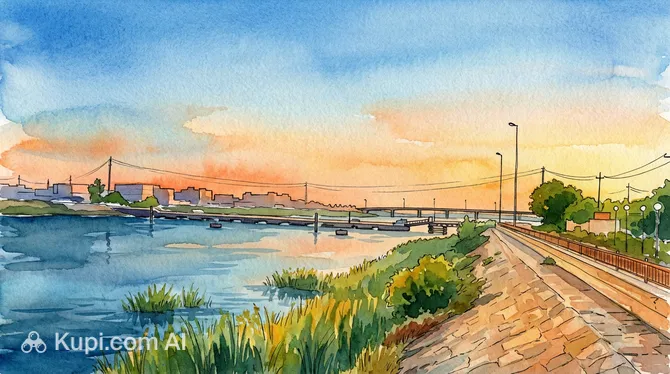
Al-Qurna is a unique corner in southern Iraq, where the grandeur of history meets the natural magic of two great rivers. The city is located in the Basra Governorate, exactly at the spot where the legendary Tigris and Euphrates merge to form the majestic Shatt al-Arab waterway. With a district population of approximately 286,000, Al-Qurna maintains the atmosphere of a quiet provincial center, closely tied to traditional rural lifestyles and river trades.
Al Qurnah. Illustration.
Source: Kupi.com AI
The city's geographical position largely defines its significance: located just 74 km from Basra, it serves as an important transport and administrative hub. The atmosphere here is imbued with the spirit of antiquity, as locals believe this very spot was the cradle of human civilization. By exploring the city's rich heritage, you will touch upon legends that have been passed down through generations for thousands of years.
For tourists, Al-Qurna is primarily interesting as a place of power and folklore traditions. Although the city cannot boast ultra-modern infrastructure, it attracts those seeking authenticity who wish to see the confluence of the two rivers celebrated in myths. This is an invitation to a quiet, contemplative Iraq, where time seems to slow down at the water's edge.
Weather Overview
The climate in Al-Qurna is typical for southern Iraq—a hot desert zone. Summers here are truly extreme: from June to September, air temperatures regularly exceed +45°C, and on peak days in July and August, they can reach +47.8°C. The proximity of the Tigris and Euphrates rivers adds humidity to the atmosphere, making the heat feel even more intense for travelers.
Winters in the city are mild and pleasant. In January, the average temperature is about +14°C, while during the day the air can warm up to a comfortable +20°C. Precipitation is rare, occurring mainly between November and March, and the amount is small. Nevertheless, tourists should consider the possibility of sandstorms, which are characteristic of this region during the dry season.
Expect a sweltering, dry summer and a short, warm winter with occasional rain. To make your trip as comfortable as possible, we recommend studying the detailed climate of Al-Qurna in advance and planning your visit for the winter or early spring months.
Average monthly temperature
Average monthly precipitation
Interesting Facts
The local population sincerely believes that Al-Qurna is the location of the biblical Garden of Eden, and an old tree in the city center is revered as the Tree of Knowledge of Good and Evil.
The city is situated exactly at the confluence of the great Tigris and Euphrates rivers, which form the unified Shatt al-Arab waterway right here.
According to legend, the city was founded by the legendary commander Seleucus I Nicator, one of Alexander the Great's successors (Diadochi), giving it an incredibly deep history.
Al-Qurna is located in a lowland, just 4 meters above sea level, which creates unique natural conditions in this marshy area.
How to Get There
The accessibility of Al-Qurna largely depends on its proximity to major regional centers. The city is an important transit point, and the easiest way to reach it is by land transport from neighboring metropolises. Detailed information on routes is available on the how to get to Al-Qurna page.
For travelers arriving from afar, the main connection is Basra International Airport (BAS), located about 70-80 km to the southeast. This is a modern air gateway receiving flights from both Baghdad and international destinations. From the airport, Al-Qurna can be reached by taxi or a rented car, which takes about an hour to an hour and a half depending on traffic.
Direct rail service to the city is currently unavailable. However, the railway passes through Basra, from where you can transfer to a bus or taxi to continue northwest. Bus services connect Al-Qurna with key cities in the province, although schedules are often informal and flexible.
Station
Passenger traffic
Distance
Al Maqal Railway Station
3
61 km
Khorramshahr railway station
1
95 km
Ahvaz Railway Station
5
123 km
Bandar Imam Khomeini Railway Station
1
171 km
1
182 km
Main Attractions
Although Al-Qurna is not a typical tourist center with a developed network of attractions, it possesses a unique natural magnetism. The main point of interest is the confluence of the Tigris and Euphrates. Watching the two greatest rivers of Mesopotamia unite into the single Shatt al-Arab stream is an unforgettable sight that allows one to feel the scale and greatness of this ancient land.
The city's most mysterious landmark is the Tree of Knowledge. According to local folklore and biblical traditions, Al-Qurna was the site of the Garden of Eden. The old tree, carefully shown to rare visitors, is revered as the very relic associated with the history of the first humans. This site is shrouded in many legends and is a must-visit for anyone interested in religious history and mythology.
For those who appreciate ethnographic tourism, observing daily life in the riverside areas is fascinating. The picturesque landscapes of the river channels, traditional boats, and the rural way of life create the atmosphere of a "living museum" under the open sky. Al-Qurna is an ideal place for a short stop to see the authentic, unvarnished south of the country.
Local Cuisine
The gastronomic face of Al-Qurna is the honest and authentic taste of southern Iraq. The foundation of the local table is fresh river fish, caught directly at the confluence of the Tigris and Euphrates. Be sure to try fish prepared in the traditional Masgouf style—it is grilled over open coals, giving the meat a unique smoky aroma and tenderness.
Classic Arabic dishes are popular in local establishments: fragrant rice with spices, lamb, and juicy kebabs. No meal is complete without dolma or crispy sambousek. Since the region is famous for its date palms, dates are present almost everywhere—from desserts to additions to main courses. The nature of the gastro-scene here is simple and home-style, and the best dishes can often be found in small street eateries or at markets.
Tea culture holds a special place in the life of the townspeople. Black tea, strong and very sweet, is served in small "armood" glasses and accompanies every conversation. It is also worth trying traditional Arabic coffee with cardamom. While there are few high-end specialized restaurants in the city, the hospitality of local chefs and the freshness of farm products make every meal in Al-Qurna a memorable event.
Travel Tips
Visiting Al-Qurna is an immersion into the real provincial life of Mesopotamia. To ensure your trip goes smoothly and leaves only pleasant impressions, please review our tips.
Clothing and Dress Code: Choose light, "breathable" clothing made of natural fabrics, as the heat here can be extreme. Remember local etiquette: clothing should be modest and cover shoulders and knees, especially when visiting holy sites and walking in rural areas.
Transport: The best way to get around the city and its surroundings is by taxi. Agree on the price before starting the trip. For travel from Basra, it is most convenient to hire a car with a driver for the whole day.
Finance: Be sure to carry a sufficient supply of cash in Iraqi Dinars. ATMs in the city are very rare, and international cards are accepted almost nowhere.
Health: Drink only bottled water and always have it with you. Use sunscreen and wear a hat to avoid heatstroke under the aggressive southern sun.
Communication: The main language is Arabic. English is not widely spoken, so it is useful to learn a few greeting phrases. Local residents are very hospitable and will always try to help, even using gestures.
Local Etiquette: Greet people politely and use your right hand for eating and passing items. Respect prayer times and local traditions.
What to Avoid: It is not recommended to walk alone in remote rural areas after dark. Also, refrain from photographing government facilities or people without their explicit consent.
Additional Tip: The best time to visit is from November to March, when the temperature becomes comfortable for long walks.
Al-Qurna will welcome you with its calm rhythm if you show respect for its traditions and prepare for the features of local daily life. Have a pleasant journey!
Entertainment & Nightlife
The entertainment scene in Al-Qurna reflects its status as a quiet provincial city. Here, you won't find noisy nightclubs, bars, or modern cinemas. Most life is centered around traditional teahouses (chaihanas), where locals gather for slow conversations over strong tea and coffee. These are ideal places to immerse yourself in the atmosphere of local hospitality and feel the rhythm of life in southern Iraq.
During daylight hours, the main entertainment for visitors is walking along the banks of the Tigris and Euphrates. Many tourists arrange picnics by the water at the picturesque confluence point, enjoying the silence and natural landscapes. This is a peaceful and safe pastime that the townspeople themselves prefer on weekends.
For those seeking a more active evening program or cultural events, it is recommended to head to Basra, located an hour's drive away. In Al-Qurna, you should focus on the tranquil atmosphere and informal socializing at the local markets, which remain lively until sunset.
Parks & Museums
In Al-Qurna, you won't find classic art galleries or large-scale historical museums. The city itself is a living monument to history, where the main attractions are created by nature. The role of the main open-air "museum" is played by the waterfront at the source of the Shatt al-Arab. Here, you can spend hours observing river life, which has changed little over the past centuries.
As for park areas, there are few in the conventional sense. Most greenery is concentrated along the rivers and in private garden territories. Residents and visitors use the banks of the Tigris and Euphrates as informal recreation zones. These are the best places to enjoy the coolness of the water on a hot day, especially in the shade of trees growing along the water channels.
If your goal is to visit major cultural institutions, you should plan a trip to neighboring Basra. There you will find local history museums and more developed city parks. Al-Qurna, on the other hand, offers tourists a more wild, natural landscape, where the main value is the opportunity to touch the legendary Tree of Knowledge in a quiet, almost meditative setting.
Getting Around
The public transport system in Al-Qurna is primarily oriented towards connecting with nearby cities, particularly Basra. The main types of transport are shared taxis and small buses. They depart regularly from central parking lots and markets, although no exact schedule usually exists—vehicles leave once they are full of passengers. This is an inexpensive but very colorful way to travel, typical for this region.
Within the city itself, the most convenient and popular transport is the taxi. Taxis are numerous here, and the cost of a trip around town is quite affordable. This is the optimal choice for tourists, allowing them to quickly reach the river confluence or the Tree of Knowledge without delving into bus routes. It is recommended to agree on the fare in advance, as meters are rarely used in the cars.
Due to the compact size of the central part, many interesting locations can be explored on foot. However, one should keep in mind that in the summer months, walks can be exhausting due to the extreme heat. Bike rentals or car sharing are not developed in the city, so taxis remain the main alternative for comfortable movement. If you plan a trip to the rural outskirts of the district, the best solution is to hire a driver for the entire day.
Accommodation
Accommodation options directly in Al-Qurna are quite limited, as the city is not a mass tourist destination. There are virtually no international-class hotels or large hotel chains here. Travelers are most often offered simple guesthouses or apartments catering to locals and people visiting for business or long-term work.
For those who value high comfort and a wide range of services, it is recommended to consider staying in Basra. This major center offers hotels of various categories, from budget to luxury five-star complexes. Due to the short distance of 74 km, a trip to Al-Qurna can easily be planned as a day excursion, returning to the more developed infrastructure of Basra for the night.
If you do decide to stay in the city, we recommend booking through local intermediaries or via direct contact, as many options may not be listed on global search engines. Be prepared for the fact that payments are most often made in cash in the local currency, and living conditions will reflect typical provincial standards.
Nearby Cities
Thanks to its location at the intersection of important routes, Al-Qurna serves as an excellent starting point for exploring the country's southern regions. The city's surroundings are rich in both large industrial centers and distinctive historical settlements, each deserving of attention.
Just 64 km away is Basra—the "Venice of the East" and the economic heart of the south. A trip there will allow you to enjoy walks along the Corniche, see old houses with carved shanashil balconies, and visit modern shopping malls. It is also worth looking into Az-Zubayr (76 km), a city with a rich history known for its traditional markets and religious shrines.
For those interested in the culture of border regions, the Iranian city of Hoveyzeh or Susangerd can be curious destinations, although such trips will require visa formalities. Exploring the nearest settlements will help you better understand the multifaceted character of this ancient land.
Traveling around the Al-Qurna area is an opportunity to see Iraq in all its diversity: from bustling metropolises to quiet agricultural districts where traditions have remained unchanged for centuries.
Shopping & Souvenirs
Shopping in Al-Qurna primarily means visiting the local traditional markets (souks). There are no huge shopping malls with glass windows here, but there is an abundance of southern Iraqi color. In the markets, you can find everything needed for daily life: from fresh fruits and vegetables to fabrics and clothing. It is an excellent place to observe local trading customs and perhaps haggle for an item you like.
If you are looking for something special, pay attention to local souvenirs. The most popular items among rare tourists are those related to the legend of Eden. Small wooden crafts or folklore souvenirs reminiscent of the Tree of Knowledge will be a unique reminder of the trip. The region is also famous for its dates—you can buy dozens of varieties of this delicacy here, which are considered among the best in the world.
Shops in the city usually operate from early morning until late evening, often closing for a break during the hottest midday hours. Payment is made almost everywhere in cash in Iraqi Dinars, so it is worth taking care of currency exchange in advance. For larger-scale purchases and brand-name goods, residents of Al-Qurna traditionally head to Basra, where the shopping opportunities are significantly wider.