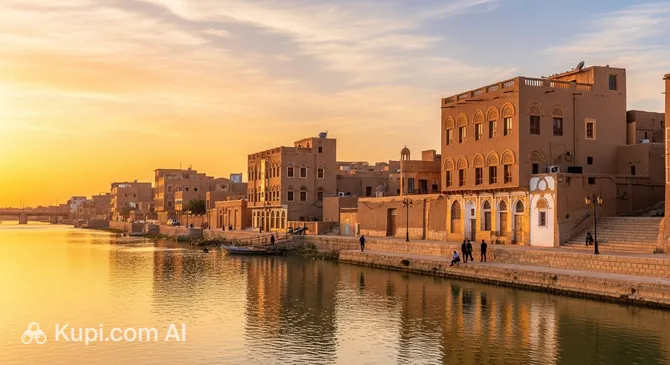
Amara is a colorful city in southeastern Iraq, serving as the administrative center of the Maysan Governorate. Situated on the banks of the Tigris River, the city is steeped in the atmosphere of a traditional Mesopotamian trading hub. Life here flows at a measured pace, following the rhythms of agriculture and artisanal production, making it an interesting destination for travelers seeking an authentic, non-touristy experience of the East.
Amarah. Illustration.
Source: Kupi.com AI
The city's geographical location is unique: it lies at the northern edge of the famous Mesopotamian Marshes, just 50 kilometers from the border with Iran. With a population of over 500,000, Amara is an important economic link for the region. The city's history is closely tied to its role as a trading post, where the paths of caravans and river vessels have crossed for centuries.
One of the main features of this place is its famous crafts—weaving and jewelry making, particularly niello silverwork. Strolling through the local streets, you can feel the true spirit of provincial Iraq, where the hospitality of the residents combines with a devotion to ancient traditions. Visiting this city is an excellent choice for those who want to see the inner life of modern southern Iraq.
Weather Overview
The climate in Amara is typical for the southeastern part of Iraq: it is characterized by extremely hot, dry summers and mild, relatively humid winters. For a comfortable trip, it is important to check the weather in the city in advance.
Summer months, from June to September, bring grueling heat with daytime temperatures often reaching +45°C and even +47°C. Precipitation is almost non-existent during this time. Winter, however, is quite pleasant: in January, the average air temperature is around +13.5°C, while during the day the air warms up to +19°C. Most of the rain falls between November and March, but even in these months, most days remain sunny.
The location near marshy terrain can lead to increased humidity, especially in the morning hours, which, combined with the heat, requires caution from travelers. Expect very hot and dry summers, requiring mandatory sun protection, and moderately warm winters, which are considered the best time to visit the region.
Average monthly temperature
Average monthly precipitation
Interesting Facts
Amara is a city with an interesting character and a unique geographical location that is worth learning more about:
The city is located approximately 307 kilometers from Baghdad, acting as a key outpost on the way to the country's southern borders.
The population density in the central districts of Amara is impressive—at peak times, it can reach 14,000 people per square kilometer.
The city is considered one of the main centers of a unique craft—the production of silver items using a special blackening (niello) technique.
Amara is located just 50 kilometers from the border with Iran, which leaves its mark on local trade and cultural exchange.
The majority of the city's population are Shia Muslims, which determines the rhythm of life and the specifics of local holidays and traditions.
How to Get There
The easiest way to reach Amara is by land transport from Iraq's major hubs. The city is connected to Baghdad and the southern regions by a network of highways; however, keep in mind that the journey from the capital (about 307 km) can take several hours. Bus services and private taxis are the primary ways to travel between cities. To better plan your route, it is useful to study information on how to get to this region.
There is currently no direct air connection to the city. Travelers are usually advised to use the international airports in Basra or Najaf, from where Amara can be reached by car or regular bus. Transferring in these cities allows you to combine a visit to several interesting places in southern Iraq.
Railway communication in this area is poorly developed, so cars remain the main mode of transport. Within the region, regular minibus services operate, connecting Amara with neighboring provinces. When planning a trip, it is important to allow extra time for possible road checks and traffic jams near large markets.
Station
Passenger traffic
Distance
1
133 km
Al Maqal Railway Station
3
154 km
Ahvaz Railway Station
5
155 km
Khorramshahr railway station
1
182 km
Bandar Imam Khomeini Railway Station
1
242 km
Main Attractions
While Amara is not a classic tourist center with an abundance of monumental landmarks, it offers a unique glimpse into traditional Mesopotamian life. The main attraction for visitors is usually the bustling central markets. Here, you can not only observe the daily hustle and bustle but also see the work of local silversmiths, whose products are famous throughout the southern region.
The city's natural surroundings deserve special mention. Amara is located in close proximity to the legendary Mesopotamian Marshes, situated between the Tigris and the Euphrates. This is a fascinating ecosystem that provides a glimpse into the region's ancient landscape. A walk along the banks of the Tigris within the city allows you to enjoy river vistas and see how the river still shapes the lifestyle of the local population.
The architectural appearance of Amara is represented mainly by administrative buildings and mosques, reflecting the city's status as a provincial center. Central squares serve as the main gathering points for citizens, where life teems in the evening hours. For the traveler, the greatest value here is not in visiting specific buildings, but in immersing oneself in the overall atmosphere of a calm and friendly trading city.
Local Cuisine
The culinary traditions of Amara are inextricably linked to the cuisine of southern Iraq, where rice, meat, and fresh vegetables play a key role. One of the most popular products in this river region is fish. You should definitely try "Masguf"—fish grilled in a special way over an open fire, which gives it a unique smoky aroma.
Street food and local markets are the best places to get to know the city's gastronomy. Here you can find freshly baked flatbreads, various kebabs, and lamb stews with spices. Special attention should be paid to local dates, which are considered among the best in this part of the country and are often served both at the main meal and as a dessert.
The tea culture in Amara has been elevated to the level of a ritual. Strong, very sweet tea is served in small glass cups ("istikan") everywhere—in market stalls, at homes, and in small cafes. It is not just a drink, but a symbol of hospitality and a reason for long conversation. Alcohol is not common in public places due to local traditions, so the emphasis is on natural juices and traditional non-alcoholic beverages.
Travel Tips
Visiting Amara will give you a unique experience of discovering the authentic south of Iraq, and these tips will help make your trip more comfortable and safe.
Clothing and Dress Code: Choose light clothing made of natural fabrics to better handle the heat, but remember modesty. Men and women are recommended to cover shoulders and knees; respect for local traditions will help you feel more confident.
Climate Accessories: Be sure to bring sunglasses, a hat, and sunscreen. If you plan a trip in winter, bring a light jacket as evenings can be cool.
Finances: The main method of payment is cash in Iraqi dinars. International cards are rarely accepted, so have a supply of cash and exchange money at banks or trusted exchange offices.
Connectivity: Buy a local SIM card (for example, Zain or AsiaCell) for internet access, as Wi-Fi is not available in all public places.
Safety: Stick to central areas and crowded places. Always carry a copy of your passport and try not to move around unfamiliar outskirts after dark.
Local Etiquette: Iraqis are very hospitable. Greet people politely, use your right hand for eating and accepting gifts. If you are invited for tea, do not refuse—it is an important gesture of politeness.
What to Avoid: Avoid photographing military objects, checkpoints, and government buildings without special permission. Also, avoid engaging in discussions on political topics.
Language: While English is not widely spoken, basic phrases in Arabic ("Shukran"—thank you, "Salam Alaikum"—hello) will be met with great warmth.
Following these simple rules will allow you to fully enjoy the flavor of Amara and the hospitality of its inhabitants. Have a pleasant trip!
Entertainment & Nightlife
Due to its status as a provincial and commercial center, Amara does not boast a vibrant nightlife in the Western sense. There are no nightclubs or noisy bars here, as the leisure of local residents is built around family values and traditions. The evening is a time when the city comes alive a bit after the midday heat, and people gather in teahouses or stroll along the river.
The main places for relaxation and evening meetings are the Tigris embankments and central squares. Here you can find small cafes serving strong Iraqi tea and traditional snacks. The atmosphere in such places is very calm and friendly, allowing the traveler to feel like part of the local community. This is an excellent time for leisurely conversations and observing city life.
Daytime entertainment in Amara is mainly related to visiting markets and shopping stalls. For those seeking cultural leisure, the city offers walks to the river channels, which are particularly beautiful in the rays of the setting sun. If you are planning a trip here, it is worth setting a contemplative mood and appreciating the charm of the quiet pace of life in southern Iraq.
Parks & Museums
Cultural and natural leisure in Amara is concentrated around the region's natural riches. There are no large art galleries here, but the city itself and its embankments can serve as a kind of open-air museum where life flows much as it did centuries ago. The Tigris River is the city's main "artery," and the walking areas along it serve as parks for the residents.
The main attraction for nature lovers is the Mesopotamian Marshes (Al-Ahwar), starting south of the city. This is a unique natural area included in the UNESCO World Heritage list. A trip to the marshes allows you to see the traditional reed houses of the local residents ("mudhifs") and get acquainted with the unique flora and fauna of this region.
While the number of organized parks in Amara itself is small, open spaces by the riverbanks and shaded areas near administrative zones serve as relaxation spots for city dwellers. The absence of classic museums is compensated for by the authenticity of local craft workshops, where you can see the process of creating silver jewelry and woven products firsthand.
Getting Around
The transport system in Amara is mainly represented by buses and private taxis. As in many Iraqi cities, taxis are the most popular and convenient way for tourists to get around. It is customary to agree on the price of the trip in advance, as meters are rarely used. Minibuses and micro-buses connect the main districts of the city and the central market with the outskirts.
The public transport system in Amara is oriented toward the needs of the local population, so there is no metro or tram. Most routes pass through the central commercial and administrative zones. It is worth considering that during peak hours and near markets, traffic can be very heavy, and jams are a common occurrence.
For short distances, many locals use bicycles or prefer to walk, although high daytime temperatures impose their own limitations. Car rental is not very popular among tourists due to the specifics of local traffic, so for comfortable trips around the city and its surroundings, it is best to use the services of trusted taxi drivers or local guides.
Accommodation
Since Amara is not a mass tourist destination, the hotel infrastructure here is primarily oriented toward business travelers and locals. The city is dominated by small mid-range hotels and guesthouses. Most accommodation options are concentrated in the central part of the city, within walking distance of markets and administrative offices.
Accommodation prices in Amara usually remain at an affordable level. Travelers should expect a basic set of amenities without frills. If you are planning a long stay, you might consider renting an apartment, which is often practiced by those coming to the region for business or trade.
We recommend booking accommodation in advance, especially if your trip coincides with important local holidays when the demand for rooms may increase. Despite the limited choice, the hospitality of local hotel owners will help smooth over the lack of luxury and make your stay in the city comfortable.
Nearby Cities
Thanks to its location in the south of the country, Amara can be a starting point for exploring lesser-known but interesting corners of Mesopotamia. The city's surroundings offer an introduction to the region's agricultural way of life and its natural wealth.
Among the nearby destinations, the city of Al-Qurna, located about 95 kilometers to the south, is worth highlighting. It is famous for being the place where the Tigris and Euphrates merge into a single river, the Shatt al-Arab. Also of interest are border towns such as the Iranian Dehloran or Susangerd, a trip to which will allow you to feel the change in the cultural landscape.
Exploring the rural areas around Amara is a great way to see the real Iraq beyond the big metropolises. Each of these directions uniquely reveals the history and modernity of this ancient region.
Shopping & Souvenirs
Shopping in Amara is primarily about visiting traditional Iraqi bazaars. The city's central market is the heart of its commercial life. You won't find brand-name boutiques here, but you can immerse yourself in the atmosphere of an oriental market where everything is sold: from fresh vegetables and fruits to textiles and household goods.
The main treasure to bring back from Amara is the work of local jewelers. The city is famous for its silver, especially the niello technique practiced by Sabean craftsmen. Elegant rings, bracelets, and pendants with traditional patterns make for a unique souvenir. It is also worth paying attention to handmade weaving—locally produced carpets and fabrics are distinguished by their durability and original ornaments.
Shops in the city usually operate from early morning until evening, with a break during the hot afternoon hours. Payments are made predominantly in cash in the local currency—Iraqi dinars. Cards are rarely accepted, so tourists should always have a sufficient supply of cash. A stroll through Amara's shopping rows is not just a search for purchases, but also a great way to practice the art of negotiating with local merchants.