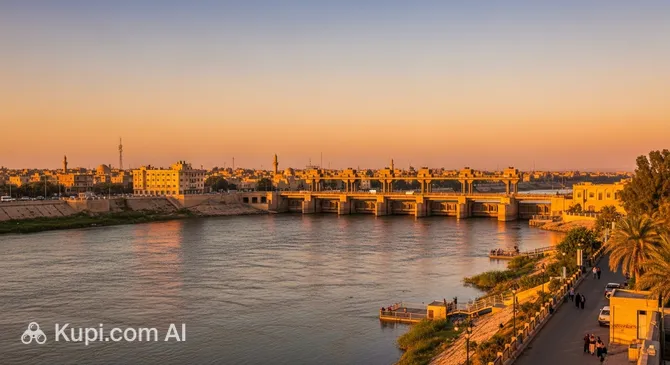
Al-Kut is the colorful administrative center of the Wasit Governorate, located in eastern Iraq. The city occupies a strategic position in a deep bend of the legendary Tigris River, which flows around its old part on three sides, creating a unique "peninsula" landscape. With a population of over 320,000, the city serves as an important economic and agricultural hub for the region.
Unlike major tourist metropolises, Al-Kut maintains the atmosphere of an authentic Iraqi province. Its character is inextricably linked to the river, which for centuries has dictated the rhythm of life for the local residents. You can learn more about the rich heritage and city's history by strolling through its old quarters, where traditions of carpet weaving and trade have remained unchanged for decades.
Al Kut. Illustration.
Source: Kupi.com AI
The city attracts visitors with its everyday energy: bustling agricultural markets and the famous Kut Barrage—a monumental engineering structure from the 1930s. A visit to Al-Kut is an opportunity to see the real, unadorned Iraq, experience the hospitality of its people, and feel the breath of the ancient Tigris.
Weather Overview
The climate in Al-Kut is characterized as typical for the hot desert regions of Iraq. Summers here are extremely hot and dry: in July and August, the average maximum temperature reaches an impressive 46°C, and sometimes higher. During this period, precipitation is virtually non-existent, and low humidity along with occasional dust storms makes being outdoors during daylight hours difficult.
Winter in the city, by contrast, is very mild and pleasant. In January, the average daytime temperature is around 18-19°C, creating ideal conditions for walking. Most precipitation falls between November and March, but rains are usually brief. The weather in Al-Kut is significantly influenced by the Tigris River, which brings a light breeze and somewhat tempers the heat in coastal areas.
The best time to visit the city is from October to April, when the heat recedes. During this time, you can expect warm sunny days and cool nights, which requires having a light jacket or sweater for evening walks.
Average monthly temperature
Average monthly precipitation
Interesting Facts
The name of the city "Kut" translates from Arabic as "fortress" or "fortification," highlighting its historical role as a protected settlement in a river bend.
For centuries, Al-Kut has been famous as a center for carpet weaving; local handmade carpets are still considered among the best in Iraq due to their unique patterns and execution techniques.
The Old City is located on a unique natural peninsula, almost entirely surrounded by the waters of the Tigris, which provided natural protection from enemies in the past.
The Kut Barrage, completed in 1939, is one of the oldest and most important irrigation systems in the country, providing water to vast areas of farmland.
The city is the largest market hub in the Wasit Governorate, where nomads and farmers from all over eastern Iraq bring their products.
How to Get There
Transport accessibility to Al-Kut is primarily provided by a developed network of roads connecting the city with key centers in Iraq. While the city itself does not have its own airport, arriving from abroad is easy via the country's major transport hubs. A trip to Al-Kut most often begins in the capital.
The main way to reach the city is by intercity buses and shared taxis (microbuses) departing from Baghdad. The distance is about 160 km, and travel time usually varies from 3 to 5 hours. The road passes through picturesque agricultural areas, though potential delays at checkpoints and heavy traffic at the city entrance should be considered.
Railway connections in this region are less developed than road transport, so most travelers prefer private taxis or regular bus services. Taxis from Najaf or Basra are also popular options, offering more comfortable travel conditions and the ability to reach the destination in 2–4 hours depending on road conditions.
Station
Passenger traffic
Distance
Baghdad railway station
10
161 km
Kermanshah Railway Station
3
236 km
1
238 km
Al Maqal Railway Station
3
286 km
Main Attractions
Al-Kut is not a city filled with classic museums, but its main attractions are practical and historical in nature. One of the city's most recognizable features is the Kut Barrage, built in the 1930s. This grandiose engineering feat not only regulates the water level of the Tigris for field irrigation but also serves as an important landmark shaping the look of the embankment.
The heart of city life is the Central Market. This is the place to feel the true spirit of the region: it features the famous handmade carpets, spices, and fresh agricultural products from surrounding villages. Walking through the market is an immersion into the sounds, smells, and colors of an Eastern bazaar, where every merchant is ready to tell their story.
The Tigris River embankment is another place worth visiting. In the evening, when the heat subsides, locals gather here to enjoy the cool breeze and river views. The old part of the city, located on the peninsula, is charming with its chaotic layout and narrow streets that have preserved the typical plan of fortified river settlements of the past.
Local Cuisine
The cuisine of Al-Kut is a real feast for lovers of hearty and aromatic dishes. Thanks to its proximity to the Tigris, fish holds a place of honor on the menu. A must-try is Masgouf—fish (usually carp) grilled over an open fire in a special way. In local establishments, it is served with crispy flatbreads, fresh herbs, and lemon.
In addition to fish, traditional Iraqi meat dishes are popular: kebabs made of tender lamb, dolma, and fragrant pilaf with saffron and raisins. In the city's markets, you can find sambusak—small fried pastries with various fillings, which are perfect for a quick snack. The region's agricultural influence is felt in the abundance of fresh vegetables, dates, and pomegranates.
Drinking culture centers around Iraqi tea, which is brewed very strong here and served with plenty of sugar in small "istikan" glasses. Arabic coffee with cardamom is also popular. The best gastronomic experiences can be found in simple family restaurants near the markets, where the food is always fresh and the atmosphere is as authentic as it gets.
Travel Tips
Al-Kut is a welcoming but specific city, and visiting it requires some preparation for your comfort and safety.
Clothing and Dress Code: Choose modest and closed clothing made from natural fabrics. For women, it is recommended to wear loose dresses or trousers covering the shoulders and knees; a head covering is not mandatory, but it is advisable to have a scarf when visiting conservative areas.
Transport: The best way to get around the city is by official taxis. Agree on the fare before getting into the car. For trips to other cities, use regular buses from Baghdad.
Finance: The main currency is the Iraqi Dinar. Cards are rarely accepted, so always carry cash. It is best to exchange money at official exchange offices in the city center.
Health: Drink only bottled water and avoid ice in drinks. In summer, be sure to use sunscreen and try not to be outside during peak heat (from 12:00 to 16:00).
Communication: The main language is Arabic. English is not widely spoken, so learn basic phrases ("Shukran" — thank you, "Salam" — hello) or use offline translators.
Safety: Move around the city during daylight hours and try to stay in groups. Avoid walking alone on the outskirts or in unlit areas of the peninsula at night.
What to Avoid: It is strictly forbidden to photograph military installations, government buildings, bridges, and people in uniform—this can lead to serious trouble with the police.
Local Etiquette: Greet people with your right hand. If you are invited for tea, do not refuse—it is a sign of respect and hospitality.
Following these simple rules will help you enjoy the atmosphere of Al-Kut and make your trip through Iraq pleasant and safe.
Entertainment & Nightlife
Entertainment in Al-Kut is quiet and traditional, which is typical for provincial centers in Iraq. You won't find noisy nightclubs or bars here, as the city's social life is centered around family values and friendly socializing. The main evening leisure activities are the numerous teahouses and outdoor cafes, where men gather to play backgammon and hold long conversations over cups of strong Iraqi tea.
As twilight falls, the Tigris embankment comes alive. This is a popular area for strolling, featuring small street food stalls and rides for children. The atmosphere here is friendly and relaxed, with a crowd consisting mostly of local families. On holidays, fairs may be held in the city, accompanied by traditional music, adding bright colors to everyday life.
For those seeking more modern entertainment, such as cinemas, large concert venues, or an active nightlife, residents usually travel to Baghdad. Nevertheless, Al-Kut offers a unique opportunity to enjoy the provincial tranquility and an authentic rhythm of life rarely found in large metropolises.
Parks & Museums
The park infrastructure of Al-Kut is mainly represented by green zones along the Tigris shoreline. Due to the hot, arid climate, such places are vital "lungs" for the city. Small municipal gardens and squares near the central plaza serve as resting places for citizens in the evening. While they may not feature world-class landscape design, one can find shade from date palms and enjoy the river view here.
Regarding cultural institutions, classic museums are virtually non-existent in the city. The primary site of historical and technical interest remains the Kut Barrage. It is not a museum in the traditional sense, but its architecture and role in the region's life make it a mandatory stop for those interested in the history of Iraq's 20th-century modernization.
For art lovers, the role of galleries is often played by carpet weaving shops and the workshops of local artisans in the old part of the city. Here, you can witness the process of creating unique patterns and learn about the symbolism embedded in traditional Iraqi carpets. It is a kind of "living museum" where exhibits are created right before the visitors' eyes.
Getting Around
The public transport system in Al-Kut is primarily represented by shared taxis and microbuses. This is the most popular and affordable way to move between different city districts and neighboring settlements. Microbuses connect the city center with the bus station and the outskirts; however, they do not have a fixed schedule—vehicles depart as they fill up with passengers.
For more comfortable trips, tourists and locals often use taxis. Both official services and private drivers operate in the city. It is customary to agree on the fare in advance, as meters are rarely used. A trip within the city usually takes 10 to 30 minutes, but traffic jams can occur on the bridges over the Tigris and the narrow streets of the old center during peak hours.
Fares are paid in cash; the use of bank cards or specialized transport apps in Al-Kut is currently not widespread. Travelers are advised to always carry small bills in Iraqi Dinars. Due to the extreme summer heat, long-distance walking and cycling are not popular, making motorized transport the only practical option.
Accommodation
The hotel infrastructure in Al-Kut is primarily geared toward business travelers, government officials, and specialists working in the agricultural sector. There are virtually no luxury five-star hotels here, but there is a selection of functional mid-range hotels and guesthouses.
Most available accommodation options are concentrated in the central part of the city, in close proximity to the Tigris embankment and administrative buildings. Hotels here usually correspond to a 2–3 star level and offer a basic set of amenities: air conditioning, Wi-Fi, and breakfast. Staying in the center is convenient due to its proximity to markets and major transport interchanges.
For longer stays or when traveling in a large group, you might consider renting an apartment. When booking, keep in mind that online services may offer a limited selection, so it is sometimes more reliable to arrange housing on-site or through local intermediaries. It is recommended to choose options with a good ventilation system, which is critical during the hot summer months.
Nearby Cities
Al-Kut serves as a convenient starting point for exploring the eastern part of the country, offering travelers access to cities that have preserved the atmosphere of traditional Iraq. Trips to neighboring settlements allow for a deeper understanding of the region's agricultural and cultural way of life.
Just 39 kilometers away is the city of Al-Numaniyah, known for its hospitality and calm pace of life. Another interesting destination is Al-Hayy, located 44 kilometers to the south. These cities are ideal for short trips, allowing you to see endless fields and get acquainted with the life of local communities. You can also head to the city of Al-Zubaydiya, which is about an hour's drive away.
City
Population
Distance
An Numaniyah
71 000
39 km
Al Hayy
82 900
44 km
Al Zubaydiyah
70 000
67 km
Afak
75 000
74 km
Zurbatiyah
22 400
75 km
Exploring the surroundings of Al-Kut provides an opportunity to see non-touristic Iraq, where life flows steadily and the hospitality of the locals is evident in every detail. For such trips, it is best to use a private taxi or local microbuses.
Shopping & Souvenirs
Shopping in Al-Kut is primarily about visiting traditional bazaars where trade continues much as it did centuries ago. The main goal for any buyer here is the famous Kut carpets. These handmade items are renowned for their durability and unique ornaments. They can be found in specialized rows at the central market, and purchasing such a carpet makes for the best souvenir of a trip to Iraq.
The central market by the banks of the Tigris also offers a huge selection of spices, top-quality dates, and local fabrics. There are no large Western-style shopping malls, so the entire shopping process is concentrated in small shops and on the commercial streets of the center. This is a place where bargaining is not just appropriate, but a part of the culture of communication between seller and buyer.
Shops typically operate from early morning until noon, then close for a break during the hottest hours and reopen in the evening. Payments are made mainly in cash in Iraqi Dinars, so it is wise to take care of currency exchange in advance. Strolling through the market rows of Al-Kut is not just about finding goods, but an opportunity to observe the vibrant and noisy daily life of a provincial city.